Jewish Alexandria: Egypt's Lost Mediterranean Community
At its peak, Alexandria's Jewish community numbered 80,000. Today, fewer than a dozen remain. The synagogues are still standing. Here is what they hold.

Quick Facts
- Best time to visit
- October through April, when Alexandria's Mediterranean climate is mild and domestic summer tourism is absent. The synagogue's interior light is best on clear winter mornings.
- Entrance fee
- Free. Passport and photocopy required for registration with the caretaker.
- Opening hours
- Sunday through Thursday approximately 10am to 2pm. Closed Friday afternoon and Saturday. Hours vary; call +20 3 492 1030 to confirm before visiting.
- How to get there
- Taxi from Raml Station approximately EGP 30 to 50 (under $2 USD). Tell driver 'Kenisa Eliyahu Hanabi' or 'Nabi Daniel Street'. Tram from Raml toward Moharrem Bey also works, roughly EGP 5 to 10.
- Time needed
- 45 to 60 minutes at the synagogue. Half a day if combining with Bibliotheca Alexandrina archive visit and Corniche walk. Full day if exploring Moharrem Bey, Chatby, and the historic commercial district.
- Cost range
- Budget EGP 200 to 400 per person including transport, a Corniche seafood lunch, and incidentals. The synagogue itself is free.
At its peak in the 1940s, Alexandria's Jewish community numbered roughly 80,000 people. They ran cotton exchanges, published Arabic-language newspapers, founded hospitals, and lived in apartments that looked out over the same Mediterranean horizon that had drawn their ancestors here more than two thousand years before. Today, fewer than a dozen Jews remain in Alexandria. The synagogues are still standing. One of them is larger than any synagogue currently operating in all of France.
This is not a story about absence, though absence is everywhere. It is a story about what a city becomes when one of its founding communities leaves, and what it keeps of them when they are gone.
Quick Facts
Eliyahu Hanavi Synagogue Entrance fee: Free, but you must register with the Egyptian Ministry of Antiquities and show your passport. Bring a photocopy. Opening hours: Generally Sunday through Thursday, 10am to 2pm, though hours shift. Call ahead or have your hotel call: +20 3 492 1030. Friday and Saturday the building is technically closed to visitors. Best time to visit: October through April, when Alexandria's maritime weather is cool and the city is not thick with domestic summer tourism. How to get there: From central Alexandria (Raml Station), take a tram or minibus toward Moharrem Bey. The synagogue is on Nabi Daniel Street, about 15 minutes by foot from the seafront Corniche. A taxi from Raml costs roughly EGP 30 to 50 (under $2 USD). Tell the driver "Masgid Yahud" or "Kenisa Eliyahu Hanabi" and watch him place it immediately. Everyone in this city knows where it is. Time needed: The synagogue itself takes 45 minutes to an hour. Combine it with a walk through the surrounding Moharrem Bey neighborhood and lunch at a nearby fish restaurant on the Corniche for a full half-day. Cost range: Budget EGP 200 to 400 per person for transport, a simple lunch, and incidentals.
Why This Place Matters
Alexander the Great founded this city in 331 BC, and Jews were present from nearly the beginning. According to the Letter of Aristeas, a document from around 130 BC, Ptolemy II brought Jewish scholars to Alexandria specifically to translate the Hebrew scriptures into Greek. That translation, the Septuagint, became the Bible that early Christians read. The New Testament was written in the Greek shaped by that Alexandrian Jewish intellectual tradition. If you want a single fact that collapses the assumed distance between ancient history and your own world, that is it.
By the first century AD, Alexandria's Jewish population was one of the largest in the ancient world, concentrated in two of the city's five residential districts. The ancient Jewish philosopher Philo of Alexandria, who lived from roughly 20 BC to 50 AD, synthesized Greek philosophy with Jewish theology in a way that directly influenced later Christian thinkers including Origen and Augustine. He did this in a city that no longer has a Jewish school, a Jewish bakery, or a functioning Jewish congregation.
The community's modern era ended in several compressed phases. The 1948 Arab-Israeli War triggered the first exodus. Egypt's 1952 revolution under Nasser accelerated the second. The 1956 Suez Crisis, during which the Egyptian government expelled British and French nationals and froze Jewish-owned assets, broke the community's commercial spine. By 1960, most of Alexandria's Jewish families had relocated to Israel, France, Brazil, and the United States. They carried with them a specific Alexandrian Jewish identity: Arabic-speaking, Mediterranean in sensibility, as likely to read Cavafy as the Torah.
The Eliyahu Hanavi Synagogue: What You Actually See
The Eliyahu Hanavi Synagogue on Nabi Daniel Street was built in 1354. This matters because it means the building predates the Ottoman period, predates Mamluk Alexandria's maturity, and sits on a street whose name, Nabi Daniel, may itself be a corruption of the name Alexander, suggesting the road follows a route from the ancient city's grid. The current structure you enter was rebuilt and expanded in the nineteenth century, but the congregation's presence on this site is genuinely medieval.
The interior is vast. The main hall seats 700 people under a series of carved wooden galleries supported by marble columns. The galleries were reserved for women under the synagogue's Sephardic rite, which reflects the community's demographics: many of Alexandria's Jewish families were descended from Iberian Jews expelled from Spain in 1492, who moved through the Ottoman Empire and eventually settled on Egypt's coast. They brought with them a distinct liturgical tradition, a Judeo-Spanish linguistic memory, and recipes that mixed Castilian and Levantine ingredients.
The ark holding the Torah scrolls is ornate and largely intact. Several of the original scrolls remain, maintained by the small Egyptian Jewish community organization based in Cairo and overseen by Carmen Weinstein's successor foundation after her death in 2013. Weinstein, who served as head of Cairo's Jewish community for years, was instrumental in preserving both Egyptian synagogues and the community's documentary record.
You will likely be escorted through the space by a caretaker, often a Muslim Egyptian whose family has maintained the building for decades. This is not unusual. Many of Egypt's Jewish sites are kept by non-Jewish Egyptians who take the responsibility seriously. Ask the caretaker about the building's recent restoration work, which was funded partly by the Egyptian government. The ceiling work completed in the 2010s stabilized deterioration that had been accelerating since the 1970s.
The Neighborhood Around the Synagogue
Nabi Daniel Street itself is worth walking in both directions. Two blocks south, a modest sign marks a site associated with Alexander the Great's tomb, though no credible archaeological confirmation has ever been produced. The claim is almost certainly false, but it has generated serious excavation attempts since the nineteenth century, most recently by a Greek archaeologist named Liana Souvaltzi in the 1990s, whose work caused a minor diplomatic incident between Egypt and Greece.
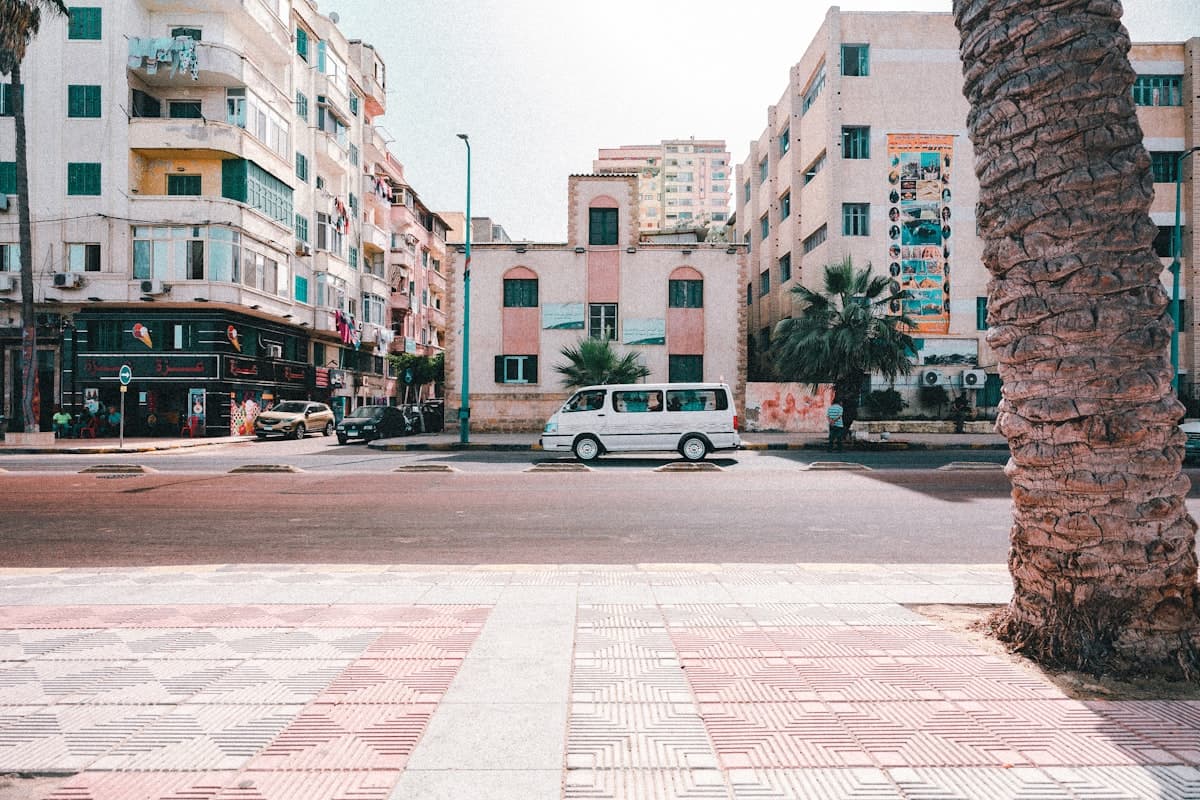
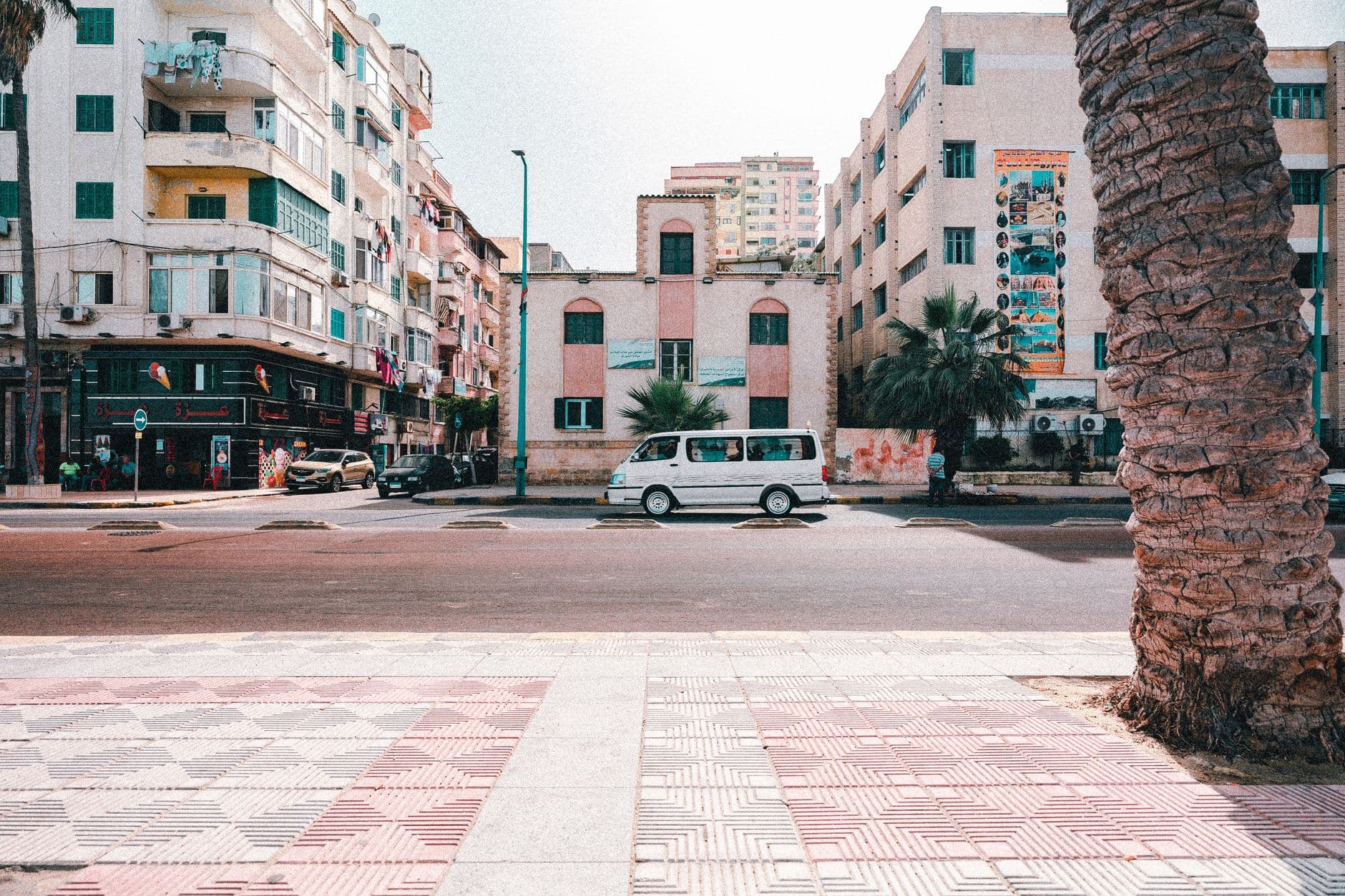
The surrounding Moharrem Bey district retains the layered residential texture of pre-revolutionary Alexandria: Art Deco apartment facades, wrought-iron balconies, Italian-language inscriptions above shop doors that have not sold Italian goods since before Nasser was born. The Greek Orthodox church of St. Saba is four minutes on foot from the synagogue. The Coptic Orthodox church of St. Mark is seven minutes. This particular corner of Alexandria held three non-Muslim communities within a short radius, which was architecturally unremarkable in 1945 and is historically extraordinary now.
The Connections: Alexandria's Layers
Alexandria does not do isolation well. Nothing here exists in one era only.
The Eliyahu Hanavi Synagogue sits above soil that holds Ptolemaic, Roman, and Byzantine layers. When the Egyptian Supreme Council of Antiquities conducted survey work near Nabi Daniel Street, they found Roman-era floor mosaics at a depth of several meters below street level. The street itself is elevated compared to ancient Alexandria because two millennia of construction debris, flood deposits, and intentional fill have raised the ground level by up to seven meters in parts of the city.
The cotton traders who formed the economic backbone of Alexandria's nineteenth-century Jewish community operated in the same commercial spaces used by Levantine Greek merchants, Italian bankers, and Syrian Christian import houses. The Alexandria Bourse, founded in 1883, had Jewish, Greek, Italian, and Egyptian Arab members trading side by side in a building that is now a government ministry. The cotton economy that enriched all of them was itself built on the labor of Egyptian fellahin, rural farmers who had been growing cotton for export since Muhammad Ali mandated its cultivation in the 1820s.
The Alexandrian Jewish writer Edmond Jabès, who left Egypt after 1956 and became a major figure in French literature, said late in his life that he wrote in French but thought in Alexandria. That distinction, between the language of exile and the city of formation, is the condition of a community that is everywhere in the historical record and almost nowhere in the living city.
What Is Not Worth Your Time
Skip any organized Jewish heritage tour that operates from Cairo with a single day allocated to Alexandria. They give you forty minutes at Eliyahu Hanavi, a drive past the Pompey's Pillar site, and lunch at a hotel restaurant nowhere near the neighborhoods that actually mattered to this community. You will learn nothing that is not on a Wikipedia page, and you will not eat well.
The Jewish cemetery in the Chatby neighborhood is administratively difficult to access and, frankly, in a state of deterioration that makes a visit more distressing than illuminating unless you have a specific family research reason to go. The Egyptian authorities are not obstructive, but the paperwork required for a foreign visitor to enter requires advance coordination through the Cairo Jewish community office, sometimes taking weeks. Do not plan a spontaneous visit.
Do not expect the Eliyahu Hanavi to feel like an active place of worship, because it is not. If that is what you are seeking, it will disappoint. What it offers instead is physical scale, architectural evidence of a community that was substantial and confident, and the specific silence of a room built for 700 people that has not heard a full congregation in sixty years.
Common Mistakes
Not calling ahead. The synagogue's hours are real but loosely kept. A national holiday, a caretaker's illness, or an unannounced security restriction can close it without warning. Call the number listed above, or ask your hotel's front desk to call on your behalf. This takes five minutes and prevents a wasted trip across the city.
Bringing large bags or camera equipment without asking. Photography inside is permitted for personal use, but caretakers have discretion, and arriving with a professional camera setup without asking first creates unnecessary friction. A phone camera causes no problems.
Visiting on a Friday. The building is nominally closed to visitors on the Jewish Sabbath. In practice this is observed inconsistently, but the day when you are most likely to find the gates locked is Friday afternoon.
Overlooking the Alexandrian Jewish Museum records. The Bibliotheca Alexandrina, ten minutes from the synagogue by taxi, holds digitized records from the Egyptian Jewish community including photographs, communal registers, and documentation of the pre-1956 community. This archive is publicly accessible and almost nobody visits it. If the history interests you at all, a morning at the Bibliotheca followed by an afternoon at Eliyahu Hanavi gives the visit a depth that neither can provide alone.
Treating this as a single-site visit. The story of Jewish Alexandria extends through the Chatby residential neighborhood, the Cecil Hotel on the Corniche (frequented by Jewish cotton merchants in the interwar years), the Stanley area where many prosperous Jewish families had summer apartments, and the entire commercial district around Mohamed Ali Square. A map from any secondhand bookseller in Alexandria showing the city in the 1930s reads as a directory of Jewish-owned businesses.
Underestimating what Egyptians know about this history. Many older Alexandrians remember Jewish neighbors, Jewish employers, or Jewish classmates with specificity and without hostility. If your caretaker or your taxi driver is old enough, ask. The stories you get are more useful than anything written in a guidebook, including this one.
Practical Tips
Bring your passport and a photocopy. The registration requirement at the synagogue is real and is managed by a caretaker who keeps a logbook. This is not bureaucratic obstruction; it is how the site maintains a record of international interest, which in turn supports funding requests for ongoing preservation.
Dress modestly. This is a working religious site in a conservative neighborhood. Covered shoulders and long trousers or a long skirt are appropriate and appreciated.
Arrive between 10am and noon for the best light inside the main hall. The clerestory windows produce good natural illumination in the morning that deteriorates by early afternoon.
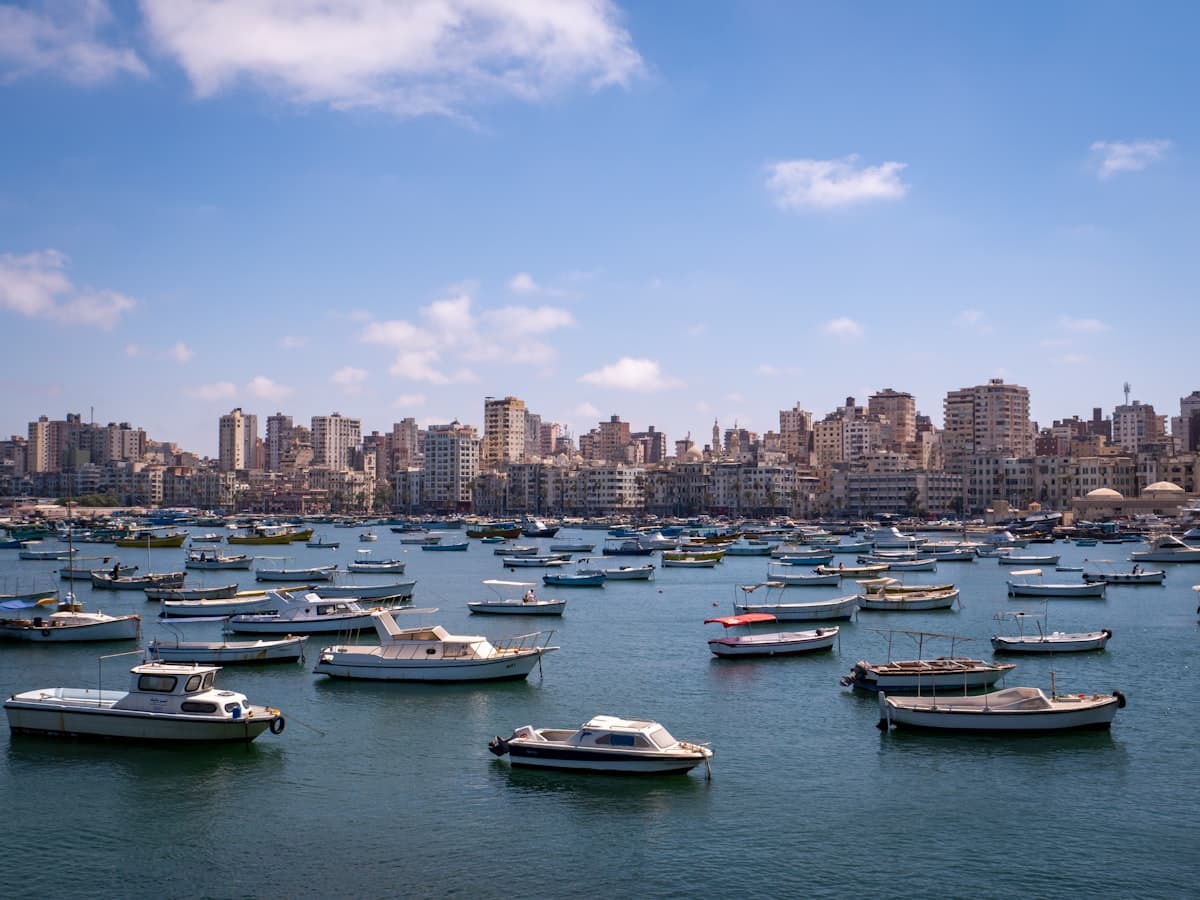
Combine the visit with a walk along the Corniche afterward. The stretch of seafront between the Eastern Harbor and the Bibliotheca Alexandrina passes the approximate location of the ancient Jewish quarter, which sat near the Brucheion palace district. Nothing of it is visible, but the geography is real and the Mediterranean light will give you some sense of why people stayed here for two thousand years.
For context before you arrive, read André Aciman's memoir "Out of Egypt," which describes an Alexandrian Jewish family's final years before leaving for France in the 1960s. It is the most precise account of what daily life in this community felt like, written by someone who lived it as a child. Reading it on the train from Cairo to Alexandria is not a bad idea.
Frequently Asked Questions
The Weekly Dispatch
More on Egypt, every Friday.
Cultural depth and places most guides never mention.
No spam. Unsubscribe anytime.