Jewish Alexandria: Egypt's Lost Synagogues and Their Survivors
At its peak, Alexandria had 40,000 Jewish residents and over a dozen synagogues. Today, fewer than a handful of Jews live there. The buildings survived. The community did not.

Quick Facts
- Best time to visit
- October through April. Mediterranean humidity and Egyptian vacation crowds make July and August uncomfortable. Winter light on the Corniche is the best argument for coming in November or December.
- Entrance fee
- Eliyahu Hanavi Synagogue: typically free but requires advance arrangement. Heritage tours including access: approximately EGP 500 to 800 (roughly $10 to $16 USD). Jewish cemetery at Chatby: free, no ticket required.
- Opening hours
- Eliyahu Hanavi is not open for casual walk-in visits. Coordinated group visits are possible Friday mornings and by prior arrangement on other days. Contact a licensed Alexandria heritage guide at least five days in advance.
- How to get there
- Express train from Cairo Ramses Station to Alexandria Misr Station: EGP 85 to 175 ($1.70 to $3.50 USD), journey 2 to 2.5 hours. Taxi or ride-share from Misr Station to Nabi Daniel Street: EGP 40 to 60 ($0.80 to $1.20 USD).
- Time needed
- 1.5 to 2 hours for the synagogue alone. 5 to 6 hours for a full circuit including the Chatby cemetery, Corniche walk, and surrounding neighborhood context. Overnight stay strongly recommended.
- Cost range
- Budget EGP 400 to 700 per day including transport, food, and tour fees. Mid-range EGP 1,200 to 2,000 per day with a licensed guide and sit-down meals at harbor fish restaurants.
At its peak in the 1940s, Alexandria's Jewish community numbered roughly 40,000 people. They ran cotton brokerages, published newspapers in Judeo-Arabic, swam at the same beach clubs as Greek merchants and Italian architects, and prayed in synagogues that occupied some of the finest real estate in the city. By 1967, following the Suez Crisis expulsions and the Six-Day War, most were gone. Today, estimates put the number of Jews actually living in Alexandria at fewer than a dozen, possibly fewer than five. The buildings are still there. The community is not. This is not a story of destruction. It is a story of dispersal, and understanding the difference changes how you read everything you see.
Quick Facts
Best time to visit: October through April. Alexandria's Mediterranean climate means summer is humid and crowded with Egyptian vacationers. Winter light on the Corniche is cleaner and the city moves at a pace that rewards slow walking.
Entrance fees: The Eliyahu Hanavi Synagogue (also spelled Eliahou Hanabi) requires prior arrangement through the Jewish Community of Alexandria. There is no standard ticket price. Visits are typically free but must be coordinated in advance. Some guided tours include access for approximately EGP 500 to 800 (roughly $10 to $16 USD) as part of a broader Alexandria heritage circuit.
Opening hours: Eliyahu Hanavi is not open to casual walk-in visitors. Contact the Egyptian Jewish Community organization or coordinate through a licensed heritage tour operator at least several days in advance. Friday mornings occasionally see limited access for organized groups.
How to get there: From Cairo, the Egyptian National Railways runs hourly express trains from Ramses Station to Sidi Gaber or Alexandria's main Misr Station. Journey time is approximately 2 to 2.5 hours; tickets run EGP 85 to 175 (around $1.70 to $3.50 USD) for second and first class respectively. From Misr Station, a taxi or ride-share to the Moharrem Bey neighborhood where Eliyahu Hanavi sits costs roughly EGP 40 to 60 ($0.80 to $1.20 USD). The synagogue is at 69 Nabi Daniel Street, a name worth noting on its own terms.
Time needed: A focused visit to the synagogue and its immediate surroundings takes 1.5 to 2 hours. A full day covering the Jewish quarter traces, the Greco-Roman Museum neighborhood, and the Corniche context takes 5 to 6 hours.
Cost range: Budget EGP 400 to 700 per day including transport, food, and any tour fees. Mid-range EGP 1,200 to 2,000 per day with a licensed guide and sit-down meals.
Why This Place Matters
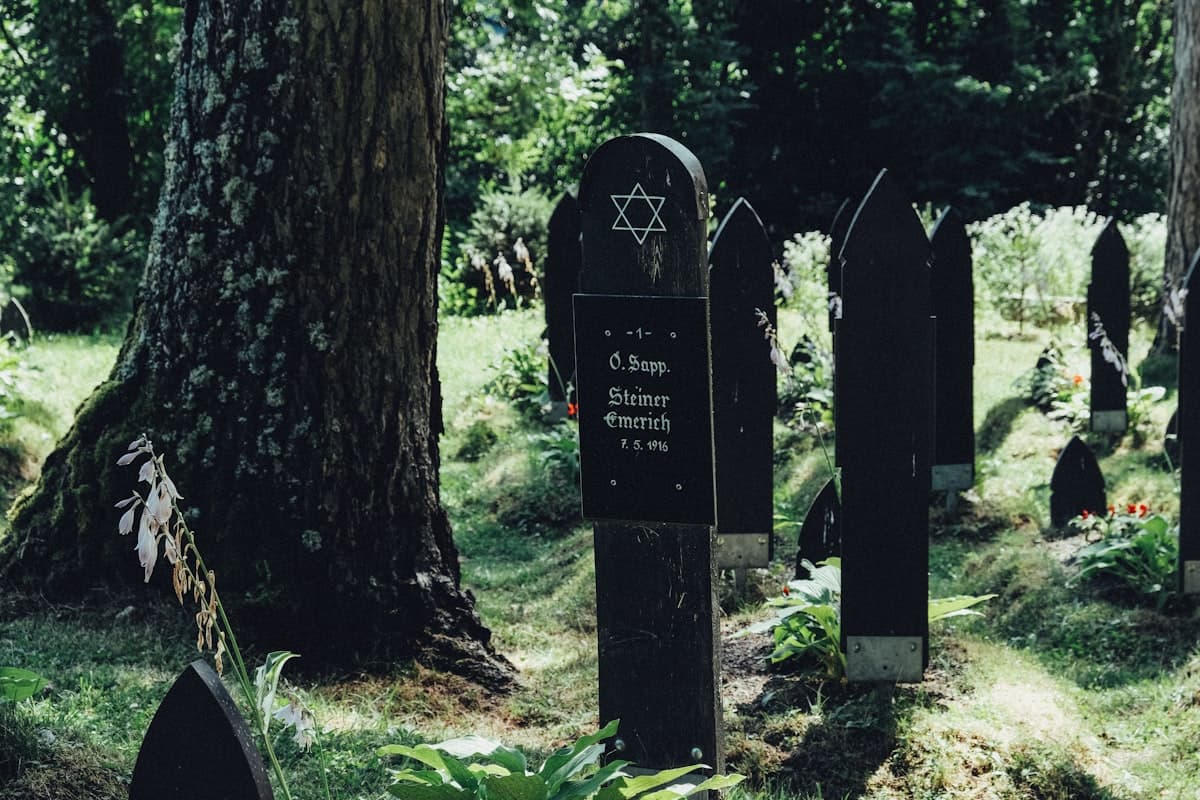
Jews have lived in Alexandria since the city was founded. Alexander the Great reportedly granted Jews equal civic rights alongside Macedonian Greeks when he established the city in 331 BCE, making the Jewish Alexandrian community one of the oldest in the diaspora. By the first century BCE, the Jewish population of Alexandria may have constituted as much as one-third of the total city. The philosopher Philo of Alexandria, who wrote extensively in Greek and attempted to reconcile Jewish theology with Platonic philosophy, was born here around 20 BCE. His work influenced early Christian theology more than most Christians know.
The neighborhood of Nabi Daniel Street carries its own layered identity. The street is named for the Prophet Daniel, and a mosque at number 47 has long been associated with a tradition, historically unverifiable but persistently held, that Alexander the Great himself is buried beneath it. Whether or not that is true, the mosque sits on ground that may have been occupied by a Ptolemaic temple, a medieval Islamic structure, and potentially a Jewish prayer house at various points across two millennia. In Alexandria, the ground beneath your feet is rarely just ground.
The Eliyahu Hanavi Synagogue, the city's largest and best-preserved, was built in its current form in 1354, though a synagogue on that site is documented from centuries earlier. It was substantially renovated in the nineteenth century under the patronage of wealthy Sephardic families who had arrived following the Ottoman expansion, and again in the early twentieth century when Alexandria's cosmopolitan era reached its economic height. The building holds roughly 700 worshippers. It has not held a minyan, the minimum quorum of ten Jewish adults required for communal prayer, with any regularity since the 1960s.
What You Will Actually See
The exterior of Eliyahu Hanavi does not announce itself. The facade is restrained, set back from the street behind a courtyard gate that is usually locked. This is not indifference from the Egyptian government; the building is a registered national monument and has received significant restoration funding, including from Egyptian state authorities and diaspora communities in Paris, Geneva, and São Paulo. What the locked gate reflects is practical reality: there is almost no one left to open it casually.
When you do get inside, the scale surprises you. The interior is Italianate in style, with marble columns, pews in pale wood, stained glass windows that filter Mediterranean light into something softer, and brass chandeliers that have been polished to a state that feels almost accusatory, given the silence below them. The ark housing the Torah scrolls is intact. There are Hebrew inscriptions on the walls alongside Arabic ones, a reminder that Judeo-Arabic was the everyday language of Egyptian Jews for centuries.
The custodians are Muslim Egyptian men, a fact that strikes some visitors as incongruous until they learn that it has been this way for decades. The Egyptian state employs caretakers for registered religious monuments regardless of which faith built them. The men who unlock the doors and sweep the floors of Eliyahu Hanavi are, by most accounts, meticulous and respectful. One custodian, according to multiple visitors over the past decade, keeps a photograph of the synagogue's last rabbi pinned near the entrance. He has worked there longer than most of the diaspora visitors have been alive.
The Other Sites: What Is Left of Forty Thousand Lives
Eliyahu Hanavi is not the only trace. The Alexandrian Jewish community left impressions across the city that require knowing where to look.
The Jewish cemetery in Chatby, one of the oldest surviving cemeteries in Alexandria, contains graves with Hebrew, French, Arabic, and Italian inscriptions sometimes on the same stone, a physical record of a community that was genuinely multilingual and genuinely Mediterranean. The cemetery is not well-signposted. It sits adjacent to other historic burial grounds in a neighborhood most tourists pass through only on the way to the Catacombs of Kom el-Shoqafa. It repays a detour.
The Greco-Roman Museum, currently undergoing long-term renovation, holds artifacts from the period when Jewish, Greek, and Egyptian religious traditions overlapped in ways that would unsettle anyone who thinks of these as always-separate worlds. Figures combining Isis iconography with Jewish menorahs, amulets with mixed Greek-Hebrew inscriptions, terracotta objects found in what were clearly domestic contexts that do not sort cleanly into any single faith category. Alexandria's ancient history was syncretic in ways that made later monotheists uncomfortable.
The cotton exchange building near the commercial center of the city, now used for other purposes, was substantially financed by Jewish and Greek merchant families in the late nineteenth century. The wealth that built Alexandria's cosmopolitan moment in the early twentieth century, the beach clubs, the department stores, the art deco apartment buildings along the Corniche, flowed through communities that are now almost entirely gone.
The Connections
The story of Jewish Alexandria does not begin or end with Jews. It is inseparable from the Greek community, which has also largely departed. It is inseparable from the Armenian community, the Italian community, and the Syrian Christian community, all of whom made Alexandria something distinct from anywhere else in Egypt or the Arab world. The writer Lawrence Durrell, who was British, set his Alexandria Quartet here in the 1950s precisely because the city's overlapping communities made it feel like a separate civilization. The Egyptian writer and Nobel laureate Naguib Mahfouz, who rarely wrote about Alexandria, understood Cairo in the same layered terms, which is partly why his work and Durrell's work read as responses to the same historical moment even when they never directly address each other.
The expulsion of the Jewish community happened in two waves. The first came after 1948 and the founding of Israel, when Jewish Egyptians were increasingly pressured to declare a loyalty that many of them experienced as a false choice. Many held Egyptian, French, and British passports simultaneously and did not think of their Jewishness as equivalent to Israeli citizenship. The second wave came after 1956 and intensified after 1967, when Nasser's nationalizations and then the Six-Day War made remaining effectively impossible. Most went to France, Brazil, the United States, and Israel. The writer Edmond Jabès, one of the most significant French-language poets of the twentieth century, was among them. He left Alexandria for Paris in 1957 and spent the rest of his life writing about exile, the book, and the desert in ways that are incomprehensible without knowing he was Egyptian.
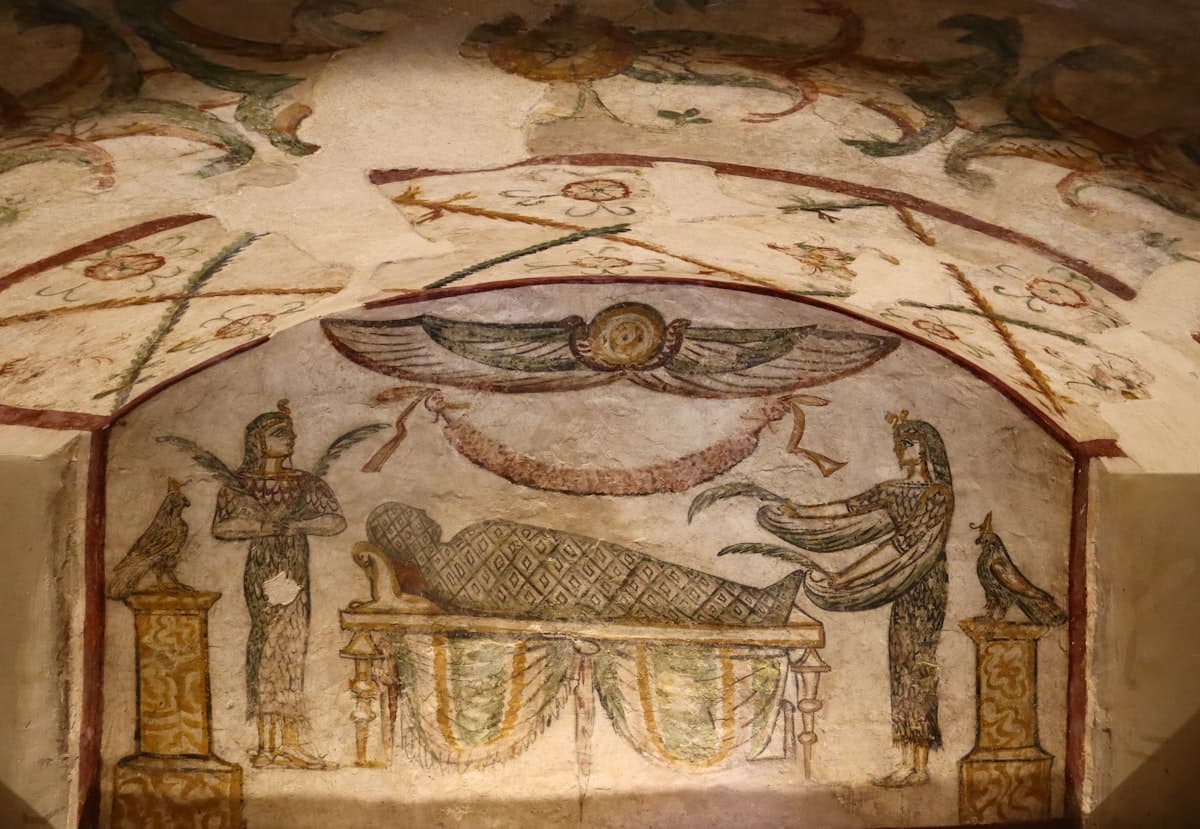
The Catacombs of Kom el-Shoqafa, Alexandria's most extraordinary underground site, reflect the same syncretism in an older register. Built in the second century CE, they contain burial chambers that mix Egyptian, Greek, and Roman religious iconography so thoroughly that archaeologists spent decades arguing about who commissioned them. The answer, most now believe, is an Alexandrian family that was probably not formally committed to any single tradition, which tells you something true and important about how Alexandria actually worked.
Common Mistakes
Arriving without an appointment and expecting entry. The single most common error. Eliyahu Hanavi is not a museum with posted hours. Visitors who show up at the gate unannounced, even with good intentions and visible cameras, will not get in. Contact a heritage tour operator in Alexandria at least five days before your visit, or reach out through the Egyptian Jewish Community's diaspora networks before you travel.
Confusing the synagogue's condition with neglect. The restoration work at Eliyahu Hanavi has been genuine and substantial. Egyptian authorities have spent real money on the building. Some visitors arrive expecting ruin and leave confused when they find polished marble. The tragedy of the place is not physical decay. It is demographic. Those are different things and conflating them produces a misleading account of what happened.
Treating this as a Holocaust-adjacent story. Jewish Alexandria was not destroyed by the Nazis. It was dismantled by a combination of Arab nationalism, political crisis, and a series of Egyptian government policies that made Jewish life legally and economically precarious. The history is specific and should not be imported into a European framework that does not apply.
Skipping the Jewish cemetery at Chatby. Most tours skip it because it requires extra time and a guide who knows it is there. This is a mistake. The cemetery contains more tangible, personal evidence of what this community was than anything inside the synagogue. Headstones do not require appointments.
Paying for the Alexandria sound and light show at any of the heritage sites. There is no sound and light show specifically for Jewish Alexandria, but various operators sell "heritage night tours" that are essentially driving past locked buildings while a recorded narration plays. These cost approximately EGP 300 to 400 per person and deliver almost nothing that a good article or a morning with a knowledgeable guide would not give you more clearly and at a fraction of the cost.
Spending only a half-day in Alexandria. Cairo is two hours away and the temptation to do Alexandria as a long day trip is understandable. Resist it. The city's cosmopolitan history does not reveal itself quickly. The light changes. The neighborhoods require walking. Stay at least one night.
Expecting a living community to visit. Some travelers arrive hoping to meet Jewish Alexandrians, to attend a service, to have a conversation with someone whose family has been there for generations. This is almost certainly not possible. The community that exists is elderly, private, and exhausted by decades of being a symbol rather than a people. Approach this as a site of historical reckoning, not an encounter with a living tradition.
Practical Tips
The most effective way to access Eliyahu Hanavi is through a licensed Alexandrian guide with established relationships at the site. Mohamed Awad, director of the Alexandria Preservation Trust, is a recognized expert on the city's multicultural architectural heritage and has facilitated visits for researchers and journalists. Contacting the Trust or similar organizations is the most reliable path.
Bring a head covering if you are visiting as a sign of respect, though you will not be turned away without one. The interior is cool even in summer. Photography is generally permitted but ask first and do not photograph custodians without permission.
For context before you visit, read André Aciman's memoir "Out of Egypt," published in 1994. Aciman grew up in Alexandria as part of a Jewish family and left as a teenager. His account of the city's final cosmopolitan decade is the most evocative English-language portrait of what was lost and why. Reading it on the train from Cairo is appropriate.
The Corniche walk from near the synagogue neighborhood toward the Eastern Harbor takes about forty minutes and passes through architectural strata that tell the city's whole story in a single walk: Ptolemaic-era shoreline, Roman-period warehousing areas now built over, Ottoman-era mosques, nineteenth-century European-style commercial buildings, and Nasser-era concrete blocks. The sea is the constant. Everything else has been rebuilt at least twice.
Alexandria's food is better than Cairo's, and anyone who tells you otherwise has not eaten fried calamari at a fish restaurant on the Eastern Harbor at noon in November. Budget accordingly and generously.
Frequently Asked Questions
The Weekly Dispatch
More on Egypt, every Friday.
Cultural depth and places most guides never mention.
No spam. Unsubscribe anytime.