Jewish Alexandria: Egypt's Synagogues and a Vanished World
At its peak, Alexandria had 40,000 Jewish residents and dozens of synagogues. Today, fewer than ten Jews live in the city. One synagogue survives. Here is what happened.

Quick Facts
- Best time to visit
- October to April, when Mediterranean humidity is low, bureaucratic offices are more reliably staffed, and the quality of light in the old city is at its best for walking and photography.
- Entrance fee
- Free, but access to Eliyahu Hanavi Synagogue requires advance coordination with the Egyptian Jewish Community or the Ministry of Tourism and Antiquities. Chatby cemetery is also free with caretaker arrangement.
- Opening hours
- Eliyahu Hanavi: by appointment, typically weekday mornings 9am to 1pm. Chatby cemetery: accessible with caretaker contact, best before noon. Hours shift without posted notice.
- How to get there
- Spanish train from Cairo Ramsis to Alexandria Misr station: EGP 90 to 200, about 2 hours. Taxi from Alexandria station to Nabi Daniel Street: EGP 30 to 50. Servees shared taxi from Cairo Turgoman: EGP 60, arrives near Sidi Gaber station.
- Time needed
- 2 to 3 hours for Eliyahu Hanavi Synagogue. Full day if combining with Chatby cemetery, a walk of the former Jewish quarter streets, and the surrounding Mansheya district.
- Cost range
- Very low admission costs. Cairo to Alexandria return transport EGP 180 to 400. Lunch in central Alexandria EGP 150 to 300. Specialist guide for half-day EGP 400 to 800.
Quick Facts
Best time to visit: October to April, when Mediterranean humidity drops and the sea light turns sharp and forgiving. The Eliyahu Hanavi Synagogue is harder to visit in summer when bureaucratic schedules compress.
Entrance fee: The Eliyahu Hanavi Synagogue is free to enter, but access requires coordination with the Jewish Community of Alexandria or advance notice through the Egyptian Ministry of Tourism and Antiquities. Bring your passport. There is no walk-in policy.
Opening hours: The synagogue opens for Shabbat services when a minyan can be assembled, which almost never happens now. Individual visits are arranged by appointment, typically on weekday mornings between 9am and 1pm. Hours shift without notice.
How to get there: From Alexandria's Ramla tram station, take a taxi to Nabi Daniel Street in the Mansheya district, roughly EGP 30 to 50 (under $2 USD). From Cairo, the Spanish train service runs to Alexandria Misr station in about two hours and costs EGP 90 to 200 depending on class. A servees (shared taxi) from Cairo's Turgoman terminal costs around EGP 60 and drops you near Sidi Gaber station.
Time needed: Two to three hours for the synagogue itself, half a day if you walk the surrounding streets of the old Jewish quarter, the former Alliance Israélite school sites, and the Chatby Jewish cemetery.
Cost range: A focused visit to Jewish Alexandria costs almost nothing in admission. Factor in transport from Cairo (EGP 180 to 400 round trip), lunch in central Alexandria (EGP 150 to 300), and a local guide if you want context rather than confusion (EGP 400 to 800 for a half-day).
---
Why This Place Matters
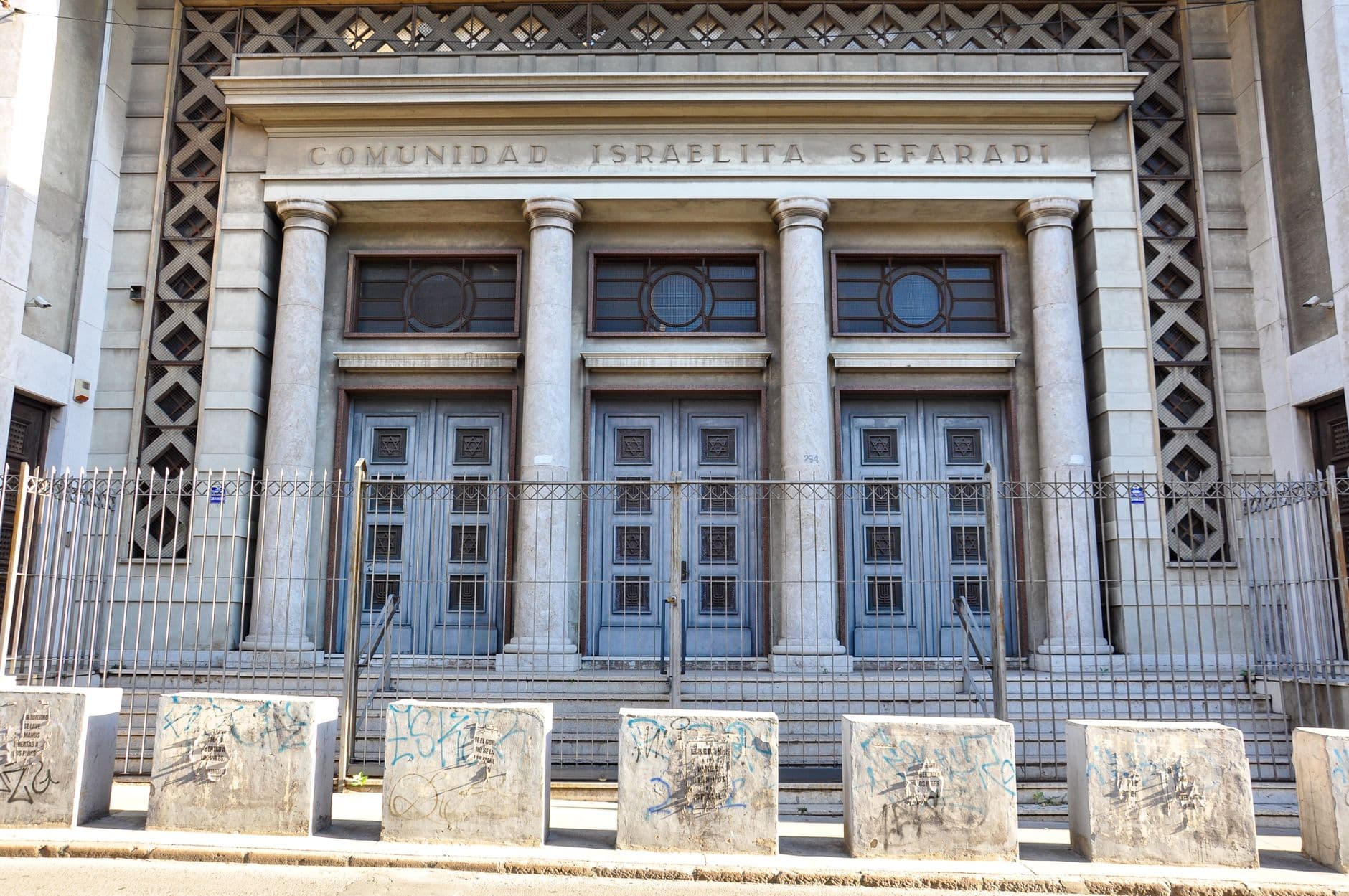
Alexandria's Jews did not arrive with the Zionist movement. They arrived with Alexander the Great. When Alexander founded the city in 331 BCE, he designated one of the city's five districts, named after the letter Delta, for Jewish settlement. Within two centuries, that community had grown large enough that the Hebrew scriptures were translated into Greek here, a project called the Septuagint, because Alexandrian Jews were losing their Hebrew. They had become too Alexandrian.
At the height of the Roman period, the Jewish population of Alexandria may have reached 180,000, roughly one third of the entire city. The Great Synagogue of Alexandria, described by the Talmud, was so large that a system of flags was used to signal the congregation when to respond during prayers, because the crowd was too enormous to hear the reader's voice. That building was destroyed by the Romans in 115 CE during a revolt that killed hundreds of thousands across Egypt and Cyrenaica, one of the most catastrophic Jewish uprisings of antiquity and one of the least known.
The community rebuilt, survived the Byzantine period, survived the Arab conquest, survived the Ottoman era, and then, in one generation between 1948 and 1967, almost entirely ceased to exist.
The story of Jewish Alexandria is not simply a story of loss. It is a story of what Mediterranean pluralism actually looked like before nationalism made it impossible: Greek, Jewish, Italian, Arab, Armenian, and Coptic families living in interlocking commercial and social worlds, speaking four languages across a single dinner table, and building a city that produced Constantine Cavafy, Giuseppe Ungaretti, and Edmond Jabès within the same few square kilometers.
---
The Eliyahu Hanavi Synagogue: What You Will Actually See
The synagogue on Nabi Daniel Street, whose name translates as the Prophet Daniel, sits on a road that itself carries a biblical name, which tells you something about how deeply layered this city is. The building you see today was consecrated in 1354, though heavily reconstructed in 1850. It is one of the oldest continuously used synagogues in the world, and since the early 2000s it has been undergoing an Egyptian government-funded restoration that is either a genuine act of heritage preservation or a complicated piece of diplomatic theater, depending on who you ask. Both things can be true.
When you walk in, the scale surprises you. Forty-four marble columns, many of them reused from earlier structures, line the central nave. The bimah, the raised reading platform, is positioned at the center rather than the front, a Sephardic arrangement that reflects the community's origins: most of Alexandrian Jewry traced itself to families expelled from Spain in 1492 who moved east through the Ottoman Empire and eventually reached Egypt. The wooden ark housing the Torah scrolls is inlaid with ivory and mother-of-pearl in patterns that would look equally at home in a mosque or a Coptic church from the same period, which is not a coincidence. Craftsmen in Ottoman Alexandria did not always work in a single tradition.
The stained glass windows, replaced during the most recent restoration, are a point of some controversy among people who knew the originals. The synagogue's caretaker, a Muslim man named Mohammed who has been tending the building for decades and knows its history better than most visiting academics, will show you the renovated sections if you ask him directly and with genuine curiosity rather than photographic efficiency.
What most visitors walk past: a small side room off the main hall contains a display of community photographs from the first half of the twentieth century. Women in European dress at beach clubs. Men in suits at what appears to be a cricket match. A bar mitzvah reception in an apartment that overlooks the sea. These are not images of foreigners in Egypt. They are images of Egyptians.
---
The Disappearance: 1948, 1956, 1967
The departure of Alexandrian Jews happened in three waves, each triggered by a political rupture. The 1948 Arab-Israeli war produced the first exodus, as Egyptian Jews became legally suspect regardless of their actual political affiliations, most of which were commercial rather than nationalist in any direction. In 1956, following the Suez Crisis and Nasser's nationalization decrees, Jews holding British or French passports, which many did because Ottoman-era arrangements had created a complex web of protectorate citizenships, were expelled outright. Their property was sequestered. Bank accounts were frozen. Families left with one suitcase.
The third wave came after 1967, when the Six-Day War made remaining in Egypt untenable for almost everyone who had stayed. By 1970, a community that had numbered 40,000 in 1945 was reduced to fewer than 500. Today, fewer than ten Jews live in Alexandria. The last Bat Mitzvah performed in the Eliyahu Hanavi Synagogue was in 1958.
The Chatby Jewish cemetery, which you can still visit with some persistence, contains graves dating back to the Ptolemaic period. It is one of the oldest continuously used Jewish burial sites in the world. The inscriptions shift over the centuries from Greek to Aramaic to Hebrew to Arabic to French, each language a record of who the community was at that moment and what language it thought in. The French inscriptions cluster in the 1920s and 1930s, the peak of the community's cosmopolitan confidence. The cemetery has a caretaker. Go before noon.
The former Jewish quarter around Nabi Daniel Street still has buildings with Hebrew inscriptions above doorways if you know to look at the upper floors, above the level where shopfront renovations stopped. A pharmacy on a side street off Fouad Street retains a Star of David in its original tilework. Nobody removed it. It was simply forgotten, which is its own kind of preservation.
---
The Connections: Alexandria's Layered Ground
Nabi Daniel Street itself is the subject of a persistent and archaeologically plausible theory: that it runs directly over the ancient Royal Quarter of Alexandria, and that somewhere beneath the road and its buildings lies the tomb of Alexander the Great, which has not been definitively located since antiquity. The street is named for a Coptic saint whose mosque sits at the southern end, which was built over what Byzantine records indicate was a significant Roman-period structure. The Jewish synagogue, the mosque of the Coptic saint, and the possible resting place of a Macedonian conqueror occupy the same four hundred meters of asphalt.
The Ben Ezra Synagogue in Cairo's Coptic quarter is the better-known Jewish monument in Egypt, partly because it is more accessible and partly because it was the site where, in 1896, the Cairo Geniza was discovered: 300,000 fragments of Jewish manuscripts and documents dating back to the ninth century, including business letters, marriage contracts, and shopping lists that have taught historians more about medieval Mediterranean life than almost any other single find. What Alexandria's Jewish community produced in equivalent documents was largely lost in the expulsions. The Cairo Geniza survived because it was stored in a room that was deliberately never cleared. What you can read in that archive is partly a mirror of what Alexandrian Jewish life must have looked like, because the communities traded, corresponded, and intermarried for a thousand years.
The Italian community of Alexandria, largely gone by the 1960s for the same political reasons, built churches that still stand, including the Cathedral of Saint Catherine, whose interior contains donations from families whose names appear in both Italian and Jewish community records, because intermarriage across religious lines was common enough to be documented and not remarkable.
---
Common Mistakes
Arriving without coordination. The Eliyahu Hanavi Synagogue does not have posted hours and does not admit walk-in tourists reliably. Arrive without a contact or a pre-arranged appointment and you will find a locked gate and no explanation. Email the Egyptian Jewish Community Association in Cairo at least two weeks before your visit.
Trusting standard tour itineraries. Most Alexandria day-trip packages from Cairo do not include Jewish heritage sites at all, or include them as a ten-minute photo stop. If you book a package tour for this purpose, you will leave knowing less than you arrived with. Hire a specialist guide or come independently.
The sound and light show at Kom El Shoqafa. This is near the old Jewish quarter and gets bundled into Alexandria heritage days. It costs around EGP 200 and adds nothing to what a single attentive hour inside those Roman-Jewish-era catacombs already tells you. Skip the show, spend the time in the catacombs themselves.
Skipping the Chatby cemetery. This is the more emotionally complete experience, and most visitors never go because it is not in the guidebooks. The logistics are slightly complicated: you need to contact the community caretaker in advance. Do it anyway. The oldest legible inscriptions are in Greek, not Hebrew, which tells you everything about who these people were.
Photographing without asking. The caretaker at Eliyahu Hanavi has seen enough visitors treat the synagogue as a photo set. Ask before photographing the Torah ark or the interior in general. This is a courtesy that will be repaid with information no guidebook contains.
Expecting a living community. This is a painful but necessary calibration. You are visiting the architecture of a community that no longer exists here. That is not nothing. But visitors who arrive expecting to find a surviving Jewish cultural scene in Alexandria leave confused and sometimes write things online that are simply wrong.
Conflating the Alexandrian Jewish experience with Israeli history. The Jews of Alexandria were, for most of their history, Egyptian. Their political sympathies before 1948 ranged from Communist to royalist to simply commercial, and many were actively opposed to Zionism as a political project. Treating their story as a chapter in Israeli national history misreads what they actually were, and what they lost when they left was not Israel. It was Alexandria.
---
Practical Tips
Come on a weekday morning. The neighborhood around Nabi Daniel Street is quieter before noon and the light on the synagogue's facade is better from the east.
Bring cash in Egyptian pounds. There are no ticket machines, no card readers, and no ATMs immediately adjacent to the site.
If you read French, the best primary source on Alexandrian Jewish life is Robert Ilbert's academic work on the city's cosmopolitan period. In English, André Aciman's memoir Out of Egypt, while not strictly about the Jewish community, captures the texture of departure from this world better than any documentary source.
The neighborhood is safe and walkable, but the streets between Nabi Daniel and the waterfront have seen aggressive renovation in recent years. Some of the buildings that appear in photographs from the 1990s are gone. Photograph what stands now.
If you want to combine this visit with other Alexandrian Jewish sites, budget a full day: Eliyahu Hanavi in the morning, the Chatby cemetery after lunch (allow two hours), and a walk along the Corniche past the sites of former Jewish-owned beach clubs, of which only the architecture remains, in the late afternoon. The sea does not know what it witnessed. But it is still there.
Frequently Asked Questions
The Weekly Dispatch
More on Egypt, every Friday.
Cultural depth and places most guides never mention.
No spam. Unsubscribe anytime.