Jewish Alexandria: History, Synagogues, and a Lost Community
At its peak, Alexandria had 80,000 Jewish residents and 57 synagogues. Today, fewer than a dozen Jews live in the city. The buildings outlasted the community.

Audio Guide: Jewish Alexandria: History, Synagogues, and a Lost Community
Quick Facts
- Best time to visit
- October to April, when Mediterranean humidity is lower and the city's coastal light is at its clearest. Avoid July and August, when heat and humidity make walking the neighborhood uncomfortable.
- Entrance fee
- Eliyahu Hanavi Synagogue: free entry, donation expected, occasional administrative fee of EGP 50 to 100 (approximately $1 to $3 USD). Alexandria National Museum: EGP 100 (approximately $3 USD).
- Opening hours
- Saturday mornings are the most reliable for Eliyahu Hanavi; weekday visits require advance coordination. The Alexandria National Museum is open daily 9am to 4:30pm.
- How to get there
- From Raml Station (central Alexandria), tram Line 1 to Nabi Daniel area costs EGP 3 to 5. Taxi from Raml Station costs EGP 30 to 50. From Cairo, the train to Misr Station Alexandria takes 2 to 2.5 hours and costs EGP 60 to 250 depending on class.
- Time needed
- 2 to 3 hours for Eliyahu Hanavi and the surrounding neighborhood walk. Half a day combining with Alexandria National Museum. Full day if also attempting the Karaite synagogue in Moharrem Bey.
- Cost range
- Budget EGP 300 to 500 per day including transport, entry fees, and food in the Jewish quarter neighborhood. Mid-range with a specialist local guide, EGP 1,500 to 2,500 per day.
At its peak in the 1940s, Alexandria's Jewish community numbered around 80,000 people. They owned department stores, ran cotton exchanges, wrote Arabic poetry, and built synagogues large enough to seat two thousand worshippers. By 1967, most were gone. Today, Alexandria has fewer than a dozen Jewish residents, possibly fewer. The synagogues remain, in various states of use and disuse, tended by the Egyptian government and a handful of caretakers who are not themselves Jewish. This is one of the stranger preservation stories in the Mediterranean world.
Quick Facts
Best time to visit: October to April, when Alexandria's Mediterranean humidity drops and the light on the city's crumbling European-era facades is at its least punishing. The Eliyahu Hanavi Synagogue holds limited opening hours and occasional visits require advance coordination.
Entrance fee: The Eliyahu Hanavi Synagogue is technically free to enter, though donations are expected and a small administrative fee of around EGP 50 to 100 (approximately $1 to $3 USD) is sometimes requested by caretakers. Confirm current access arrangements before visiting, as hours shift frequently.
Opening hours: Generally Saturday mornings, with limited weekday visits by appointment. Contact the Jewish community foundation in Cairo or the Egyptian Ministry of Antiquities for current access. Hours are not fixed in any meaningful sense.
How to get there: From central Alexandria (Raml Station), the Eliyahu Hanavi Synagogue on Nabi Daniel Street is reachable by tram (Line 1, EGP 3 to 5) or taxi (EGP 30 to 50 depending on traffic). The synagogue sits near the intersection of Nabi Daniel and Horreya streets, which places it at the geographic center of ancient Alexandria's grid.
Time needed: Two to three hours for the main synagogue and surrounding neighborhood. Half a day if you walk the Jewish quarter's ghost geography and visit the Alexandria National Museum for context.
Cost range: Budget EGP 300 to 500 per day including transport and food in the Jewish quarter neighborhood. Mid-range with a private guide, EGP 1,500 to 2,500.
Why This Place Matters

Jews have lived in Alexandria since the city was founded. Alexander the Great reportedly allocated them one of the city's five designated districts when he planned the settlement in 331 BC. By the first century BC, the Jewish population of Alexandria was large enough that the Hebrew Bible was translated into Greek there, a project called the Septuagint, because most Alexandrian Jews could no longer read Hebrew. The translation happened in the third century BC, and the legend that seventy-two scholars completed it independently and produced identical texts gave the Septuagint its name: seventy.
This detail matters because it tells you something about the depth of the community's integration. These were not recent arrivals. They were so absorbed into the Greek-speaking Hellenistic world that they needed their own scripture translated. Philo of Alexandria, the Jewish philosopher who tried to reconcile Moses with Plato, was writing in Greek around 25 BC to 50 AD, and his ideas influenced early Christian theology more than most theology textbooks acknowledge.
The community survived Roman Alexandria, Byzantine Alexandria, Arab Alexandria, Ottoman Alexandria, and finally French and British Alexandria, each time adapting and, with some notable exceptions, coexisting. The synagogues you can visit today date mostly from the nineteenth and early twentieth centuries, when Alexandria's cosmopolitan population swelled with Sephardic Jews from Spain, Karaite Jews from the Egyptian interior, and Ashkenazi migrants from Eastern Europe. They built in the grand European style because that was the architectural grammar of the city at the time.
The Eliyahu Hanavi Synagogue: What You Actually See
The Eliyahu Hanavi Synagogue on Nabi Daniel Street is the largest and most intact Jewish building in Egypt. It was originally built in 1354 and rebuilt substantially in 1850 on the same site. The current structure seats approximately two thousand people and almost never has more than a handful of visitors at any given time.
When you step inside, the scale is the first thing. The building is designed for a congregation that no longer exists, and the empty pews register this absence more clearly than any placard. The interior is a mix of Italian and Moorish revival styles, typical of the ambitious Sephardic synagogues built across the Mediterranean between 1850 and 1930. Marble columns, a raised bimah (the central reading platform), and stained glass windows that filter Alexandria's coastal light into something softer than the street outside.
The caretakers are Muslim Egyptians, a detail that tends to unsettle first-time visitors but is worth sitting with. Egypt has been maintaining this building for decades with almost no Jewish community left to use it. The government spent EGP 15 million on renovation works between 2010 and 2020. This is partly about tourism, partly about the Egyptian state's official position that its Jewish heritage is Egyptian heritage, and partly, if you talk to the caretakers long enough, about something harder to name: a sense that the building belongs to the city.
The synagogue's Ark contains Torah scrolls that have not been used for regular prayer in decades. There are marble plaques on the walls with names of community donors, merchants and financiers whose families now live in Paris, São Paulo, and Tel Aviv, and who sometimes return to stand in the building their great-grandparents funded.
The Nabi Daniel Street Geography
The street the synagogue sits on is named for a Coptic Christian saint, which is itself a piece of Alexandrian logic. The street also allegedly passes over the location of Alexander the Great's tomb, which has never been found, and runs along the axis of the ancient city's main north-south road, the Canopic Way. So you have: a Coptic saint's name, a possibly buried Macedonian king, a Jewish synagogue, and a street grid that is 2,300 years old. This is what walking in Alexandria feels like.
The surrounding blocks were once the Jewish quarter, and while none of it is signposted or preserved as such, the architecture tells you what it was. The buildings from the 1920s and 1930s have the wide balconies and decorative ironwork of the Belle Époque Mediterranean, built by families with money and a belief that Alexandria was their permanent home. The Hebrew letters carved above some doorways have not been removed. They have simply been ignored, which in Alexandria sometimes amounts to the same thing as preservation.
The Karaite Synagogue and What Was Lost
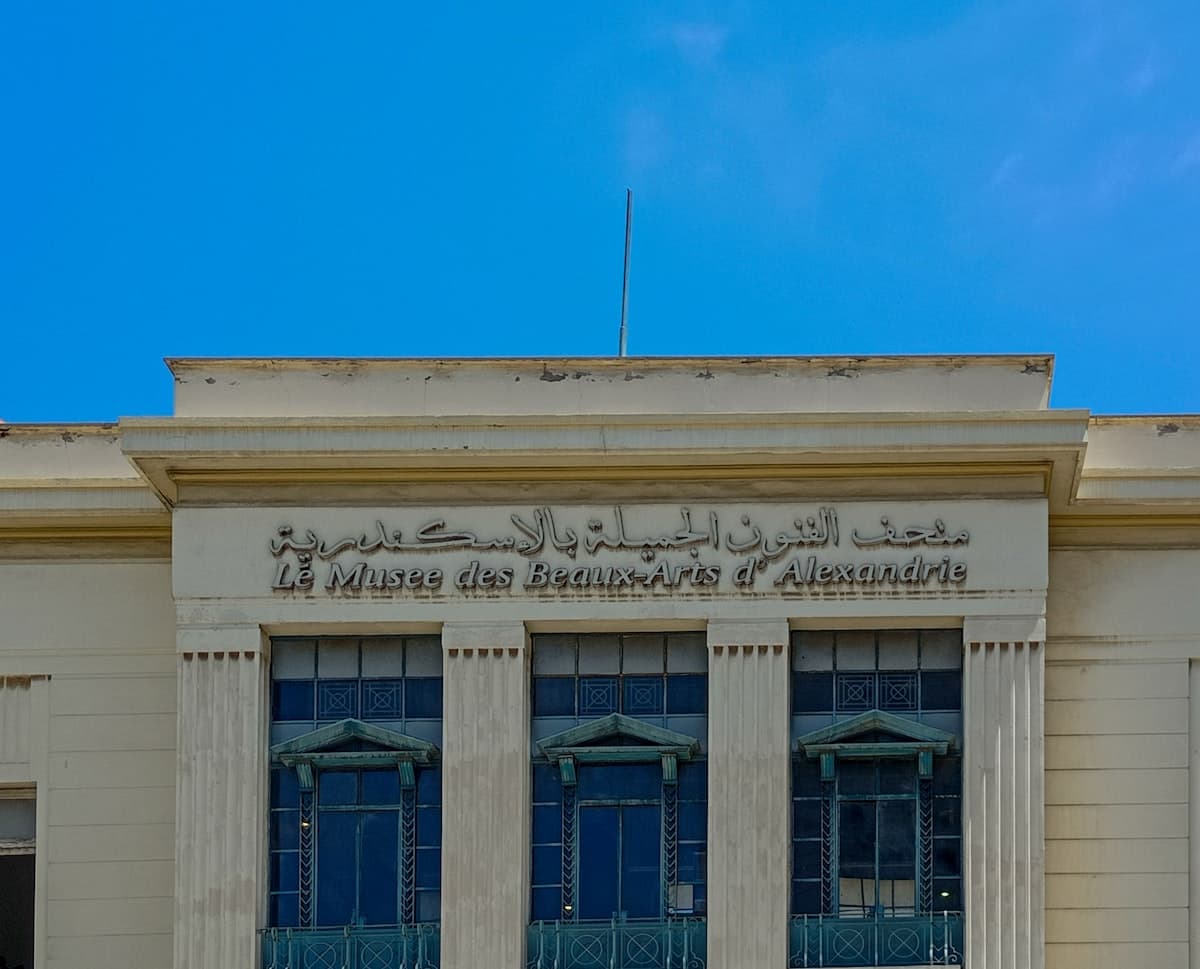
Most visitors to Jewish Alexandria Egypt history coverage focus exclusively on Eliyahu Hanavi and miss the Karaite synagogue entirely. The Karaites are a Jewish sect that rejected the Talmud in the eighth century AD and accepted only the Hebrew Bible as authoritative. Alexandria had a significant Karaite community, and their synagogue stands in the Moharrem Bey neighborhood.
The Karaite community of Egypt was distinctive enough to have its own chief rabbi and its own legal system, recognized separately from the Rabbinite Jewish community under the Ottoman millet structure. In the 1950s, there were approximately five thousand Karaite Jews in Egypt, mostly in Cairo and Alexandria. Now there are perhaps none, though a diaspora community of Egyptian-descended Karaites exists in the San Francisco Bay Area and maintains the community's traditions and records.
The Karaite synagogue in Alexandria is harder to access than Eliyahu Hanavi and is not on most itineraries. Getting inside requires local contacts or persistence with the Egyptian antiquities authority. If you manage it, the interior is smaller and simpler than Eliyahu Hanavi, which reflects Karaite theology: fewer ritual objects, a different layout, an austerity that is doctrinal rather than accidental.
The Connections: Alexandria as a Layered City
The block on which Eliyahu Hanavi stands sits within walking distance of the Mosque of the Prophet Daniel, where a tradition, probably apocryphal, holds that the prophet Daniel is buried. Two hundred meters away is the site of what was once the Alexandrian library's daughter institution, the Serapeum, a temple to the syncretic god Serapis that the emperor Theodosius ordered destroyed in 391 AD. Three hundred meters further is the site of the ancient agora.
Alexandria does not layer its history politely. The Jewish community that Philo of Alexandria wrote from in the first century BC lived within sight of the Pharos lighthouse, one of the seven wonders of the ancient world, which collapsed in a series of earthquakes between the ninth and fourteenth centuries. By the time the current Eliyahu Hanavi building was being constructed in 1850, the rubble of the lighthouse was on the seabed, and the Qaitbay Citadel had been built on its foundations in 1477 using stones from the lighthouse itself.
The cotton merchants who funded the synagogue's 1850 renovation were operating in a city that Muhammad Ali, the Albanian-born Ottoman governor who effectively founded modern Egypt, had deliberately rebuilt as a cosmopolitan trading hub after 1805. Muhammad Ali invited Sephardic Jewish merchants specifically because he wanted their commercial networks. The synagogue is a direct product of that policy.
Common Mistakes
Arriving without advance contact. The Eliyahu Hanavi Synagogue's opening hours are irregular in practice regardless of what any website says. Email the Egyptian Jewish Community association or contact the Ministry of Antiquities in advance. Showing up Saturday morning without coordination is the most reliable approach, but not guaranteed.
Expecting a living community. Some visitors arrive hoping to attend services or meet Jewish Alexandrians. This is not a realistic expectation. There is no regular minyan (the quorum of ten Jewish adults required for communal prayer) and has not been for decades. What you are visiting is a heritage site, not an active religious community. Being clear-eyed about this will make the visit more meaningful, not less.
Skipping the neighborhood walk. The synagogue itself takes thirty minutes. The neighborhood around it, walked slowly with some knowledge of what stood where, takes two hours and is more revealing. Bring a map of the pre-1952 Jewish quarter, which several academic publications have reconstructed.
Taking the half-day Alexandria Jewish tour operated by most Cairo-based agencies. These tours spend forty-five minutes at Eliyahu Hanavi, read three sentences of context from a laminated card, and move on to Pompey's Pillar. Skip this. Hire a local Alexandrian guide who specializes in the city's cosmopolitan history, of which there are a small number, or come independently with preparation.
Overlooking the Alexandria National Museum. It contains material on Alexandria's pre-1952 multicultural population, including its Jewish, Greek, and Italian communities, that is more carefully curated than anything at the synagogue site itself. The museum is on Tariq al-Horreya Street, entrance EGP 100 (approximately $3 USD), and takes ninety minutes to do properly.
Confusing Egyptian Jewish history with Israeli history. These are related but distinct. The people who left Alexandria in the 1950s and 1960s went to France, Brazil, Italy, and Israel, in roughly equal proportions. Many of them, and their descendants, identify as Alexandrian or Egyptian before they identify as Israeli. The community had been in Egypt for two thousand years before the state of Israel existed.
Reading only the tragedy. The expulsions and departures of 1948, 1956, and 1967 were real and forced, often involving property confiscation and statelessness. But twenty centuries of mostly continuous presence preceded them. Framing the entire history as prologue to exile misreads what the community actually was.
Practical Tips
Friday afternoon and Saturday morning are the most culturally appropriate times to visit, and Saturday morning occasionally sees a small informal gathering at Eliyahu Hanavi, though not a formal service. Dress conservatively: covered shoulders and knees for all genders, which is also what you would wear in a mosque or church in Egypt.
Photography inside the synagogue requires explicit permission from the caretakers. Ask before shooting. Most caretakers will agree, particularly if you have shown genuine interest in the building rather than treating it as a backdrop.
The Jewish Alexandria Egypt history record is better documented in the diaspora than in the city itself. The Maimonides Foundation and several university archives hold oral history collections from former Alexandrian Jewish residents. Reading some of this before you visit will give you the human layer that the building alone cannot provide.
For context on the broader loss of cosmopolitan Alexandria, the novelist and former resident Edwar al-Kharrat's work, and the essays of Andre Aciman, who grew up in the city's Jewish community, will prepare you better than any guidebook. Aciman's memoir is specific enough about streets and buildings that you can follow it as a walking map.
Frequently Asked Questions
The Weekly Dispatch
More on Egypt, every Friday.
Cultural depth and places most guides never mention.
No spam. Unsubscribe anytime.