Jewish Alexandria: History, Synagogues, and a Lost World
At its peak, Alexandria had 11 synagogues and 80,000 Jewish residents. Today, fewer than 10 Jews live in the city. The buildings tell the whole story.

Quick Facts
- Best time to visit
- October through April. Mild Mediterranean temperatures, occasional rain in December and January, manageable crowds. Avoid July and August when humidity along the Corniche is high and the city fills with Egyptian summer tourists.
- Entrance fee
- Free. A donation of EGP 100 to 200 is appropriate at the Eliyahu Hanavi Synagogue. Access requires advance coordination, not a ticket purchase.
- Opening hours
- Not fixed museum hours. Open for High Holy Day services annually (Rosh Hashana and Passover) and accessible by appointment for serious visitors. Coordinate at least one week in advance through the Jewish Community Association of Egypt in Cairo.
- How to get there
- Train from Cairo Ramses or Misr Station to Alexandria Sidi Gaber, EGP 45 to 200 depending on class, approximately 2 hours. Uber or taxi from Sidi Gaber Station to Nabi Daniel Street, EGP 40 to 60. The synagogue is walkable from Raml Station tram stop.
- Time needed
- One focused hour at the synagogue itself. Three to four hours for a proper walking circuit of the former Jewish quarter including the Chatby cemetery and Cavafy Museum. A full day if combining with the Bibliotheca Alexandrina or the Catacombs of Kom el-Shoqafa.
- Cost range
- Budget EGP 600 to 900 per day in Alexandria including mid-range accommodation. The Jewish heritage circuit itself costs nothing in entrance fees. A quality local guide for a half-day costs EGP 500 to 800 and is worth it for this particular subject.
At its peak in the 1940s, Alexandria's Jewish community numbered roughly 80,000 people. They owned department stores, cotton brokerages, law firms, and at least eleven synagogues. By 1970, fewer than a thousand remained. Today, credible estimates put the Jewish population of all Egypt below 20, with most of those in Cairo. Alexandria, which was once the second-largest Jewish city in the Arab world, has perhaps none.
The buildings, however, are still standing. What you do with that fact is the entire question of Jewish Alexandria.
Quick Facts
Best time to visit: October through April, when Mediterranean temperatures stay between 15 and 22 degrees Celsius. Alexandria gets real rain in winter, which is unusual for Egypt and entirely pleasant.
Eliyahu Hanavi Synagogue entrance: Free, though a donation to the restoration fund is appropriate. Access requires advance coordination through the Jewish Community of Alexandria or, in practice, through a knowledgeable local guide. Showing up and knocking rarely works.
Opening hours: The synagogue is not a museum with posted hours. It is a functioning historic building under restoration, opened for Rosh Hashana and Passover services, and accessible to serious visitors by appointment. Contact the Alexandria Jewish community or Egypt's Jewish Community Association in Cairo at least a week before your visit.
How to get there: Alexandria is 220 km from Cairo. The Spanish train from Ramses Station costs EGP 75 to 200 depending on class and takes around two hours. Uber from Alexandria Sidi Gaber Station to the Eliyahu Hanavi Synagogue on Nabi Daniel Street costs EGP 40 to 60. A direct train from Cairo's Misr Station is around EGP 45 on second class.
Time needed: The synagogue itself takes one focused hour. Add another two to three hours if you are walking the surrounding Jewish quarter of the old city and combining with the Cavafy Museum, which shares the same Rue Lepsius neighborhood and the same vanished cosmopolitan world.
Cost range: Budget EGP 600 to 900 per day in Alexandria including accommodation. The synagogue visit itself costs nothing but requires planning.
Why This Place Matters
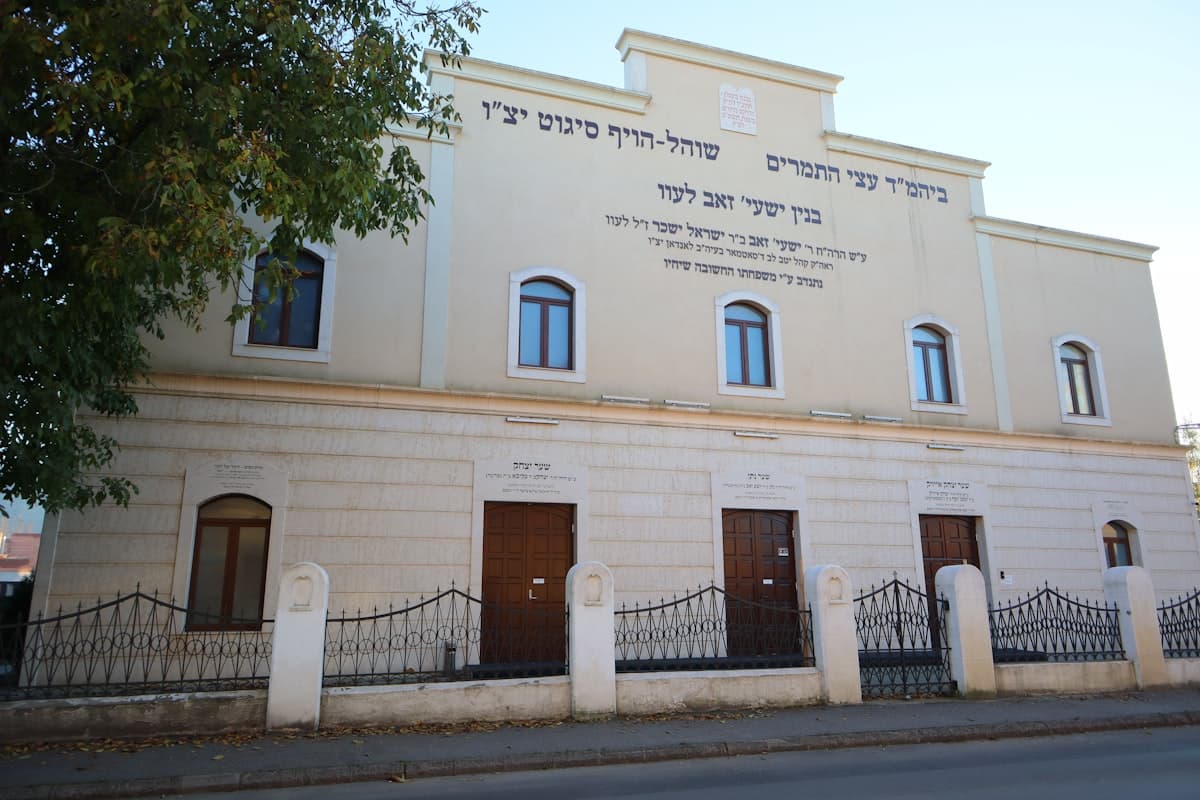
The Jewish presence in Alexandria is not medieval or obscure. It predates the city itself, in a sense: when Alexander the Great founded Alexandria in 331 BCE, Jews were among the first settlers, granted equal civic rights alongside Greeks and Egyptians. By the first century BCE, the Jewish population of Alexandria was large enough that they had translated the Hebrew Bible into Greek, producing the Septuagint, the translation that would become the scriptural foundation of early Christianity. That translation was made here, on this Mediterranean coastline, possibly on the island of Pharos where the lighthouse stood.
Philo of Alexandria, who was born around 20 BCE and died around 50 CE, was an Alexandrian Jew who attempted to reconcile Jewish theology with Greek philosophy. His ideas about the Logos, the divine word or reason, directly influenced early Christian theology, including the opening of the Gospel of John. The line "In the beginning was the Word" owes a debt to a Jewish philosopher working in Roman Alexandria.
The community that existed until the twentieth century was not descended in a straight line from antiquity. Medieval and Ottoman waves brought Sephardic Jews expelled from Spain in 1492, Italian Jewish merchants, and communities from across the Levant. By the nineteenth century, Alexandria's Jewish community was genuinely cosmopolitan in the specific sense: many were Egyptian nationals, many held Italian, French, or British nationality, many spoke four languages as a matter of course.
The cotton trade built this community into the middle and upper-middle classes. Families like the Mosseri, Rolo, and Tilche banking dynasties were woven into Alexandria's commercial fabric as tightly as the Greek, Italian, and Syrian Christian communities alongside them. This was the cosmopolitan Alexandria that the Greek poet Constantine Cavafy documented in his poems, the city that Lawrence Durrell mythologized in the Alexandria Quartet. It was not a Jewish city or a Greek city. It was a city in which those distinctions existed but did not, for several generations, determine your fate.
That changed fast. The 1948 Arab-Israeli War triggered the first serious departures. The 1952 revolution that brought Nasser to power accelerated them. The 1956 Suez Crisis, during which Nasser nationalized the canal and expelled tens of thousands of foreign nationals, was decisive: British and French passport holders left in weeks. The 1961 nationalization of private businesses eliminated the economic foundation the community had spent a century building. By 1967, after the Six-Day War, the community was effectively finished.
The Eliyahu Hanavi Synagogue: What You Will Actually See
The Eliyahu Hanavi Synagogue on Nabi Daniel Street is the only synagogue in Alexandria that has survived in a form worth visiting. It was built in 1354, destroyed, rebuilt, expanded in the nineteenth century, and restored again in the 2000s with Egyptian government funding and support from international Jewish organizations. That the Egyptian government funded the restoration of a synagogue is not a minor fact. It represents a specific political decision to treat Jewish Alexandria as Egyptian heritage rather than foreign remnant.
The building you enter is primarily the product of its 1850 reconstruction, which added the neoclassical facade and the interior marble columns. The scale surprises people. This is not a small community chapel. The main sanctuary seats several hundred, the bimah (the reading platform) is positioned in the Sephardic tradition in the center of the hall rather than at the front, and the women's gallery runs along three sides of the upper level. During the High Holy Days services held each year, the sanctuary fills with Jewish visitors from Europe, the United States, and Israel, many of them descendants of families who left Alexandria three or four generations ago.
Look at the brass memorial plaques on the walls. They record donations and dedications from families across the nineteenth and twentieth centuries, and the surnames on them, Matalon, Nahum, Mizrahi, Galante, read as a directory of a world that no longer exists in this city. The caretaker, a Muslim Egyptian who has worked at the synagogue for decades, can often point out specific plaques and tell you what he knows of the families.
The geniza, the storage room for worn sacred texts that Jewish law forbids from being discarded, was found to contain documents spanning several centuries when it was examined in the twentieth century. This is a smaller-scale parallel to the famous Cairo Geniza at Ben Ezra Synagogue, which yielded over 300,000 manuscript fragments when it was opened in the 1890s.
The Other Synagogues: What Remains of the Eleven
Of the eleven synagogues that operated in Alexandria through the mid-twentieth century, most have been demolished, converted, or sealed. The Menasce Synagogue on Menasce Square, built by the philanthropist Felix de Menasce in the late nineteenth century, is now a cultural center. The Green Synagogue, which served the Italian Jewish community, no longer stands. The Delta neighbourhood had several smaller community synagogues that are either gone or repurposed beyond recognition.
The Mosseiri family synagogue, built by one of Alexandria's most prominent Jewish banking families, is the kind of building you pass without knowing what it was. This is the pattern throughout the old Jewish quarter: the buildings have new uses and no signs explaining what they were. A pharmacy stands where a Jewish school stood. An apartment building occupies a site where a community center operated. The absence is the story.
The Connections: Cavafy, Cotton, and Cosmopolitan Alexandria
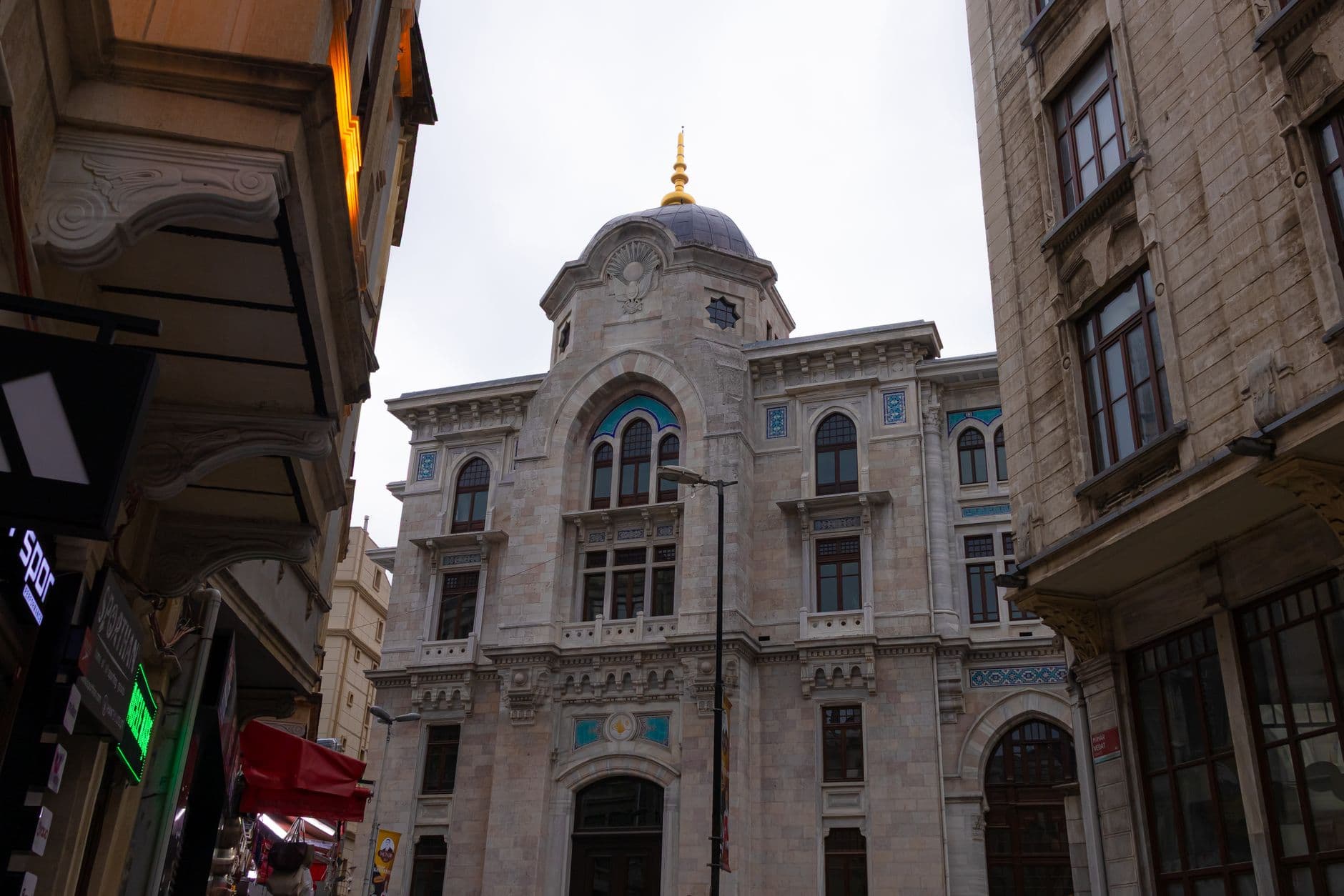
Nabi Daniel Street, where the Eliyahu Hanavi Synagogue stands, is also the street where Alexander the Great is believed by some scholars to have been buried, though that tomb has never been found. The street's name refers to the Prophet Daniel, and a small mosque dedicated to him sits nearby, built over what medieval Islamic tradition considered his tomb. Three traditions, one street: this is Alexandria's actual texture.
The Cavafy Museum on Rue Lepsius, a ten-minute walk from the synagogue, is where the Greek poet lived and wrote. Cavafy's Alexandria and Jewish Alexandria were coextensive: the same cafes, the same cotton brokers, the same multilingual commercial world. His poem "The God Abandons Antony" uses Alexandria as the lens for understanding what it means to lose something irreplaceable. It applies with some precision to what happened to the Jewish community here.
The Cecil Hotel on the Corniche, which features in the Alexandria Quartet, was owned by Simon Stein, a member of the Jewish community, until nationalization. The Hannaux department store, where Alexandrian families of every background shopped for European goods, was a Jewish-owned institution that operated on what is now a very different stretch of downtown. Cotton trading firms with Jewish partners occupied buildings on Salah Salem Street that are now government offices or empty.
The Ben Ezra Synagogue in Cairo's Coptic quarter is the essential companion visit to Jewish Alexandria. It was built on the site where, according to tradition, the infant Moses was hidden in the reeds. The geniza it contained, discovered by the Cambridge scholar Solomon Schechter in 1896, yielded the largest single cache of medieval manuscripts ever found, including letters, legal documents, and personal correspondence that rewrote scholarly understanding of Jewish life in medieval Egypt and the wider Mediterranean world.
Common Mistakes
Showing up without an appointment. The Eliyahu Hanavi Synagogue is not a museum. The caretaker may or may not let you in if you arrive unannounced, and the interior you are allowed to see without coordination is not the interior worth seeing. Email ahead.
Treating this as a Jewish-only story. The community that built and sustained Jewish Alexandria was embedded in a city of Greeks, Italians, Syrians, Armenians, and Egyptians. Visiting only the synagogue and leaving misses the full picture. Walk the old downtown. Find the Greek Orthodox Patriarchate. Look at the Italian-built facades on the Corniche. Jewish Alexandria only makes sense in that context.
Skipping the Jewish cemetery on Chatby Road. Most visitors focused on the synagogue do not make it to the cemetery. This is a significant omission. The tombstones, in Hebrew, French, Italian, Greek, and Arabic, tell you more about the community's actual composition than any single building. The cemetery is maintained and accessible. It is not well signposted.
Taking a tour that includes Jewish Alexandria as one item on a list. The standard Alexandria day trip from Cairo, which tries to cover Pompey's Pillar, the Catacombs, the Bibliotheca Alexandrina, the Citadel, and the synagogue in eight hours, does justice to none of them. If Jewish Alexandria is your focus, give it a full day, stay overnight, and treat the city as the destination rather than the backdrop.
Expecting the Bibliotheca Alexandrina to contextualize this history. The Bibliotheca has an extensive permanent collection and several museums, but its treatment of the Jewish and cosmopolitan history of the city is thin. The library is an extraordinary institution, but it is not where you will learn about the Septuagint's composition or the Mosseri banking dynasty.
Paying for a sound and light show or a packaged heritage tour marketed to Jewish visitors from abroad. Several operators sell "Jewish Alexandria" tours at prices aimed at diaspora tourism budgets, typically USD 80 to 150 per person, that cover the same ground a good guide can cover for a fraction of that cost and with more depth. The markup buys you a PDF brochure and a minibus.
Assuming the story ended with the departures. The Egyptian Jews who left are one part of the history. The Egyptian families who moved into their apartments, the Egyptian workers who stayed on at Jewish-owned businesses through nationalization, the Muslim caretakers who have maintained Jewish sacred spaces for decades: these are also part of the story, and the better guides in Alexandria tell it whole.
Practical Tips
Contact the Jewish Community of Alexandria or the Jewish Community Association of Cairo before your visit. The contact process takes time, but the access it provides is worth it. If you have no existing connection, a reputable Alexandria-based guide who specializes in minority heritage can facilitate this more reliably than emailing cold.
Hire a local guide specifically for this subject. Alexandria has a small number of genuinely knowledgeable guides on its cosmopolitan history, many of them affiliated with Alexandria's urban heritage organizations. The difference between a good guide and a generic one here is the difference between understanding what you are looking at and simply looking at it.
Bring cash. There are no ticket machines or card readers involved in any part of a serious Jewish Alexandria visit. A donation at the synagogue in the range of EGP 100 to 200 is appropriate and appreciated.
Combine with a morning at the Bibliotheca Alexandrina's antiquities museum, then move to the Jewish quarter in the afternoon when the light on the old downtown buildings is better and the crowds in the central streets have thinned. End the day at the Cavafy Museum before it closes at 3pm, Tuesday through Sunday.
Alexandria's old downtown is walkable but not obviously organized. The streets of the former Jewish quarter, Nabi Daniel, Rue Lepsius, the blocks around Raml Station, are best navigated with a guide or a very good map, because the buildings you are looking for have no heritage signage explaining what they were.
Frequently Asked Questions
The Weekly Dispatch
More on Egypt, every Friday.
Cultural depth and places most guides never mention.
No spam. Unsubscribe anytime.