Jewish Alexandria: History, Synagogues, and a Vanished Community
At its peak, Alexandria's Jewish community numbered 80,000. Today, fewer than five remain. The synagogues still stand. Here is what they hold.

Quick Facts
- Best time to visit
- October through April. Mediterranean climate keeps temperatures between 15 and 22 degrees Celsius. Summer humidity is high and the synagogue is poorly ventilated.
- Entrance fee
- No formal fee at Eliyahu Hanavi Synagogue. Donation of EGP 100 to 200 (approx $2 to $4 USD) is customary. Cemeteries free but require advance coordination.
- Opening hours
- Eliyahu Hanavi Synagogue: Saturday mornings for services, Monday to Thursday approx 10am to 2pm by appointment. Call ahead: +20 3 492 5269. Hours change without notice.
- How to get there
- Train from Cairo Ramses Station to Alexandria Misr Station: EGP 85 to 145 (approx $1.70 to $3 USD), roughly 2 hours. Taxi from Misr Station to synagogue: EGP 50 to 80 (approx $1 to $1.60 USD).
- Time needed
- Synagogue alone: 45 to 60 minutes. Full Jewish heritage walk including cemeteries and quarter: 4 to 5 hours. Full day if combining with Cavafy Museum and Corniche.
- Cost range
- Budget EGP 400 to 700 per day including transport and food. Mid-range EGP 1,200 to 2,000 per day with local guide and waterfront restaurant meal.
At its peak in the 1940s, Alexandria's Jewish community numbered roughly 80,000 people. Today, credible estimates put the number of Jews still living in the city at fewer than five, most of them elderly women. The synagogues are still there. The cemeteries are still there. The community clubs, the schools, the apartment buildings with Hebrew inscriptions above doorways, still there. What happened in the space between those two facts is one of the most compressed, most complete stories of communal erasure in modern history, and Alexandria is where you go to read it.
Quick Facts
Best time to visit: October through April, when Mediterranean temperatures sit between 15 and 22 degrees Celsius. The city is less crowded than Cairo year-round, but summer humidity is punishing and the synagogues are poorly ventilated.
Entrance fees: The Eliyahu Hanavi Synagogue does not charge a formal entrance fee, but a donation of EGP 100 to 200 (approximately $2 to $4 USD) is customary and goes toward upkeep. You will need to register at the entrance with your passport. The Jewish cemeteries are free to enter but require advance coordination through the Jewish community office.
Opening hours: The Eliyahu Hanavi Synagogue is officially open Saturday mornings for what remains of communal gathering, and can be visited by appointment Monday through Thursday, roughly 10am to 2pm. Hours shift without warning. Call ahead: +20 3 492 5269.
Getting there: Alexandria is 220km from Cairo. The Egyptian National Railways runs comfortable air-conditioned trains from Ramses Station roughly every hour; the Spanish train (the fast intercity service) costs EGP 85 to 145 (approximately $1.70 to $3 USD) and takes just over two hours. From Alexandria's Misr Station, the Eliyahu Hanavi Synagogue is a 15-minute taxi ride, approximately EGP 50 to 80 ($1 to $1.60 USD). Do not pay more than EGP 100.
Time needed: The synagogue itself takes 45 minutes to one hour. A serious walk through the Jewish quarter, the cemeteries, and the neighborhood around Nebi Daniel Street takes a full half-day, four to five hours minimum. Combine with the Cavafy Museum (one block from the former Jewish quarter) for a full day on Alexandria's lost cosmopolitanism.
Cost range: Budget EGP 400 to 700 per day including transport, food from local restaurants, and site donations. Mid-range EGP 1,200 to 2,000 per day with a licensed guide (strongly recommended here) and a meal at one of the waterfront fish restaurants.
Why This Place Matters
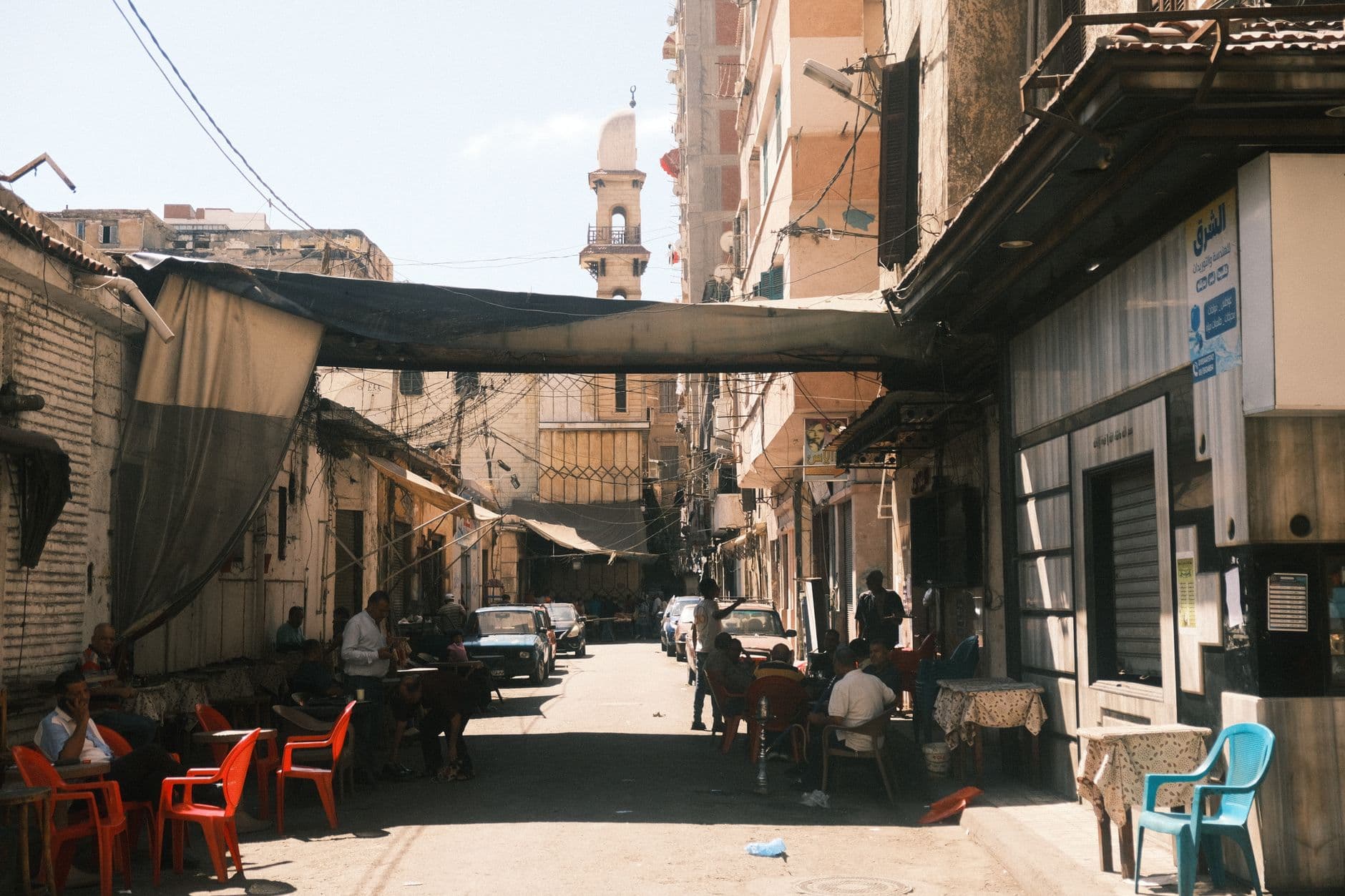
The Jewish community of Alexandria is not ancient in the way the Pyramids are ancient. It is recent in the way that makes absence feel violent. But the roots go back further than most visitors realize. Jews have lived in Alexandria since the city's founding in 331 BCE. Alexander the Great, in his original urban plan, designated a specific quarter for Jewish settlement near the royal district, and within two centuries the Alexandrian Jewish community had grown large enough to produce the Septuagint, the Greek translation of the Hebrew Bible completed under Ptolemy II around 270 BCE. This was not a small translation project: seventy-two scholars, according to tradition, worked in isolation and produced identical texts. Whether you believe the miracle or not, the Septuagint became the version of scripture that shaped early Christianity, which means that a significant portion of Western religious thought was filtered through the intellectual labor of Alexandrian Jews.
Philo of Alexandria, the first-century philosopher who tried to reconcile Jewish theology with Greek philosophy, was born here. His work influenced the Christian theologians Origen and Clement of Alexandria, both of whom also worked in this city. The intellectual cross-pollination that made Alexandria the ancient world's most consequential city was substantially Jewish in character, and that is not a fact you will find on any tourist board poster.
The community that finally collapsed in the twentieth century was the descendant of two thousand years of continuous urban life. It was not a recent immigrant community. It was Alexandria.
The Eliyahu Hanavi Synagogue: What You Will Actually See
The Eliyahu Hanavi Synagogue on Nebi Daniel Street is the largest synagogue in Egypt and one of the largest in the Middle East, with a capacity of 700 worshippers. Today the same room holds, on a busy Saturday, perhaps a dozen people, most of them tourists or diplomats who have come to observe rather than pray.
The building you see today was completed in 1354, though there has been a synagogue on this site since at least the twelfth century, when the Jewish traveler Benjamin of Tudela visited Alexandria and recorded finding a substantial Jewish community here. The current structure was heavily renovated in 1850 and again in the early twentieth century when the community was at the height of its prosperity, which is why the interior feels more like a nineteenth-century Italian synagogue than a medieval Egyptian one. The high windows, the women's gallery, the elaborate marble bimah brought from Livorno, Italy, the chandeliers from Venice: they are records of a community that was trading across the Mediterranean and knew it.
Look at the brass plaques on the walls. They are memorial tablets for prominent community members, inscribed in Hebrew, French, and sometimes Italian. The surnames tell you the geography of diaspora: Mizrahi, Mosseri, Cattaui, Harari. These were families with roots in Spain, Iraq, Morocco, and Greece, all converging on a city that, under the relatively tolerant cosmopolitanism of nineteenth-century Egyptian governance, offered them commercial opportunity and a degree of civic recognition unusual in the region.
The caretaker, if he is present, will sometimes show you the genizah room, a small chamber where worn sacred texts are stored before ritual burial, because Jewish law prohibits destroying any document that contains the name of God. The texts here span several centuries. Nobody has touched most of them in decades.
The Mosseri and Cattaui Families: The Plutocracy Nobody Remembers
The families whose names appear most frequently on those memorial plaques built modern Alexandria as much as any Egyptian dynasty did. The Mosseri family bankrolled Khedive Ismail's modernization projects in the 1860s and 1870s. The Cattaui family produced Joseph Aslan Cattaui Pasha, who served as Egypt's Finance Minister in the 1920s. Felix de Menasce financed the construction of Alexandria's tramway system. These were not peripheral figures. They were central to the economic and administrative machinery of a country that is now almost entirely absent from their story.
The families left in waves. The first wave followed the 1948 Arab-Israeli War, when approximately 20,000 Egyptian Jews departed. The second and larger wave followed the 1956 Suez Crisis, when the Nasser government expelled or pressured out approximately 25,000 more, confiscating their property, freezing their assets, and issuing deportation orders within days. By the early 1960s, the community of 80,000 had contracted to a few thousand, and by the 1970s, to a few hundred. They went to Israel, France, Brazil, the United States, and Italy. Many took nothing except what they could carry.
The Jewish Cemeteries: The Archive That Remains
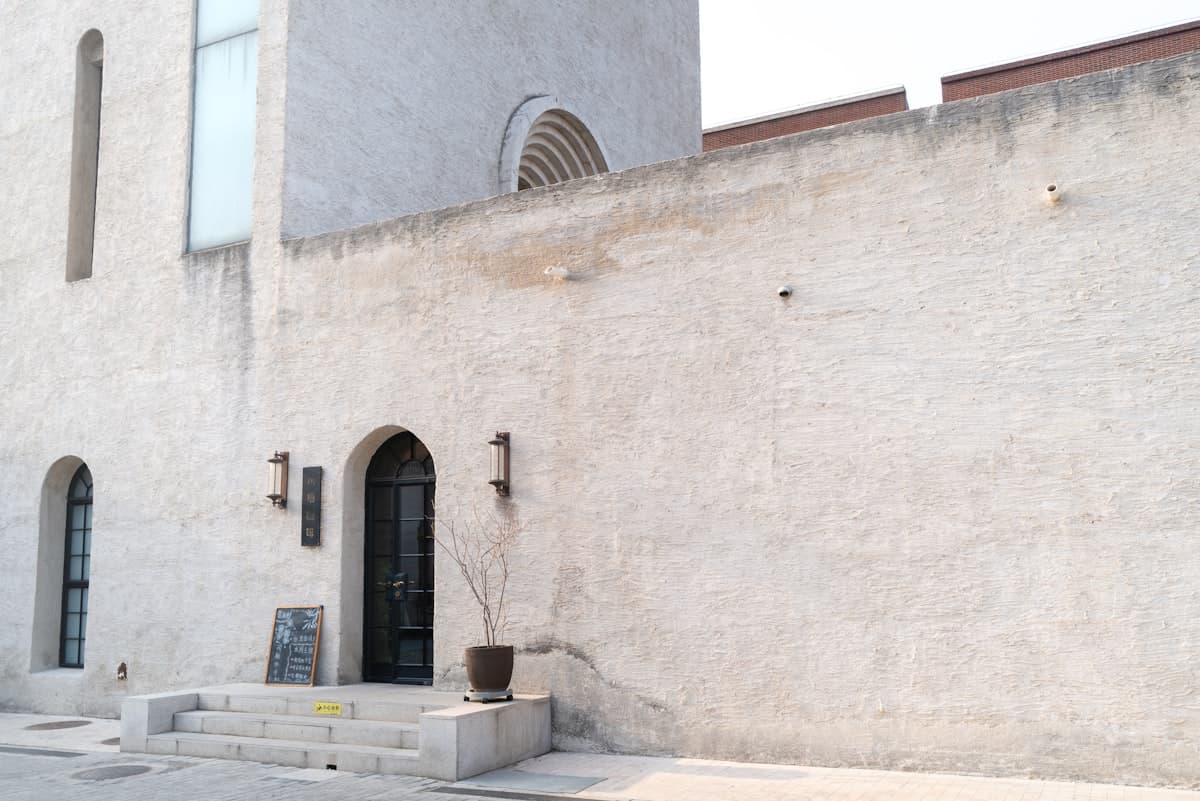
The most honest record of the Jewish community of Alexandria is not in the synagogue. It is in the cemeteries, and specifically in the Chatby Jewish Cemetery, one of the oldest in the city and the place where you can walk through the full arc of communal history in about an hour.
The tombstones here are in Hebrew, French, Italian, Arabic, and occasionally Greek. They span a period from the mid-nineteenth century to the mid-twentieth. The inscriptions track the community's self-understanding over time: early stones tend to be more purely Hebrew, later ones more multilingual, reflecting a community that was integrating into Egyptian cosmopolitan life without abandoning its particular identity. The most recent stones, from the 1950s and 1960s, sometimes have no visitors' marks at all, because the descendants who would normally maintain them are in Tel Aviv or Paris.
The cemetery is maintained by a small trust funded partly by international Jewish organizations and partly by the Egyptian government, which has, to its credit, made formal preservation commitments to the remaining Jewish heritage sites. The maintenance is imperfect. Some sections are overgrown. Some stones have been displaced or broken. But the archive is legible, and it is free of the reconstruction anxiety that makes some preserved heritage sites feel like theater.
Arranging a visit requires patience. Contact the Alexandrian Jewish Community office at least two days in advance. A guide who knows the site is genuinely useful here, not for crowd navigation, but because the stories behind specific family plots are not marked anywhere and exist only in the memories of a few remaining community members and in specialized scholarship.
The Connections
The Jewish quarter of Alexandria, centered on what is now Nebi Daniel Street, overlaps with layers of earlier and later history in ways that are easy to miss if you are only looking for one thing. Nebi Daniel Street itself is named for a mosque that sits on the site where, according to several traditions, Alexander the Great was originally buried before his body was moved or lost. The mosque was built in the fourteenth century over earlier foundations that may include Byzantine-era structures. The Jewish community built its main synagogue within a few hundred meters of what was, in the Ptolemaic period, the royal quarter of the city. The geographical concentration is not coincidence: the Jewish quarter in Ptolemaic Alexandria was explicitly established near the palace district, a mark of privileged status.
The Cavafy Museum, a five-minute walk from the synagogue on Sharm el-Sheikh Street, is worth a detour that most people who come for Jewish history do not make. Constantine Cavafy, the Greek-Alexandrian poet, lived and worked in a city whose Jewish, Greek, Italian, Armenian, and Levantine communities were all simultaneously present and in daily contact. His poem "The God Abandons Antony," one of his most famous, uses the myth of Alexandria's founding patron abandoning the city as a metaphor for accepting loss with dignity. It is the most accurate poem about what happened to the cosmopolitan city, written decades before the expulsions that proved his intuition right.
Common Mistakes
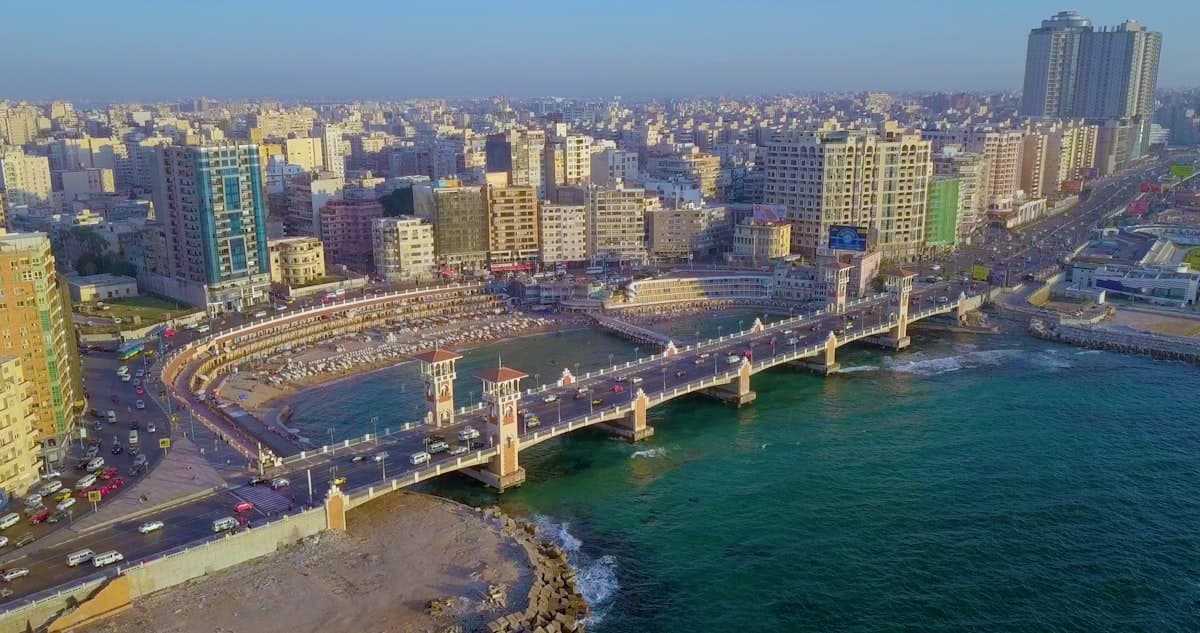
Arriving without an appointment. The Eliyahu Hanavi Synagogue is not a museum with posted hours. It is an active religious site maintained by an extremely small community. Showing up without calling ahead is not just inefficient, it is a genuine imposition on people who are managing something fragile. Call at least 48 hours in advance.
Hiring a general Cairo tour operator for this. Most Cairo-based tour packages that include Alexandria cover Qaitbay, Pompey's Pillar, and a waterfront lunch. They do not go near the Jewish quarter, they do not have connections with the community office, and their guides often have only basic information about the Jewish heritage. Find an Alexandria-based guide who specifically works with cultural history itineraries.
Skipping the cemeteries in favor of the synagogue. This is the most common error and the most consequential one. The synagogue is a beautiful building. The cemeteries are the actual story. If you have limited time, invert the expected priority.
Assuming the Alexandrian Jewish story is primarily about conflict. Most visitors arrive with a framework shaped by twentieth-century political history. The more important and less understood story is the two-thousand-year one: a community that produced philosophers, financiers, writers, and scientists, and shaped the city at every level. The expulsions are the punctuation mark, not the sentence.
Paying for the sound and light show at any Alexandria site. This is a general Alexandria warning: the sound and light show at Qaitbay and similar productions cost EGP 300 to 400 and deliver nothing that a half-hour of reading would not give you. The money and time are better spent at a waterfront restaurant talking to a local guide over fish.
Not reading before you go. André Aciman's memoir "Out of Egypt" is the single best preparation for this visit. Aciman's Jewish family was among those expelled after 1956, and his account of growing up in Alexandria is the closest thing to a guided walk through the community at its last hour of existence. Read it on the train from Cairo.
Expecting a living Jewish neighborhood. This is not the Jewish quarter of Marrakech or Budapest. There is almost nothing commercial left that marks this as a Jewish neighborhood. The traces are architectural and archival. Come prepared for an experience that is mostly about reading absence, and it will be genuinely moving. Come expecting a living cultural quarter and you will be disoriented.
Practical Tips
Dress conservatively for the synagogue visit. Women should have their shoulders and knees covered. Men should bring a kippah if they have one, though the caretaker usually has spares.
Photography inside the synagogue requires explicit permission from whoever receives you. Ask before raising your camera. The answer is usually yes, but the asking matters.
The neighborhood around Nebi Daniel Street is perfectly safe for tourists at any hour. Alexandria has a different atmosphere than Cairo: slower, more Mediterranean, with a default hospitality toward foreigners that feels less commercial than the capital.
If you are serious about this history, consider visiting during Shabbat morning (Saturday), when the tiny remaining community gathers. This is a genuine religious service, not a performance. Behave accordingly: observe quietly, do not photograph during prayer, and understand that you are a guest at something that may not exist in a decade.
For food before or after, the fish restaurants along the Corniche are genuinely good and reasonably priced. Tikka Grill near the Stanley Bridge is reliable. A full grilled fish meal with mezze costs EGP 300 to 500 per person, approximately $6 to $10 USD.
If you read French, the Institut d'Egypte in Cairo has digitized portions of the Alexandrian Jewish community records. The Gennadius Library in Athens holds significant Alexandrian Greek archives that cross-reference with Jewish community records. Neither is easily accessible, but both are real.
Alexandria's Jewish history is not a footnote to Egyptian history. For two thousand years, it was part of the text.
Frequently Asked Questions
The Weekly Dispatch
More on Egypt, every Friday.
Cultural depth and places most guides never mention.
No spam. Unsubscribe anytime.