Jewish Cairo and the Ben Ezra Synagogue: A Complete Guide
Moses was supposedly found in the reeds here. The geniza hidden in this synagogue rewrote everything scholars thought they knew about medieval Jewish life.

Quick Facts
- Best time to visit
- October to April. Cairo heat in summer makes the walk from the metro and the time inside the compound uncomfortable. Mornings before 10am are consistently quieter than afternoons regardless of season.
- Entrance fee
- EGP 100 (approx $2 USD) for the Coptic Cairo compound, which includes the synagogue. Students with valid ID pay EGP 50. The Coptic Museum next door charges a separate EGP 150.
- Opening hours
- Daily 9am to 4pm. Closed on major Jewish holidays, which vary by year. Confirm ahead of time if visiting around Rosh Hashanah, Yom Kippur, or Passover.
- How to get there
- Cairo Metro Line 1 to Mar Girgis station, EGP 8 (approx $0.16). The compound entrance is directly outside the station exit. Taxi from downtown EGP 60 to 100. Uber from central Cairo roughly EGP 70 to 90.
- Time needed
- 2 to 3 hours for the synagogue alone. A full morning of 4 to 5 hours if combining with the Coptic Museum, Hanging Church, and Church of St. Sergius.
- Cost range
- Very affordable. Compound entry EGP 100, metro EGP 8 each way, lunch at a local restaurant EGP 80 to 150. Total half-day budget EGP 300 to 500 including transport.
Quick Facts
Best time to visit: October to April, when Cairo is cool enough to walk the narrow lanes of Old Cairo without suffering. Avoid Friday mornings when the area around the Mosque of Amr ibn al-As fills with worshippers.
Entrance fee: EGP 100 (approx $2 USD). Students with valid ID pay EGP 50. The fee is collected at the gate of the Coptic Cairo compound, which covers access to several churches and the synagogue together.
Opening hours: Daily 9am to 4pm. Closed on Jewish holidays, though the dates shift each year, so check before you go if visiting around Rosh Hashanah or Yom Kippur.
How to get there: Take the Cairo Metro to Mar Girgis station on Line 1 (EGP 8, roughly $0.16). Walk out of the station and the entrance to Old Cairo is directly in front of you. Taxis from downtown cost EGP 60 to 100 depending on traffic and your negotiating patience. Uber runs slightly less.
Time needed: Two hours if you are moving efficiently. Three if you read the interpretation panels and sit for a while. Combine with the Coptic Museum next door, the Hanging Church, and the Church of St. Sergius to make a half-day.
Cost range: The compound entry is cheap. Budget EGP 300 to 500 for a half-day including transport and a lunch of kushari or ful nearby.
---
Somewhere around the year 882, a man named Abraham ibn Ezra sold a synagogue to the Jewish community of Fustat. The price was one hundred dinars. What no one knew until 1896 was that the attic above this synagogue had been accumulating paper for nearly a thousand years, and that the 300,000 fragments stuffed into that small room would turn out to be one of the most significant archival discoveries in human history.
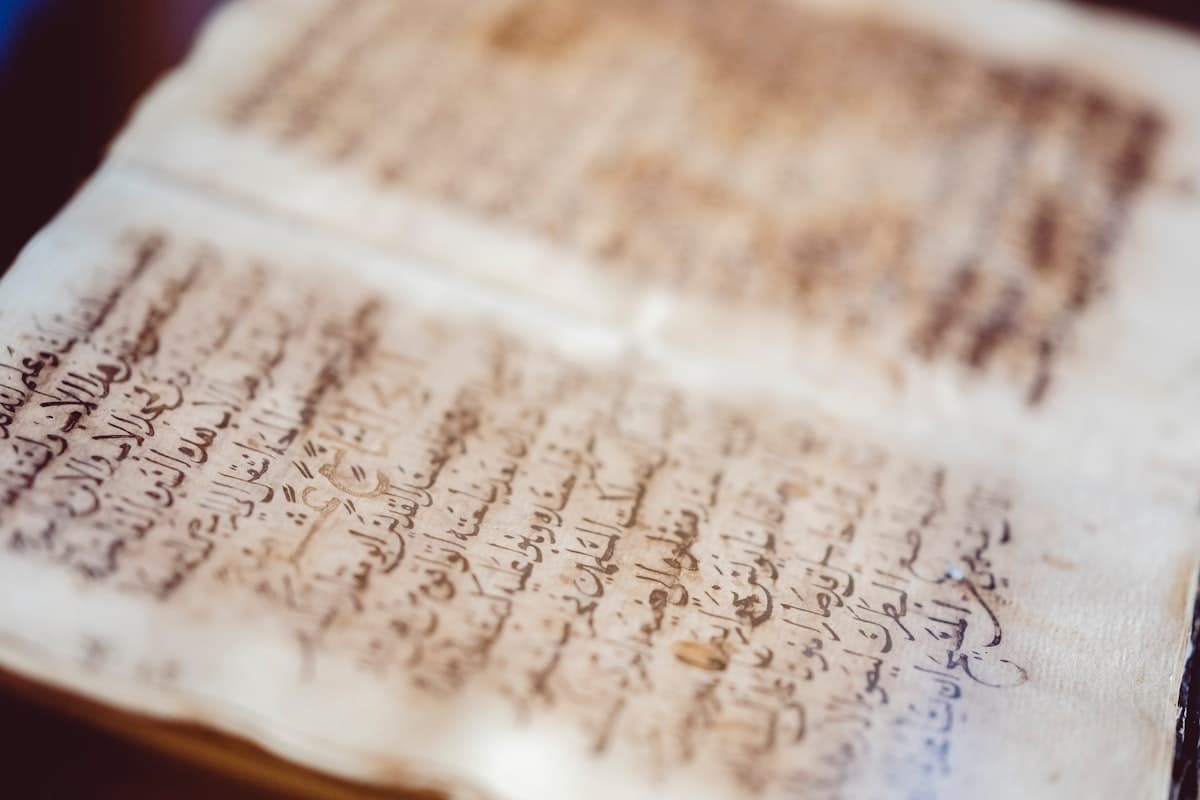
The Ben Ezra Synagogue is not famous because Moses was discovered as an infant in the nearby reeds of the Nile, though that is what the local tradition cheerfully claims. It is famous because of what Cambridge scholar Solomon Schechter found hidden in its walls: a geniza, a sacred storage room where Jewish law forbids the destruction of any document that might contain the name of God. The documents inside included letters, contracts, marriage certificates, medical prescriptions, shopping lists, and merchant accounts stretching from the 10th to the 19th century. They were written in Judeo-Arabic, Hebrew, and Aramaic. When Schechter shipped 140,000 fragments to Cambridge in 1897, scholars suddenly had a ground-level portrait of medieval Jewish Mediterranean life so detailed that it permanently altered what historians thought they knew.
Why This Place Matters
Fustat, the old city that predates Islamic Cairo, was founded in 641 CE by Amr ibn al-As after the Arab conquest of Egypt. It became home to one of the oldest and most important Jewish communities in the medieval world, partly because Fustat sat at the intersection of trade routes connecting the Mediterranean to the Red Sea and the Indian Ocean. Jewish merchants operated as essential connectors in this system, and their letters, preserved in the geniza, document trade in flax, silk, pepper, and indigo across distances that the medieval world managed without phones, banks, or reliable postal systems.
The synagogue itself sits on ground that holds extraordinary layers. The site is traditionally identified as the place where Pharaoh's daughter found the infant Moses in the reeds. The Nile once ran closer to this spot, and the area's geography has shifted significantly since antiquity. What stands here today is a structure that was originally a Coptic church, the Church of Saint Michael, which the Jewish community acquired in the 9th century. The 882 date of that sale appears in documents from the geniza itself, which is how we know it.
The building you enter today is not the original 9th-century structure. Earthquakes and time destroyed successive versions. The current synagogue was largely rebuilt in the 19th century, funded by prominent Egyptian Jewish families, and restored again with Egyptian government and international Jewish funding in the 1980s and 1990s. It is functional as a synagogue in the sense that it is consecrated space, but no regular congregation prays here. Egypt's Jewish population, which numbered around 80,000 before 1948, now stands at fewer than ten elderly individuals.
What You Will Actually See
The exterior does not prepare you for the interior. From outside, the building looks modest, almost defensive, set back behind iron gates inside the larger Coptic Cairo compound. The first thing you notice walking in is the quality of the light: the synagogue was designed in the Sephardic style, with a central bimah, the raised platform from which the Torah is read, positioned in the middle of the hall rather than near the ark. The ark itself faces Jerusalem and contains Torah scrolls in decorated cases, some of which are genuinely old.
The women's gallery runs along both sides of the upper level on wooden columns. These columns are worth examining closely. Several are reputed to be ancient, possibly Roman, possibly recycled from an earlier structure on the site. The practice of incorporating older architectural elements into newer religious buildings was nearly universal in this part of Cairo, where stone was expensive and sacred continuity mattered more than stylistic purity.
The floor is marble. The ceiling is elaborately painted wood. There is Hebrew text around the ark and on the walls, some of it faded, some restored with perhaps more confidence than the original warranted. The overall effect is of a building that has been assembled across centuries, not designed in a single moment, which is historically accurate.
What you will not see is any physical remnant of the geniza itself. The room, located in the upper-right section of the building, was emptied by Schechter in 1897. The fragments are now distributed across more than eighty libraries and universities worldwide, with the largest holdings at Cambridge and at the Jewish Theological Seminary in New York. A small panel in the synagogue explains this, but the explanation undersells it: the Cairo Geniza is arguably the most important single archive for understanding daily life in the medieval Islamic world, for Jews and for their Muslim and Christian neighbors, because the letters document interactions between all three communities.
The People Who Worshipped Here
The great medieval Jewish philosopher Moses Maimonides, known in Arabic as Ibn Maimun, lived in Fustat from approximately 1166 until his death in 1204. He served as the head of the Jewish community and as a court physician to Saladin's vizier. His family had fled the Almohad persecution in Andalusia and North Africa before settling in Egypt. Maimonides is said to have prayed at Ben Ezra, and while there is no way to confirm this with certainty, his presence in Fustat during the synagogue's most active period is documented. His legal writings, particularly the Mishneh Torah, were influenced by his experience of Jewish life under Fatimid and Ayyubid rule, which was substantially more tolerant than what his family had fled in the west.
The geniza documents paint a portrait of this community that is remarkably specific. We know the names of individual merchants who traded between Cairo and Palermo in the 11th century. We know what a middle-class Jewish household in Fustat owned because betrothal documents listed dowries in detail: copper cooking pots, embroidered cushions, specific amounts of gold. We know that Jewish, Muslim, and Christian merchants used each other as agents and guarantors across religious lines because the letters say so explicitly. The community that prayed at Ben Ezra was not isolated. It was commercially and socially embedded in Fatimid Cairo in ways that contradict the simpler stories we tell about medieval religious segregation.
The Connections
You cannot understand Ben Ezra without understanding Fustat, and you cannot understand Fustat without walking the broader geography of Old Cairo. The Mosque of Amr ibn al-As, a five-minute walk from the synagogue, was built in 641 CE and is the oldest mosque in Africa. The original building was made of mud brick and palm fronds. The current structure dates mostly from the 18th century, expanded and rebuilt so many times that essentially nothing of the original remains except the location and the founding intention.
The Coptic Museum, directly adjacent to the synagogue compound, holds one of the world's greatest collections of Coptic Christian art. Several objects in its collection predate Islam in Egypt by six centuries. The Hanging Church, a few meters further, is built over a Roman gatehouse of the Babylon Fortress, the Roman military installation that gave this neighborhood its name before the Arab conquest. The fortress's towers are still partially visible, incorporated into the fabric of later buildings.
This square kilometer of ground in Old Cairo has been continuously inhabited and continuously sacred to three religious traditions for more than two thousand years. The Jewish community did not exist here in isolation from the Coptic Christian community or from the Muslim majority. Their documents, their architecture, and their history are threaded through each other. The Ben Ezra Synagogue is inseparable from the churches that surround it, from the mosque down the street, and from the Roman walls it sits against.
Common Mistakes
Treating the synagogue as a standalone visit. The Ben Ezra Synagogue makes almost no sense without the Coptic Museum next door. The museum's collection contextualizes eighteen centuries of religious coexistence and competition in exactly the neighborhood where the synagogue sits. Budget an additional ninety minutes and EGP 150 for the museum. Skip it and you are reading one page of a much longer book.
Arriving without knowing why the geniza matters. The interpretation panels inside the synagogue are adequate but not exceptional. Read something about the Cairo Geniza before you visit: Adina Hoffman and Peter Cole's book on the subject, or even the Wikipedia article on the geniza, will transform what you see from a pretty restored building into the site of one of the most consequential archival discoveries of the modern era.
Taking a guided tour of Old Cairo that spends forty-five minutes at the Hanging Church and eight minutes at the synagogue. This is how most group tours operate. The synagogue deserves more time than the tour operators give it, partly because fewer tourists ask for it and so the guides default to what they think people want. If you are on a group tour, ask your guide specifically about the geniza and watch what happens.
Skipping the neighborhood itself. The lanes between the metro station and the compound entrance are genuinely worth ten minutes of slow walking. Small shops sell Coptic icons, cheap brass crosses, and religious texts. The street food near the station is honest and cheap.
Paying for a professional photography permit when you don't need one. General photography inside the synagogue for personal use is permitted without a permit at the standard entry fee. If you are shooting commercially, you need to arrange this separately with the Supreme Council of Antiquities. Most tourists carrying cameras are waved through without incident.
The honest contrarian take: Skip the combined Old Cairo tours that bundle Ben Ezra with a Nile felucca ride and Khan el-Khalili shopping in a single afternoon. These tours treat three completely unrelated experiences as a coherent narrative, and the result is that you understand none of them. Ben Ezra and the Coptic Cairo compound deserve their own morning, followed by lunch in the neighborhood and a visit to the Coptic Museum. The felucca and the bazaar are for another day entirely.
Not visiting the Babylon Fortress towers. Two Roman towers from the 1st century CE are partially preserved at the entrance to the Coptic Cairo compound and most visitors walk past them without noticing. They are the physical remnant of the fortress that gave this area its name and explains why the Romans, the Copts, the Jews, and eventually the Arab conquerors all chose this specific stretch of the Nile to build their most important institutions.
Practical Tips
Arrive when the compound opens at 9am. By 10:30am, tour groups from the Nile cruise ships begin arriving and the lanes between the churches fill with guided clusters. The synagogue specifically gets quieter than the churches even at peak hours, because fewer tour itineraries include it, but the general noise level in the compound rises substantially by mid-morning.
Dress modestly. The compound includes active religious sites, and while the synagogue itself has no current congregation, the churches do, and you will be walking through shared space. Covered shoulders and knees are both respectful and practical given the pace of moving between sites.
Bring water. The compound has no café or refreshment point inside. There are small shops on the street immediately outside the metro station.
The compound is wheelchair-accessible at the entrance level, but the interior of the synagogue has some steps and the women's gallery is not accessible without stairs.
If you want to understand the geniza fragments without traveling to Cambridge, the Princeton Geniza Lab has digitized a significant portion of the collection and made it available online. Looking at the actual documents before your visit changes how you see the building.
Frequently Asked Questions
The Weekly Dispatch
More on Egypt, every Friday.
Cultural depth and places most guides never mention.
No spam. Unsubscribe anytime.