Jewish Cairo & Ben Ezra Synagogue: The Complete History Guide
The Ben Ezra Synagogue sits on the spot where, according to tradition, Moses was found in the bulrushes. Its geniza held 400,000 documents that rewrote medieval history.

Quick Facts
- Best time to visit
- October to April for bearable heat. Weekday mornings before 11am for smallest crowds. Avoid Friday midday prayers which bring local foot traffic.
- Entrance fee
- EGP 180 (approx $3.70 USD) compound ticket includes synagogue and Coptic churches. Students EGP 90. Coptic Museum separate at EGP 200.
- Opening hours
- Daily 9am to 4pm. Closed on major Jewish holidays including Rosh Hashanah and Yom Kippur.
- How to get there
- Metro Line 1 to Mar Girgis station, EGP 10, approx 20 minutes from central Cairo. Taxi from Khan el-Khalili EGP 60 to 80.
- Time needed
- 1 hour for synagogue alone. 2 to 3 hours combining with Coptic churches and Coptic Museum. Half day if adding Amr ibn al-As Mosque.
- Cost range
- Budget EGP 300 to 500 for the half-day including transport, compound entry, museum entry, and refreshments.
Quick Facts
Best time to visit: October to April, when Cairo's heat is manageable and the light inside the synagogue falls softly through the upper windows. Avoid Friday afternoons, when Old Cairo gets crowded with local visitors.
Entrance fee: Included in the Coptic Cairo compound ticket, currently EGP 180 (approx $3.70 USD). Students pay EGP 90. Foreigners pay EGP 180; the ticket covers entry to the Hanging Church, the Church of St. Sergius, and the Ben Ezra Synagogue in one go.
Opening hours: Daily 9am to 4pm. The synagogue closes for Jewish holidays, so check before visiting during Rosh Hashanah, Yom Kippur, or Passover.
How to get there: Take the Cairo Metro Line 1 to Mar Girgis station. Exit and walk 100 metres. You are already in Old Cairo. The journey from downtown Cairo takes roughly 20 minutes and costs EGP 10. Taxis from Khan el-Khalili cost around EGP 60 to EGP 80 depending on traffic and your negotiating patience.
Time needed: One hour for the synagogue alone. Two to three hours if you combine it with the surrounding Coptic Cairo churches and the Coptic Museum, which houses the most significant collection of Coptic Christian artifacts in the world.
Cost range: Budget EGP 300 to 500 for the half-day including transport, entry, and a coffee afterward at one of the small cafes near Mar Girgis station.
---
Why This Place Matters
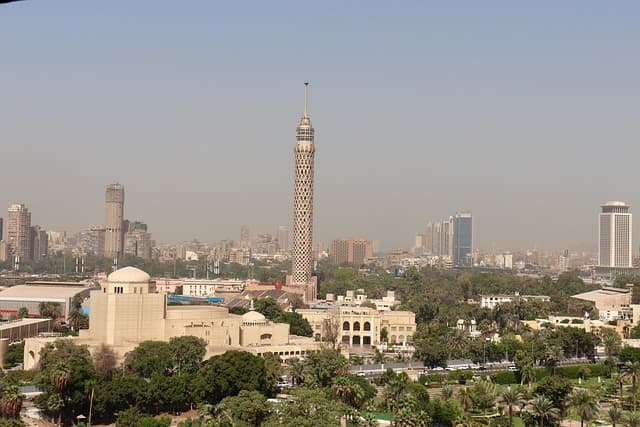
In 1896, a Scottish scholar named Solomon Schechter climbed into a storage room above the Ben Ezra Synagogue and found what he later called a battlefield of books. The geniza, a sealed chamber used to store worn-out sacred texts so they could not be thrown away or desecrated, contained approximately 400,000 manuscript fragments. Among them: personal letters, business contracts, marriage certificates, medical prescriptions, and court documents written by Jews living under Fatimid, Ayyubid, and Mamluk rule between the 10th and 19th centuries. Schechter shipped most of the collection to Cambridge, where it is still being studied today. Those documents did not just illuminate Jewish life. They rewrote the economic history of the medieval Mediterranean world. Historians now know the price of pepper in 11th-century Alexandria, the routes used by traders between Cairo and India, and the name of the woman who sued her husband for neglect in a Fustat rabbinical court in 1050 AD.
The synagogue that housed this archive sits inside the walled compound of Coptic Cairo, in the district of Old Fustat, which was Egypt's first Islamic capital, founded in 641 CE by the Arab general Amr ibn al-As. Fustat itself was built on top of the Roman fortress of Babylon, whose towers still stand at the entrance to the compound. Beneath those Roman walls lie the remnants of a Pharaonic settlement and what some archaeologists believe is a branch of the ancient canal connecting the Nile to the Red Sea. The Ben Ezra Synagogue, in other words, does not exist in a Jewish quarter. It exists in a place where Roman, Coptic Christian, Jewish, and Islamic civilizations have been physically layered on top of one another for two millennia, each one building on what came before.
The Jewish community of Egypt is one of the oldest in the world. Jews arrived in Egypt in significant numbers after the Babylonian destruction of Jerusalem in 586 BCE, and a large colony existed at Elephantine, near modern Aswan, as early as the 5th century BCE. Those Elephantine Jews, as the papyri found there reveal, worshipped in a temple dedicated to Yahweh alongside Egyptian and Persian gods, a theological flexibility that would have scandalized their contemporaries in Jerusalem. The Ben Ezra community was the heir to that long, complicated, distinctly Egyptian Jewish tradition.
---
What You Are Actually Looking At
The building you enter today is not ancient in its current form. The original synagogue on this site was sold to the Coptic Christians in the 9th century CE to help pay a tax levied on the Coptic community by the Abbasid governor. The Jewish community bought it back in 882 CE, reportedly with funds raised in part by Moses Maimonides' family, though Maimonides himself, the great 12th-century philosopher and physician, arrived in Egypt several decades later. The structure was then largely destroyed and rebuilt multiple times. The current building dates primarily to a major restoration completed in 1892, which is why its interior looks so clean, so almost European, compared to the ancient weight you might expect.
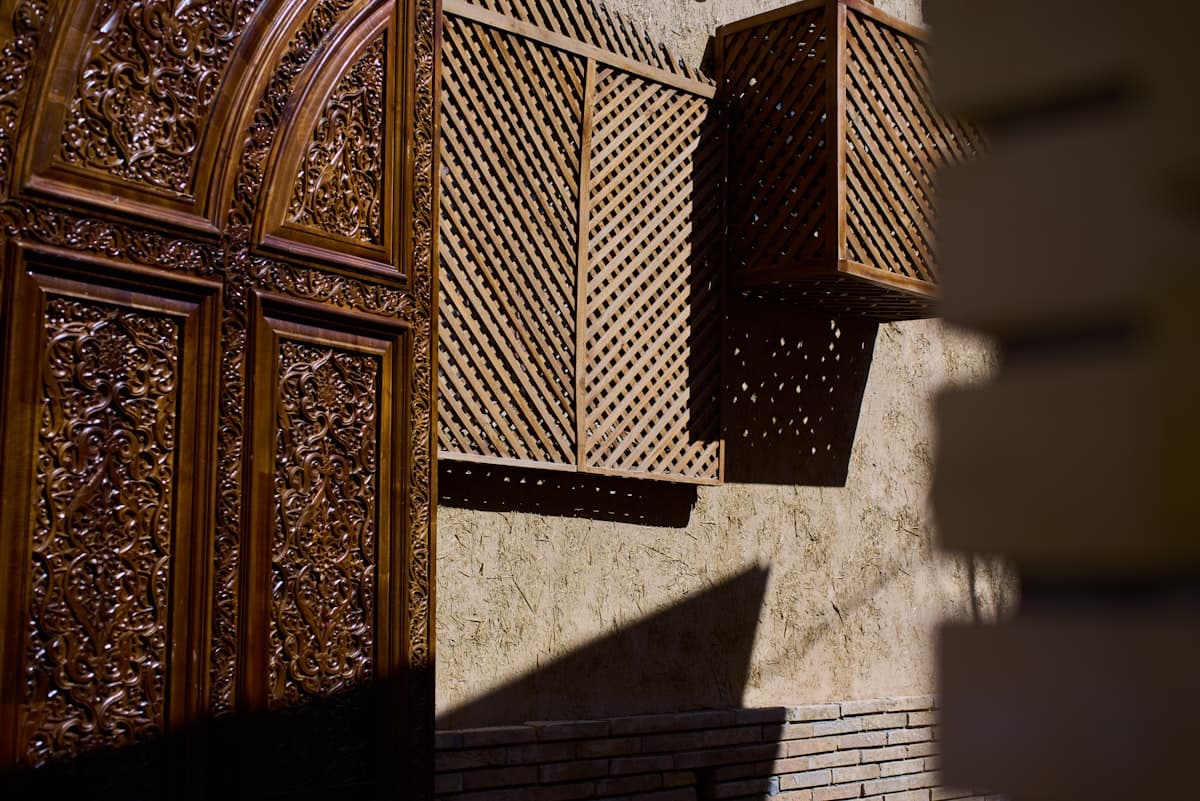
What survives from an earlier era is the atmosphere and the wood. The carved wooden Torah ark, which houses the scrolls of the law, dates to the medieval period and is the most significant original element still in place. Look at the latticework of the women's gallery above: women worshipped separately, screened from the men below, and the gallery's carved screens are among the finest examples of medieval Egyptian woodwork you will encounter outside of the Museum of Islamic Art.
The interior is a basilica plan, the same plan used by the Coptic churches immediately outside the synagogue walls, and that is not a coincidence. Jewish religious architecture in Egypt absorbed local building conventions just as Jewish theology had absorbed local religious influences at Elephantine centuries earlier. The columns separating the nave from the aisles are not uniform. Some are clearly older than others, salvaged from earlier structures on the site. This was normal practice in medieval Cairo: you used what the ground gave you.
The niche indicating the direction of Jerusalem, the mizrach, is positioned on the eastern wall. Stand at the entrance, look east, and you are looking across the Sinai toward Jerusalem, the same direction Coptic Christians in the church next door turn when they face their sanctuary. The orientation is shared. The memory is shared. What is different is the name given to the presence encountered in that direction.
---
The Cairo Geniza and What It Revealed
The word geniza comes from a Hebrew root meaning to hide or store. Every synagogue that followed Talmudic law maintained one, because any document containing the name of God could not be destroyed. Over centuries, a geniza accumulates. Most were eventually emptied and the contents buried. The Ben Ezra geniza was not, possibly because the synagogue fell into disuse for long periods and nobody got around to it.
When Schechter's shipment arrived in Cambridge in 1897, it took decades to fully catalog. The researcher who did the most to unlock what the geniza meant was the historian S.D. Goitein, who spent 35 years studying the documents and published a five-volume work, A Mediterranean Society, which described the daily life of the Jewish communities of the medieval Islamic world in a level of detail that no other source makes possible. He found grocery lists next to philosophical treatises. A letter from a trader apologizing to his wife for his long absence sits a few centimetres away in the archive from a fragment of a lost work by Maimonides.
Maimonides himself lived in Fustat from around 1168 until his death in 1204. He served as the head of the Jewish community, as court physician to Saladin's vizier al-Qadi al-Fadil, and as a practicing doctor whose patient list included members of the Ayyubid court. He wrote his major philosophical work, The Guide for the Perplexed, in Judeo-Arabic, the Arabic language transcribed in Hebrew letters, which was the everyday written language of Egyptian Jews at that time. His grave is not in Cairo. He was buried, at his own instruction, in Tiberias, in modern Israel. But the building he would have prayed in stood where the Ben Ezra Synagogue stands today.
---
The Connections: One Site, Four Civilizations
Leave the synagogue and walk twenty metres to the Church of St. Sergius and Bacchus, also called Abu Serga. Beneath it is a crypt where, according to Christian tradition, the Holy Family sheltered during the flight into Egypt. The church dates to the 5th century CE in its foundations, rebuilt repeatedly. Immediately outside the compound wall, you are standing on the site of the Roman fortress of Babylon, whose name has nothing to do with Mesopotamia. It likely derives from the ancient Egyptian Per-Hapi-n-Iunu, meaning house of the Nile of Heliopolis, corrupted through Greek into Babylonia. The Arab general Amr ibn al-As built his new capital of Fustat directly beside the fortress in 641 CE, choosing the location because it was where he had camped during the siege.
The Coptic Museum, fifty metres from the synagogue entrance, holds a collection that includes objects recovered from Pharaonic temples repurposed by early Christians, Roman-era textile fragments with both classical and Christian imagery woven into the same cloth, and manuscripts that represent the transition point between the Coptic language and Arabic, the moment when Egyptian Christians stopped writing in the language of the Pharaohs and shifted to the language of the Quran. That transition happened between the 9th and 11th centuries, the same period when the Ben Ezra geniza was most actively accumulating documents. These communities were not living parallel lives in isolation. They were borrowing from each other's architecture, doing business with each other in the same market, and appearing in each other's legal documents.
The Jewish community of Cairo that worshipped at Ben Ezra effectively ceased to exist in the 20th century. Egypt's Jewish population, which numbered around 80,000 in 1948, fell to fewer than 200 by the 1970s following the Arab-Israeli wars and the nationalizations of the Nasser era. Most emigrated to Israel, France, Brazil, and the United States. The last permanent Jewish resident of Old Cairo died in the 1990s. The synagogue is maintained today by the Egyptian government and receives visitors, not worshippers.
---
Common Mistakes
Buying a separate ticket. The Ben Ezra Synagogue is included in the standard Coptic Cairo compound ticket. Do not let anyone outside the gate sell you an additional entry fee for the synagogue specifically. This happens occasionally and the charge is not legitimate.
Skipping the Coptic Museum. Most tourists treat it as an afterthought and are wrong to do so. The museum's collection of 14,000 objects includes the largest surviving library of Coptic manuscripts and a reconstruction of an early Christian church interior that makes the surrounding live churches suddenly legible. Allow at least 90 minutes. The entry fee is separate: EGP 200 (approx $4 USD).
Going on a Friday midday. Old Fustat is close enough to a major residential district that Friday prayers bring significant foot traffic. The atmosphere changes. If you want the compound quiet, go Thursday morning or any weekday before 11am.
Spending money on a tour guide at the gate. The unofficial guides who approach visitors near Mar Girgis station are, with a few exceptions, offering nothing that this article and the Coptic Museum's own signage do not already provide. The EGP 150 to 300 they charge buys you a script you have already read.
Expecting an active religious community. Some visitors arrive imagining they will witness a living Jewish congregation. There are fewer than ten Jews permanently resident in all of Egypt. The synagogue is a monument, beautifully maintained, but there are no regular services. This is not a failure of the visit. It is the visit. You are looking at the physical remainder of a community that existed for 2,500 years and is now almost entirely elsewhere.
The sound and light show does not exist here, but skip the one at the Citadel. If your guide suggests combining this visit with an evening at the Citadel's sound and light show, decline. The Citadel deserves a separate visit in daylight when you can read the architecture. At night it tells you nothing the view alone cannot.
Rushing the compound in under an hour. The spatial logic of Old Cairo, the way the Roman towers, the Coptic churches, the synagogue, and the Islamic Amr ibn al-As Mosque nearby all occupy the same few hectares, only becomes clear if you walk the perimeter, look at what connects to what, and let the layers accumulate in your understanding. One hour is not enough. Two is the minimum.
---
Practical Tips
Dress modestly. Arms and legs should be covered at the entry to the compound, which includes the churches. The synagogue applies the same standard. There is no enforced dress code at the museum, but you will feel conspicuous in shorts. A scarf for women is useful to have.
Photography is permitted inside the Ben Ezra Synagogue, but flash photography damages the wooden elements. Turn it off before you enter. The staff will ask you to, and they are right to.
Combine this visit with the Amr ibn al-As Mosque, a 15-minute walk north of the compound through the old Fustat area. It is the oldest mosque in Africa, founded in 642 CE, though the current structure is an 18th-century rebuild. Entry is free and it is almost always quiet. The contrast between the intimate synagogue interior and the vast open courtyard of the mosque makes both spaces more comprehensible.
Bring water. The compound has no cafe inside. The nearest options are at the Metro station exit, where a small kiosk sells water and soft drinks at fair prices. In summer, carry at least one litre per person.
If you read Arabic or have a translation app, look for the small explanatory panels inside the synagogue. Some of them contain details, particularly about the restoration history, that the English panels omit.
Frequently Asked Questions
The Weekly Dispatch
More on Egypt, every Friday.
Cultural depth and places most guides never mention.
No spam. Unsubscribe anytime.