Jewish Cairo & Ben Ezra Synagogue: The Full History Guide
The Ben Ezra Synagogue sits where Moses was found in the bulrushes, according to local tradition. Its geniza held 400,000 documents that rewrote medieval history.

Quick Facts
- Best time to visit
- October to April for comfortable temperatures. Friday mornings are quieter than Saturday or Sunday.
- Entrance fee
- EGP 200 per adult for the Coptic Cairo compound (approx $4 USD). Confirm current synagogue access at the gate or by phone.
- Opening hours
- Daily 9am to 4pm. Subject to closure on Jewish holidays and without advance notice. Call ahead: +20 2 2362 1068.
- How to get there
- Metro Line 1 to Mar Girgis, EGP 8 (under $1 USD). Taxi from Downtown Cairo approximately EGP 60 to 100.
- Time needed
- 1 to 2 hours for the synagogue alone. Half a day for the full Coptic Cairo compound including the museum and churches.
- Cost range
- Budget EGP 400 to 600 including transport and entry. Add EGP 150 to 300 for lunch near the compound.
Quick Facts
Best time to visit: October to April, when Cairo's heat is manageable and the Coptic Cairo complex is less stifling. Friday mornings are quieter than weekends.
Entrance fee: Entry to the Coptic Cairo compound (which includes access to the Ben Ezra Synagogue area) costs EGP 200 for adults (approximately $4 USD). The synagogue interior itself may require a separate coordination with the local Jewish community or the Supreme Council of Antiquities; confirm current access at the gate.
Opening hours: Daily 9am to 4pm. Closed during Jewish holidays and subject to closure without notice. Always call ahead: +20 2 2362 1068.
How to get there: Take the Cairo Metro Line 1 to Mar Girgis station. The station exits directly into the Coptic Cairo compound. The fare is EGP 8 (under $1 USD). By taxi from Downtown Cairo, expect EGP 60 to 100 depending on traffic. Avoid driving yourself into Old Cairo; parking is difficult and the lanes around the compound were not designed for cars.
Time needed: One to two hours for the synagogue and immediate surroundings. Half a day if you combine it with the Coptic Museum, the Hanging Church, and the Church of Abu Serga, all within walking distance.
Cost range: Budget EGP 400 to 600 for the compound visit including transport. Add EGP 200 to 400 for lunch at one of the Old Cairo restaurants near the Mar Girgis gate.
---
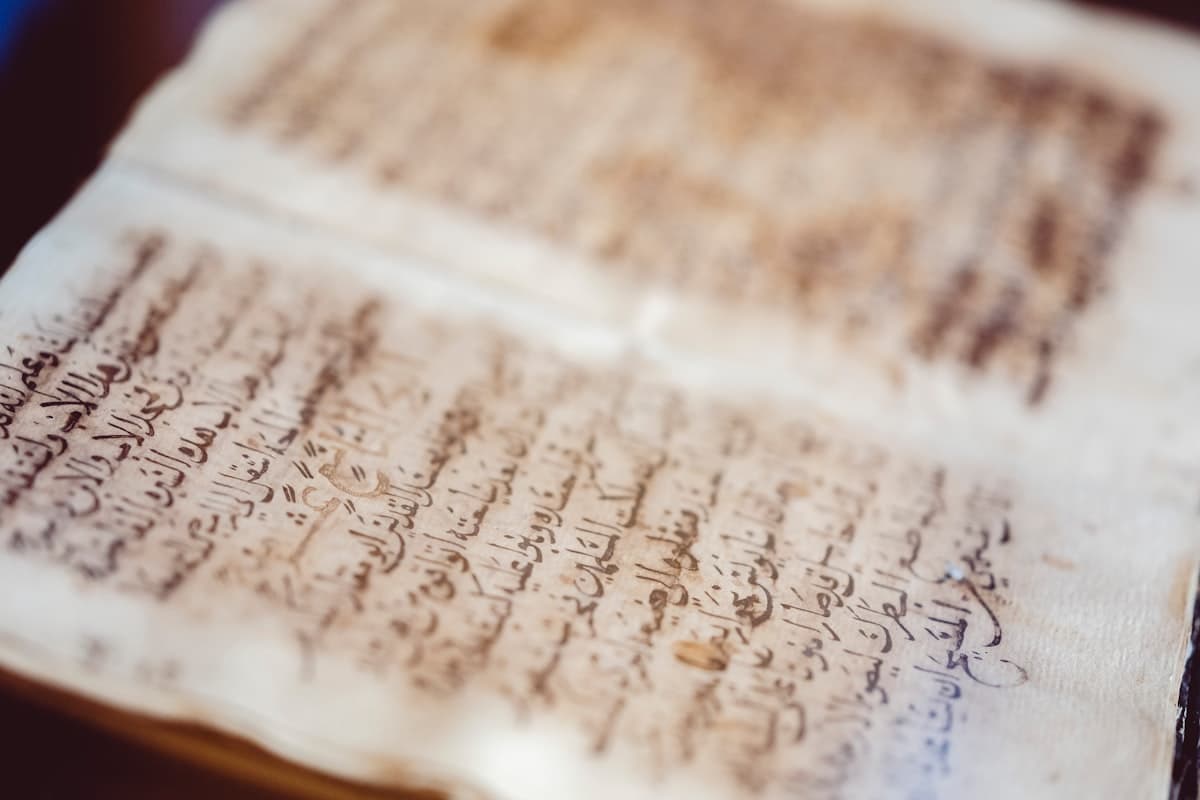
In 1896, a Cambridge scholar named Solomon Schechter climbed into a sealed storage room above the Ben Ezra Synagogue in Cairo and found, heaped to the ceiling in centuries of dust, approximately 400,000 manuscript fragments. What he pulled out over several visits changed the understanding of medieval Jewish life, Islamic commerce, and Judeo-Arabic literature so completely that historians still argue about its implications today. The collection, known as the Cairo Geniza, included personal letters, marriage contracts, merchants' accounts, biblical texts, and shopping lists written in Arabic using Hebrew script. It documented a world nobody knew had existed in such texture: a Jewish merchant class deeply embedded in the Fatimid and Ayyubid economies, writing to each other across the Mediterranean about spice prices and family feuds. The synagogue itself is one of the oldest in Africa. The geniza documents are why it matters to the history of the entire world.
Why This Place Matters
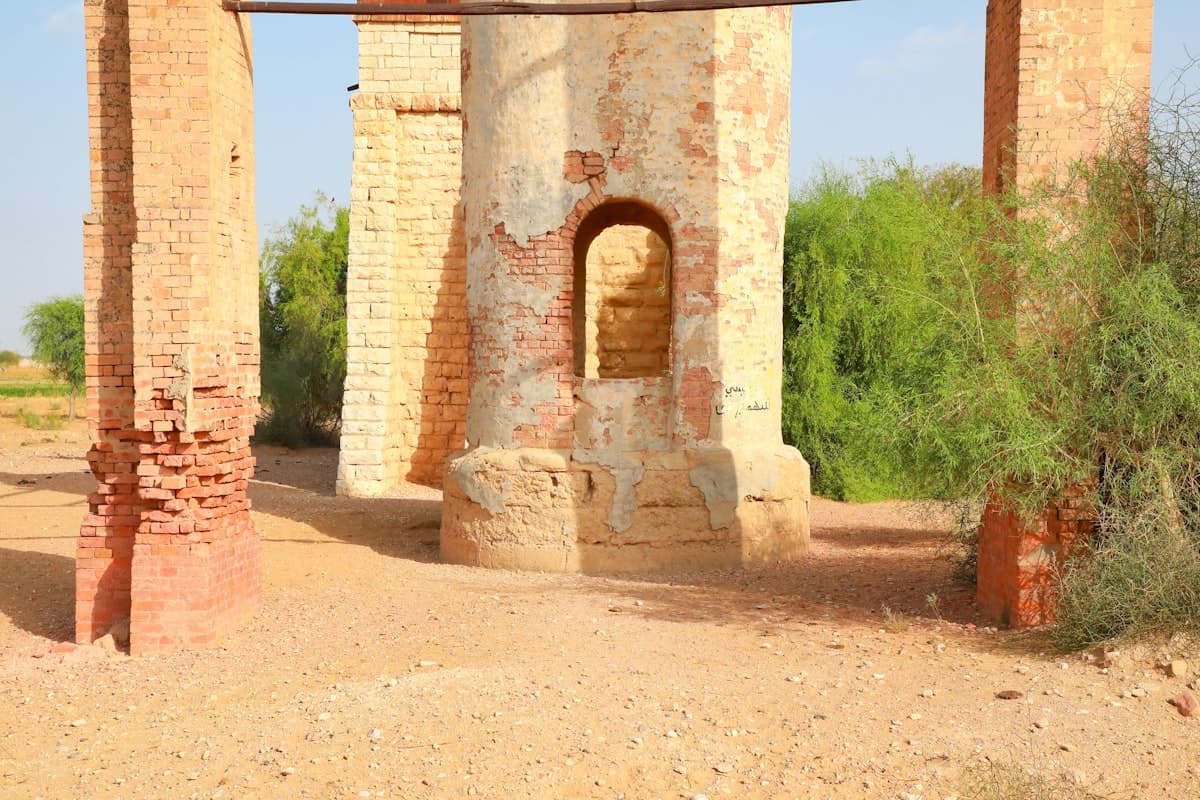
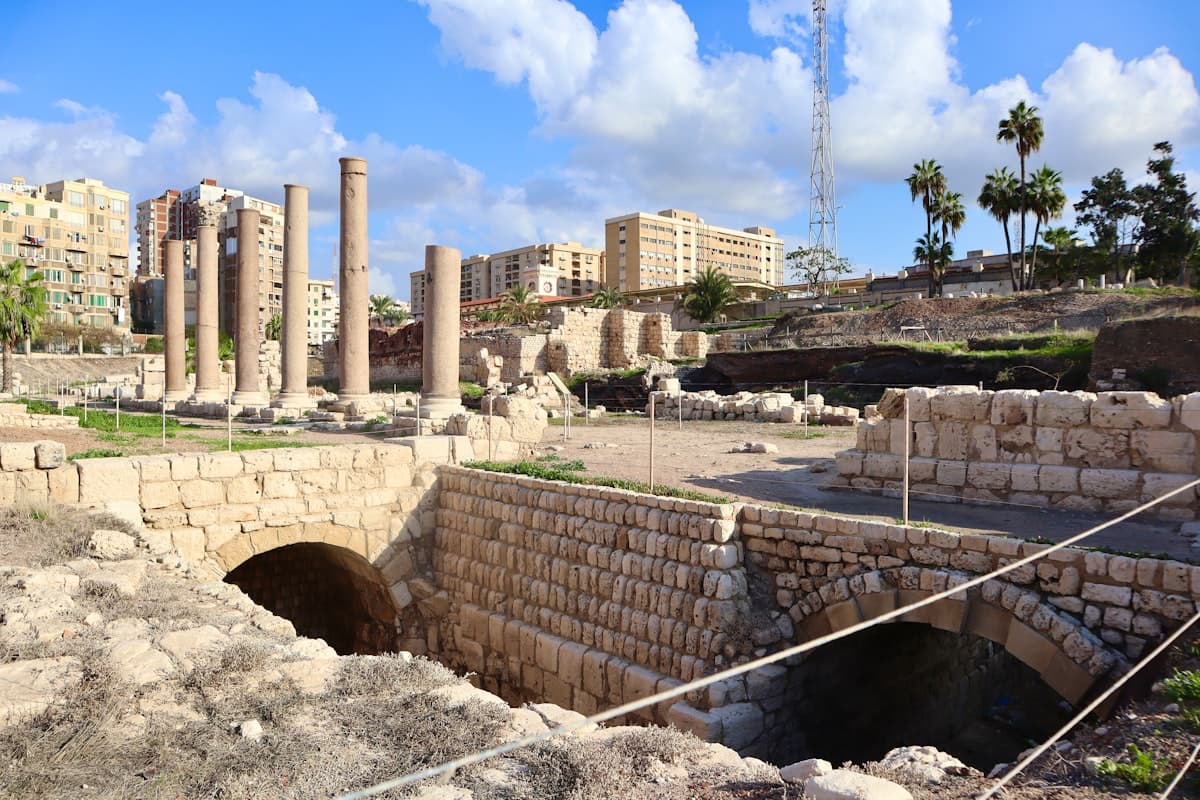
The Ben Ezra Synagogue stands inside the ancient walled district that Egyptians call Masr al-Qadima, Old Cairo, built on the site of the Roman fortress of Babylon. This detail is not incidental. The Romans chose this location because it sat at the junction of the Nile and the canal connecting the river to the Red Sea, a commercial artery that predated the fortress by centuries. When the Arab general Amr ibn al-As conquered Egypt in 641 CE, he built his city, Fustat, immediately north of Babylon. The Jewish community that had lived in and around Babylon under Roman and then Byzantine rule remained. They were not expelled. They adapted, as they had done under every previous administration, and they flourished under the Fatimid caliphs, who ruled Egypt from 969 to 1171 CE and were notably tolerant of religious minorities by the standards of the medieval world.
The synagogue's origin story is itself a palimpsest. The building that Schechter entered was constructed in its current form in the twelfth century, but the site had housed a Jewish house of worship since at least the ninth century, when it was reportedly purchased from the Coptic community. The Copts had built a church on the site of an even older structure. That layering of communities, each one inheriting, repurposing, and adding to what the previous group left behind, is the grammar of Old Cairo. Every stone here has served more than one god.
The synagogue is named after Abraham Ben Ezra, a twelfth-century Spanish rabbi and philosopher, but the connection is loose. Local tradition, which should be treated as such, holds that Ben Ezra visited Egypt and that the community named the building in his honor. What is certain is that Benjamin of Tudela, the great medieval Jewish traveler, passed through Cairo around 1170 CE and documented the Jewish community there as numbering around 2,000, a significant presence in a city that was then one of the largest in the world.
What the Geniza Actually Was
A geniza is a storage room used by Jewish communities to preserve documents containing the name of God, which cannot be destroyed. When these documents accumulated beyond usefulness, they were eventually buried in a ceremony. The Ben Ezra Synagogue's geniza was never properly buried. It was sealed and forgotten, and because Cairo's dry air preserves paper the way Luxor's dry air preserves linen, the documents survived intact for up to a thousand years.
Schechter did not discover the geniza. The Cairene Jewish community knew it existed. Several European scholars had already purchased fragments from dealers in the 1880s. What Schechter did was recognize the scale of what was there and negotiate to bring the bulk of the collection, somewhere between 140,000 and 200,000 fragments, to Cambridge University Library, where it remains. The ethics of that removal are now discussed in the same register as the Elgin Marbles: a scholar from a colonial-era institution acquiring a community's archive at a moment when that community lacked the institutional power to refuse or to know what they were giving up.
The fragments revealed, among hundreds of other things, that the medieval Jewish merchant Khalaf ibn Bundar operated a trade network stretching from Cairo to India in the eleventh century, writing his accounts in a Judeo-Arabic that mixed Hebrew script with Arabic grammar. They revealed that Jewish women in Fatimid Cairo could own property, initiate divorce proceedings, and conduct business independently. They revealed that the Maimonidean community in Cairo corresponded directly with Moses Maimonides, who lived in Fustat from roughly 1166 until his death in 1204 and served as the head of the Jewish community in Egypt. His tomb, a short distance from the synagogue, is still a pilgrimage site for Jewish visitors.
What You Will Actually See
The current synagogue building dates largely to a nineteenth-century restoration funded by the Cattaui family, one of the prominent Jewish banking families of Cairo. The interior is small and cool, white and blue, with a wooden ark, ornate columns, and a women's gallery above. It does not look ancient in the way that Egyptian sites usually look ancient. It looks like a carefully maintained religious space that has survived against the odds, which is precisely what it is.
The geniza room itself is above the left aisle. You may not always be allowed to enter, and even when you can, there is nothing in it. Everything was removed by Schechter, by subsequent researchers, and by the antiquities trade. What the room gives you is proportion: it is small, which makes the 400,000 documents even more remarkable. Paper compresses. Centuries compact.
On the walls of the main hall you will see inscriptions and dedications in Hebrew, some marking donations by families whose descendants left Egypt entirely. Between 1948 and 1979, Egypt's Jewish population fell from approximately 80,000 to fewer than 200. The process was not a single event. It was a series of pressures: the 1948 war, Nasser's nationalizations in the 1950s, the 1967 war, legal restrictions on employment and property. The families whose names are carved here left for Israel, France, Brazil, and the United States. Some left with a single suitcase and a few hours' notice. The synagogue was maintained for decades by a single woman, Carmen Weinstein, who served as president of the Cairo Jewish community until her death in 2013. After her death, the community in Cairo numbered approximately 12 to 15 elderly women, none of whom could form the minyan of ten adult males required for a full Jewish service.
The Connections
The Ben Ezra Synagogue is 300 meters from the Church of Abu Serga, built on the site where the Holy Family is said to have rested during their flight into Egypt. It is 200 meters from the Hanging Church, the Church of al-Muallaqah, suspended above the gatehouse towers of the Roman fortress of Babylon. The towers themselves are still visible below the church's terrace. Walk another ten minutes north and you are in Fustat, the first Islamic capital of Egypt, now largely unexcavated under an open lot. The mosque of Amr ibn al-As, the oldest mosque in Africa, is a ten-minute walk from the Mar Girgis metro exit. The entire sequence, Roman fortress, Jewish synagogue, Coptic churches, Islamic mosque, first Islamic city, compressed into a half-mile radius, makes Coptic Cairo the most densely layered historical district in the country, and possibly in the region.
Moses Maimonides, who is buried nearby, wrote his most influential work, the Guide for the Perplexed, while living in Fustat. He served as court physician to Saladin's vizier, al-Qadi al-Fadil. Saladin himself had dismantled the Fatimid caliphate in 1171, restoring Sunni rule to Egypt. The Jewish community that had thrived under Fatimid tolerance navigated the transition successfully. Maimonides corresponded with Jewish communities across the Mediterranean from his home in Fustat, and the Ben Ezra Synagogue served the community he led. The specific human chain connecting this building to the greatest Jewish philosopher of the medieval period is real and documentable, and almost no tour guide mentions it.
Common Mistakes
Arriving without confirming access. The synagogue sometimes closes without advance notice due to religious holidays, security conditions, or staffing. A phone call the day before saves a wasted journey.
Spending all your time in the synagogue and none in the compound. The Ben Ezra is one building. The Coptic Museum, 50 meters away, holds the world's largest collection of Coptic artifacts, including fourth-century textiles and fifth-century manuscripts that predate the Arab conquest by three centuries. The museum costs EGP 200 and most visitors to the synagogue walk past it.
Hiring a guide from the gate. The unofficial guides who approach at the Mar Girgis exit are inconsistent. Some are excellent; many repeat a set of legends (Moses, the Holy Family, the burning bush) without historical basis and without being challenged. If you want a guide, arrange one through a reputable agency in advance.
Visiting on Friday afternoon. The compound closes early on Fridays and the surrounding streets become congested after the noon prayer at the nearby mosques. Saturday mornings are the best option for a quiet visit.
The Nile-side tourist bazaar on the way in. Between the metro exit and the compound gate, there is a strip of shops selling papyrus, alabaster, and cotton at prices three to four times what you would pay in Khan el-Khalili. Nothing there is worth stopping for.
Expecting a functioning synagogue. The Ben Ezra is a monument, not an active house of worship. There are no regular services and no resident rabbi. Visitors sometimes arrive expecting a living religious community and are disoriented to find a museum-like interior. Understanding this before you go allows you to approach it on its own terms: as a document of a community that no longer exists here in any meaningful number.
Skipping Maimonides' tomb. Located in Fustat, about a 15-minute walk from the synagogue, the tomb of Moses Maimonides is one of the few intact markers of medieval Jewish Cairo still accessible to visitors. It draws Jewish pilgrims from around the world and costs nothing to visit. Almost no general travel guide to Cairo mentions it. It is not an afterthought. It is the reason many serious visitors make this journey at all.
Practical Tips
Dress modestly: covered shoulders and knees are expected in all the religious buildings in this compound, regardless of faith. Carry a scarf even in summer.
Bring cash. The ticket office does not always accept cards, and the nearest functioning ATM is back at the Mar Girgis metro station.
The Coptic Cairo compound is genuinely walkable and small. A printed or downloaded map helps because the internal signage is inconsistent. Google Maps works reasonably well once you are inside.
If you read about the Cairo Geniza before visiting, the experience changes entirely. Adina Hoffman and Peter Cole's book Sacred Trash is the most readable account of the geniza and its contents. S.D. Goitein's multi-volume A Mediterranean Society is the scholarly standard, but it is not casual reading. Even a single article about Schechter's 1896 visit will reframe what you see when you stand in that small, quiet room above the aisle.
Coptic Cairo combines well with a morning visit to the Egyptian Museum in Tahrir Square, which is a 15-minute metro ride on Line 1. The museum holds artifacts from the same Roman-era Babylon that underlies the compound, including Roman-period mummy portraits that connect the ancient and early Christian worlds in the most direct visual terms.
Frequently Asked Questions
The Weekly Dispatch
More on Egypt, every Friday.
Cultural depth and places most guides never mention.
No spam. Unsubscribe anytime.