Jewish Cairo History and the Ben Ezra Synagogue Guide
Moses was supposedly found in the reeds here. The synagogue sold its Torah scrolls to fund repairs. Cairo's Jewish community once numbered 80,000. Now fewer than ten remain.

Quick Facts
- Best time to visit
- October to April. Summer temperatures in Old Cairo's enclosed lanes regularly exceed 38C and the synagogue's interior is not air-conditioned.
- Entrance fee
- EGP 100 per person (approximately $3.30 USD). No separate student discount has been reliably applied at this site.
- Opening hours
- Sunday to Thursday, 9am to 4pm. Closed Friday, Saturday, and Jewish holidays. Confirm closures in advance as holiday schedules are not always posted online.
- How to get there
- Metro Line 1 to Mar Girgis station (EGP 8, approximately $0.25 USD). 7-minute walk through the Coptic compound. Alternatively, taxi or Uber from central Cairo costs EGP 80 to 120.
- Time needed
- 45 minutes to 1.5 hours for the synagogue alone. Allow 3 to 4 hours to combine with the Coptic Museum, Hanging Church, and Church of St. Sergius.
- Cost range
- Entry plus Metro transport: under EGP 120 per person. Add EGP 150 to 250 if hiring a guide inside the compound. The entire Coptic Cairo half-day including museum entry runs EGP 300 to 500 per person.
Quick Facts
Best time to visit: October to April, when the heat in Old Cairo's narrow lanes is bearable and the light in the late morning is extraordinary.
Entrance fee: EGP 100 per person (approximately $3.30 USD). The fee includes entry to the synagogue compound and a basic printed guide available in Arabic, English, and French.
Opening hours: Sunday to Thursday, 9am to 4pm. Closed Friday and Saturday. Closed on Jewish holidays, which are not always posted in advance. Confirm before going.
How to get there: Take Metro Line 1 to Mar Girgis station (EGP 8). The station exits directly into Coptic Cairo. The Ben Ezra Synagogue is a 7-minute walk through the Coptic compound. Alternatively, a taxi from downtown Cairo costs EGP 80 to 120 depending on traffic. Uber runs slightly cheaper. Do not take a horse carriage from the station. They are expensive and unnecessary.
Time needed: 45 minutes to 1.5 hours at the synagogue itself. Budget a full half-day to combine it with the Hanging Church, the Coptic Museum, and the Church of St. Sergius and Bacchus, all of which are within a 10-minute walk.
Cost range: Entry plus transport from central Cairo runs EGP 200 to 300 per person. If you hire a guide inside the compound, expect to pay EGP 150 to 250 for an hour.
---
Why This Place Matters
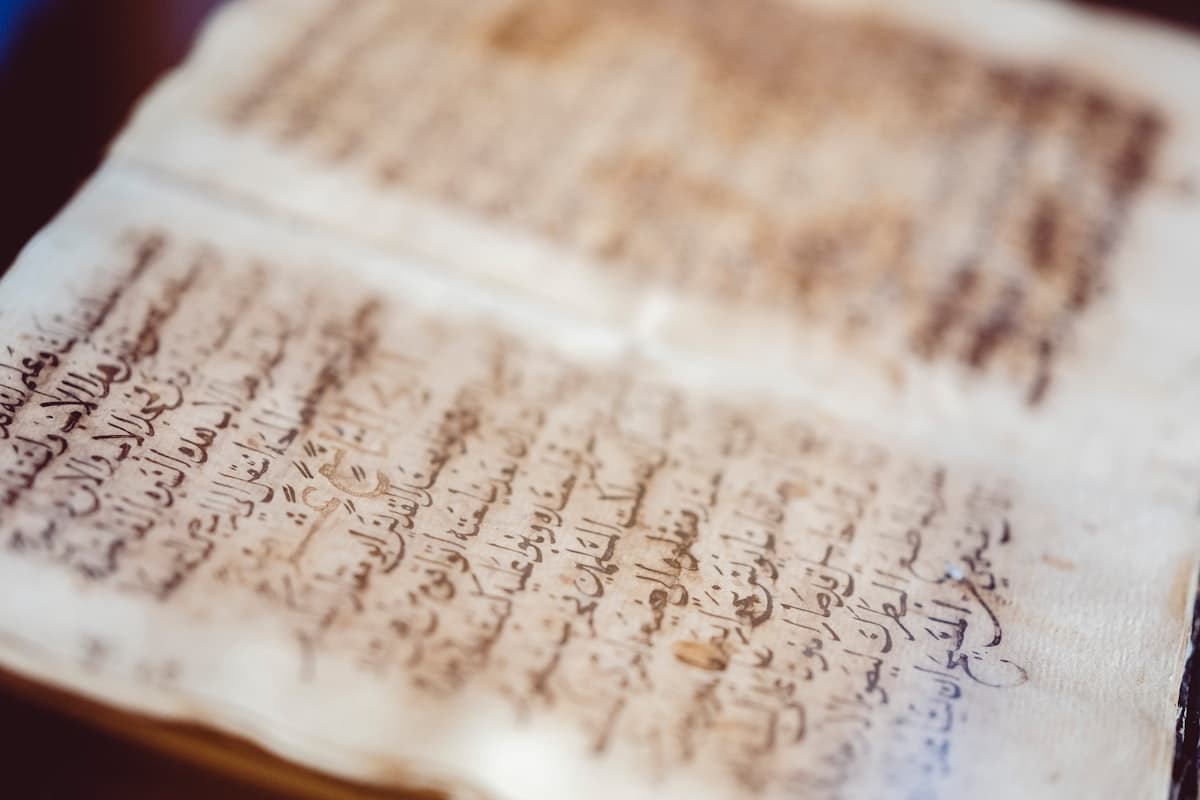
In 1896, two Scottish sisters named Agnes Lewis and Margaret Gibson arrived in Cairo carrying a fragment of paper they had bought in a market. The fragment turned out to be a page from the oldest known Hebrew manuscript of the Book of Sirach, a text that had been considered lost to Christianity for centuries. The sisters showed it to Solomon Schechter, a Cambridge scholar of Talmudic literature. Schechter came to Cairo, convinced the chief rabbi to open the storage room above the Ben Ezra Synagogue, and found approximately 300,000 fragments of medieval Jewish manuscripts stacked floor to ceiling in a room that had been sealed for several hundred years.
This room was the Cairo Geniza, one of the most significant archival discoveries in history. The fragments, now scattered across universities from Cambridge to Philadelphia, rewrote what scholars knew about Jewish life in the medieval Islamic world, about trade routes across the Mediterranean and Indian Ocean, about daily life in 11th-century Fustat, the ancient city on which modern Cairo was built. There were shopping lists. There were divorce documents. There were letters from merchants in Aden complaining about slow shipments. There were poems by Yehuda Halevi. The Geniza contained the documentary residue of a community that had lived comfortably inside Cairo's layered civilization for over a thousand years.
The Ben Ezra Synagogue itself is usually described as dating to 882 CE, when the Jewish community purchased a Christian church from the Coptic patriarch Shenouda I, who needed money to pay a tax levied by Ahmad ibn Tulun, the Abbasid governor who had just built his own new city north of Fustat. The building was reconstructed in the 12th century, heavily restored in the 19th century, and again in the 1980s and 1990s under Egyptian government oversight. What you see today is a composite: some medieval structural bones, 19th-century woodwork and furnishings, and careful modern restoration work funded in part by donations from Jewish communities abroad.
---
What You Will Actually See
The exterior gives nothing away. You pass through the Coptic compound's main gate, walk past the Hanging Church and its persistent postcard sellers, turn left through a second gateway, and find yourself in a quieter courtyard. The synagogue sits at the far end, its facade modest and white, more like an administrative building than a place of prayer.
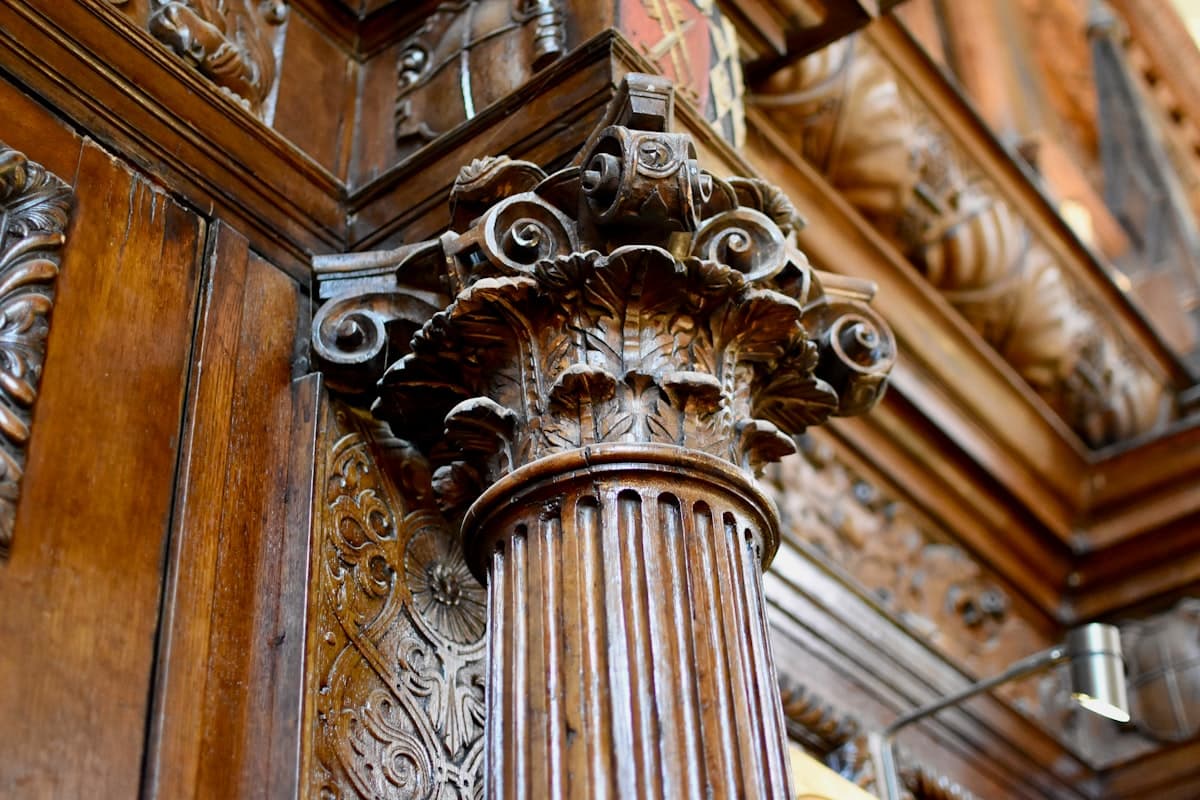
Inside, the scale surprises you. The sanctuary is a broad, airy basilica with a women's gallery running along three sides supported by white marble columns with gilded capitals. The floor is tiled in a geometric pattern that reads as simultaneously Islamic and Byzantine. The central bimah, the raised platform from which the Torah is read, sits under a wooden canopy with carved arabesques that echo the mashrabiyya screens you find in Mamluk mosques two kilometers north in Old Cairo. This is not coincidence. Jewish craftsmen in medieval Cairo worked in the same visual vocabulary as their Muslim neighbors, because they lived in the same city and trained in the same workshops.
The Ark of the Torah at the eastern end is ornate and well-lit. What it contains now is largely ceremonial. The synagogue is no longer a functioning house of worship in any regular sense. There is no community left to sustain daily or Shabbat prayer. The last substantial Jewish community in Cairo, concentrated in the neighborhoods of Zamalek, Heliopolis, and the Haret el-Yahud district near Khan el-Khalili, effectively ended with the emigrations of 1948, 1956, and 1967. Egypt's Jewish population, which stood at roughly 80,000 in 1948, had fallen to under 400 by the 1970s.
If a guard offers to show you the back room where the Geniza was located, accept. It is a small, unremarkable space now, whitewashed and empty, but standing in it after understanding what it held is one of those moments in Cairo where the weight of what was lost becomes physical.
---
The Human Story of the Community
Fustat, the city founded by the Arab general Amr ibn al-As in 641 CE after the Muslim conquest of Egypt, became one of the most cosmopolitan urban spaces in the medieval world. The Jewish community there was not a persecuted minority living in enforced separation. Documents from the Geniza show merchants writing in Judeo-Arabic, a dialect of Arabic written in Hebrew characters, corresponding with business partners in Sicily, Aden, India, and Persia. A merchant named Khalaf ibn Isaac wrote to his brother in the 11th century describing a shipment of pepper that had been delayed by storms off the Malabar Coast. His world was enormous.
The community maintained its own courts, its own charitable institutions, and its own leadership structure, headed by a figure called the Nagid, a kind of Jewish governor recognized by the Fatimid and later Ayyubid authorities. The most famous Nagid in Egyptian Jewish history was Moses Maimonides, the philosopher and physician who arrived in Fustat around 1168 after fleeing the Almohad persecutions in his native Cordoba. Maimonides served as court physician to Saladin's vizier al-Fadil and wrote most of his major works, including the Mishneh Torah and the Guide for the Perplexed, in Fustat. He is buried in Tiberias, but he lived and worked a short walk from where you are standing.
The community's trajectory after the 19th century is one of Egypt's great unmourned losses. During the reign of Mohammed Ali and his successors, Jews from Italy, Spain, and Greece arrived and built a new Cairene Jewish middle class: the Qattawi family, the Suarès family, the Cattaui family, who financed railways and built palaces and served in the Egyptian senate. By the 1920s, the Jewish community of Cairo was producing writers, musicians, and politicians who considered themselves Egyptian first. The singer Layla Murad, one of the most beloved voices in the history of Arabic music, came from this world. Her father, Zaki Murad, was a Jewish cantor.
---
The Connections
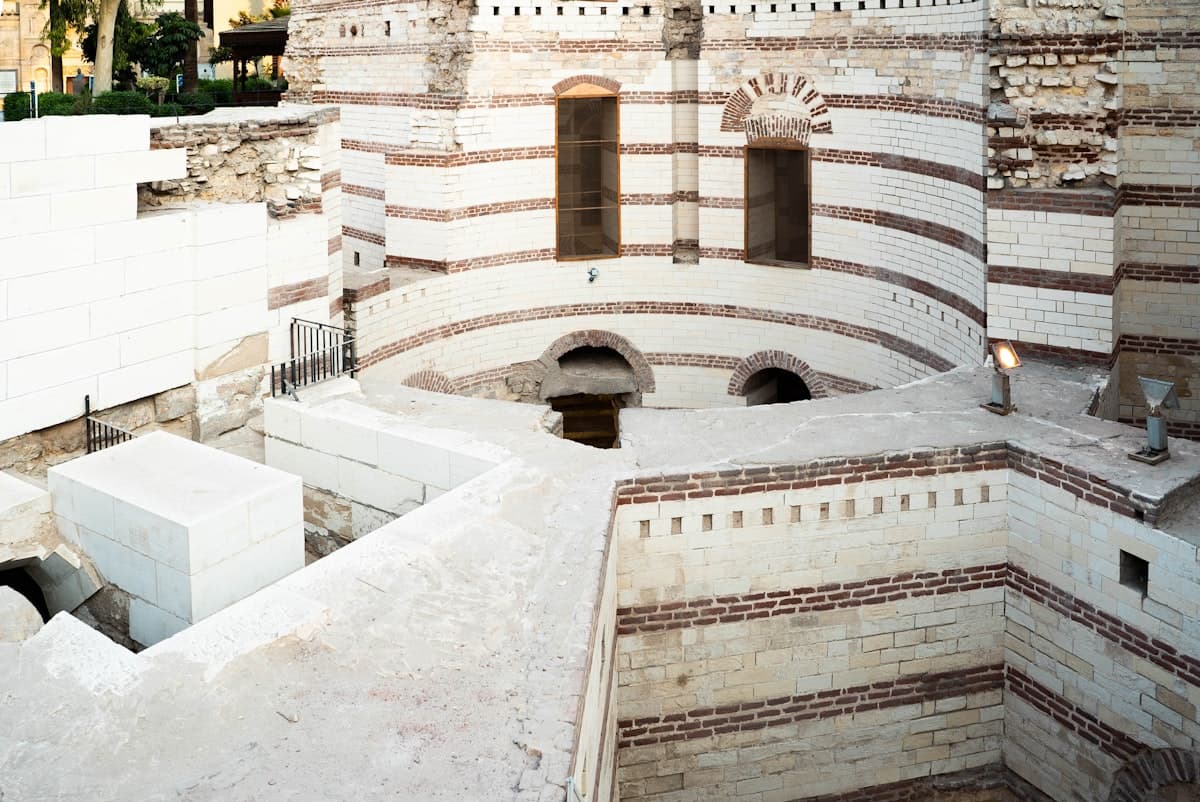
The Coptic compound where the Ben Ezra Synagogue sits was itself built over the Roman fortress of Babylon, whose towers you can see embedded in the walls near the entrance. The fortress dates to the 1st century CE and was expanded by the emperor Trajan around 100 CE. The ancient Egyptians had dug a canal here that connected the Nile to the Red Sea. The Romans used the same canal for military logistics. The Arabs built their new city alongside the Roman ruins. The Copts, Jews, and eventually a small resident Muslim population all found space inside the same compressed geography.
The Fatimid rulers who dominated Egypt from 969 to 1171 CE are directly relevant to the synagogue's golden age. The Fatimid caliphs were Ismaili Shia Muslims who were ideologically committed to tolerating their dhimmi populations, partly for theological reasons and partly because Jewish and Christian merchants and administrators were economically indispensable. It was under the Fatimids that the Ben Ezra Synagogue community produced its most voluminous records, the ones that ended up sealed in the Geniza. When Saladin overthrew the Fatimids and established Sunni Ayyubid rule, the community continued but the particular atmosphere of Fatimid cosmopolitanism shifted.
The Geniza documents themselves now live primarily in the Taylor-Schechter Collection at Cambridge University Library, which holds approximately 193,000 fragments. Princeton, the Jewish Theological Seminary in New York, and the Bodleian at Oxford hold most of the rest. Egypt has none of them. This is a fact that sits uncomfortably in any honest account of the place.
---
Common Mistakes
Visiting on a Friday or Saturday. The synagogue is closed on Shabbat and Friday, which is the Islamic day of rest in Egypt. Many visitors arrive to find the gate locked because they did not check the schedule. Add to this that Jewish holidays, which rotate annually through the Gregorian calendar, also trigger closures that are not reliably posted online.
Skipping the Geniza room. Most visitors walk the main sanctuary and leave. The Geniza storage chamber, the actual room where Schechter found 300,000 manuscripts, is accessible if you ask the guards. Ask. It takes four minutes and changes the entire experience.
Hiring a guide from outside the compound. Unofficial guides outside the Mar Girgis Metro station will offer to show you the whole Coptic area for EGP 200 to 400. Most of them know the Hanging Church well and the Ben Ezra poorly. If you want a guide for the synagogue specifically, ask at the internal ticket office. The guides stationed inside the compound are not all equally knowledgeable, but they are better than the freelancers outside.
Spending money on the Coptic Cairo sound and light experience. It costs EGP 280 and offers a generic narration that you can get better, faster, and free by reading the placards inside the Coptic Museum next door. Skip it entirely.
Treating the synagogue as a standalone attraction. The Ben Ezra makes no sense without the surrounding context. Spend at least 30 minutes in the Coptic Museum before entering the synagogue. The museum's collection of Coptic textiles, manuscripts, and icons will give you the visual and historical framework to understand why a Jewish community, a Christian community, and a Roman fort all share the same 500 square meters.
Photographing worshippers or officials without asking. On the rare occasions when the synagogue hosts official visitors or small religious gatherings, photography of individuals without permission is inappropriate and will get you asked to leave. The building itself can be photographed freely.
Confusing restoration with authenticity. The current woodwork, much of the tiling, and some of the structural elements date to 1980s and 1990s restoration projects. This is not a criticism of the restoration, which was careful and respectful, but visitors who expect an untouched medieval interior will be confused. Know what you are looking at.
---
Practical Tips
Arrive before 10am to have the space to yourself. By 11am, tour groups begin arriving from the cruise ships docked at Giza and from the larger Cairo hotels running half-day excursions.
The Mar Girgis Metro station is the cleanest and simplest way to arrive. Metro Line 1 runs frequently and the station is 200 meters from the compound entrance. Do not walk from downtown Cairo. The route is confusing and the traffic on Sharia Salah Salem is hostile to pedestrians.
Dress conservatively, which in this context means covered shoulders and knees for both men and women. This applies to the entire Coptic compound, not just the synagogue.
The compound contains a small café near the Coptic Museum entrance. The coffee is serviceable and the seating is shaded. Use it.
If you want to understand the Geniza before you arrive, the most readable introduction is Amitav Ghosh's book "In an Antique Land", which interweaves a historian's account of the Geniza documents with a memoir of living in a Delta village in the 1980s. It is the best book ever written about the particular texture of Egyptian cosmopolitanism. Read it before you go, not after.
Frequently Asked Questions
The Weekly Dispatch
More on Egypt, every Friday.
Cultural depth and places most guides never mention.
No spam. Unsubscribe anytime.