Jewish Cairo History & the Ben Ezra Synagogue: A Full Guide
The Ben Ezra Synagogue was sold to the Coptic community for 20,000 dinars in 882 AD. A Jewish congregation bought it back. Cairo's layered story in one building.

Quick Facts
- Best time to visit
- October to April. Cairo's summer heat makes the walk through the compound uncomfortable, and the synagogue's interior offers limited ventilation. Morning visits before 11am avoid tour groups year-round.
- Entrance fee
- EGP 50 (approximately $1.60 USD). No student discount currently available. The adjacent Coptic Museum charges EGP 100 separately.
- Opening hours
- Sunday to Thursday, 9am to 4pm. Closed Friday and Saturday. No exceptions for holidays.
- How to get there
- Cairo Metro Line 1 to Mar Girgis station (EGP 8 to 10), then 5-minute walk north. Taxi from Downtown Cairo EGP 40 to 70. Uber approximately EGP 50 to 60 from Tahrir Square.
- Time needed
- 45 minutes to 1 hour for the synagogue alone. 2 to 3 hours for the full Coptic Cairo compound including the Hanging Church and Coptic Museum.
- Cost range
- Budget EGP 150 to 300 for the Coptic Cairo compound including entry fees. Full day combining with Islamic Cairo: EGP 400 to 700 including transport, entries, and food.
Quick Facts
Best time to visit: October to April, when Cairo's heat drops to something manageable and the light inside the synagogue's restored interior comes through the alabaster panels without the summer glare.
Entrance fee: EGP 50 (approximately $1.60 USD) for foreign adults. No student discount currently applies. Prices are controlled by the Egyptian government and have not changed as frequently as most other heritage sites.
Opening hours: Sunday to Thursday, 9am to 4pm. Closed Friday and Saturday. The Friday closure is notable: the building follows neither Jewish Shabbat nor the Muslim Friday prayer schedule as its closing logic. It follows Egyptian civil bureaucracy. Plan accordingly.
How to get there: From central Cairo, take the Cairo Metro Line 1 to Mar Girgis station. Exit and walk north for five minutes into Coptic Cairo. The synagogue sits at the northern edge of the Coptic compound, directly behind the Hanging Church. Taxis from Downtown cost EGP 40 to 70 depending on traffic. Uber is consistent at roughly EGP 50 to 60 from Tahrir Square.
Time needed: 45 minutes to one hour for the synagogue alone. Two to three hours if you combine it with the Hanging Church, the Coptic Museum, and the Church of Saints Sergius and Bacchus, all of which are within 200 meters.
Cost range: The Coptic Cairo compound charges separate entry for some buildings. Budget EGP 200 to 400 for the full area, including the Coptic Museum entry at EGP 100 (approximately $3.20 USD).
---
Why This Place Matters
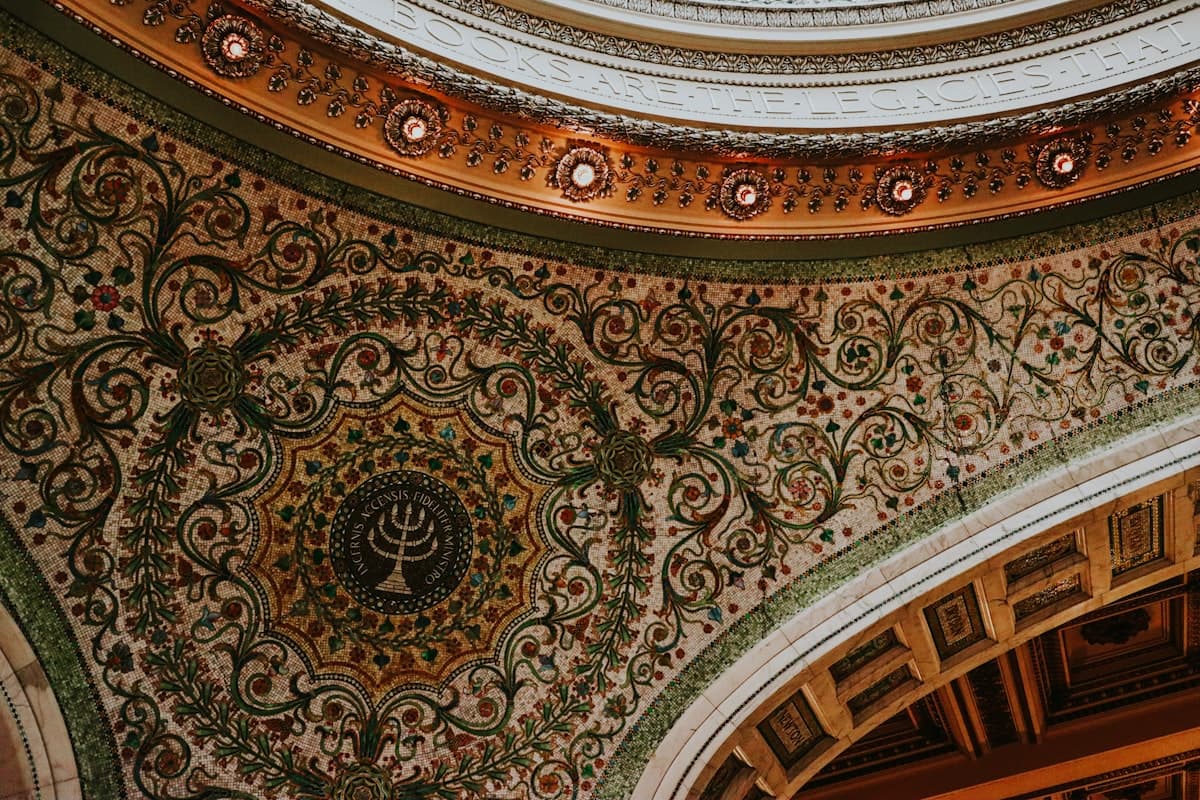
The Ben Ezra Synagogue stands at the edge of Coptic Cairo, which is itself built on the ruins of the Roman fortress of Babylon. That layering is not incidental. It is the entire point. The Jewish community did not arrive in this part of Cairo because of commerce or accident. They arrived because they had been here, in this bend of the Nile, arguably before the Romans, before the Copts, before Islam. A tradition recorded by several medieval Arab geographers holds that the synagogue marks the precise spot where Moses was found in the bulrushes by Pharaoh's daughter, which is either historically extraordinary or historically impossible, depending on what you believe about the location of ancient Heliopolis relative to the Nile's course. Either way, the tradition was believed firmly enough to anchor a community here for over a millennium.
The structure you visit today was rebuilt in 1115 by Abraham Ben Ezra, a Spanish-born rabbi whose name the building now carries, after an earlier synagogue on the site was purchased by the Coptic community during a period of financial crisis in the 9th century. The congregation eventually bought the property back, which tells you something essential about Cairo: ownership, faith, and geography have always been negotiated, not fixed.
What makes Ben Ezra historically significant beyond its age is what was found in its geniza, the storage room where Jewish law requires worn-out documents containing God's name to be preserved rather than destroyed. In 1896, Cambridge scholar Solomon Schechter travelled to Cairo and recognized that the Ben Ezra geniza contained one of the largest single collections of medieval documents ever found anywhere: approximately 300,000 fragments covering 1,000 years of Jewish life, business, correspondence, religious text, and personal letters. He transported the bulk of the collection to Cambridge, where it remains. What that collection revealed was not just Jewish history. It was a detailed portrait of medieval Mediterranean trade, Islamic-Jewish relations, the daily cost of bread and linen in 11th-century Fustat, and the names of people who would otherwise have vanished entirely from history.
---
What You Will Actually See
The Interior After Restoration
The building was extensively restored in the 1980s and 1990s with funding largely from outside Egypt, primarily from the United States and Europe, after decades of minimal maintenance following the emigration of nearly the entire Egyptian Jewish community after 1948 and again after 1956. The restoration is good. It is also, if you are being honest, almost too complete. The interior reads as a careful reconstruction rather than a living space. The wooden screens, the painted ceiling, the inlaid marble floors, and the women's gallery above are all accurate to the building's 19th-century state. But the absence of a resident congregation means the space carries a particular silence that goes beyond the sacred. It is a silence of discontinuity.
The building follows a basilica plan with two rows of white marble columns separating the nave from the aisles. The Aron HaKodesh, the ark containing Torah scrolls, faces Jerusalem, which from this location means it faces roughly northeast, away from the Nile. The bimah, the raised reading platform, sits at the center of the nave. Both are elaborately carved and inlaid. A collection of Torah scrolls and illuminated manuscripts remains in the building's care, though much of the original liturgical material was dispersed during the 20th century.
The Geniza Room and What It Left Behind
There is a small room to the right as you face the ark. This is where Schechter found the geniza. The room is accessible but spare. Nothing in it explains the magnitude of what was stored here. The Ben Ezra geniza fragments, now catalogued primarily at Cambridge University Library under the Taylor-Schechter Genizah Collection, include a letter written by the philosopher Maimonides, business contracts between Jewish and Muslim merchants trading between Egypt and India, marriage contracts specifying exactly what a bride brought to her husband in 11th-century Fustat, and documents in Arabic, Hebrew, Aramaic, Judeo-Arabic, and several other languages. The collection is considered as important to the study of medieval Islamic society as it is to Jewish studies, because Jewish merchants documented everything they bought, sold, and discussed with their Muslim neighbors.
Schechter took roughly 193,000 fragments to Cambridge in 1897. He described opening the geniza as like opening a mass grave, not because of death but because of sheer density of preserved life.
---
The Jewish Community of Fustat and Cairo: Who They Were
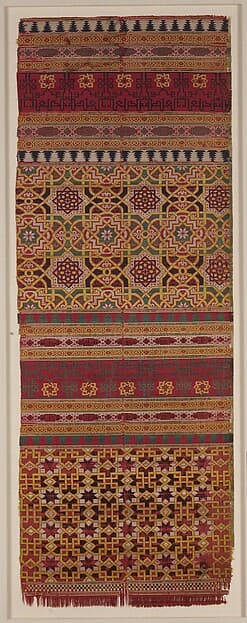
Cairo's Jewish population at its peak in the medieval period was centered not in what is now Cairo proper but in Fustat, the Arab-founded city immediately to the south, established in 641 CE after the Muslim conquest. The Jewish community of Fustat was substantial, multilingual, and commercially active across the Mediterranean and into the Indian Ocean trade network. The Cairo Geniza documents reveal a merchant class that moved between Alexandria, Palermo, Aden, and the Malabar Coast, writing letters home in Judeo-Arabic about the price of flax and the reliability of ship captains.
By the late 19th century, Cairo's Jewish community had grown again through immigration from North Africa, the Levant, and central Europe, reaching approximately 80,000 people by the 1940s, making it one of the largest Jewish communities in the Arab world. They were concentrated in the neighborhoods of Haret el-Yahud in medieval Cairo and later in Zamalek, Garden City, and Heliopolis. The community included bankers who helped finance the Egyptian state, cotton merchants, lawyers, and at least one prime minister: Yusuf Wahba Pasha served as Egypt's prime minister in 1919. The departures after 1948 and 1956 were rapid and largely involuntary. By the early 1970s, fewer than a few hundred Jews remained in Egypt. Today the number is estimated at between three and ten individuals, all elderly.
---
The Connections
The Ben Ezra Synagogue sits inside the Coptic Cairo compound, which is bounded by the walls of the Roman fortress of Babylon. The fortress was built under Augustus, reinforced under Trajan, and its towers still stand at the Mar Girgis Metro entrance. The same ground, then: Roman military installation, then a Christian monastic and ecclesiastical quarter, then a Jewish congregation's home for more than a thousand years, all within 200 meters of each other, all still physically present.
The Hanging Church directly adjacent to Ben Ezra was built into a gatehouse of the Roman fortress. Its nave is suspended over the old Roman water gate, which is why it bears the name. When you walk the few steps between the Hanging Church and the synagogue, you are covering distance that, historically, would have been walked daily by members of communities who lived in much closer proximity than the modern narrative of the Middle East often allows.
Fustat, the original Arab capital on this site, is now represented by the ruins 500 meters south, where ongoing excavation continues to produce Fatimid-era ceramics, glass, and the physical evidence of the city described in the Geniza documents. The connection between what the documents describe and what archaeology confirms is one of the most productive intersections of text and material culture anywhere in the Islamic world.
Four kilometers north, in Khan el-Khalili and the surrounding Islamic Cairo complex, the same medieval period produced the great Mamluk mosques and madrasas that are now the main attraction for most visitors to old Cairo. The Jewish merchant community documented in the Geniza was trading with the same city those mosques served. The separation of these sites in modern tourist itineraries creates a false impression of separate civilizational streams. They were one city.
---
Common Mistakes
Visiting on a Friday or Saturday. The synagogue is closed both days. This catches a surprising number of visitors who assume Jewish sites close Friday and reopen Saturday like a synagogue in active religious use. It does not. It follows government hours: Sunday to Thursday, 9am to 4pm.
Spending too much time in the main nave and missing the context. The building itself is beautiful but the geniza story is what gives it weight. Ask the on-site staff about the discovery if they are available. Some speak English and are genuinely knowledgeable. Some are not. Bring a book or printout about the Taylor-Schechter collection if the intellectual history matters to you.
Treating the visit as a standalone. The synagogue without the Coptic Museum next door is half a story. The museum's collection of Coptic textiles, manuscripts, and icons covers roughly the same centuries as the Geniza documents and shows you the community living alongside the Jewish congregation during the same period. Combined, they make a coherent picture. Separately, they are fragments.
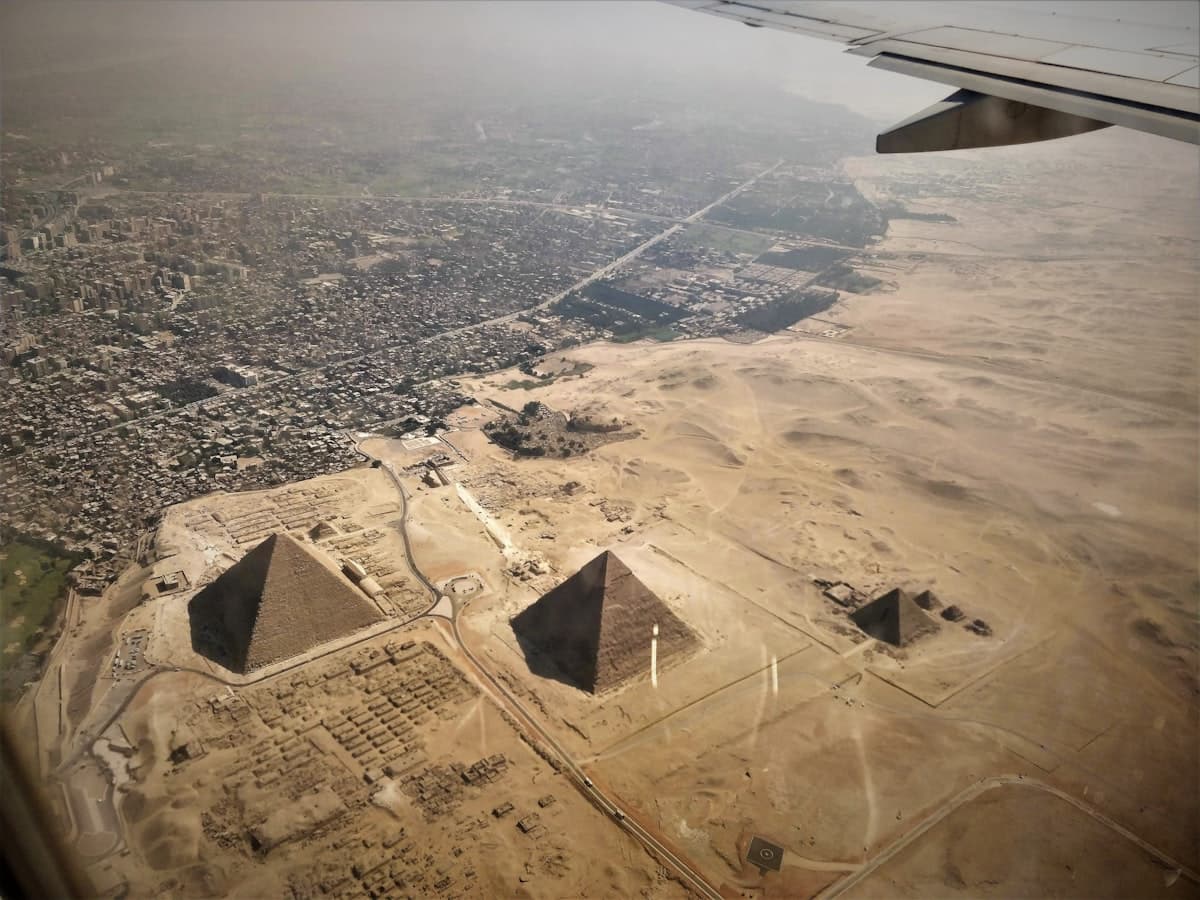
Skipping this because you have limited time. This is the contrarian take on many Cairo itineraries, which deprioritize Coptic Cairo in favor of the Pyramids and Islamic Cairo. The Ben Ezra Synagogue and the Coptic compound as a whole take two to three hours and contain more continuous inhabited history per square meter than almost anywhere else in the city. The Pyramids are older and more dramatic. They are also not a place where people lived, worshipped, argued, wrote letters, and buried their documents for 1,000 consecutive years.
Hiring a guide outside the gate. The unofficial guides who approach at Mar Girgis Metro station range from well-informed to actively misleading. They will tell you facts that are not true with complete confidence. If you want a guide, arrange one through your hotel or through a licensed agency in advance.
Expecting a functioning synagogue. Visitors sometimes arrive expecting a working religious institution. It is not. No regular services are held here. The community that would hold them does not exist in sufficient numbers. What you are visiting is a carefully preserved historical site. That is meaningful. It is different from a living congregation, and adjusting your expectation before you arrive affects what you take from it.
---
Practical Tips
Arrive before 11am to beat both the tour groups and the heat, particularly between May and September. The Mar Girgis Metro station puts you at the entrance with no navigation required. The Metro from central stations like Sadat or Ramses costs EGP 8 to 10 per journey and is faster than any surface transport during daytime hours.
Dress modestly. This is consistent across all the religious sites in the Coptic compound. Shoulders and knees covered. Women are not asked to cover their hair inside the synagogue, unlike inside the mosques a few kilometers north.
Photography is permitted inside Ben Ezra, which is not the case at all Coptic Cairo sites. The Coptic Museum prohibits photography without a paid permit. Check current rules at the museum entrance.
The compound has a small cafe near the main entrance that serves tea and coffee. It is adequate and fairly priced. The restaurants immediately outside the Mar Girgis Metro station are inexpensive and serve Egyptian staples. Do not eat at the tourist-oriented spots on the road to the compound entrance. They charge three times the price for equivalent food.
If you are combining this with Islamic Cairo, the logical route is: Coptic Cairo in the morning, walk or take a short taxi to Fustat ruins if they are accessible during your visit, then head north into Fatimid Cairo and Khan el-Khalili in the afternoon when the light on the Mamluk stonework is better anyway. This is a full day. It is worth it.
Frequently Asked Questions
The Weekly Dispatch
More on Egypt, every Friday.
Cultural depth and places most guides never mention.
No spam. Unsubscribe anytime.