Jewish Cairo & the Ben Ezra Synagogue: The Full Guide
The Ben Ezra Synagogue hid 300,000 medieval documents in a sealed room for 800 years. A Cambridge scholar's 1896 visit changed everything we know about medieval Jewish life.

Quick Facts
- Best time to visit
- October to March. The compound lanes are more comfortable in cooler temperatures, and the morning light on the stone is markedly better than summer midday. Arrive at 9am before tour groups arrive.
- Entrance fee
- Coptic Cairo compound approx EGP 180 (approx $4 USD). Ben Ezra Synagogue additional approx EGP 80 (approx $2 USD). Prices subject to change; confirm at the gate.
- Opening hours
- Daily approximately 9am to 4pm. Friday and Saturday hours may be shorter. Not a functioning place of worship, so no service schedule affects access.
- How to get there
- Cairo Metro Line 1 to Mar Girgis station, EGP 10. Station exit is directly outside Coptic Cairo walls. Taxi or ride-share from Downtown Cairo approximately EGP 40 to 70.
- Time needed
- 30 to 45 minutes for the synagogue alone. 2 to 3 hours for the full Coptic Cairo compound including the Hanging Church and Coptic Museum. Add 1 hour if walking into the Fustat area.
- Cost range
- Half-day including compound entry, synagogue, metro, and a coffee: EGP 350 to 500 per person. Adding the Coptic Museum (included in compound ticket) costs nothing extra.
The most important archive of medieval Jewish history was not found in Jerusalem, or Babylon, or Toledo. It was found in a locked storage room above a synagogue in Old Cairo, stuffed into a geniza, a sacred holding space for documents too holy to destroy. When Cambridge scholar Solomon Schechter climbed up and opened it in 1896, he pulled out roughly 300,000 manuscript fragments dating from the 9th to the 19th century: letters, legal contracts, Bible pages, love notes, shopping lists, and a complete draft of a previously unknown Hebrew text of the Wisdom of Ben Sira. The Ben Ezra Synagogue had been quietly holding the most significant cache of medieval documents ever discovered, and for eight centuries, nobody outside the community had thought to look.
This is where your visit to Jewish Cairo should begin: not with the building itself, but with what the building was trusted to keep.
Quick Facts
Best time to visit: October to March, when the heat in Old Cairo is manageable and the light in the narrow lanes of Coptic Cairo is at its best in the early morning.
Entrance fee: The Ben Ezra Synagogue is accessed through the Coptic Cairo compound. Entry to the compound costs approximately EGP 180 (roughly $4 USD) for foreigners. The synagogue itself has a separate entrance fee of approximately EGP 80 ($2 USD), though pricing is subject to change. Confirm at the gate.
Opening hours: Daily approximately 9am to 4pm. Friday and Saturday hours may be reduced. The synagogue is not a functioning place of worship, so there are no service schedules to plan around.
How to get there: The easiest route from central Cairo is the Cairo Metro Line 1, alighting at Mar Girgis station. The station exit deposits you directly outside the Coptic Cairo walls, a 90-second walk to the compound entrance. A metro ticket costs EGP 10. Taxis and ride-shares from Downtown Cairo run EGP 40 to 70 depending on traffic.
Time needed: The synagogue alone takes 30 to 45 minutes if you read carefully. Budget 2 to 3 hours to also walk the Coptic Cairo compound, including the Hanging Church and the Coptic Museum. Add another hour if you continue into the streets of Fustat.
Cost range: The compound plus synagogue entry, a coffee in the lanes nearby, and metro fare back puts you at EGP 350 to 500 per person for a half-day.
Why This Place Matters
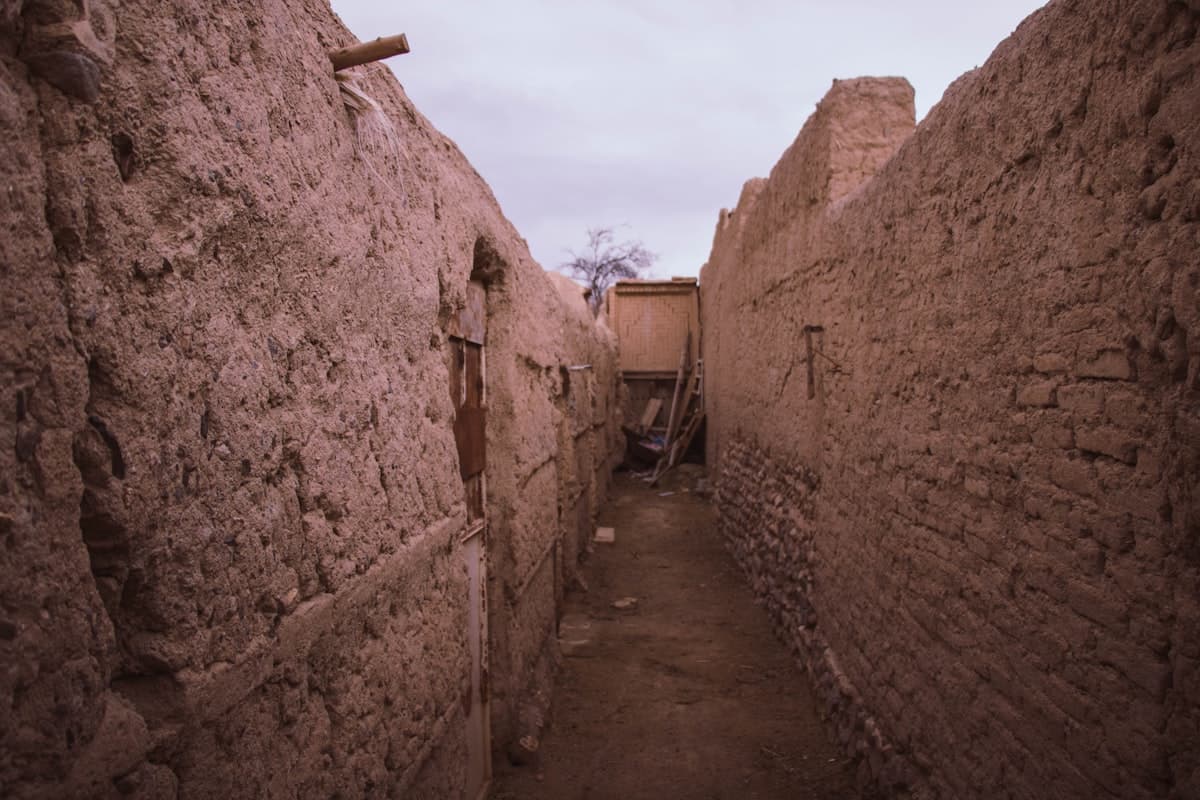
To understand what Ben Ezra is, you first need to understand what it is sitting on. The synagogue stands inside Coptic Cairo, which is itself built on the ruins of the Roman fortress of Babylon, constructed around 30 BCE to guard the southern approach to what would become Cairo. Below the Coptic churches and their Roman walls, archaeologists have identified traces of a Pharaonic settlement. This is not unusual in Cairo. Beneath almost everything, there is something older.
The Jewish community in Egypt is not a medieval story. It is a 2,500-year story. Jews arrived in Egypt in significant numbers after the Babylonian conquest of Jerusalem in 586 BCE. By the time of the Ptolemaic period, Alexandria had one of the largest Jewish populations in the world, large enough that the Hebrew scriptures were translated into Greek there, producing the Septuagint, the version of the Old Testament that most early Christians actually read. The community in what is now Coptic Cairo, then called Babylon, was established well before the Arab conquest of Egypt in 641 CE.
The Ben Ezra Synagogue specifically is said to occupy the site where, according to tradition, Moses was found in the bulrushes by Pharaoh's daughter. This claim is unprovable and probably legend, but it tells you something about how deep the community's sense of belonging to this particular piece of ground goes. The current structure dates primarily to the 9th century, when it was rebuilt by Abraham Ben Ezra, a Jerusalem-based scholar, after the Coptic community sold the site to the Jewish community to raise funds to pay a tax imposed by the Abbasid governor Ahmad ibn Tulun.
The Geniza and What It Changed
The word geniza comes from a Hebrew root meaning to hide or store. Jewish law prohibits the destruction of any document containing the name of God. Rather than burn such papers, communities placed them in a geniza, a sealed room attached to a synagogue, until enough had accumulated to warrant a formal burial. The Ben Ezra geniza was unusual in that it was never cleared out. For roughly 800 years, documents accumulated in the upper chamber, and nobody removed them.
When Solomon Schechter entered that room in 1896, accompanied by the synagogue's caretaker, he found a compression of 800 years of daily life. What he recovered was not only religious text. It was commercial correspondence between Jewish merchants in Cairo, Aden, and India. It was divorce documents, medical prescriptions, Hebrew poetry by figures previously known only by name, and a letter from Maimonides himself, the 12th-century philosopher and physician who served as court doctor to Saladin and whose family had fled from Cordoba during the Almohad persecution. Maimonides lived and worked in Fustat, the old city that begins just beyond the Coptic Cairo walls. He is buried, according to tradition, in Tiberias, Israel, but his working life was lived within walking distance of the synagogue whose geniza would later bear his community's imprint.
Schechter negotiated to bring the bulk of the documents to Cambridge, where the Taylor-Schechter Genizah Collection now holds approximately 193,000 fragments. Other pieces are held at the Jewish Theological Seminary in New York, the Bodleian at Oxford, and the Alliance Israélite Universelle in Paris. The fragments digitized by Cambridge are now searchable online. You can read a letter from a medieval Cairo merchant discussing pepper prices and still be standing in the city where he wrote it.
What You Will Actually See
The synagogue building that exists today is largely a product of the 19th-century restoration funded by the Cattaui family, one of Cairo's most prominent Jewish banking dynasties. The interior is spare, white, and cool in the way that buildings with thick old stone walls are always cool. Two rows of marble columns divide the nave. The women's gallery runs along the upper level. The ark that holds the Torah scrolls is carved wood, ornate without being excessive.
What most visitors walk past without stopping is the small display case near the entrance that contains facsimile pages from the geniza documents. These are reproductions, not originals, but they are worth pausing over. The handwriting is careful and compressed, the paper thin with age even in reproduction. One fragment, widely reproduced in academic literature, is a child's Hebrew alphabet practice sheet, the letters drawn over and over in slightly unsteady lines. Someone's child, learning to read, in a city that has been continuously inhabited since before Rome was an idea.
The geniza room itself, the upper chamber where the documents were found, is not open to visitors and has not been for some years. You can see the exterior of the staircase that leads to it from the women's gallery. It is a small, plain door. Nothing about it announces what was behind it.
The Connections
The geography of Jewish Cairo is inseparable from the geography of Islamic Cairo and Coptic Cairo. All three communities occupied Fustat and its surroundings for centuries in arrangements that were rarely simple and never what either romantic nostalgia or modern political categories suggest.
Fustat, the first Islamic capital of Egypt founded in 641 CE by the Arab general Amr ibn al-As, was built adjacent to the existing Roman and Coptic settlement at Babylon. The Ibn Tulun Mosque, the oldest intact mosque in Cairo, was built in 876 CE just one kilometer from the Ben Ezra Synagogue by Ahmad ibn Tulun, the same Abbasid governor whose tax burden reportedly forced the Coptic community to sell the synagogue site to the Jewish community in the first place. His mosque was constructed on a hill that had previously served as a Pharaonic site, using plans drawn up, according to medieval sources, by a Coptic Christian architect. The material connections between these communities were constant and practical, even when the political relationships were fraught.
Maimonides, who represents perhaps the most famous Jewish intellectual life in Cairo, was himself a product of this entanglement. He wrote in Arabic as well as Hebrew. His major philosophical work, the Guide for the Perplexed, was written in Judeo-Arabic, Arabic in Hebrew script, and was later translated into Hebrew by a Jewish scholar in Provence and into Latin by Christian scholars who introduced his ideas to Thomas Aquinas. The chain runs from a physician's house in Fustat, within sight of the Ben Ezra Synagogue, to the foundations of European Christian scholasticism.
Common Mistakes
Arriving without reading anything about the geniza first. The building itself is modest. What makes it extraordinary is the documentary history that passed through it. If you arrive knowing nothing about the Cairo Geniza, you will leave thinking you visited a small, restored synagogue. Spend 20 minutes with the Taylor-Schechter collection's online introduction before you go.
Skipping the Coptic Museum. It is 200 meters from the synagogue entrance and contains one of the most undervisited collections in Cairo, including early Christian manuscripts, Roman-era textiles, and the largest collection of Coptic art in the world. The entry is included in the compound ticket. Most tourists walk past the door.
Expecting an active Jewish community. Egypt's Jewish population, which numbered around 80,000 in the 1940s, had fallen to fewer than 100 by the early 2000s. The last known member of the Ben Ezra congregation died in 2021. The synagogue is a heritage site, not a functioning community space. It is maintained by the Egyptian government. This is worth understanding before you visit, because it changes what you are looking at.
Taking the guided tour offered near the Mar Girgis metro exit. These are unofficial guides who work on commission from nearby shops. Their historical information is unreliable and the tour ends, without exception, at a papyrus shop. The synagogue's own printed materials are adequate, and the Coptic Museum staff are genuinely knowledgeable.
Conflating the Ben Ezra visit with the broader Jewish Cairo walking tour without a specialist guide. Several other Jewish sites in Cairo are worth finding: the Sha'ar Hashamayim Synagogue on Adly Street in Downtown Cairo is architecturally more impressive and rarely has more than a handful of visitors. But it requires advance permission to enter, arranged through Egypt's Jewish Community Association. Showing up without permission gets you to the door and no further.
The sound and light shows at nearby Coptic and Islamic sites cost EGP 200 to 350 and deliver narration at a level calibrated for a group that has never heard of Egypt before. Skip them. The sites themselves, in the actual morning light, will tell you more.
Rushing the lanes of Coptic Cairo. The narrow streets between the compound walls and the Mar Girgis metro contain some of the best incense shops in the city, run by families who have supplied Coptic churches for generations. The smell alone, frankincense and myrrh cut with something sharper, cedar or sandalwood, is specific to this quarter and worth stopping for.
Practical Tips
Arrive at 9am when the compound opens. By 11am, the tour groups arrive in waves, the lanes fill, and the synagogue interior becomes difficult to move through quietly. The early morning light in Coptic Cairo is also genuinely different: lower, warmer, reflecting off the old stone in a way that the midday sun flattens entirely.
Dress conservatively. This applies throughout the Coptic Cairo compound and is enforced at the synagogue entrance. Shoulders and knees covered. A light layer carried in your bag solves the problem regardless of season.
Photography is permitted inside the Ben Ezra Synagogue. It is not permitted in all sections of the Coptic Museum. Ask before raising your camera.
If your visit falls during Ramadan, the compound may have adjusted hours. Verify before traveling. The surrounding street vendors and food stalls will, conversely, be more lively and the street food in the evenings in the nearby lanes of Old Cairo is worth planning around.
For a serious engagement with Jewish Cairo history, the book that repays the most effort is Adina Hoffman and Peter Cole's "Sacred Trash: The Lost and Found World of the Cairo Geniza," which manages to be both scholarly and readable. It will change what you see when you stand in the synagogue.
Frequently Asked Questions
The Weekly Dispatch
More on Egypt, every Friday.
Cultural depth and places most guides never mention.
No spam. Unsubscribe anytime.