Mohamed Ali Mosque: Albanian Ambition Built in Cairo Stone
An Albanian soldier who couldn't read became Egypt's most transformative ruler. His mosque was designed by a Greek architect and built partly by French prisoners of war.

Quick Facts
- Best time to visit
- October to March. Arrive at 8am to beat tour groups. Avoid Friday midday due to prayer closures.
- Entrance fee
- EGP 450 (approx $9 USD) for foreigners, covers the full Citadel including all museums. Egyptian students EGP 100.
- Opening hours
- Daily 8am to 5pm (winter), 8am to 6pm (summer). Brief closure during Friday midday prayer.
- How to get there
- Metro to Sayyida Zeinab then tuk-tuk EGP 10 to 20. Taxi from Tahrir EGP 50 to 80. Bus 951 from Abdel Moneim Riad terminal EGP 5.
- Time needed
- 2 to 3 hours for the mosque alone. 4 to 5 hours for the full Citadel including al-Nasir Muhammad Mosque and museums.
- Cost range
- Budget EGP 500 to 800 per day combining with Islamic Cairo on foot. Mid-range EGP 1,500 to 2,500 with lunch and private guide.
Quick Facts
Best time to visit: October to March, early morning (8am to 10am) before tour groups arrive
Entrance fee: Included in the general Citadel ticket: EGP 450 for foreigners (approx $9 USD), EGP 100 for Egyptian students. The Citadel also contains the Military Museum and the Carriage Museum under the same ticket.
Opening hours: Daily 8am to 5pm (winter), 8am to 6pm (summer). Closed to non-worshippers briefly during Friday midday prayer.
How to get there: From Downtown Cairo, take the Metro to Sayyida Zeinab station (Line 2) then a tuk-tuk or taxi uphill to the Citadel gate, roughly EGP 20 to 40. From Tahrir Square, a taxi direct to Bab al-Gadid (the main entrance) costs EGP 50 to 80 depending on traffic. Bus line 951 from Abdel Moneim Riad terminal stops near the Citadel for EGP 5.
Time needed: 2 to 3 hours for the mosque alone with serious attention. A full Citadel visit including al-Nasir Muhammad Mosque and the museums takes 4 to 5 hours.
Cost range: Budget EGP 500 to 800 per day if combining with Islamic Cairo on foot. Mid-range EGP 1,500 to 2,500 if adding lunch at a sit-down restaurant near Khan el-Khalili.
---
An Albanian soldier arrived in Egypt in 1801 as part of an Ottoman force sent to expel Napoleon's army. He spoke no Arabic, had never administered anything larger than a market garrison, and was functionally illiterate for most of his adult life. Within four years he controlled Egypt. Within fifteen he had massacred the entire Mamluk ruling class at a dinner he personally invited them to. Within thirty he had built a mosque that dominates the Cairo skyline from virtually every direction, commissioned in a style that had nothing to do with Egypt and everything to do with his determination that no one would ever again confuse his dynasty for a temporary arrangement.
This is the Albanian history Egypt's most recognizable skyline monument carries inside it, and almost no one who photographs it from the Citadel ramparts knows it.
Why This Place Matters
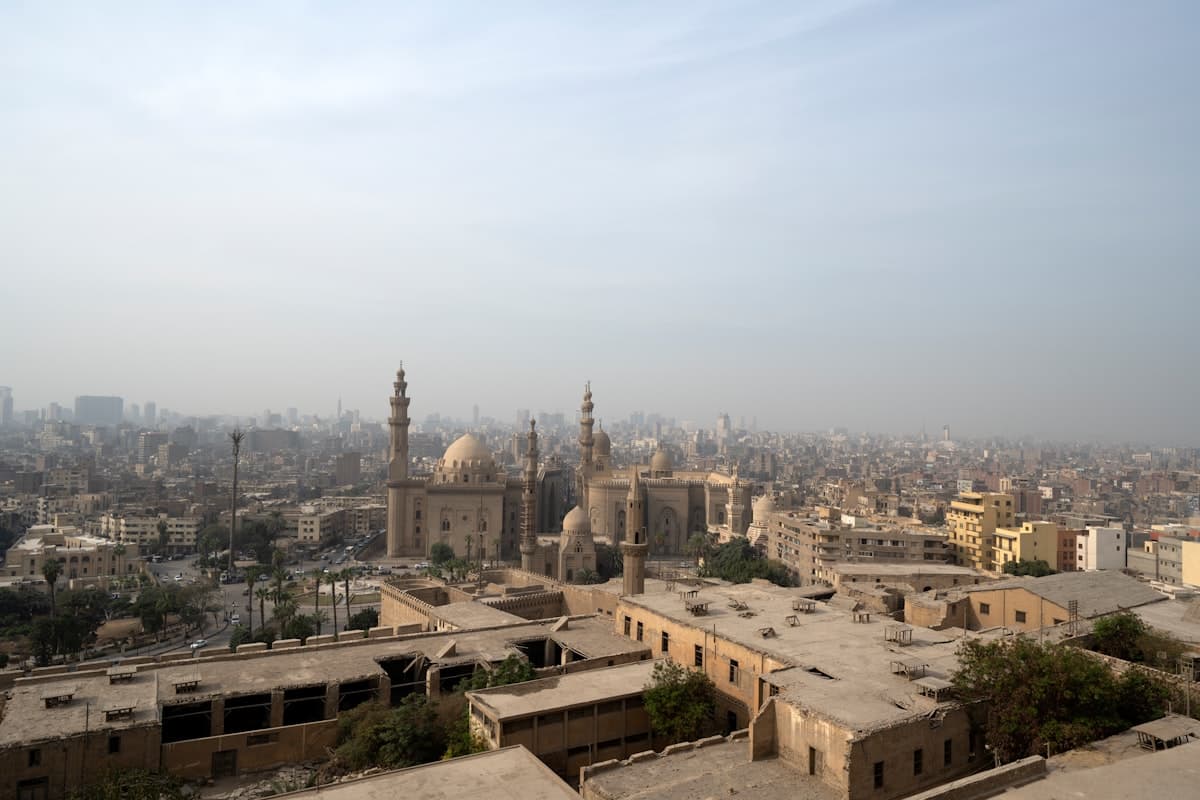
The Citadel of Cairo was built by Saladin between 1176 and 1183 CE, using limestone quarried partly from the outer casing stones of smaller Giza pyramids. He chose the Muqattam spur because it caught the prevailing north wind, making it the coolest elevated point in the city during summer. For the next seven centuries, whoever held the Citadel held Egypt.
Mohamed Ali Pasha held it from 1805 until his death in 1849, and he used that tenure to demolish almost everything the Mamluks had built on the plateau and replace it with his own architectural program. The mosque that carries his name was commissioned in 1830, designed by Yusuf Bushnak, a Greek-Ottoman architect from Istanbul, and built in the Ottoman Baroque style that was then fashionable in the Sultan's capital. It was not finished until 1857, eight years after Mohamed Ali died.
The deliberate reference point was the Sultan Ahmed Mosque in Istanbul (the Blue Mosque, completed 1616). Both use a cascade of domes and semi-domes and both were built by rulers who needed a monument to signal political legitimacy to an Ottoman audience. Mohamed Ali was officially a vassal of the Ottoman Sultan; this mosque was, among other things, a message about how he interpreted that relationship.
The alabaster that sheaths the mosque's exterior courtyard walls from floor to midpoint was quarried at Beni Suef, about 120 kilometers south of Cairo. Egyptians have been working that same alabaster seam since the Predynastic period. The French clock that stands in the courtyard, visibly broken for well over a century now, was a gift from King Louis-Philippe in 1846 in exchange for the obelisk Mohamed Ali sent him, which still stands in the Place de la Concorde in Paris.
What You Will Actually See
The approach through the Citadel's outer gates prepares you incompletely for the interior. The mosque's twin minarets are 84 meters tall, the highest in Cairo, and they are visible from the Nile. Up close, the Ottoman Baroque details become strange: acanthus-scroll brackets, rounded arches with something almost Italianate in their proportions, and a dome system that sits slightly awkwardly above an Egyptian city that spent seven centuries developing its own entirely different aesthetic vocabulary.
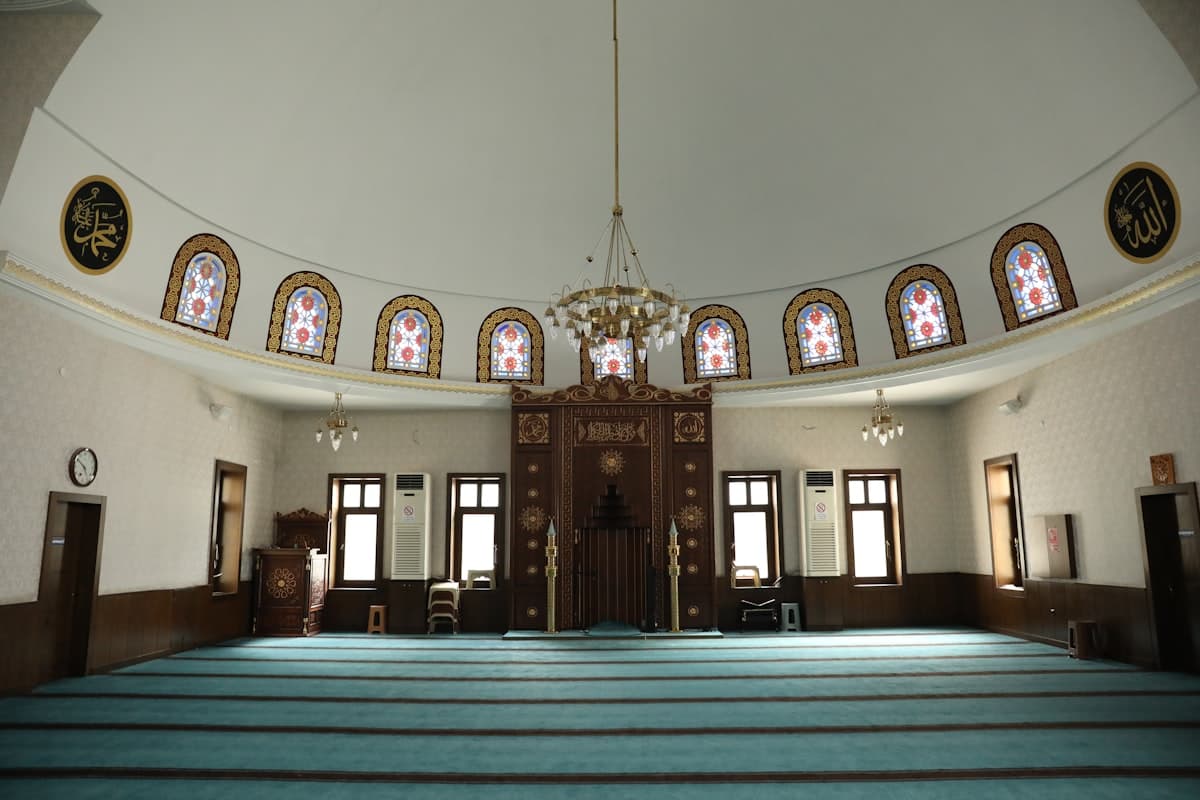
Inside, the single large dome reaches 52 meters at its apex. The interior is lit by hundreds of hanging brass lamps (electrified now, but original in form) and by light entering through windows set into the dome's base. The effect on a clear winter morning, when the light enters at an oblique angle and falls on the carpeted floor in long yellow columns, is worth arriving at 8am for.
On the qibla wall (the wall oriented toward Mecca), the mihrab and minbar are Ottoman in style but the craftsmen who built them were largely Egyptian. Look at the stalactite vaulting in the mihrab niche: this muqarnas work is the point where Egyptian craft tradition and Istanbul design specification met and negotiated a result.
Mohamed Ali himself is buried here, in a small marble mausoleum behind a bronze grille on the right side of the mosque interior as you enter. The tomb is modest to the point of incongruence given what surrounds it. Most visitors walk past it entirely.
What Most Visitors Walk Past
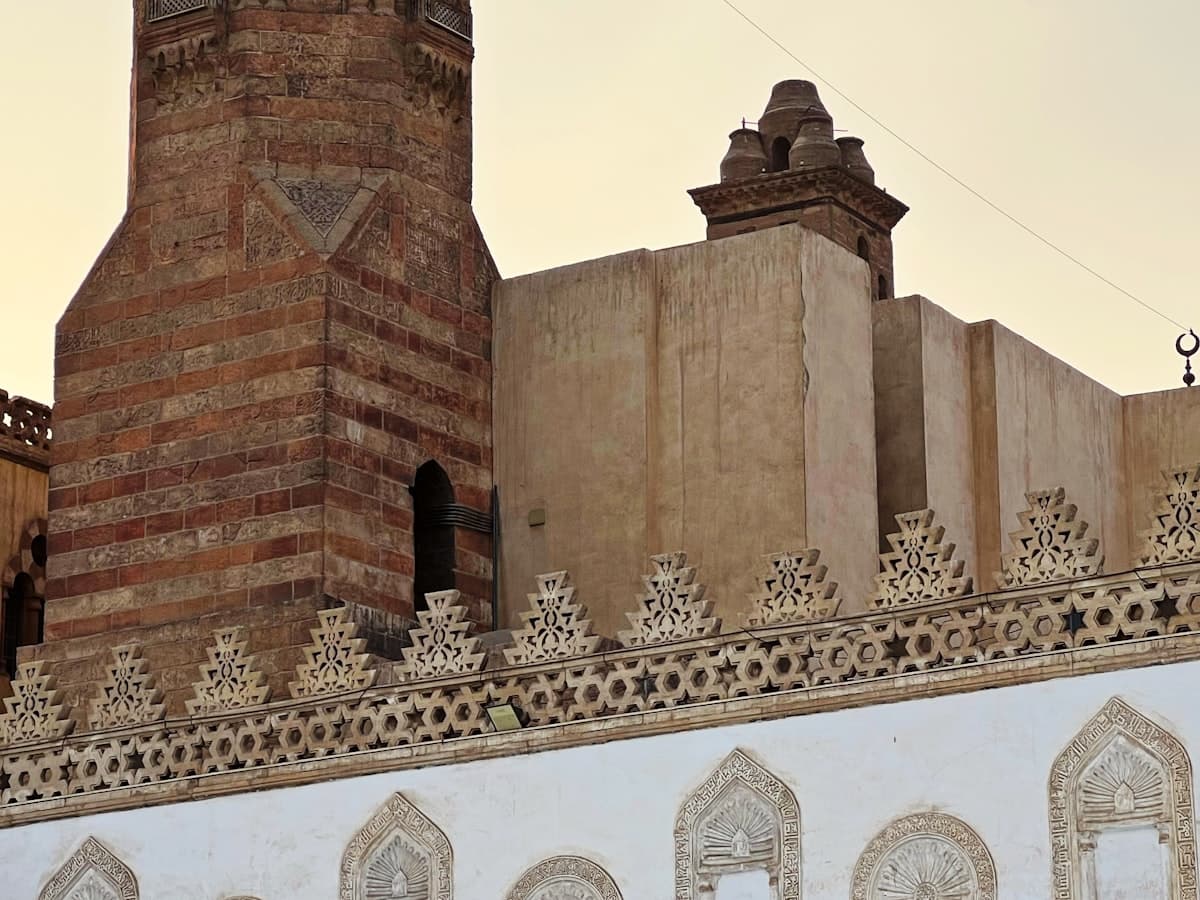
The second mosque on the Citadel plateau, al-Nasir Muhammad Mosque, is a hundred meters from the Mohamed Ali Mosque and visited by perhaps one in ten people who make the trip. This is a genuine loss. Al-Nasir Muhammad was a Mamluk sultan who ruled Egypt (with two interruptions) from 1293 to 1341 CE, the longest reign of any Mamluk, and his mosque, completed in 1335, contains two minarets of entirely different styles: one is Gothic, taken from a Crusader church in Acre after the city fell to the Mamluks in 1291. The minaret was dismantled, transported to Cairo, and set on top of an Islamic prayer hall. It is one of the more explicit architectural statements of military victory in the city.
The mosque's interior is stripped. Mohamed Ali removed the marble cladding in the 1820s to use in his palace at Shubra. What remains is the stone structure itself, which makes the proportions of the Mamluk design easier to read than they would be if the decorative surface were intact.
The Connections
Standing on the Citadel's northern ramparts, you are looking down onto a city that Mohamed Ali restructured not just architecturally but economically and medically. He sent the first Egyptian student missions to Paris and Milan in 1826, 44 students in total, many of them studying medicine and engineering. The Egyptian state medical system, which today operates 2,143 hospitals, traces its institutional origin directly to those missions and to the medical school Mohamed Ali established at Abu Zaabal in 1827 under the French physician Antoine Barthélemy Clot.
The Albanian history Egypt absorbed through Mohamed Ali runs deeper than a mosque. He abolished the tax-farming system the Ottomans had used, nationalized agricultural land, established state monopolies on cotton and sugar, and created a professional conscript army that ultimately threatened to take Istanbul itself: his son Ibrahim Pasha's forces reached Kutahya in Anatolia in 1833 before European powers intervened diplomatically to stop them.
The Citadel itself connects further back. Beneath the plateau and extending through the neighborhoods of Islamic Cairo below it run the remains of a canal system that Pharaonic engineers dug to connect the Nile to the Red Sea. The Ptolemies partially restored it. The Romans extended it again. The Arab general Amr ibn al-As reopened it after the conquest in 641 CE to ship grain to Arabia during a famine. It silted permanently in the 8th century. Some of its stone-lined sections still run under the foundations of mosques and houses in the Darb al-Ahmar neighborhood you can see from the Citadel walls.
The Mamluks that Mohamed Ali massacred in 1811 in the very Citadel where you are standing were themselves a slave-soldier caste who had ruled Egypt since 1250 CE. They were originally purchased as children in the Caucasus, trained as cavalry, and converted to Islam. They defeated the Mongols at Ain Jalut in 1260 CE, the first significant defeat of the Mongol army anywhere, and that victory preserved both Egypt and, arguably, the Levant from devastation. Mohamed Ali did not abolish slavery; he redirected its political products. The system he terminated and the system he built were both rooted in the same Ottoman logic of purchasing loyalty.
Common Mistakes
Arriving by tour bus between 10am and 2pm. This is when 70 percent of Citadel visitors are on site. The mosque's interior becomes difficult to navigate and the rampart views are experienced through other people's phones. If you arrive at 8am, you will have the interior largely to yourself for at least forty minutes.
Skipping the al-Nasir Muhammad Mosque to save time. The Crusader Gothic minaret alone justifies the hundred-meter walk. You have already paid for it with your Citadel ticket.
Paying for the sound and light show at the Citadel. It costs EGP 350, runs 45 minutes, and narrates a version of Egyptian history that stops being interesting around the third battle scene. Nothing in it will add to what you learn by walking the site with attention during daylight.
Wearing shoes that cannot be removed quickly. You will remove your shoes at the mosque entrance, place them in a plastic bag provided at the door, and carry them. Slip-on shoes or sandals save real time and frustration.
Assuming the broken clock in the courtyard is a minor detail. Ask a guide or look it up before you go: the Luxor obelisk it was exchanged for has stood in the Place de la Concorde since 1836. Egypt sent a 3,300-year-old monument to Paris and received a clock that has not worked since the 19th century. This exchange tells you something precise about the terms on which Mohamed Ali negotiated with European powers.
Eating at the tourist restaurants immediately outside the Citadel gates. Prices are double what you will pay two streets further into the Darb al-Ahmar neighborhood, and the food is worse. Walk down Sharia Salah Salem toward the Ibn Tulun Mosque area for better options.
Expecting a quiet spiritual space. The Mohamed Ali Mosque is a functioning mosque and a UNESCO-adjacent heritage site and a major tourist destination simultaneously. It manages all three badly. If you want a Mamluk mosque that is actually quiet and actually beautiful and actually lets you think, go to the Sultan Hassan Mosque directly across the square from the Citadel entrance. It was built between 1356 and 1363 CE, is structurally one of the most sophisticated buildings in Africa, and on a weekday morning you may have it nearly to yourself.
Practical Tips
Dress conservatively: covered shoulders and knees for everyone, and women will be offered a headscarf at the entrance if they are not wearing one. Accepting it is straightforward and expected.
The Citadel's Bab al-Gadid entrance on the northern side is the main tourist entrance. The southern Bab al-Qulla gate is used primarily by locals and is less clearly signposted from the road. Either works but the northern entrance has the ticket windows.
Friday mornings are simultaneously the most atmospheric and most crowded time to visit. The call to prayer echoing off the Citadel stone at noon on a Friday, with the city spreading below you all the way to the Nile, is worth the additional crowd management. If you go on a Friday, arrive by 8:30am and plan to leave before 11:30am.
A knowledgeable private guide for the Citadel and Islamic Cairo costs EGP 500 to 800 for a half-day. This is worth paying once if you are spending serious time in Cairo. The difference between walking the Citadel with someone who knows Ottoman architectural history and walking it with a laminated pamphlet is not a marginal difference.
Photography is permitted inside the mosque without a tripod. Video is technically restricted but enforcement is inconsistent.
Frequently Asked Questions
The Weekly Dispatch
More on Egypt, every Friday.
Cultural depth and places most guides never mention.
No spam. Unsubscribe anytime.