Mohamed Ali Mosque: Albanian History in Cairo's Citadel
An Albanian soldier who massacred his rivals at a banquet built Cairo's most recognizable skyline. The mosque he left behind borrowed everything from Istanbul and still outshines the original.

Quick Facts
- Best time to visit
- October to April, before 10am. Winter mornings offer clear pyramid views from the north terrace and bearable temperatures inside the alabaster-walled interior.
- Entrance fee
- EGP 450 adults (approx $9 USD), EGP 225 students with ID. Covers all Citadel sites including al-Nasir Muhammad Mosque and Gawhara Palace.
- Opening hours
- Daily 8am to 5pm. Closed to visitors during Friday prayer, approximately 12pm to 1:30pm.
- How to get there
- Taxi from Downtown Cairo EGP 50 to 80. Uber EGP 60 to 90. Metro to Sayyida Zeinab then tuk-tuk EGP 5 to 10. No direct metro stop.
- Time needed
- 2 hours minimum for the mosque alone. Half a day if combining with al-Nasir Muhammad Mosque, Gawhara Palace, and the view terraces.
- Cost range
- EGP 600 to 900 covers transport, entrance, and a coffee afterward. EGP 1,200 to 1,500 if adding a guided context tour.
Quick Facts
Best time to visit: October to April, before 10am to beat both heat and tour groups
Entrance fee: Included in the Citadel complex ticket: EGP 450 (approx $9 USD), students EGP 225. The ticket also covers the Military Museum and the National Police Museum inside the Citadel walls.
Opening hours: Daily 8am to 5pm. The mosque itself closes briefly during Friday prayer, roughly 12pm to 1:30pm.
How to get there: Taxi from Downtown Cairo runs EGP 50 to 80. The Cairo Metro does not reach the Citadel directly. Take the metro to Sayyida Zeinab station, then a tuk-tuk or microbus up Salah Salem Road for EGP 5 to 10. Uber from most central hotels costs EGP 60 to 90.
Time needed: Two hours minimum for the mosque alone. Half a day if you also visit the Gawhara Palace museum, the Mosque of al-Nasir Muhammad inside the Citadel, and the view terraces facing the pyramids.
Cost range: EGP 600 to 900 for the Citadel visit with transport and a coffee afterward.
---
An Albanian soldier arrived in Egypt in 1801 as part of an Ottoman expeditionary force sent to expel Napoleon's army. He had no land, no title, and no particular claim to anything. Within four years he was the most powerful man in the country. Within twenty years he had reorganized the Egyptian military, gutted the Mamluk ruling class in a single afternoon of systematic murder, and commissioned a mosque that would define the Cairo skyline for the next two centuries.
His name was Mohamed Ali Pasha, and the mosque he built between 1830 and 1848 is still the first thing most people see when they look at Cairo from any elevated point. It is also the most misunderstood building in Egypt.
Why This Place Matters
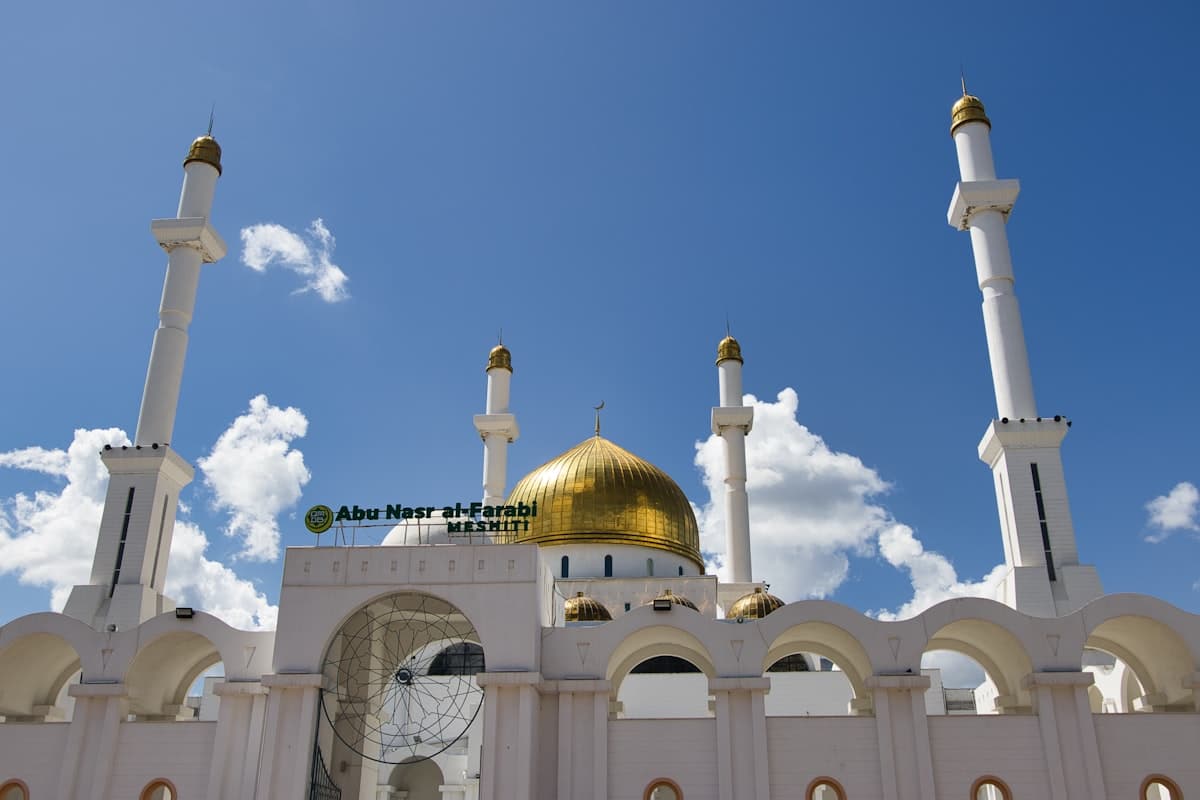
Most visitors walk into the Mohamed Ali Mosque expecting to encounter Egypt. What they encounter instead is a deliberate act of political theater aimed at Constantinople.
Mohamed Ali was Albanian by birth, Ottoman by political identity, and Egyptian by ambition. When he commissioned his mosque, he did not call on Egyptian craftsmen or Egyptian architectural traditions. He hired a Greek-Armenian architect named Yusuf Boshna and ordered a design that was a direct copy of the Blue Mosque in Istanbul, completed in 1616. The cascading domes, the two minarets with their distinctive pencil-like silhouettes, the Ottoman geometric tilework inside: all of it was a message to the Ottoman Sultan that Mohamed Ali was an equal, not a vassal. He was building his legitimacy in stone, and he was building it in the architectural language of Istanbul.
The irony is that the mosque he built to prove he was Ottoman now sits in a city he spent his career trying to make independent of the Ottoman Empire. In 1831, Mohamed Ali's forces under his son Ibrahim Pasha invaded Syria and got within two hundred kilometers of Constantinople before European powers intervened to stop them. The man who commissioned a monument to Ottoman aesthetic taste came closer than any Egyptian ruler since Saladin to breaking Ottoman power entirely.
The site itself adds another layer. The Citadel of Cairo was founded in 1176 by Saladin, the Kurdish commander who had defeated the Crusaders and consolidated Sunni rule over Egypt. Saladin chose the spur of the Muqattam Hills because it commands every approach to the city. Mohamed Ali demolished large sections of Saladin's original Citadel to make room for his palace and mosque complex. The Ottoman kiosk that Salah al-Din built his fortress to protect was now hosting an Ottoman-style mosque commissioned by an Albanian pasha who was technically loyal to the Ottoman Sultan but had just invaded the Sultan's territories. Cairo's history has always operated on this kind of layered contradiction.
What You Actually See Inside
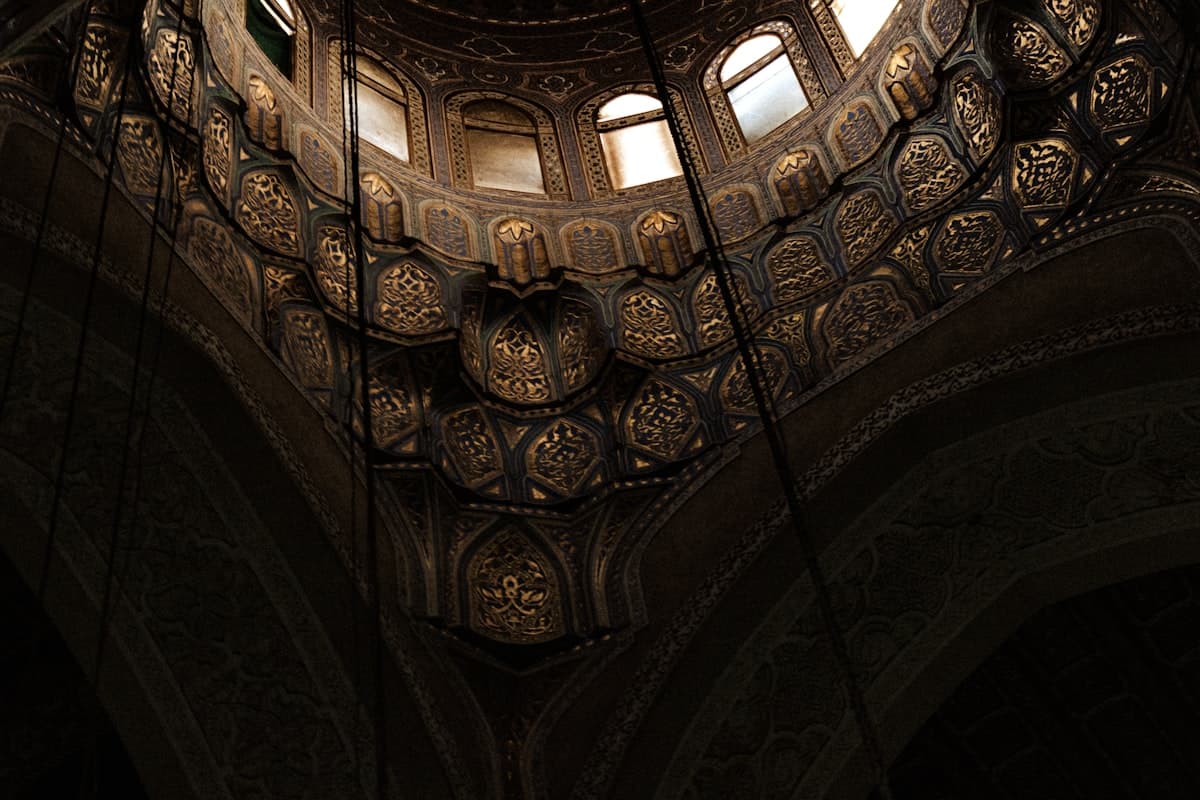
The mosque's interior is organized around a central dome 52 meters high, flanked by four smaller semi-domes. The walls up to window height are covered in alabaster panels quarried from the Eastern Desert, which gives the interior its cool, slightly luminous quality in morning light. Above the alabaster, the walls are painted in a style that owes more to European baroque than to classical Islamic tradition, the result of a late renovation completed after Mohamed Ali's death, when his successors had become significantly more interested in Paris than in Istanbul.
The chandeliers are original, and they are extraordinary. The central chandelier holds 365 lamps. Whether Mohamed Ali specified that number for the days of the year or whether it is a coincidence that became a legend, no one can now say. What can be said is that they weigh several tons and that the Ottoman craftsmen who made them had no cranes. The logistics of getting them into place are not discussed on any tour, but they should be.
On the left side of the interior, as you face the qibla wall, is the tomb of Mohamed Ali himself. He died in 1849, the year after the mosque was completed, in Alexandria. He is buried here in a white marble sarcophagus behind an ornate iron grille. Almost no one stops at the tomb. Almost everyone should, because this is one of the only places in Cairo where you can stand within a few meters of the man who created modern Egypt, in the building he created to justify himself.
The Clock Tower Debt
In the courtyard, the first thing you see after passing through the entrance gate is a tall clock tower that looks completely wrong in its Ottoman-Egyptian setting. It is French. Specifically, it was a gift from King Louis-Philippe of France in 1845, sent in exchange for the obelisk that stands today in the Place de la Concorde in Paris. Mohamed Ali had gifted the obelisk, one of a pair that had stood at the entrance to Luxor Temple for roughly 3,200 years, to France in 1833. Louis-Philippe sent a clock in return. The clock has never worked properly. The obelisk has stood in Paris for nearly two centuries. Egyptians have been making this point ever since.
The Albanian History Egypt Mohamed Ali Connection
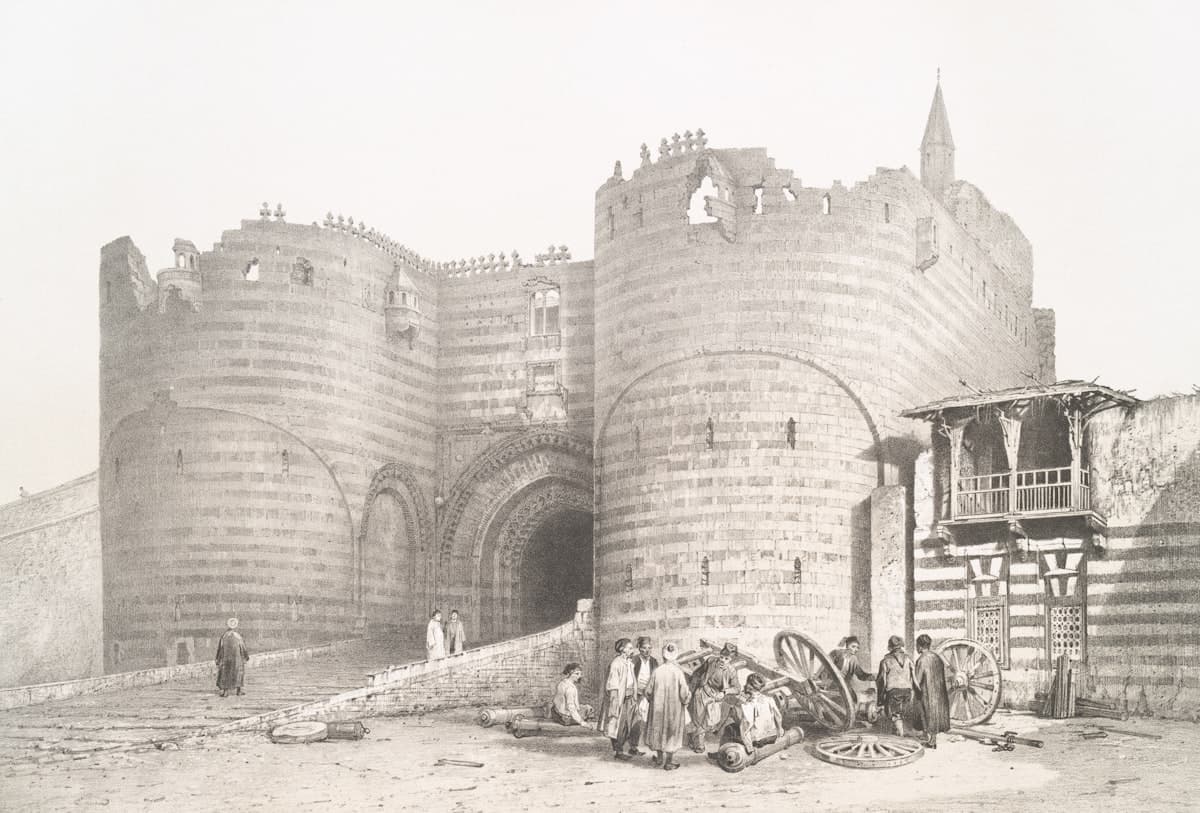
To understand what Mohamed Ali represents in Egyptian history, it helps to understand what he replaced.
The Mamluks had ruled Egypt, with interruptions, since 1250. They were a military caste of enslaved soldiers, mostly Circassian and Turkish in origin, who had been purchased as boys, trained as cavalry, converted to Islam, and eventually elevated to rule the country that had bought them. By the time Mohamed Ali arrived, they were still the effective power in Egypt under nominal Ottoman sovereignty. On March 1, 1811, Mohamed Ali invited the leading Mamluk beys to the Citadel for a ceremony celebrating his son Tusun's appointment to command the Arabian campaign. As the procession moved through the narrow passage between the Bab al-Azab gate and the upper Citadel, Mohamed Ali's soldiers closed both ends of the passage and opened fire. Between 470 and 500 Mamluks were killed in what became known as the Citadel Massacre. One, according to the most persistent account, jumped his horse from the Citadel walls and survived. Every other Mamluk leader in Egypt was dead by nightfall.
This is the context in which the mosque was built. It was not simply a place of worship. It was a monument raised by a man who had just eliminated the entire previous ruling class of Egypt in a single afternoon, on the same ground where the killing happened. The Bab al-Azab gate, through which the Mamluks entered and through which none left, still stands at the base of the Citadel. You pass close to it on the approach road.
The Albanian history Egypt connection runs deeper than Mohamed Ali personally. He established a dynasty, technically the Muhammad Ali dynasty, that ruled Egypt until 1952, when a military coup led by Gamal Abdel Nasser forced King Farouk, Mohamed Ali's great-great-grandson, into exile. The family that an Albanian soldier founded in the early nineteenth century governed Egypt for 140 years.
The Connections
The Citadel sits on a ridge that has been militarily significant since the Pharaonic period. The Romans built a fortress at its base, Babylon Fortress, which still stands in what is now Coptic Cairo. Saladin incorporated Roman building techniques into his twelfth-century walls. The Mamluks who built the Mosque of al-Nasir Muhammad inside the Citadel in 1318 used columns stripped from Pharaonic temples in Upper Egypt, then covered the courtyard floor with marble shipped from Italy and Crusader-era buildings in Palestine. You can see those stripped-down columns still standing inside al-Nasir's mosque, which is fifty meters from Mohamed Ali's door and visited by perhaps one-tenth the number of people.
The Ottoman tilework inside the Mohamed Ali Mosque connects directly to the Iznik tile tradition, the same tradition you see in the Mosque of Sinan Pasha in Bulaq, built in 1571 by the Ottoman governor who was Suleiman the Magnificent's admiral. Both buildings are in Cairo. Most visitors to one never visit the other.
For a guide to Albanian history in Egypt through Mohamed Ali, the most honest starting point is not the mosque itself but the view from the terrace on the mosque's north side, where on a clear winter morning you can see the Pyramids of Giza directly to the west. Mohamed Ali could see them too, and he stripped the outer limestone casing from the Pyramid of Menkaure, the smallest of the three, in 1215. He ran out of money before he could complete the demolition. The casing stones he did remove were used to build the harbor walls of Alexandria. The Pyramids survived an Albanian pasha's infrastructure project by running over budget.
Common Mistakes
Arriving at midday in summer. The alabaster walls hold heat efficiently. By 11am in July, the interior is uncomfortable in ways that undermine any attempt at reflection. The light is also flat and harsh. Come before 9:30am.
Paying for a guided tour of the mosque interior. The guides stationed inside the mosque are not official employees and are not required. Several are knowledgeable. Several will repeat the same five facts and then ask for a tip. The additional fee they request, sometimes EGP 50 to 100, buys you nothing you cannot learn from this article or a thirty-minute read beforehand.
Skipping the Mosque of al-Nasir Muhammad. It is fifty meters away, costs nothing beyond your Citadel ticket, and contains those stripped Pharaonic columns covered in Mamluk marble covered in Italian stonework. It is empty most of the time. It is arguably more interesting than the Mohamed Ali Mosque and receives perhaps 5 percent of the attention.
The sound and light show at the Citadel. It costs EGP 300 and tells you a simplified version of what a basic read on Egyptian history already covers. The Citadel at night, viewed from outside on Salah Salem Road, is free and considerably more atmospheric.
Assuming the clock tower is worth photographing. It looks like a French municipal building was air-dropped into an Ottoman courtyard, because essentially it was. Photograph it if you want to explain the obelisk story. Otherwise your time is better spent at the tomb.
Leaving without walking to the north terrace. The view of Cairo from the terrace north of the mosque, with the medieval minarets of the old city spreading below and the Pyramids visible in the distance on clear mornings, is the most complete visual summary of Egyptian history available from a single point. No one tells you to go there. Go there.
Going on a Friday afternoon. The mosque closes during Friday prayer, and the entire Citadel area becomes significantly more congested as worshippers arrive and depart. If Friday is your only option, arrive before 11am.
Practical Tips
Dress conservatively. The mosque is an active place of worship, and visitors in shorts or sleeveless tops will be offered robes at the entrance, which costs time and EGP 10 to 20 in tips. Women should bring a scarf. This is not a suggestion.
Bring your own water. The vendors inside the Citadel walls sell water at two to three times the street price. There is a reasonable kiosk just outside the main Citadel gate where prices are normal.
The Citadel ticket covers multiple sites within the walls. Use it. The Gawhara Palace museum contains Mohamed Ali's original reception halls and furniture, including European-made pieces that show exactly how aggressively his court was trying to signal modernity and proximity to European powers in the 1840s. It takes forty minutes and is usually nearly empty.
If you are coming from Coptic Cairo or Khan el-Khalili, both are within a fifteen-minute taxi ride. A logical half-day combines the Citadel with Al-Azhar Mosque and the Khan, keeping to the Islamic Cairo district without the pyramid-and-mosque loop that tour operators sell and which exhausts everyone by 2pm.
Photography inside the mosque is permitted without flash. The light through the upper windows in morning hours is the best available. The dome interior, shot from directly beneath with a wide lens, is the frame that justifies the effort.
Frequently Asked Questions
The Weekly Dispatch
More on Egypt, every Friday.
Cultural depth and places most guides never mention.
No spam. Unsubscribe anytime.