Mohamed Ali Mosque & Albanian History in Egypt: A Full Guide
Mohamed Ali was Albanian, spoke no Arabic when he seized Egypt, and built the mosque that defines Cairo's skyline. The Ottoman connection most visitors never hear.

Quick Facts
- Best time to visit
- October to March for cooler temperatures and better light on the alabaster. Arrive before 10am to avoid tour groups.
- Entrance fee
- EGP 450 (approx $9 USD), students EGP 225 with valid ID. Covers entire Citadel complex.
- Opening hours
- Daily 8am to 5pm (winter), 8am to 6pm (summer). Closed to tourists during Friday midday prayers approx 11:30am to 1:30pm.
- How to get there
- Taxi or rideshare from Downtown Cairo: EGP 60 to 100, 20 to 30 minutes. Microbus along Salah Salem Road from Midan Ramses: under EGP 10, 10-minute walk to entrance.
- Time needed
- 2 hours for the mosque alone. 3 to 4 hours to include al-Nasir Muhammad Mosque and the Military Museum.
- Cost range
- Budget EGP 700 to 1,000 per person including transport, entry, and lunch. Mid-range EGP 1,800 to 2,500 with a licensed guide and sit-down meal.
Quick Facts
Best time to visit: October to March, when the Citadel plateau stays below 25°C and the light on the alabaster facade turns the color of old bone around 9am.
Entrance fee: EGP 450 for foreign adults (approximately $9 USD at current rates). The ticket covers the entire Citadel complex, including the Military Museum and the Mosque of al-Nasir Muhammad. Students with valid ID pay EGP 225.
Opening hours: Daily 8am to 5pm in winter, 8am to 6pm in summer. Friday prayers close the mosque to tourists between approximately 11:30am and 1:30pm.
How to get there: The most direct route is a taxi or rideshare from Downtown Cairo, roughly EGP 60 to 100 depending on traffic. The Cairo Metro does not reach the Citadel directly. From Midan Ramses or Tahrir, a microbus to the Salah Salem road will deposit you near the base of the hill for under EGP 10, with a ten-minute walk up. Uber and Careem are reliable from anywhere in central Cairo.
Time needed: Two hours for the mosque alone if you read slowly and talk to the custodians. Three to four hours if you combine it with al-Nasir Muhammad Mosque and the Carriage Museum inside the Citadel walls.
Cost range: Budget day around EGP 700 to 1,000 including transport, entry, and a koshary lunch near the Citadel gate. Mid-range EGP 1,800 to 2,500 if you add a guide and lunch at a sit-down restaurant on the Salah Salem strip.
---
Why This Place Matters
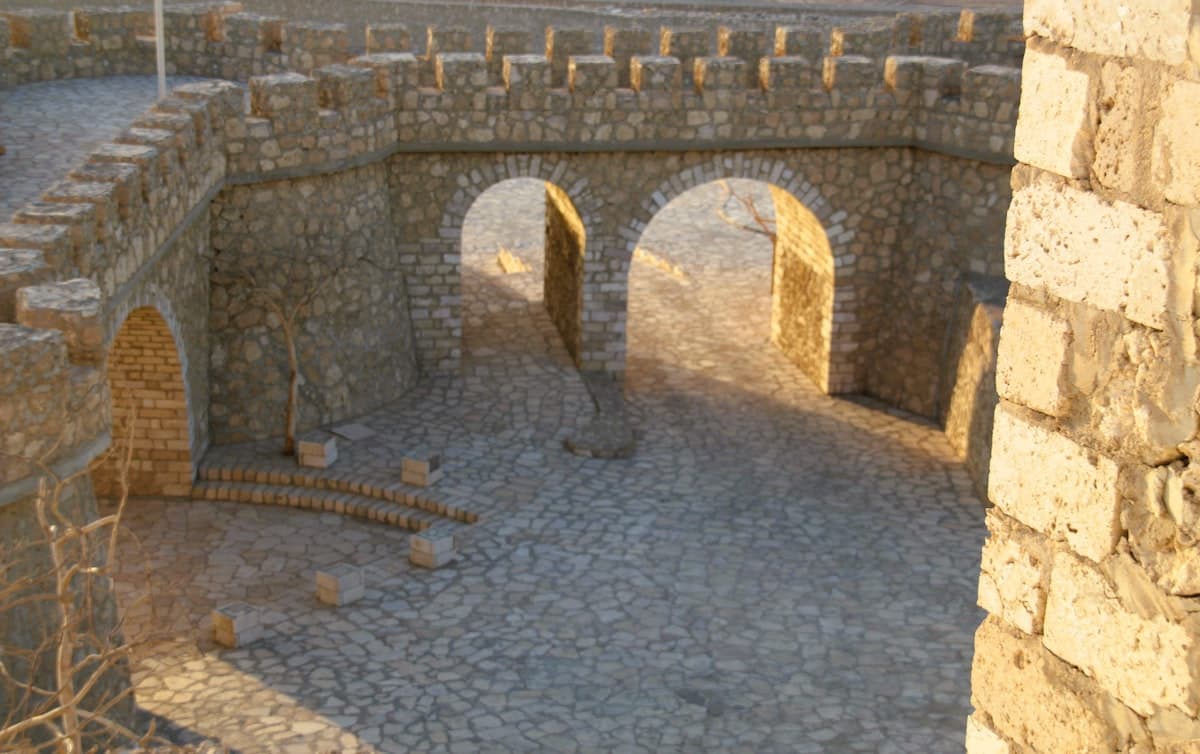
Mohamed Ali Pasha, the man whose mosque crowns Cairo's skyline and whose dynasty ruled Egypt until 1952, was born in Kavala, a port town in what is now northern Greece, in 1769. He was Albanian. He arrived in Egypt in 1801 as a junior Ottoman military commander sent to restore order after Napoleon's forces withdrew. He spoke no Arabic. He understood nothing of the country he would come to dominate entirely.
Within four years he had outmaneuvered the Mamluks, the French legacy administrators, and the Ottoman governor himself to install himself as Egypt's ruler. The method he used was not military genius. It was patience and calculated betrayal, culminating in the Citadel Massacre of 1811, when he invited approximately 470 Mamluk leaders to a ceremony inside these very walls and had them killed in the narrow passageway still called Bab al-Azab. One Mamluk, a man named Amin Bey, reportedly jumped his horse off the Citadel wall and survived. Every Egyptian schoolchild knows this story. Most foreign visitors do not.
The mosque he built between 1830 and 1857 is modeled almost entirely on the Blue Mosque in Istanbul, which is itself modeled on the Hagia Sophia. This is not Egyptian architecture. It is Ottoman imperial architecture, planted on a medieval fortress built by Saladin in 1176, on a limestone spur of the Muqattam Hills that the Pharaohs quarried for the Great Pyramid's casing stones. The layers, in other words, go all the way down.
---
What You Will Actually See: The Mosque Itself
The exterior prepares you poorly for the interior. From the Citadel approach, the two Ottoman-style minarets and the large central dome register as elegant but distant. Up close, the facade material surprises: it is alabaster, quarried from Beni Suef in Middle Egypt, applied in large smooth panels that give the walls a slightly translucent quality in early morning light. This is why the mosque is sometimes called the Alabaster Mosque, though almost no one in Cairo actually uses that name.
The courtyard contains a French clock tower gifted to Mohamed Ali by King Louis-Philippe in 1845, in exchange for the obelisk of Ramesses II that now stands in the Place de la Concorde in Paris. The clock has reportedly never worked correctly. The obelisk has stood in Paris for 180 years. Egyptians find this exchange amusing and slightly galling in equal measure.
Inside the prayer hall, the dome reaches 52 meters at its highest point. Four semi-domes distribute the weight in the classic Ottoman manner. The chandeliers are enormous and hung low, which creates an unexpected intimacy given the scale of the space. The original chandelier system used oil lamps and was the first structure in Cairo to be converted to gas lighting, in 1889. The current electric fittings are not old, but they preserve the low-hanging arrangement that Mohamed Ali himself would have recognized.
Mohamed Ali's tomb is in the southwest corner of the prayer hall, enclosed behind a marble screen. It is white and relatively plain given the man's political ambitions. He died in 1849, eight years before the mosque was completed, suffering from dementia in his final years. He had outlived the clarity that made him dangerous.
---
The Albanian Connection: What This Building Actually Tells You
![[The Citadel and the Mosque of Mohammed Ali, Cairo]](/_next/image?url=https%3A%2F%2Fpub-04554b4ed1074e4a91148d8c5d76943b.r2.dev%2Fimages%2Fmohamed-ali-mosque-albanian-history-in-egypt-a-full-guide%2F2.jpg&w=3840&q=75)
Understanding Mohamed Ali's Albanian origin reframes everything about this mosque and about modern Egypt. He was not a reformer who emerged from Egyptian society. He was a foreign military commander who happened to win a complex multi-sided power struggle and then ruled with the confidence of someone who owed the local population nothing.
His reforms were real and consequential. He abolished the tax farming system that had impoverished Egyptian peasants for centuries, built the first modern military academy in the Arab world at Aswan, sent hundreds of Egyptian students to France and Italy to study medicine and engineering, and began the cotton monoculture that would define the Egyptian economy for the next 150 years and ultimately generate the debt that justified British occupation in 1882. The modernization and the dependency were the same project.
The Albanian community in Egypt, while small today, traces a continuous presence back to Mohamed Ali's officers and administrators, many of whom he brought from his Balkan homeland. Streets in Alexandria still carry family names that are recognizably Albanian rather than Arabic or Turkish. The Kavala Club in Alexandria, founded in the early twentieth century by descendants of those original immigrants, functioned as a community anchor for decades.
In the mosque, this history is present in the architecture. An Egyptian building of this period would have used Mamluk or Fatimid design vocabulary: geometric muqarnas, striped ablaq stonework, the pointed arches of the Ibn Tulun era. Mohamed Ali chose Istanbul instead. He was telling a story about power and legitimacy, not about local continuity. He was saying: I answer to the Ottoman tradition, not to the civilization I now govern. The Cairenes who watched it go up understood that perfectly.
---
The Connections: Citadel, Saladin, and the Long View
The Citadel of Cairo was begun by Saladin, the Kurdish general who ruled Egypt from 1171 to 1193, took Jerusalem from the Crusaders in 1187, and spent much of his life nowhere near Egypt. Saladin never finished the Citadel. His Ayyubid successors did, and the Mamluks who replaced them expanded it continuously for two and a half centuries.
The Mosque of al-Nasir Muhammad, which sits within the Citadel compound and is usually bypassed by visitors heading straight to the Mohamed Ali Mosque, was built between 1318 and 1335. Al-Nasir Muhammad ruled Egypt three separate times, the longest reign totaling twenty-four years, and was one of the few Mamluk sultans to die of natural causes. His mosque uses Gothic doorways looted from a Crusader church in Acre, which the Mamluks had captured in 1291. The columns inside are from ancient temples. The building is a deliberate archive of military victories, and it is largely empty of tourists. This is where you should spend the first thirty minutes of your visit before the crowds arrive at the Mohamed Ali Mosque.
Below the Citadel, the neighborhood of Darb al-Ahmar connects the medieval city to the Ottoman city in a single continuous street. The Mosque of Aqsunqur there, known as the Blue Mosque for its seventeenth-century Ottoman tile refit, sits on foundations that predate it by three centuries. Three layers of Cairo are visible in a single building if you know where to look at the brickwork.
---
Common Mistakes
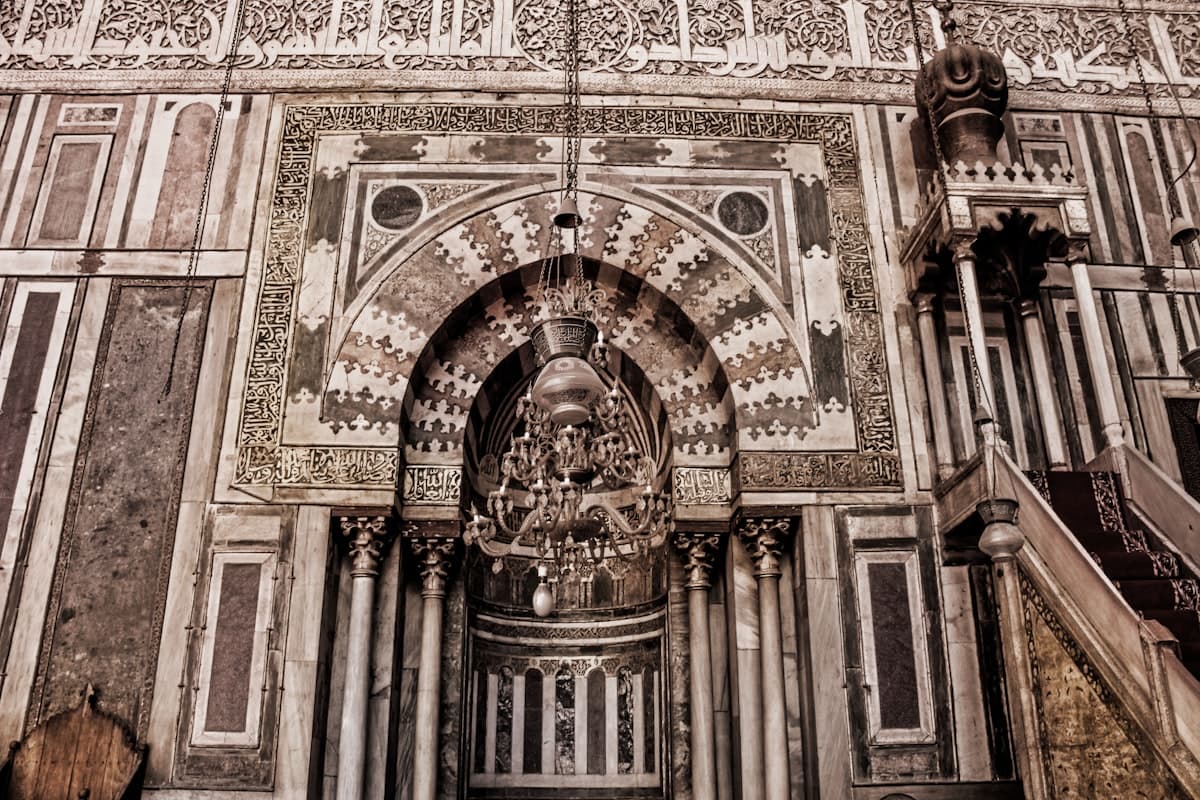
Arriving without the Citadel context. Most visitors enter, photograph the skyline view, photograph the dome, and leave. Spend ten minutes reading about the 1811 Massacre before you arrive. The Bab al-Azab gate at the base of the hill is still there. Walking through it knowing what happened in the passage changes the quality of the visit entirely.
Skipping al-Nasir Muhammad Mosque. Your ticket covers it. It is a three-minute walk inside the compound. The Gothic doorway from Acre is one of the most quietly extraordinary objects in Cairo and has almost no interpretive signage, which means almost no one understands what they are looking at. Now you do.
The sound and light show. It costs EGP 350 and tells you things you will learn more efficiently from reading this article or any basic history of Cairo. The theatrical lighting on the Citadel walls is not unpleasant, but the narration is at the level of a secondary school textbook from 1985. Skip it without guilt.
Visiting at midday in summer. The Citadel plateau is exposed limestone at altitude. Between 11am and 3pm in July and August, surface temperatures on the stone exceed 45°C. The mosque interior is cool, but the courtyard and the approaches are not. Come before 9am or after 4pm.
Hiring a guide at the gate. The unofficial guides at the Citadel entrance are persistent and the quality varies enormously. If you want a guide, book through a licensed Cairo-based agency in advance. Costs are higher (EGP 500 to 1,000 for a private two-hour tour) but the knowledge gap is significant.
Assuming the alabaster is stone. Parts of the exterior facing are original nineteenth-century alabaster. Parts were replaced during twentieth-century restorations with material that does not match in direct sunlight. If you look carefully at the joins near the lower courtyard arcade, you can see exactly where the restoration work was done. The mismatch is informative.
Conflating Mohamed Ali with Mohamed Ali Pasha al-Kabir. There is also a much later figure of the same name, a twentieth-century politician. When Egyptians talk about Mohamed Ali in historical context, they almost always mean the founder of the dynasty. The mosque belongs to the founder. Confirm this with your guide if any confusion arises.
---
Practical Tips
Dress modestly regardless of gender. Shoulders and knees must be covered inside the mosque. Scarves and coverups are available at the entrance for a small fee or a tip to the attendant, but bringing your own is simpler. Remove shoes before entering the prayer hall. The carpet is clean but the floor outside the carpet area is cold stone in winter.
The best light for the alabaster exterior falls between 8:30am and 10am when the sun is low and from the east. This is also the quietest period before tour buses arrive from Downtown and Giza hotels. On Fridays, plan around the midday prayer closure or arrive by 9am to have the courtyard largely to yourself.
The Citadel parking area fills quickly on weekends. If you are coming by taxi or rideshare, ask to be dropped at the main Bab al-Gadid entrance on Salah Salem Road rather than the tourist entrance near the parking lot. It is a slightly longer walk but avoids the congestion and the more aggressive souvenir sellers near the bus drop-off point.
Bring water. There are vendors inside the compound, but prices are high and selection is limited. A bottle from a kiosk on Salah Salem before you ascend costs EGP 10. The same bottle inside costs EGP 40.
For the Albanian history dimension of this visit, the Egyptian Museum in Tahrir holds several portraits of Mohamed Ali and objects from his personal collection, including correspondence in Ottoman Turkish and French. The Gezira Palace, now part of the Marriott Cairo, was built by his grandson Ismail for the opening of the Suez Canal in 1869. Visiting both on the same day as the Citadel gives you the full arc of what the Albanian officer from Kavala built and what it eventually cost Egypt.
Frequently Asked Questions
The Weekly Dispatch
More on Egypt, every Friday.
Cultural depth and places most guides never mention.
No spam. Unsubscribe anytime.