Mohamed Ali Mosque: Albanian History That Built Modern Egypt
An Albanian soldier who couldn't read built the mosque that still defines Cairo's skyline. His story is stranger than any pharaoh's.
Quick Facts
- Best time to visit
- October to April for comfortable temperatures. Weekday mornings before 10am year-round to avoid group tours.
- Entrance fee
- EGP 450 foreigners (approx $9 USD), EGP 225 student with ID, EGP 100 Egyptian nationals. Covers entire Citadel complex including mosque and Gawhara Palace.
- Opening hours
- Daily 8am to 5pm (winter, November to April), 8am to 6pm (summer). Closed to non-worshippers during Friday midday prayer approx 11:30am to 1pm.
- How to get there
- Uber or Careem from downtown Cairo: EGP 60 to 90. Metro Line 1 to Mar Girgis then microbus: EGP 8 to 10. Street taxi: EGP 80 to 120, agree price before entering.
- Time needed
- 2 to 3 hours for mosque and Citadel complex. Half a day if combining with Darb al-Ahmar walk and Ibn Tulun mosque.
- Cost range
- Budget day EGP 600 to 900 including transport, entry, water, and basic lunch nearby. Mid-range EGP 1,500 to 2,000 with private guide and sit-down meal.
Quick Facts
Best time to visit: October to April, weekday mornings before 10am
Entrance fee: Included in the Citadel complex ticket. EGP 450 for foreigners (approx $9 USD), EGP 100 for Egyptian nationals. Student discount: EGP 225 with valid ID.
Opening hours: Daily 8am to 5pm (winter), 8am to 6pm (summer). Closed during Friday midday prayer, roughly 11:30am to 1pm.
How to get there: Cairo Metro Line 1 to Mar Girgis station, then microbus toward the Citadel (EGP 5). Taxi from downtown Cairo runs EGP 80 to 120 depending on traffic. Ride-hailing apps (Uber, Careem) are more reliable and cost roughly EGP 60 to 90.
Time needed: 2 to 3 hours for the Citadel complex, including the mosque. Half a day if you add the Military Museum and Gawhara Palace.
Cost range: Budget EGP 600 to 900 including transport and entry. Mid-range EGP 1,500 to 2,000 with a private guide.
---
He was born in Kavala, a port city in what is now northern Greece, around 1769. His father sold tobacco. He never learned to read or write. By the time Mohamed Ali died in 1849, he had reorganized the Egyptian army, built the first Western-style medical school in the Arab world, sent Egyptian students to Paris to study engineering, and massacred the entire Mamluk ruling class at a single dinner invitation. The mosque on the Citadel that bears his name is built in the Ottoman style he grew to hate, modeled partly on Istanbul's Blue Mosque, finished by his grandson because he ran out of time. Every contradiction in that paragraph is worth thinking about before you walk through the gate.
Why This Place Matters
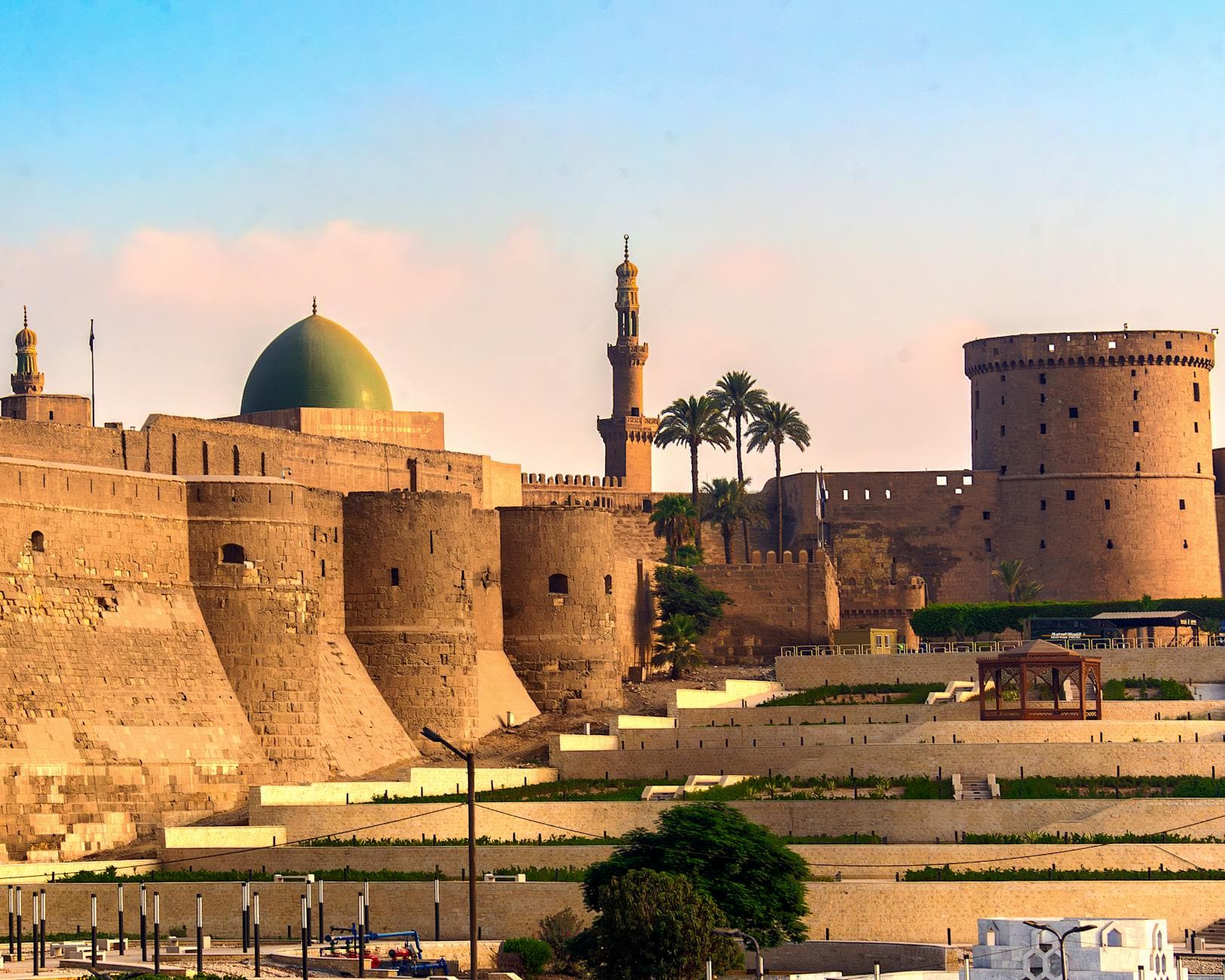
The Citadel of Saladin, where the mosque sits, was begun in 1176 by the same man who fought the Crusades. Saladin chose this limestone spur above Cairo because it caught a breeze that the rest of the city did not. A 12th-century physician had noticed that meat hung at this elevation spoiled slower than meat hung in the city below, which Saladin interpreted, correctly, as meaning the air was cleaner. He never finished the fortress himself. The Ayyubids, the Mamluks, the Ottomans, and finally Mohamed Ali each added to it across seven centuries, which means the Citadel you walk through today is not a monument to one era but an argument between several.
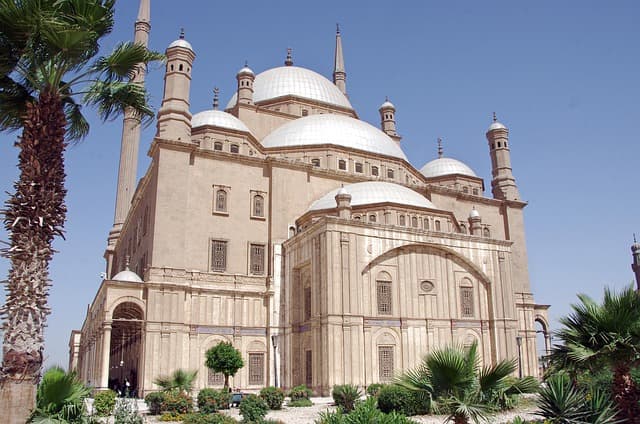
Mohamed Ali's mosque was completed in 1848, the year before he died. It was built using alabaster from Beni Suef, which accounts for its particular pallor in early morning light, a cool grey-white that turns almost gold by noon. The clock tower in the courtyard was a gift from the French King Louis-Philippe, sent in 1845 in exchange for the obelisk that now stands in the Place de la Concorde in Paris. The clock has never worked properly. The obelisk has been standing in Paris for nearly 190 years.
This is the framing most guides skip: Mohamed Ali was not Egyptian by origin, not Ottoman by loyalty for long, and not particularly religious in the conventional sense. He built a mosque that announced Cairo as a world capital. He also closed the mosques that the Mamluks had built across the city, diverting their religious endowment funds into his own treasury. The building is an act of statecraft as much as faith.
The Man Behind the Minaret
Mohamed Ali arrived in Egypt in 1801 as part of an Ottoman Albanian regiment sent to push out Napoleon's occupying forces. He was 32 years old. Within three years he had outmaneuvered both the Ottomans and the remaining Mameluks to become the de facto ruler of Egypt, officially recognized as Wali (governor) by the Ottoman Sultan in 1805. The speed of this rise is worth holding onto. He had no family connections in Egypt, no inherited land, no religious authority. He had infantry, loyalty from his Albanian troops, and a precise understanding of who his enemies' enemies were.
The Albanian history Egypt Mohamed Ali guide rarely emphasizes is how specifically Albanian his inner circle remained. His early army was built around Albanian soldiers who had followed him from the Balkans. His personal guard, his first military administrators, his most trusted commanders were men from the same mountain communities he came from. Egypt was, in the first decade of his rule, partly governed by a network of Albanian men who had never seen the Nile before 1800.
In 1811, he invited the Mamluk beys to the Citadel for a ceremony celebrating his son's appointment to lead a military campaign in Arabia. As the procession moved through the Citadel's narrow passage called Bab al-Azab, his soldiers sealed the gate and opened fire. Estimates of the dead range from 470 to over 600. One Mamluk, according to multiple accounts, jumped his horse over the Citadel wall and survived. The name of that wall is still debated by historians. The event ended 600 years of Mamluk political influence in Egypt in an afternoon.
What You Actually See Inside
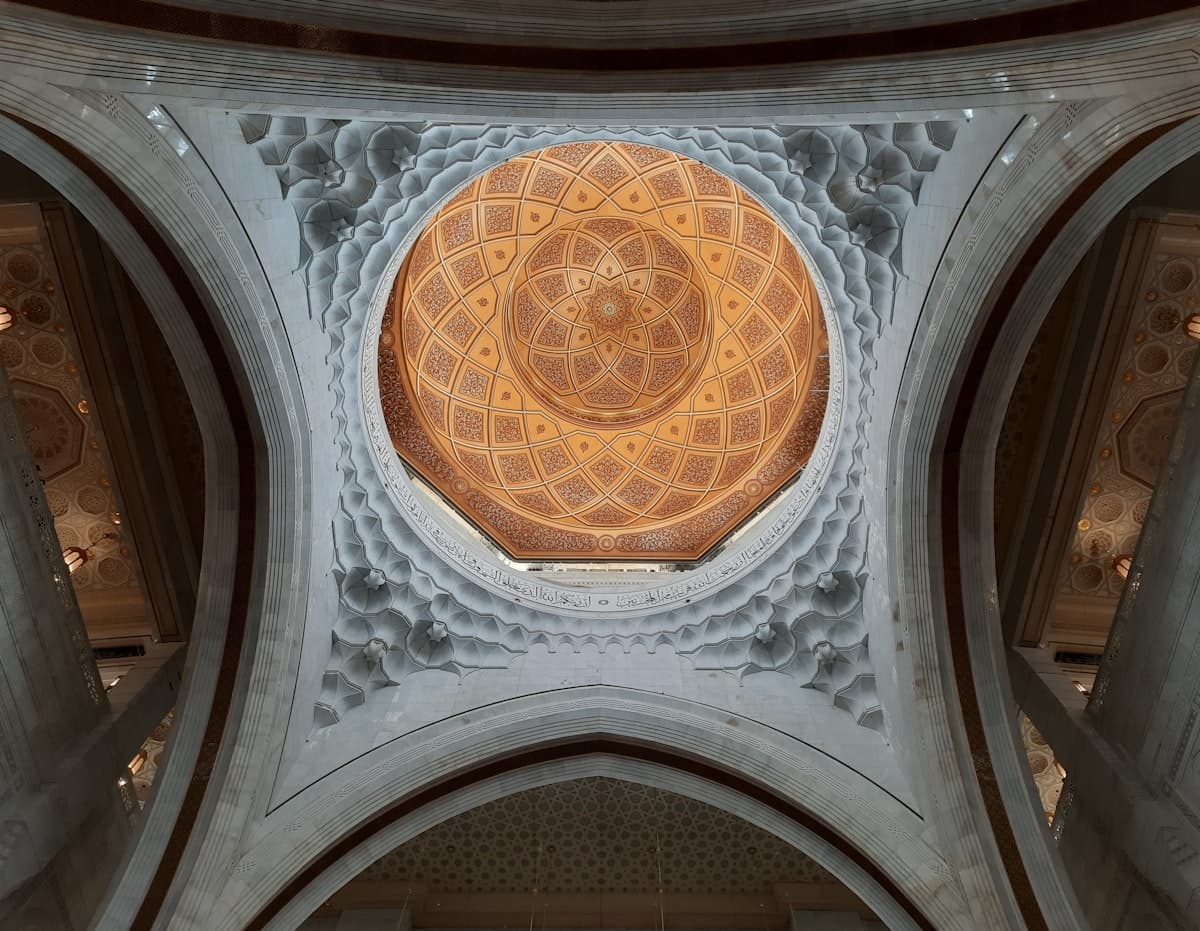
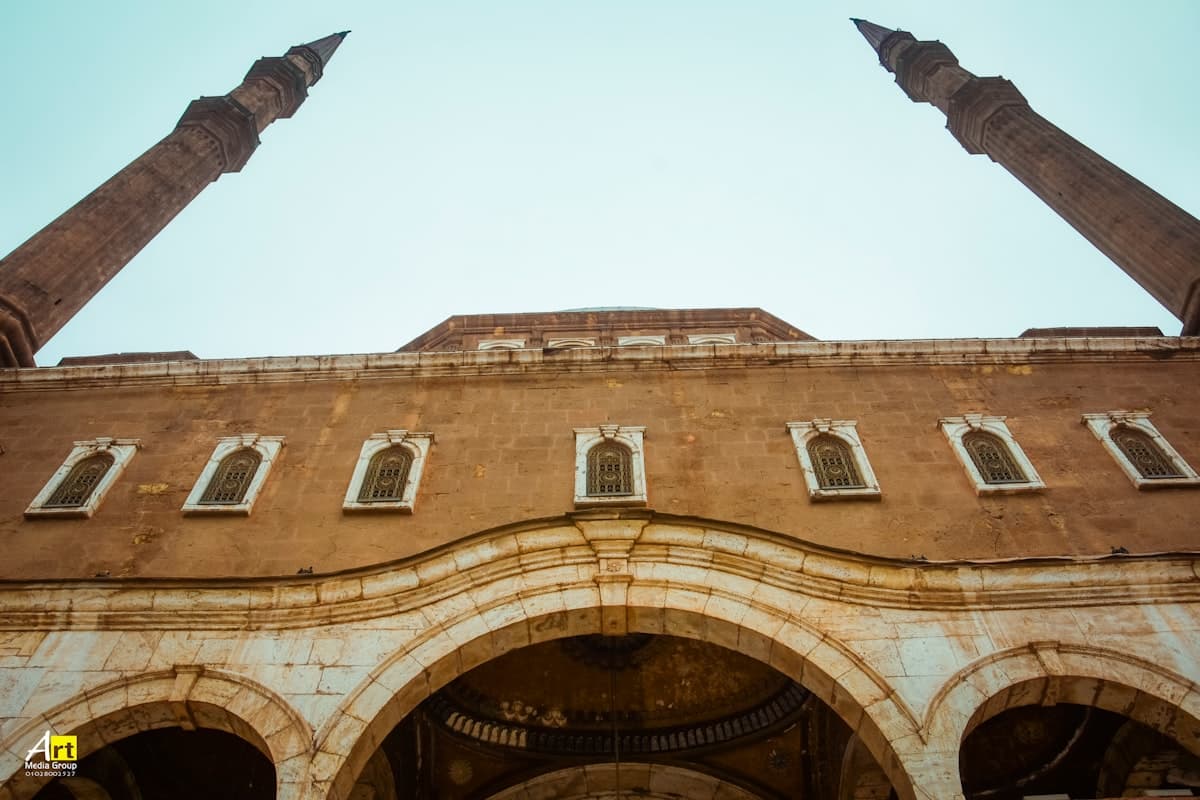
The mosque's interior is covered in alabaster panels up to a height of about 11 meters. Above that, Ottoman-style tilework takes over, much of it added or restored in the 1930s under King Farouk, which means some of what you are looking at is not 19th-century at all. The dome rises to 52 meters at its peak. The four minarets are pencil-thin in the Ottoman style, designed to be seen from a distance rather than climbed.
Mohamed Ali is buried in a white marble tomb in the southeastern corner of the mosque, behind an ornate gilt screen. The tomb is relatively modest given the scale of the building, which is either deliberate humility or an oversight by his successors depending on who you ask. He died in Alexandria, reportedly suffering from dementia in his final years, and was brought back to Cairo for burial.
The courtyard is the more honest space. The ablution fountain in its center, an ornate domed kiosk, was brought from a demolished Mamluk mosque and repurposed here, which is itself a metaphor for everything Mohamed Ali did: take what existed, dismantle what was inconvenient, rebuild on a larger scale under a new name.
From the courtyard, you have one of the best views of Cairo available at no additional cost. The minarets of Ibn Tulun mosque, built in 879 AD, are visible to the southwest. The 12th-century Ayyubid walls that Saladin built are directly below. On a clear winter morning, before the haze builds, you can see to Giza.
The Connections
The Citadel sits on a city that has been continuously inhabited for roughly 5,000 years, and the mosque of Mohamed Ali sits at the intersection of more historical threads than almost any single building in Egypt.
Directly below the Citadel's eastern wall, the district of Darb al-Ahmar contains 14th and 15th-century Mamluk architecture that most visitors walk past entirely. The mosque of Aqsunqur, also called the Blue Mosque for its Iznik tile interior, was built in 1347 by a Mamluk amir who was also the son-in-law of a sultan. It was later restored by an Ottoman governor who added the blue tiles in the 17th century, creating a building that is architecturally part Mamluk and part Ottoman and is almost never crowded.
The Albanian connection runs forward in time as well as backward. Mohamed Ali's dynasty, the Khedivial family, ruled Egypt until King Farouk was deposed in 1952. Every ruler of Egypt from 1805 to 1952 was a direct descendant of an illiterate Albanian tobacco merchant's son from Kavala. The modern Egyptian state, its bureaucratic structure, its military officer corps, its early industrial infrastructure, all of it was designed by or descended from decisions this man made between 1805 and 1840.
The medical school he founded in 1827 in Abbasiya, staffed initially by French physician Antoine Clot, was the first institution in the region to perform systematic autopsies and teach Western anatomy. This is the direct ancestor of Cairo University's Faculty of Medicine, one of the largest medical schools in Africa today.
Common Mistakes
Arriving after 10am on a weekend. The Citadel is on every group tour itinerary out of Cairo. By 10:30am on a Friday or Saturday, the courtyard is dense with tour groups and the mosque interior is difficult to appreciate. Arriving at 8am means you will often have the courtyard largely to yourself.
Spending all your time in the mosque and ignoring the rest of the Citadel. The Gawhara Palace, built by Mohamed Ali in 1814 and largely destroyed by a fire in 1972, has been partially restored and contains the best surviving collection of 19th-century Khedivial furniture and decorative arts in Cairo. It is included in the same ticket and almost nobody goes.
Skipping Darb al-Ahmar to go back to Khan el-Khalili. The street that runs along the Citadel's base toward the mosque of Ibn Tulun passes through one of the oldest intact urban quarters in Cairo. The Aga Khan Trust for Culture has been restoring it for two decades. Walking it takes 40 minutes and costs nothing beyond your existing Citadel ticket to start.
The sound and light show at the Citadel. It costs EGP 300 and delivers a narrated history you will already know after reading this article. The Citadel at night, seen from a distance from the rooftop of a restaurant in the nearby Sayeda Zeinab district, is more atmospheric and costs only the price of dinner.
Hiring a guide at the gate without negotiating scope first. Citadel guides at the entrance vary enormously in quality. If you want an Albanian history Egypt Mohamed Ali guide specifically, ask directly before agreeing to a price: can they tell you about Kavala, the Albanian regiment, the Mamluk massacre? If they look uncertain, negotiate down or find someone else. A good guide charges EGP 300 to 500 for two hours and earns it. A poor one walks you between the main sites and recites dates.
Assuming the mosque's interior is original. Much of the tilework was replaced or heavily restored between 1931 and 1939. The structure is 19th century. Several of the decorative surfaces are 20th century. This is not unusual for a working mosque, but it changes what you are looking at.
Practical Tips
Dress modestly: shoulders and knees covered for both men and women. Scarves are sometimes available at the mosque entrance for women who need them, but bringing your own is more reliable. Remove shoes at the mosque door; there are plastic bags available, or you can carry them in your hands.
The Citadel complex is large enough that comfortable shoes matter. The ground between buildings is uneven paved stone. In summer, there is almost no shade between structures.
Water is sold inside the complex at inflated prices (EGP 20 to 30 per bottle versus EGP 5 to 8 outside). Bring your own.
Photography is permitted throughout the mosque and courtyard. Flash photography inside is discouraged by the guards but not always enforced. The best interior light is between 9am and 11am when the southern windows are active.
For context before you arrive, the Egyptian Museum's collection of Khedivial-era objects, including personal effects from Mohamed Ali's court, is a useful prelude. It takes about 45 minutes to cover the relevant sections and costs EGP 450 separately, but if you are spending two days in Cairo, the sequence of museum then Citadel produces a coherence that going in the other direction does not.
Frequently Asked Questions
The Weekly Dispatch
More on Egypt, every Friday.
Cultural depth and places most guides never mention.
No spam. Unsubscribe anytime.