Mohamed Ali Mosque and Albanian History in Egypt: A Full Guide
Mohamed Ali Pasha was Albanian, spoke no Arabic, and built Egypt's most iconic mosque on the ruins of a Mamluk palace he demolished to erase his rivals. The full story.

Quick Facts
- Best time to visit
- October to April for comfortable temperatures. Arrive before 9am year-round to beat tour groups. Avoid midday visits May through September.
- Entrance fee
- EGP 450 (approx $9 USD) for the full Citadel complex including Mohamed Ali Mosque. Students with valid ID EGP 225.
- Opening hours
- Daily 8am to 5pm. Last entry 4:30pm. The mosque may remain accessible during evening prayer but outer gates close at 5pm.
- How to get there
- Metro to Sayyida Zeinab (Line 1) then microbus or tuk-tuk to Citadel gate, EGP 10 to 20 total. Taxi from Downtown Cairo EGP 80 to 120. Uber or InDrive EGP 60 to 100.
- Time needed
- 2 hours minimum for Mohamed Ali Mosque and terrace. 3 to 4 hours for the full Citadel complex. Half day if combining with Darb al-Ahmar walk to Ibn Tulun Mosque.
- Cost range
- Budget EGP 500 to 700 including entry, transport, and drinks. Mid-range EGP 1,200 to 2,000 combining with lunch and Khan el-Khalili.
Quick Facts
Best time to visit: October to April, when the heat on the Citadel plateau does not make the climb punishing. Early morning, before 9am, gives you the mosque largely to yourself and the best light on the alabaster exterior.
Entrance fees: The Citadel complex (Salah El-Din Citadel) costs EGP 450 for foreigners (approximately $9 USD). This covers the Mohamed Ali Mosque, the Al-Nasir Muhammad Mosque, and the military museums inside the walls. Students with valid ID pay EGP 225.
Opening hours: Daily 8am to 5pm. The mosque itself stays open slightly later for evening prayer, but the outer Citadel gates close at 5pm sharp.
How to get there: The most direct option from central Cairo is the metro to Sayyida Zeinab station (Line 1), then a microbus or tuk-tuk to the Citadel gates, roughly EGP 10 to 20 total. A taxi from Downtown will cost EGP 80 to 120 depending on traffic. Ride-hailing apps (Uber, InDrive) run EGP 60 to 100. Do not let any driver convince you that the only entrance is on the far side of the hill. The main Muqattam gate is the standard tourist entrance and it is where your ticket gets you in.
Time needed: Two hours minimum for the mosque and the terrace views. Three to four hours if you plan to walk the full Citadel complex, including the Al-Nasir Muhammad Mosque, which most visitors skip entirely and should not.
Cost range: Budget EGP 500 to 700 for entry plus transport plus tea at a nearby ahwa. Mid-range EGP 1,200 to 2,000 if you combine with the Khan el-Khalili bazaar and a sit-down lunch.
---
Why This Place Matters
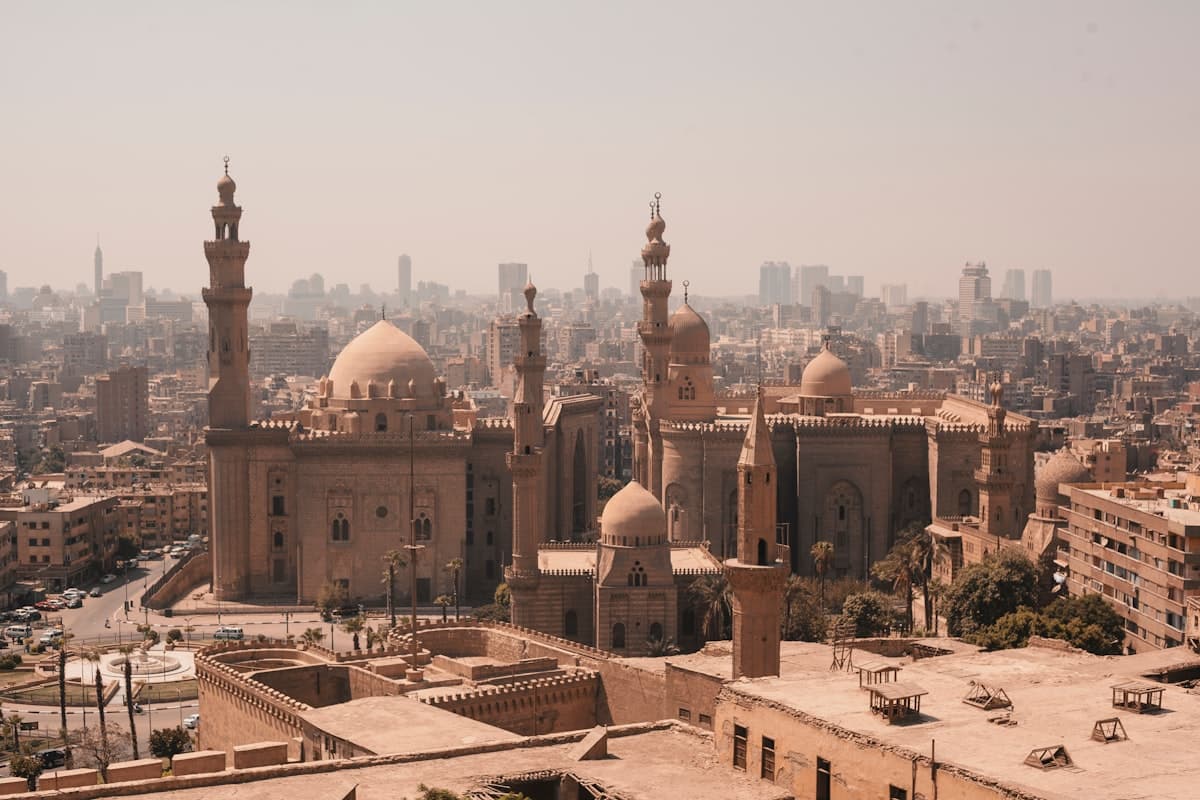
Mohamed Ali Pasha, the man who built modern Egypt, never considered himself Egyptian. He was born in Kavala in 1769, a port city that is now part of Greece but was then part of the Ottoman province of Rumelia, populated largely by Albanians. He spoke Albanian as his mother tongue and Ottoman Turkish as his language of governance. He arrived in Egypt in 1801 as part of an Albanian military contingent sent by the Ottoman Empire to push out Napoleon's forces, and he never left. Within four years he had maneuvered himself into the position of Ottoman viceroy, and within another decade he had massacred the entire Mamluk leadership class that stood between him and total power.
The massacre happened here, on the Citadel, in 1811. Mohamed Ali invited the Mamluk beys to a ceremony, walked them into the narrow passage between the outer and inner walls now called Darb al-Labban, and had them killed. Between 470 and 500 Mamluk leaders died that day according to most historical accounts, though the numbers vary. One, Amim Bey, reportedly escaped by jumping his horse over the Citadel wall. Whether that story is true is debatable. What is not debatable is that the Mamluk order in Egypt ended on that afternoon.
The mosque Mohamed Ali then built over the Mamluk palace he demolished is not Egyptian in style at all. It is Ottoman, deliberately, emphatically so. He brought in Ottoman architects and modeled the building on the Sultan Ahmed Mosque in Istanbul. The message to Cairo and to the world was explicit: this was a new order, with a new aesthetic, loyal to a different imperial tradition. That the building now appears on every Egyptian tourism poster is a historical irony worth sitting with.
---
What You Actually See: The Mosque and the Alabaster
The exterior of the mosque is clad in alabaster quarried from Beni Suef, roughly 120 kilometers south of Cairo. The color in strong morning light is the pale gold of old teeth, warm and slightly translucent where the stone is thin. It is genuinely beautiful and genuinely strange, because no Cairene building before or since uses this material in quite this way.
The interior is large, cool, and suffused with a diffuse light that drops from the central dome and its surrounding half-domes. The dome sits 52 meters above the floor at its highest point. The chandeliers, which are original, were made in France. The clock tower in the courtyard was a gift from King Louis-Philippe of France in 1846, given in exchange for the obelisk that now stands in the Place de la Concorde in Paris. The Cairo clock has never worked properly. The Paris obelisk has stood for nearly 180 years. Draw your own conclusions about that exchange.
Mohamed Ali is buried here, in a marble mausoleum on the right side as you enter the prayer hall. The tomb is white, relatively modest for a man who founded a dynasty, and most visitors walk past it without realizing what it is. His dynasty, the Muhammad Ali dynasty, ruled Egypt until 1952, when the Free Officers Revolution ended the reign of his great-great-grandson, King Farouk.
The Terrace: What the Guidebooks Undersell
Before you go inside, or after, stand on the northern terrace and look at Cairo spreading north and west below you. The Citadel sits on a spur of the Muqattam hills at 75 meters above the city. On a clear winter morning, you can see the Pyramids of Giza from here. More importantly, you can see the full medieval city of Cairo laid out beneath you: the minarets of the Ibn Tulun Mosque to the southwest, the Fatimid-era gates of Bab Zuweila and Bab al-Futuh visible if you know what you are looking for, and the Nile glinting beyond the modern highway. This is the best free geography lesson Cairo offers.
---
The Mosque Most Visitors Skip: Al-Nasir Muhammad
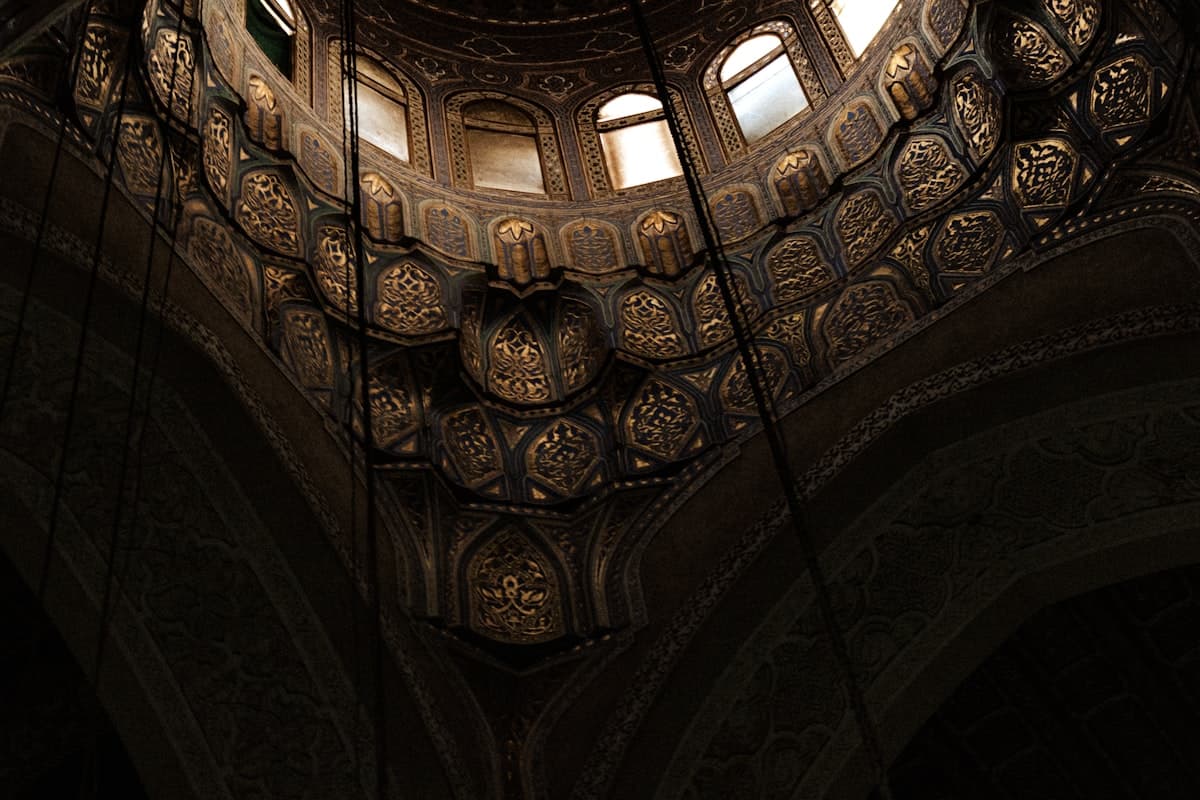
Inside the same Citadel walls, a five-minute walk north of Mohamed Ali's monument, sits the Mosque of Al-Nasir Muhammad ibn Qalawun, built in 1318 and expanded in 1335. Almost no tourists visit it. This is a significant error.
Al-Nasir Muhammad ruled Egypt three separate times, a political feat that required extraordinary maneuvering in a system where Mamluk sultans were regularly deposed and murdered by their own commanders. He reigned for a total of 42 years across his three terms, during which he constructed more buildings in Cairo than any other medieval ruler. The mosque that bears his name inside the Citadel is the oldest surviving structure within the walls, and its minarets are covered in faience tiles imported from Persia. After the Ottoman conquest of Egypt in 1517, the Ottoman governor stripped the mosque of many of its marble columns and shipped them to Istanbul to be reused in a new imperial mosque. What you see today is a building that was partially cannibalized by a new empire, which is a more honest representation of how architectural history actually works than most restored monuments allow.
---
The Connections: Layers You Are Standing On
Salah El-Din, the Kurdish general who founded the Citadel in 1176 to defend Cairo against Crusader incursion, chose this site because it sat above a natural rock escarpment with clear views in every direction. He never actually lived here. He spent most of his reign campaigning and died in Damascus in 1193, the year after retaking Jerusalem. His Citadel was completed by his successors.
Below the Citadel, in the neighborhood of Darb al-Ahmar, the streets follow the lines of a Fatimid-era city plan that itself followed an earlier Abbasid layout, which in turn was oriented around a Roman road that ran along what had been a branch of the Nile. By the time the Nile shifted westward in the medieval period, the road remained, and the city built itself around a dry channel. Cairo is built on geological and hydrological memory.
The Albanian connection does not end with Mohamed Ali. The Kavala Connection, as some historians call it, shaped Egyptian politics for 150 years. His successors, including Khedive Ismail who built modern Downtown Cairo and borrowed so recklessly that it triggered British occupation in 1882, were all products of this Albanian-Ottoman dynasty governing an Arabic-speaking country. The tension between those identities runs through Egyptian cultural history in ways that contemporary Egypt is still working out.
In the Sharia Bab el-Wazir neighborhood directly below the Citadel's southern wall, a cluster of Mamluk-era mosques and sabil-kuttabs (public fountains combined with Quranic schools) survive largely intact. The Mosque of Aqsunqur, built in 1347 and later covered in Ottoman-era blue tiles, is ten minutes' walk from the Citadel gate. Most Citadel visitors never make this descent. It is one of the more consequential omissions on the standard Cairo itinerary.
---
Common Mistakes
Buying a tour from a driver at the gate. These tours cost EGP 300 to 600, last twenty minutes, and consist almost entirely of incorrect historical information delivered at volume. You do not need a guide for the Mohamed Ali Mosque. You need this article and thirty minutes of your own attention.
Visiting at midday in summer. The Citadel plateau has almost no shade. Between 11am and 3pm from May through September, the heat on the terrace becomes genuinely debilitating. If you cannot visit early morning, visit late afternoon.
Paying for the sound and light show at the Citadel. It costs EGP 400 and covers roughly the same information as a Wikipedia summary, with theatrical narration added. Skip it entirely.
Spending all your time in the Mohamed Ali Mosque and leaving before seeing Al-Nasir Muhammad's mosque. This is the most common error. The Al-Nasir Muhammad Mosque is older, architecturally more complex in its stripped and half-ruined state, and almost empty of tourists. It is the better building for understanding Cairo's medieval history.
Ignoring the military museums. They are cluttered and not world-class institutions. But the Carriage Museum contains the state carriages of the Muhammad Ali dynasty, including the carriage used by Khedive Ismail for the opening of the Suez Canal in 1869, and this specific object is genuinely worth five minutes.
Wearing shoes that are difficult to remove. You will remove your shoes to enter the mosque and carry them in a bag or leave them at the door. Slip-ons or shoes with easy fastenings make this considerably less frustrating on a busy day.
Taking a taxi that claims the main Citadel entrance is closed. It is not closed. The driver wants to take you to a specific gate adjacent to shops where he receives a commission. Say "Bab el-Muqattam" and insist.
---
Practical Tips
Dress conservatively. Both shoulders and knees should be covered before entering the mosque. Scarves are available to borrow at the entrance for free, but they are shared among many visitors and this is Egypt in summer. Bring your own.
The best photography of the exterior happens from the northern terrace in morning light, with the twin minarets rising against a clear sky. In winter, this shot is possible from 8am. In summer, the haze builds quickly and the quality of the light degrades by 9am.
If you are combining the Citadel with a walk through medieval Cairo, descend from the southern gate toward Darb al-Ahmar after your visit. The walk to the Ibn Tulun Mosque takes about twenty-five minutes on foot and passes through a residential neighborhood that has changed remarkably little in its street plan since the Mamluk period. This is not a tourist area. It is a working-class Cairo neighborhood and you will be a visitor passing through it. Behave accordingly.
Water is available from vendors inside the Citadel at EGP 10 to 15 per bottle. Bring your own if you are cost-conscious. The café inside the complex serves tea and coffee at reasonable prices and has seating with views toward the city. It is a good place to sit for twenty minutes and look at what you have just walked through.
For the Albanian history dimension of your visit, the Kavala House in the Sharia Khayamiya neighborhood near Al-Azhar preserves the memory of Mohamed Ali's birthplace through a small cultural center. It is not always open to individual visitors, but it is worth noting on a map if you are specifically tracing the Albanian Egypt connection.
Frequently Asked Questions
The Weekly Dispatch
More on Egypt, every Friday.
Cultural depth and places most guides never mention.
No spam. Unsubscribe anytime.