Mohamed Ali Mosque: The Albanian Who Remade Cairo
An Albanian soldier who couldn't read seized Egypt in 1805 and built a mosque that still dominates Cairo's skyline. The Ottoman Empire never recovered.

Quick Facts
- Best time to visit
- October to April; arrive before 9am for best light on the alabaster interior and smaller crowds
- Entrance fee
- EGP 200 (approx $4 USD) for the full Citadel complex including the mosque; students EGP 100
- Opening hours
- Daily 8am to 5pm (winter), 8am to 6pm (summer); mosque closed to visitors during Friday midday prayers approx 11:30am to 1:30pm
- How to get there
- Microbus from Midan Ataba: EGP 5. Taxi from Downtown Cairo: EGP 60 to 100. Uber or Careem: EGP 50 to 80. Metro to Sayyida Zeinab then taxi: EGP 5 plus EGP 20 to 30
- Time needed
- 2 hours for mosque and main terraces; 4 hours to include Police Museum, Carriage Museum, and walking the full Citadel complex
- Cost range
- Budget day EGP 300 to 500 including transport and street food in the Al-Azhar area; mid-range EGP 800 to 1,200 with a licensed guide
Quick Facts
Best time to visit: October to April, arriving before 9am to beat tour groups and catch the morning light on the alabaster courtyard
Entrance fee: EGP 200 (approx $4 USD) for the Citadel complex, which includes the mosque. Students pay EGP 100. The mosque itself has no separate fee.
Opening hours: Daily 8am to 5pm in winter, 8am to 6pm in summer. Friday prayers close the main hall to visitors between approximately 11:30am and 1:30pm.
How to get there: Microbus from Midan Ataba to the Citadel gate costs EGP 5. A taxi from Downtown Cairo runs EGP 60 to 100 depending on traffic. The Cairo Metro does not serve the Citadel directly; alight at Sayyida Zeinab station and take a short taxi ride (EGP 20 to 30).
Time needed: Two hours for the mosque and courtyard alone. Four hours if you include the Military Museum, the Carriage Museum, and the view platforms over Cairo.
Cost range: Budget EGP 300 to 500 for the Citadel day including transport and a meal in the nearby Al-Azhar district. Mid-range EGP 800 to 1,200 with a licensed guide.
---
Why This Place Matters
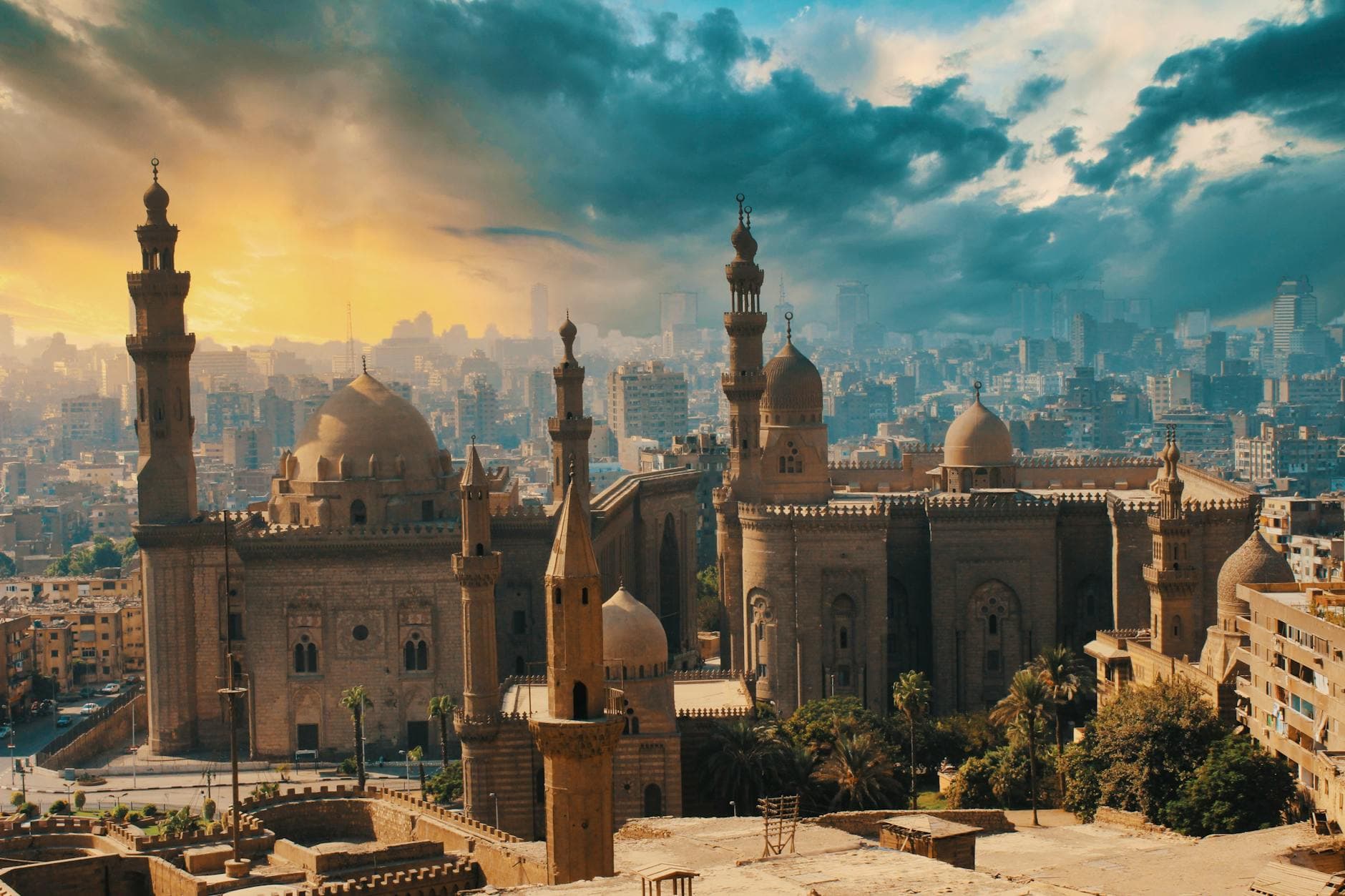
Mohamed Ali Pasha arrived in Egypt in 1801 as a junior Ottoman officer commanding a contingent of Albanian soldiers sent to help expel Napoleon's army. He left as the founder of a dynasty that ruled Egypt until 1952. He was, at the time of his arrival, functionally illiterate. He did not learn to read until his forties, studying in secret so his ministers would not know.
The mosque he built between 1830 and 1848 on the highest point of the Citadel was a deliberate statement. It was modeled on the Sultan Ahmed Mosque in Istanbul, which was itself modeled on the Hagia Sophia, which was built by Justinian in 537 AD. Mohamed Ali was not borrowing a style. He was placing himself in a line of succession that ran from Byzantine emperors to Ottoman sultans, and announcing that Egypt's new ruler belonged in that company.
The clock tower in the mosque's courtyard was a gift from King Louis-Philippe of France in 1845, exchanged for the obelisk from Luxor's Ramesses II temple that now stands in the Place de la Concorde in Paris. The French clock has never worked correctly. The obelisk is still in Paris. Egyptians consider this a reasonable summary of the entire exchange.
What makes this site essential to understanding Cairo is not the mosque in isolation. It is what sits beneath it. The Citadel hill has been fortified since Saladin began construction in 1176, using stone quarried from the smaller pyramids at Giza. Below the Ottoman mosque are Mamluk palaces. Below those are Ayyubid foundations. The hill is a geological cross-section of Islamic Cairo, and most visitors see only the top layer.
---
The Man Behind the Marble
Mohamed Ali was born in Kavala, in what is now northern Greece, around 1769, the same year as Napoleon and the Duke of Wellington. This is not a coincidence that history has made much of, but it should be. All three men understood that the post-revolutionary world was being reorganized by force, and all three acted accordingly.
His rise in Egypt is one of the more audacious political maneuvers in modern history. After the French withdrew, Egypt was contested between the Ottoman-appointed governor, the Mamluk beys who had effectively run the country for centuries, and the British who had helped defeat Napoleon and felt they had earned some influence. Mohamed Ali played each faction against the others with patience and then, in 1811, invited all 470 senior Mamluk leaders to a banquet at the Citadel to celebrate his son's appointment to a military command. As the guests descended the narrow passage between the Citadel's inner and outer walls, his soldiers shot them. The Mamluks, as a political force, ceased to exist that afternoon. The location of that passage, the Bab al-Azab gate, is still visible on the lower slopes of the Citadel and almost no one stops there.
The mosque he subsequently built was designed by a Greek-Egyptian architect named Yusuf Bushnak, working in the Ottoman Baroque style that was fashionable in Istanbul in the 1820s and 1830s. The interior dome rises 52 meters and is lined with alabaster quarried from the eastern desert near Beni Suef, which is why the building is sometimes called the Alabaster Mosque. The stone absorbs morning light differently than afternoon light, and the difference is worth planning your visit around. Before 10am, the interior glows pale yellow. By 2pm it has gone flat white.
---
What Most Visitors Walk Past
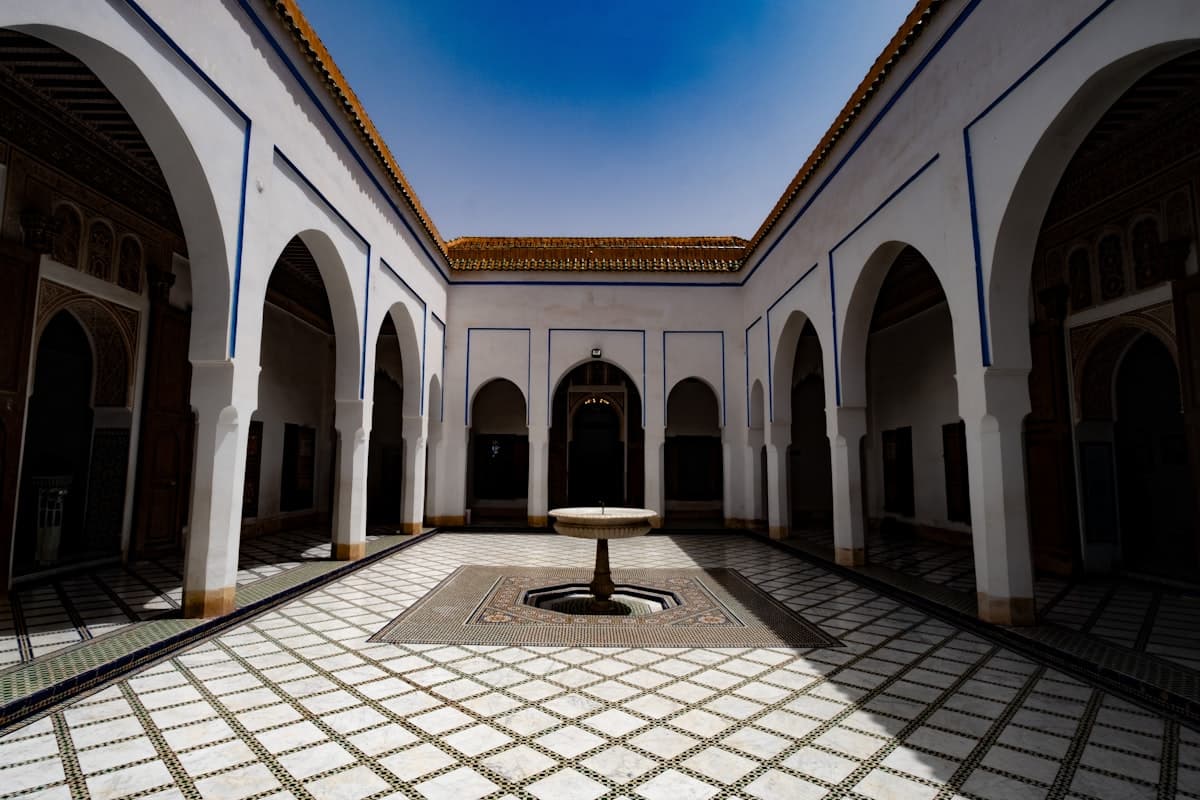
The courtyard contains something almost nobody photographs intentionally: a sundial installed by Mohamed Ali in the 1840s that was used to set the time for prayer until the 1950s. It sits on a low plinth near the ablutions fountain and is frequently mistaken for a decorative element. It is not. It is a working instrument that was the timekeeping authority for an entire city.
Inside the mosque, look at the lower walls rather than the ceiling. The lower registers are covered in trompe l'oeil painting imitating elaborate architectural detail, added in the late nineteenth century when funds for more stone ran short. It is skilled work and looks convincing until you tap it, at which point it sounds hollow. This is a reasonable metaphor for several things Mohamed Ali built.
The tomb of Mohamed Ali is in the southeast corner of the mosque, enclosed in marble carved in the Ottoman tradition. He died in 1849, one year after the mosque was nominally completed, though interior work continued for another decade under his successors. His descendants, including King Farouk, the last reigning member of the dynasty, are buried in the Al-Rifa'i Mosque a short walk south of the Citadel. The two mosques face each other across a square, and visiting both in the same afternoon gives you the full arc of the dynasty, from its founding ambition to its anxious, expensive end.
The Al-Rifa'i Mosque also contains the tomb of Muhammad Reza Shah Pahlavi, the last Shah of Iran, who died in exile in Cairo in 1980. He is buried there because President Sadat offered him refuge when no other country would. This fact is on none of the signage and almost no guides mention it.
---
The Connections
Standing on the Citadel's northern terrace and looking over Cairo, you are standing roughly where Saladin's engineers stood in 1176 choosing the site. Saladin chose the hill because it caught the prevailing north wind, which kept it cooler than the city below and gave defenders a clear sightline to any approaching army. The same prevailing north wind that moves feluccas up the Nile passes through the mosque's courtyard every afternoon.
The stone for the Citadel's original walls was quarried from the outer casing of Menkaure's pyramid at Giza, the smallest of the three main pyramids. This is documented in Arab chronicles and visible in the texture of the lower Citadel walls, where you can sometimes see traces of the original polished limestone surface. The Fatimid Cairo that Saladin was fortifying had itself been built partly using stone from earlier Pharaonic and Roman structures. Cairo does not preserve its layers. It eats them and builds upward.
Mohamed Ali's modernization program, which he funded partly through a state monopoly on cotton, restructured Egyptian agriculture in ways that are still visible. The long-staple cotton fields of the Delta exist because he ordered them planted. The irrigation canals that cross Lower Egypt were extended and regularized under his administration. The medical school he founded at Qasr al-Aini in 1827, staffed initially by French physicians, became the nucleus of what is now Cairo University's Faculty of Medicine. An Albanian warlord, functionally illiterate until middle age, founded the institution that trained Egyptian doctors for the next two centuries.
---
Common Mistakes
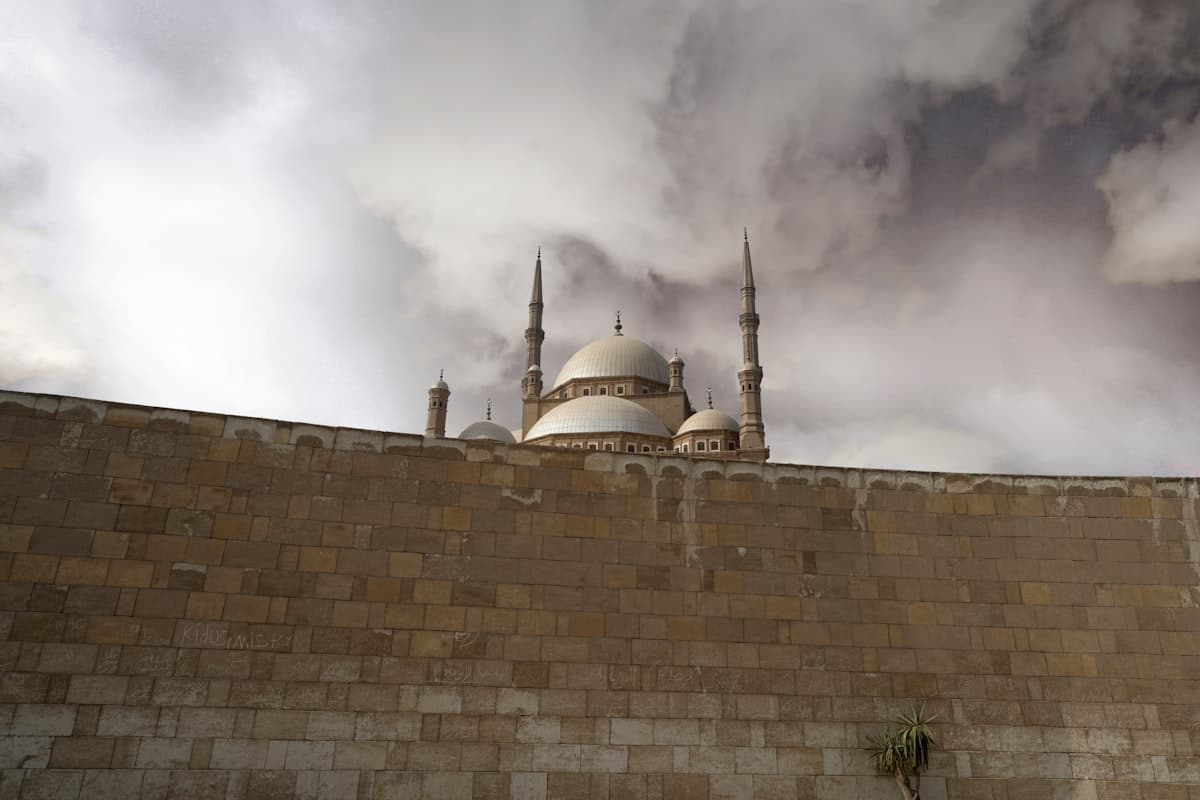
Arriving at midday. The alabaster interior loses its quality of light by late morning and the courtyard becomes very hot between 11am and 3pm. The mosque is also considerably more crowded after 10am as tour buses arrive from central Cairo hotels.
Paying for a guide at the gate. Unofficial guides at the Citadel entrance will offer their services for between EGP 200 and EGP 500. Most of them know the mosque's surface history well but will not tell you about the Bab al-Azab massacre, the broken French clock, or the Shah of Iran's tomb. A licensed guide booked through a reputable agency costs more but gives you the actual history. Or read this article before you go.
Skipping the Citadel's other buildings. The Police Museum, housed in a former Mamluk palace, contains an exhibition on political assassinations in Egyptian history that is remarkable for its frankness. The display on the 1981 assassination of Anwar Sadat includes photographs and documents that would not exist in a state museum in most countries. It costs nothing beyond the Citadel entry fee and takes 25 minutes.
Doing the sound and light show. It costs EGP 350 and runs on the Citadel's south terrace on selected evenings. The narration is a simplified version of Islamic Cairo history read over dramatic music. It tells you less than an hour of reading and requires you to be at the Citadel after dark, when the surrounding neighborhood requires more navigational confidence than most first-time visitors have. Skip it entirely.
Assuming the mosque is the only reason to come to the Citadel. The view from the northern terrace at sunset, looking over the domes and minarets of medieval Cairo toward the Muqattam hills, is one of the better views in the city and is free once you have paid the entrance fee. Most visitors leave immediately after the mosque. Stay for it.
Wearing the wrong footwear. The Citadel complex involves significant uneven cobblestone walking and the mosque requires removing your shoes at the entrance. Shoes with complex laces or buckles slow you down and create a small hazard at the entrance where dozens of people are removing footwear simultaneously. Slip-ons are the practical choice.
Conflating Mohamed Ali Pasha with Muhammad Ali the boxer. This sounds like a joke but the confusion appears regularly in search queries and occasionally in conversation. Mohamed Ali Pasha, the Albanian-born Ottoman officer turned Egyptian ruler, is the subject of this guide. He died in 1849 and is buried in this mosque. The connection ends there.
---
Practical Tips
Dress conservatively for the mosque. Men need covered shoulders and knees. Women are required to cover their hair; a scarf is available at the entrance for visitors who do not bring one, but the available scarves are rough synthetic fabric and can be uncomfortable in warm weather. Bring your own.
The Citadel complex is large and partially under ongoing restoration. Some sections close without notice. The Military Museum and the Carriage Museum occasionally have irregular hours. Confirm which buildings are open when you arrive at the ticket office rather than planning your route around them in advance.
Photography inside the mosque is permitted. Photography of military installations visible from the Citadel terrace is not, and signs indicate this. The restriction is occasionally enforced.
The area around the Citadel entrance, particularly the lower slopes near Salah al-Din Square, has a concentration of souvenir vendors and persistent guides. They are not aggressive by regional standards but they are persistent. A direct, polite refusal in Arabic, "la shukran" (no thank you), is more effective than eye contact avoidance.
If you are combining the Citadel visit with a walk through Islamic Cairo, the logical sequence is to start at Al-Azhar Mosque and the Khan el-Khalili market in the morning when both are less crowded, walk south through the historic district past the Sultan Hassan Mosque, and arrive at the Citadel by early afternoon. The Sultan Hassan Mosque, built between 1356 and 1363, uses stone visibly quarried from the Giza pyramids and sits directly below the Citadel's western wall. Standing between them, you can see seven hundred years of Cairo's history in a single glance.
Frequently Asked Questions
The Weekly Dispatch
More on Egypt, every Friday.
Cultural depth and places most guides never mention.
No spam. Unsubscribe anytime.