Mohamed Ali Mosque & the Albanian Who Remade Egypt
An Albanian soldier arrived in Egypt with Ottoman troops in 1801. Within 5 years he ruled it. The mosque he built is a calculated lie in stone. Here is what it is really saying.

Quick Facts
- Best time to visit
- October to April. Winter mornings between 8am and 10am give the best light and the fewest crowds. Avoid July and August midday entirely.
- Entrance fee
- EGP 450 adults (approx $9 USD), EGP 225 students with valid ID. Covers the full Citadel complex including Mohamed Ali Mosque, Military Museum, and Al-Gawhara Palace.
- Opening hours
- Daily 8am to 5pm. Mosque closes briefly during Friday prayers approximately 12pm to 1:30pm. Guards begin clearing the site around 4:30pm.
- How to get there
- Uber or Careem from downtown Cairo: EGP 60 to 90. Microbus from Ataba: EGP 5 to 8. Negotiated taxi: EGP 50 to 80. No metro station directly serves the Citadel; nearest is Sadat or Ataba.
- Time needed
- 2 hours for mosque and courtyard alone. 4 hours for the full Citadel complex. Pair with Sultan Hassan and Ibn Tulun mosques nearby for a full Islamic Cairo day.
- Cost range
- Budget day EGP 600 to 1,000 including transport and street food lunch. Mid-range EGP 2,000 to 3,500 with guided tour and sit-down meal.
Quick Facts
Best time to visit: October to April, when the Citadel plateau does not cook you alive. Early morning in winter gives you the courtyard almost alone and light that turns the alabaster walls gold rather than white.
Entrance fee: EGP 450 (approx $9 USD) for the Citadel complex, which includes the Mohamed Ali Mosque, the Military Museum, and Al-Gawhara Palace. Students with valid ID pay EGP 225. There is no separate ticket for the mosque itself.
Opening hours: Daily 8am to 5pm. The mosque closes briefly during Friday prayers, roughly 12pm to 1:30pm. Plan around this.
How to get there: From Tahrir Square, a taxi should cost EGP 50 to 80 depending on traffic and your negotiating patience. The metro gets you to Sadat or Ataba stations; from Ataba, a microbus to the Citadel gate runs EGP 5 to 8. Uber and Careem are reliable and usually cheaper than negotiated taxis, averaging EGP 60 to 90 from downtown.
Time needed: Two hours minimum for the mosque and courtyard alone. Add another two if you walk through Al-Gawhara Palace and the Carriage Museum. A full Citadel morning pairs well with an afternoon at the Sultan Hassan and Ibn Tulun mosques five minutes' walk away.
Cost range: Budget EGP 600 to 1,000 for the day including transport and a lunch at one of the small fuul and ta'meya places on the Citadel road. Mid-range EGP 2,000 to 3,500 if you add a guided tour.
---
Why This Place Matters
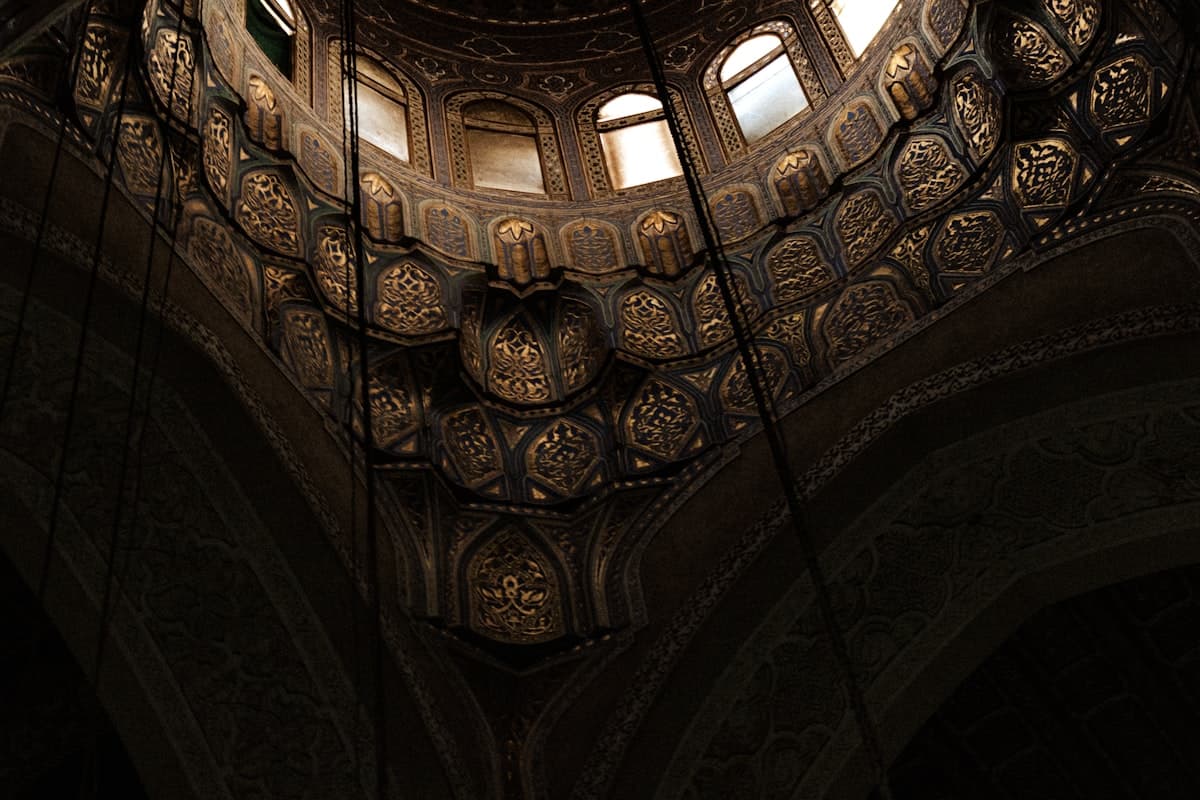
Mohamed Ali Pasha did not commission this mosque for God. He commissioned it for Istanbul.
When construction began in 1830, the Ottoman Sultan Mahmud II was watching Egypt with increasing alarm. His Albanian governor had already defeated a French army, massacred the Mamluk beys who had run Egypt for centuries, and was now building an industrial economy, a European-trained army, and a navy capable of threatening Syria. The mosque was the architectural declaration of intent: I am not a provincial governor. I am a ruler. And the style he chose, Ottoman imperial, modeled on the Sultanahmet mosque in Istanbul, was not piety. It was provocation.
The building took 18 years to complete and Mohamed Ali died before it was finished, in 1849. His tomb is inside, in the western vestibule, enclosed in a white marble screen. His architect was a Greek named Yusuf Bushnak, not an Egyptian, not an Ottoman Turk. The alabaster that covers the courtyard exterior walls came from Beni Suef, 120 kilometers south along the Nile. The design borrowed from Istanbul, the materials came from Upper Egypt, and the man who ordered it was from Kavala, in what is now northern Greece.
This building is Egypt in a single monument.
---
The Albanian Who Became Egypt
The Albanian history of Egypt begins, technically, in 1801. The Ottoman Empire sent a military force to help expel Napoleon's occupying army. Among the Albanian contingent was a junior officer named Mohamed Ali, born in Kavala around 1769, the son of a tobacco merchant and a local commander. He had no particular education, no wealth, and no political connections. He had, by all accounts, extraordinary political instinct and a talent for knowing which way power was about to move before it moved.
By 1805, Cairo's religious establishment, the ulama, had turned against the Ottoman governor and were looking for an alternative. They chose Mohamed Ali, possibly because they thought he would be manageable. He was not. Within two years he was taxing agricultural land directly, cutting out the Mamluk intermediaries who had controlled Egypt's economy for 500 years. In 1811, he invited the remaining Mamluk leaders to a celebration at the Citadel for his son's departure to a military campaign in Arabia. The guests arrived. The gates closed. Between 470 and 500 Mamluk beys were killed in the narrow lane that descends from the Citadel's Bab al-Azab gate. One Mamluk, the story goes, survived by jumping his horse from the walls. The drop is about 20 meters. Whether the horse survived is not recorded.
This is what the Citadel means before you ever enter the mosque: it is the site of the most decisive political massacre in Egypt's modern history. The tourists taking photographs in the alabaster courtyard are standing on that fact.
---
What You Are Actually Looking At
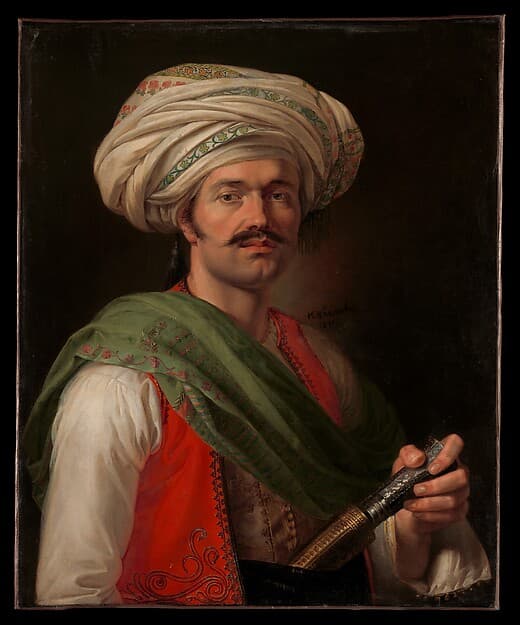
The mosque operates on two scales: the theatrical exterior and the surprisingly intimate interior.
From outside, across the lower Citadel courtyard, the two minarets rise 82 meters above the plateau. The lead-covered domes were designed to echo Sinan's imperial mosques in Istanbul, specifically the mid-16th century work that defined Ottoman sacred architecture at its peak. But look at the octagonal clock tower in the courtyard. It was a gift from King Louis-Philippe of France in 1846, sent in exchange for the obelisk Egypt gave France that now stands in the Place de la Concorde in Paris. The clock has never worked properly. Egyptians find this funnier than French visitors do.
Inside, the scale shifts. The central dome rises 52 meters and is flanked by four semi-domes, a spatial formula borrowed from Hagia Sophia by way of Constantinople. The interior is hung with hundreds of lamps, and on a winter morning when low sun enters from the eastern windows, the light pools on the carpeted floor in a way that is less ceremonial than it is simply quiet. People pray here. It is an active mosque. Behave accordingly, which means shoes off, shoulders covered, and silence in the prayer hall proper.
The alabaster lower walls are not, strictly speaking, alabaster. Egyptologists and geologists classify the material as calcite travertine, quarried from the Eastern Desert and the Nile Valley. It is translucent at the edges and cold to the touch even in summer. Running your hand along it, you understand why Mohamed Ali chose it for a building meant to look permanent.
Mohamed Ali's tomb in the western vestibule gets less attention than it deserves. The marble screen surrounding it was carved in Italy. The man inside it was born an Ottoman subject in a Greek port city, ruled Egypt for 43 years, sent his armies into Sudan, Syria, Greece, and Arabia, founded the dynasty that would produce Egypt's last king, Farouk, and died of senility in 1849 before ever seeing his mosque completed. His actual body has been moved twice. History is not tidy.
---
The Connections
The Citadel hill itself was chosen by Saladin, the Kurdish general and Sultan of Egypt and Syria, who began fortifying it in 1176. He chose the site partly for its elevation and partly because prevailing winds carried cool air across the plateau, which meant it was measurably fresher than the city below. Saladin never finished the Citadel. He left Egypt to fight the Crusades and never returned. A Mamluk sultan, Al-Nasir Muhammad ibn Qalawun, did most of the building that actually survives, constructing his own mosque inside the walls in 1318. That mosque, with its Gothic doorway taken from a Crusader church in Acre, stands 200 meters from Mohamed Ali's imperial showpiece, and almost nobody visits it.
The neighborhood below the Citadel, known as the Citadel Quarter, contains Sultan Hassan Mosque, completed in 1363 and still considered one of the finest examples of Mamluk religious architecture anywhere in the world. Its walls are 36 meters high. It was built so tall that medieval Cairenes feared an army could fire down into the Citadel from its minarets. One of the original four minarets fell in 1360, killing several hundred people. This is the mosque to visit after Mohamed Ali's, and the contrast is instructive: Ottoman theatrical confidence against Mamluk structural authority.
The Albanian connection to Egypt did not end with Mohamed Ali. His dynasty ruled until 1952, when officers led by Muhammad Naguib and Gamal Abdel Nasser overthrew King Farouk, the Albanian dynasty's last ruler. Farouk left Egypt on a yacht from Alexandria. He took, reportedly, seventy suitcases of luggage. Mohamed Ali, who had arrived with nothing, would have found this quantity both excessive and strategically unwise.
---
Common Mistakes
Arriving at midday. The Citadel plateau in summer reads between 38 and 42 degrees Celsius with no shade in the outer courtyard. The mosque interior is cool, but you will spend significant time outside. Morning visits before 10am or late afternoon visits after 3pm are not optional advice. They are the difference between an experience and an endurance test.
Paying for a guide at the Citadel gate. The self-appointed guides who approach you at the entrance charge EGP 200 to 400 and frequently provide inaccurate or superficial information. The Citadel has printed information panels in Arabic and English inside the mosque. A good guidebook or this article will serve you better than most of them.
Skipping Al-Nasir Muhammad Mosque. It is 200 meters from Mohamed Ali's mosque, inside the same ticket, and it contains a Gothic doorway physically transported from a Crusader church in Acre following the Mamluk conquest of that city in 1291. This is a piece of Crusader architecture inside a 14th-century Egyptian mosque. Almost every tour group walks straight past it toward the viewpoint terrace.
Going to the sound and light show. It costs EGP 350, runs about 45 minutes, and delivers a narrated history of Cairo that contains nothing you will not absorb by reading for twenty minutes before your visit. The light itself is underwhelming and the recorded voice-over is the kind of theatrical pompousness that makes historians wince. Skip it without guilt.
Missing the viewpoint at the wrong time. The northern terrace of the Citadel offers the most complete panorama of Islamic Cairo available from any publicly accessible point. It is genuinely worth several minutes of standing still. But at midday the haze renders the view flat and colorless. Early morning and the hour before sunset are when the minarets of the city resolve into their actual shapes against the sky and you understand, viscerally, why Cairo was once the largest city on earth.
Combining the Citadel with the Egyptian Museum on the same day. Both are substantial. Both demand attention. Visitors who do both in one day invariably give neither enough time and leave exhausted rather than informed. Choose one.
Assuming the mosque is only for non-Muslims to visit respectfully. The Mohamed Ali Mosque is a functioning place of worship with a regular congregation. It is not a museum. Visitors who wander into the prayer hall during salah times, who talk loudly near the tomb, or who treat the space as a photo opportunity without acknowledgment of what it actually is, are making an error of basic respect that Cairenes notice and remember.
---
Practical Tips
Dress for a mosque visit, not a sightseeing stroll. Women need to cover hair, shoulders, and knees inside. Scarves are available for rental or loan at the entrance for EGP 10 to 20, but bring your own if you have one. Men in sleeveless shirts will be handed a cover-up or asked to wait outside.
Shoes come off at the mosque entrance. The marble floor gets cold in winter and hot in summer. Socks are practical, not optional.
The Citadel complex is large enough that the published closing time of 5pm can catch you mid-site. Guards begin moving visitors toward exits around 4:30pm. Factor this into your afternoon timing.
For the Albanian history and Egypt context specifically, the Military Museum inside the Citadel walls has a section on the Mohamed Ali era that includes maps of his military campaigns and portraits of the dynasty. It is dry in presentation but specific in content, and it gives you the political shape of what the mosque represents. Entry is included in the Citadel ticket.
Photography inside the mosque is permitted but use judgment about when and where. During prayer times, put the camera away entirely.
Frequently Asked Questions
The Weekly Dispatch
More on Egypt, every Friday.
Cultural depth and places most guides never mention.
No spam. Unsubscribe anytime.