Mohamed Ali Pasha: Albania's Gift to Egyptian Civilization
An Albanian tobacco merchant's son became Egypt's most transformative ruler since Saladin. His mosque still dominates Cairo's skyline. His bloodline ended in 1953.

Quick Facts
- Best time to visit
- October through March. The Citadel plateau is exposed and offers no shade; summer heat by 10am is punishing. November and February offer the best combination of cool temperatures and manageable crowds.
- Entrance fee
- EGP 450 (approximately $9 USD) for international visitors, EGP 225 for students with valid ID, EGP 200 for Egyptian nationals. Ticket covers the Mohamed Ali Mosque, the Military Museum, and the Carriage Museum.
- Opening hours
- Daily 8am to 5pm. The mosque closes briefly during Friday midday prayer. The Citadel complex itself remains open during this period.
- How to get there
- Uber or Careem from Tahrir Square: EGP 50 to 80. Microbus from Ataba Square: EGP 5. Taxi from Downtown Cairo: EGP 120 to 150 negotiated before departure. Nearest metro station is Sadat on Lines 1 and 2, then a short microbus or 20-minute walk.
- Time needed
- 2 hours minimum for the mosque and courtyard. Half a day for the full Citadel complex. Full day if combining with Sultan Hassan Mosque (10 minutes downhill) and Ibn Tulun Mosque (20 minutes by taxi or rideshare).
- Cost range
- Budget EGP 600 to 900 per day including entry, transport, and a meal in the Darb al-Ahmar district below. Mid-range EGP 1,800 to 2,800 per day including a pre-booked guided tour and lunch at a restaurant in the area.
Quick Facts
Best time to visit: October through March, when the Citadel is cool enough to walk slowly. Summer heat on the exposed limestone plateau is punishing by 10am.
Entrance fees: The Citadel complex costs EGP 450 (approximately $9 USD) for international visitors, EGP 200 for Egyptian nationals. The ticket covers the Mohamed Ali Mosque, the National Military Museum, and the Carriage Museum inside the walls. Students with valid ID pay EGP 225.
Opening hours: Daily 8am to 5pm. The mosque closes briefly during Friday prayer. Arrive before 9am if crowds concern you.
How to get there: From Tahrir Square, take a taxi or rideshare (Uber/Careem, roughly EGP 50 to 80) to the Citadel's main Bab el-Gabal gate. The closest metro station is Sadat on Line 1 and Line 2, a 15 to 20 minute walk or a short microbus ride from there. The microbus from Ataba Square costs EGP 5. Avoid the tuk-tuks near the base of the hill; they overcharge by a factor of four.
Time needed: Two hours for the mosque and courtyard alone. Half a day if you walk the full Citadel, including the Military Museum. A full day if you combine it with the Islamic art and medieval fabric of the city below.
Cost range: Budget EGP 600 to 900 per day including transport and a meal in the medieval district below. Mid-range EGP 1,800 to 2,800 per day including a guided tour and lunch at a rooftop restaurant in Khan el-Khalili.
---
Why This Place Matters
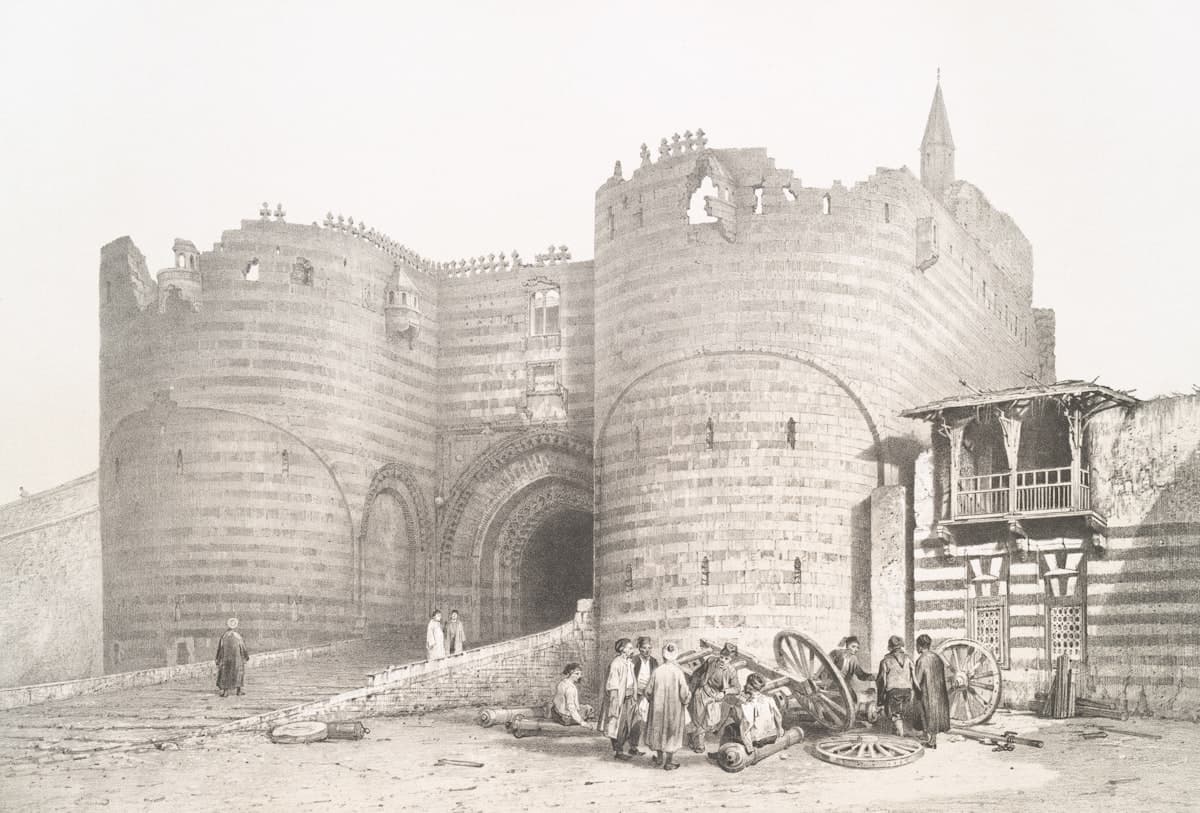
Mohamed Ali Pasha was not Egyptian. He was not Arab. He was not even Ottoman in any culturally meaningful sense. He was born in 1769 in Kavala, a coastal town in what is now northern Greece, to an Albanian family that had settled there across generations of Ottoman imperial expansion. His father Ibraham Agha was an Albanian commander in the Ottoman military apparatus. His mother died when he was young. He was raised partly by the governor of Kavala and worked as a tobacco merchant and tax collector before circumstances flung him toward Egypt in 1801 as part of an Albanian contingent sent to expel Napoleon's retreating forces.
He arrived as a soldier. He left, four years later, as the effective ruler of Egypt. And he never left.
Understanding Mohamed Ali's Albanian heritage is not a footnote to Egyptian history. It is the key to understanding why Egypt modernized when it did, how it did, and what that modernization cost. The man who broke the power of the Mamluks, built the first modern army in the Arab world, sent Egyptian students to Paris on state scholarships, and constructed a mosque whose silhouette still defines the Cairo skyline was not working from an Egyptian cultural script. He was working from an Albanian one: pragmatic, militaristic, ruthlessly opportunistic, and fiercely committed to dynasty. He founded a dynasty that ruled Egypt until 1953, when his descendant Farouk was deposed by the Free Officers and sent into exile. The dynasty lasted 150 years. Almost none of it was Egyptian by blood.
The mosque that bears his name sits at the highest point of the Citadel of Saladin, itself built in 1176 on a spur of the Muqattam Hills using stone stripped, without apology, from the outer casing of the Giza pyramids. That recycled limestone is still visible in sections of the Citadel's lower walls. Three civilizations in a single view: Pharaonic stone, Ayyubid military architecture, and an Ottoman-style mosque built by an Albanian who modeled it on the Sultan Ahmed Mosque in Istanbul, partly because he wanted to signal that Egypt under his rule was a rival to the Ottoman capital, not a subordinate province.
---
The Albanian Who Broke Cairo's Power Brokers
The Mamluks had controlled Egypt since 1250, a military caste of enslaved soldiers, mostly Circassian and Turkic, who had evolved into hereditary rulers. By the time Mohamed Ali arrived, they were corrupt, fractured, and militarily obsolete. He tolerated them for years as a political necessity. Then, in March 1811, he invited their leaders to a banquet at the Citadel to celebrate his son Tusun's appointment to lead a campaign in Arabia. As the Mamluk beys rode in procession through the Bab el-Azab gate, the gate was locked behind them. Mohamed Ali's Albanian and Turkish soldiers opened fire from the walls above. Between 470 and 500 Mamluk leaders were killed in what became known as the Citadel Massacre. One man reportedly escaped by jumping his horse from the Citadel walls. Whether the story is true is disputed. The massacre was not.
You can stand at the Bab el-Azab today, from outside, because the gate is still closed to the public. Look up at the walls. The angle of fire would have been devastating. It was not a battle. It was a removal.
What followed was the systematic modernization of Egypt by a man who understood, from his Albanian and Ottoman background, that power requires institutions, not just armies. Mohamed Ali established the first secular schools in Egypt, including a school of medicine in 1827 at Qasr al-Aini, which still operates as one of Cairo's major teaching hospitals. He sent 44 students to France in 1826, the first state-sponsored educational mission in Egyptian history. Among them was Rifaa al-Tahtawi, who returned to translate French Enlightenment texts into Arabic and effectively invented the modern Arabic essay. Mohamed Ali's Albanian pragmatism about knowledge as a tool of power had consequences that echo in every Egyptian university today.
---
Inside the Mosque: What You Are Actually Looking At
![[The Citadel and the Mosque of Mohammed Ali, Cairo]](/_next/image?url=https%3A%2F%2Fpub-04554b4ed1074e4a91148d8c5d76943b.r2.dev%2Fimages%2Fmohamed-ali-pasha-albanias-gift-to-egyptian-civilization%2F2.jpg&w=3840&q=75)
The Mohamed Ali Mosque, completed in 1848 and built by the Greek-born Ottoman architect Yusuf Bushnak, is covered almost entirely in alabaster from Beni Suef, a city 120 kilometers south of Cairo. This is why it is called the Alabaster Mosque, though that name undersells the specific political intent behind the material choice. Alabaster was expensive, Egyptian, and not what an Istanbul mosque would typically use. It was a statement: this is Egypt's own Ottoman grandeur, not Istanbul's copy.
The interior is a large central dome flanked by four semi-domes, lifting to 52 meters at the apex. The hanging brass lantern chandelier below is extraordinary up close: it holds hundreds of glass globes and was designed to be lit by oil, then later converted to electricity. The original French clock in the courtyard, a gift from King Louis Philippe in 1846 in exchange for the obelisk that Mohamed Ali sent to Paris to stand in the Place de la Concorde, has never worked reliably. Parisians got a 3,300-year-old obelisk from Luxor's Ramesseum. Egyptians got a clock that doesn't keep time. This transaction has been described by Egyptian historians with varying degrees of bitterness.
Mohamed Ali's own tomb is in the southeastern corner of the mosque, in a white marble enclosure. It is understated, which is either a mark of genuine piety or a reminder that he knew his legacy was written in institutions, not monuments. His body was moved here from its original burial site. He died in Alexandria in 1849, one year after the mosque was completed, his mind largely gone from what was likely Alzheimer's disease.
Remove your shoes at the entrance. The carpets are thick and clean. Women should have a headscarf; one is available to borrow at the entrance. The dress code is enforced without aggression but consistently.
---
The Connections
The Citadel was built by Salah ad-Din, the Ayyubid sultan known in the West as Saladin, using military engineering concepts he had absorbed from the Crusaders he fought and, in many cases, defeated. The quarried stone for its foundations came partly from workers who dismantled pyramid casing stones at Giza, a fact confirmed by Arab chroniclers of the period. Standing inside the Citadel, you are inside a structure that consumed the ancient world to build the medieval one.
Between Saladin's Citadel and Mohamed Ali's mosque, the Mamluks built their own structures on this hill, most of which Mohamed Ali demolished to make room for his mosque and palace complex. He was not sentimental about older architecture when it conflicted with his vision. Several Mamluk mosques below the Citadel in the district of Darb al-Ahmar survive from the 14th and 15th centuries and are superior examples of Mamluk craftsmanship to anything that survived inside the Citadel walls. The mosque of Amir Khayer Bek, built in 1502, is a 10 minute walk downhill and almost never has more than three visitors at any given moment.
Mohamed Ali's Albanian heritage also connects Cairo to a broader Mediterranean world that is invisible in most tourist narratives. The Albanian community in Cairo was significant through the 19th century. Albanian soldiers who served under Mohamed Ali settled in the city, and their descendants became part of Cairo's cosmopolitan elite that included Greeks, Italians, Armenians, Syrians, and Jews. This world largely disappeared after 1952, when Nasser's nationalizations and the political pressures that followed drove most of Cairo's non-Arab minorities into emigration. The city that Mohamed Ali built was more ethnically complicated than the city that exists today.
---
Common Mistakes
Arriving at midday in summer. The Citadel plateau has almost no shade between the mosque and the military museum. Temperatures on the exposed limestone hit 40 degrees Celsius regularly from June through September. The morning light before 9am is also better for photography and significantly better for your experience of the mosque's alabaster interior.
Paying for a guide at the gate. The unofficial guides who approach you outside the Bab el-Gabal entrance are persistent and occasionally knowledgeable, but their standard tour hits four points you can read in ten minutes. If you want a guide, book one in advance through a registered company. Expect to pay EGP 400 to 600 for a two-hour specialist tour. The difference in quality is significant.
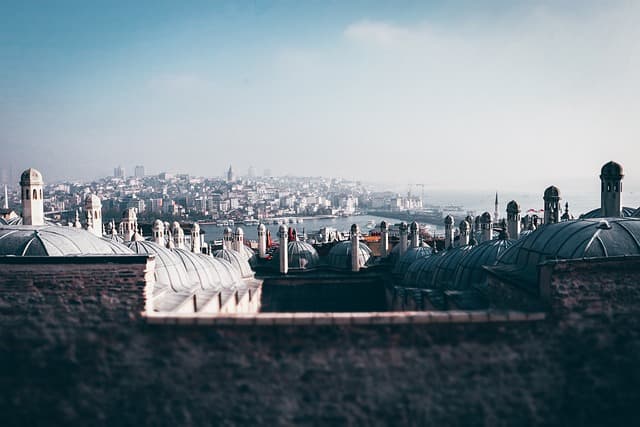
Spending the whole visit inside the mosque. The mosque is the obvious destination, but the courtyard view north toward the medieval city of Cairo is one of the best urban panoramas in Africa. Stand at the northern wall of the courtyard and look toward the minarets of Sultan Hassan Mosque directly below. That mosque, built between 1356 and 1363, is larger by volume than most European cathedrals and is arguably the most architecturally accomplished building in Cairo. Most people photograph the Mohamed Ali Mosque from below, not realizing the best view of Sultan Hassan is from above.
The sound and light show. It costs EGP 400 and narrates a version of Egyptian history that flattens three thousand years into a 45-minute spectacle designed for the widest possible audience. It adds nothing to your understanding of Mohamed Ali, the Citadel, or Islamic Cairo. Skip it without guilt.
Missing the Carriage Museum. It is included in your ticket, almost no one visits it, and it contains the actual state carriages of the Khedival period, including vehicles used by Mohamed Ali's descendants. It is a direct material link to the dynasty's final century and takes 20 minutes.
Conflating the Alabaster Mosque with Ottoman architecture. It is Ottoman in style, but it was built by a man who was actively trying to break free of Ottoman control. Mohamed Ali declared effective Egyptian independence from the Ottomans in the 1830s after his armies marched to within striking distance of Istanbul. The mosque's Ottoman aesthetic was political theater, not cultural loyalty.
Buying souvenirs inside the Citadel complex. The stalls near the exit charge two to three times the price of shops 200 meters downhill in the street markets of Darb al-Ahmar. Walk down. The neighborhood is safe, interesting, and undervisited.
---
Practical Tips
The Citadel is most manageable on a weekday morning. Friday afternoons bring local visitors for prayer and the surrounding streets become genuinely crowded. Saturday mornings are the most reliably quiet.
Wear shoes you can slip off easily. You will remove them at the mosque entrance and carry them in a provided plastic bag. Sandals with no buckles take 10 seconds. Lace-up boots take considerably longer and become annoying if you visit more than one mosque in a day.
Bring water. There is a café inside the Citadel complex, but it charges tourist prices (EGP 60 to 80 for a bottle of water that costs EGP 10 outside the walls). Fill a bottle before you enter.
If you are combining the Citadel with the Sultan Hassan Mosque and the Ibn Tulun Mosque on the same day, start at the Citadel for the morning light, walk down to Sultan Hassan by 10:30am, and reach Ibn Tulun before noon. Ibn Tulun, built in 879 AD and the oldest intact mosque in Cairo, has a minaret with an external spiral staircase that is unique in Egyptian Islamic architecture. It takes 45 minutes and costs EGP 100 for foreigners. It is the better building, architecturally, than the Mohamed Ali Mosque, and it sees a fraction of the visitors.
For context before you arrive, read Khaled Fahmy's "All the Pasha's Men," a rigorous and readable account of how Mohamed Ali built his army and what that project did to Egyptian peasants who were conscripted into it. It will make the mosque and the Citadel feel considerably heavier.
Frequently Asked Questions
The Weekly Dispatch
More on Egypt, every Friday.
Cultural depth and places most guides never mention.
No spam. Unsubscribe anytime.