Mohamed Ali Pasha: Albania's Gift to Egypt's Citadel
He arrived in Egypt as a foreign soldier with no claim to power. Within a decade he had killed every Mamluk rival in a single dinner invitation. The mosque he built still dominates Cairo's skyline.

Quick Facts
- Best time to visit
- October to April. November and March are ideal, cool enough to walk the exposed plateau comfortably and with cleaner air for views toward Giza.
- Entrance fee
- EGP 450 (approx $9 USD) for the full Citadel complex including Mohamed Ali Mosque and Military Museum. Students with valid ID pay EGP 225.
- Opening hours
- Daily 8am to 5pm. Mosque closes for Friday prayer approximately 12pm to 1:30pm. Arrive before 10am for the best light and smallest crowds.
- How to get there
- Taxi from Downtown Cairo: EGP 60 to 80, 20 minutes. Metro to Sayyida Zeinab (Line 2) then tuk-tuk: EGP 30 total. Request the Bab al-Mudarraj entrance, not the northern gate.
- Time needed
- 2 hours minimum for the mosque and courtyard. 4 hours for the full Citadel circuit including Gawhara Palace and the terrace views.
- Cost range
- Budget day EGP 600 to 900 including transport, entry, and tea. Mid-range with licensed private guide EGP 2,500 to 3,500.
Quick Facts
Best time to visit: October to April, when the citadel plateau is cool enough to walk without suffering. July and August are brutal at this altitude.
Entrance fee: EGP 450 (approximately $9 USD) covers the entire Citadel complex including the Mosque of Mohamed Ali and the Military Museum. Students with valid ID pay EGP 225.
Opening hours: Daily 8am to 5pm. The mosque closes briefly during Friday prayer, roughly 12pm to 1:30pm. Plan around this.
How to get there: Taxi from Downtown Cairo, roughly EGP 60 to 80 depending on traffic and your negotiating. The Cairo Metro drops you at Sayyida Zeinab (Line 2), from which a tuk-tuk or short taxi reaches the Citadel gate in under ten minutes for EGP 20. The no.72 and no.951 buses run from Tahrir but add 40 minutes and significant confusion to the journey.
Time needed: Two hours minimum for the mosque and its courtyard. Budget four hours if you plan to walk the full citadel circuit and visit the Gawhara Palace museum, where Mohamed Ali's personal effects are displayed with zero curatorial imagination but some genuinely strange objects.
Cost range: Budget day including transport and entry, EGP 600 to 900. Mid-range with a good private guide who actually knows Albanian history, EGP 2,500 to 3,500.
---
Why This Place Matters
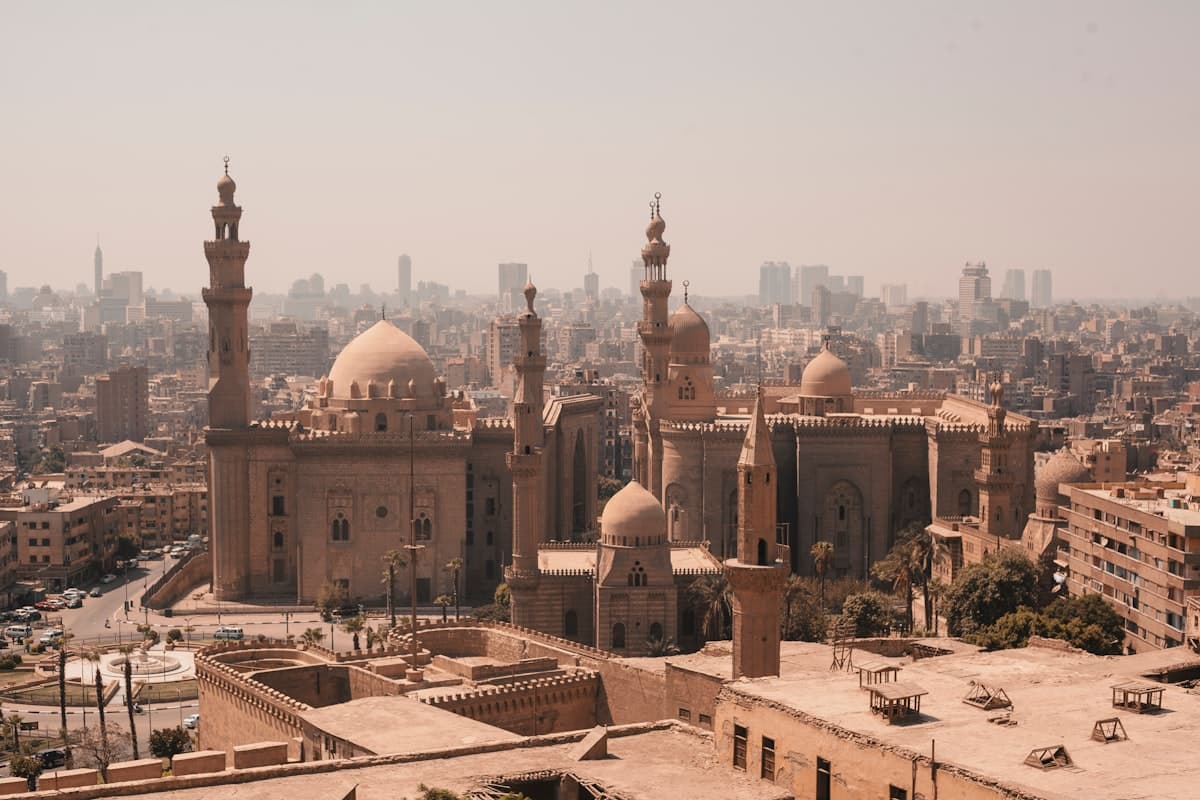
![[The Citadel and the Mosque of Mohammed Ali, Cairo]](/_next/image?url=https%3A%2F%2Fpub-04554b4ed1074e4a91148d8c5d76943b.r2.dev%2Fimages%2Fmohamed-ali-pasha-albanias-gift-to-egypts-citadel%2F1.jpg&w=3840&q=75)
Mohamed Ali Pasha was not Egyptian. He was not Arab. He was born in Kavala in 1769, a port city that is today part of northern Greece but was then an Ottoman Albanian community, and he spoke Arabic for the rest of his life with a heavy accent his Cairo courtiers reportedly found both ridiculous and terrifying. He came to Egypt in 1801 as a lieutenant commanding Albanian mercenaries sent by the Ottoman Empire to expel Napoleon's occupying French forces. He had no particular plan to stay.
What followed is one of the stranger political careers in modern history. Within four years he had manipulated the Ottoman governor, the French legacy factions, the Mamluk military caste, and Egypt's own religious establishment against one another with enough skill that he was appointed Wali, governor, of Egypt in 1805. The Egyptian ulama, the religious scholars who wielded enormous public authority, actually petitioned the Ottoman Sultan to appoint him. He was their chosen strongman. This is the first surprise about Mohamed Ali: he did not conquer Egypt. He was invited to run it by the people who thought they could control him.
They could not. By 1811 he had consolidated power enough to address the Mamluk problem permanently. The Mamluks were a military aristocracy who had governed Egypt in various configurations since 1250 AD, first as independent sultans, then as Ottoman vassals who retained effective local control. They were the only institution powerful enough to challenge him. His solution was a banquet at the Citadel on March 1, 1811, to which he invited the Mamluk leadership to celebrate his son's appointment to command a military expedition to Arabia. Somewhere between 470 and 500 Mamluk beys and their retinues arrived. As they processed through a narrow passage in the Citadel's Bab al-Azab gate, Mohamed Ali's Albanian soldiers opened fire from the walls above. The Mamluks were killed to the last man. The only survivor in most accounts escaped by jumping his horse from the Citadel wall, a drop estimated at twelve meters. His name was Amin Bey and he reached Syria.
The mosque Mohamed Ali then built over the next three decades to crown the Citadel and declare his dynasty is not, architecturally speaking, Egyptian at all. It is Ottoman, modeled closely on the Yeni Cami in Istanbul, with two minarets that are pencil-thin in the Turkish style rather than the multi-tiered minarets of Cairo's Mamluk mosques below. He was making a statement about which civilization he belonged to and which empire he respected, even as he spent the rest of his life trying to break free of Ottoman control entirely.
---
What You Will See, and What You Will Miss
The courtyard stops most people cold, which is appropriate. The ablutions fountain at its center is covered by an elaborate Ottoman-style dome on eight columns and is one of the most photographed structures in Cairo, which means you have already seen it without knowing it. What the photographs do not convey is the specific quality of light on the alabaster cladding of the mosque walls in the morning. The stone is not white. It is a pale honey gold, and it changes color by the hour.
The mosque itself borrows from Hagia Sophia in Istanbul in its dome structure, a fact that Mohamed Ali's architects were apparently open about. The main dome rises 52 meters above the floor and rests on four massive pillars. The interior was decorated with French clocks, French chandeliers, and French gifts because Mohamed Ali spent much of his reign cultivating French military and technical assistance, sending Egyptian students to Paris at state expense and hiring French engineers to redesign his army and canal system. One French clock stands in the courtyard to this day, given by King Louis-Philippe in 1846 in exchange for the obelisk that now stands in the Place de la Concorde in Paris, taken from Luxor Temple in 1833. The clock has never worked properly in Cairo. The Egyptians note this with a certain satisfaction.
Mohamed Ali's tomb is inside the mosque, behind an iron grille on the right side of the interior. It is modest by the standards of the building around it and frequently overlooked by visitors following guides toward the dome. The tomb was moved here from the garden of the Shubra Palace after his death in 1849, by which point he had lost his mental faculties entirely. He died at 80, confused, in Alexandria, the last clear act of his reign arguably being the 1841 Convention of London in which the European powers forced him to dismantle the army he had built, the army that had at one point threatened Istanbul itself.
The Albanian Identity Question
The connection between Mohamed Ali Pasha Albanian heritage and Egypt runs deeper than one man's biography. The Albanian military communities that came to Egypt with and after Mohamed Ali formed a distinct social class in Cairo for generations. Albanian soldiers, administrators, and merchants settled in neighborhoods that still carry traces of that migration. The district around the Citadel, known historically as the Qala'a quarter, had a concentration of Albanian-speaking families into the early twentieth century.
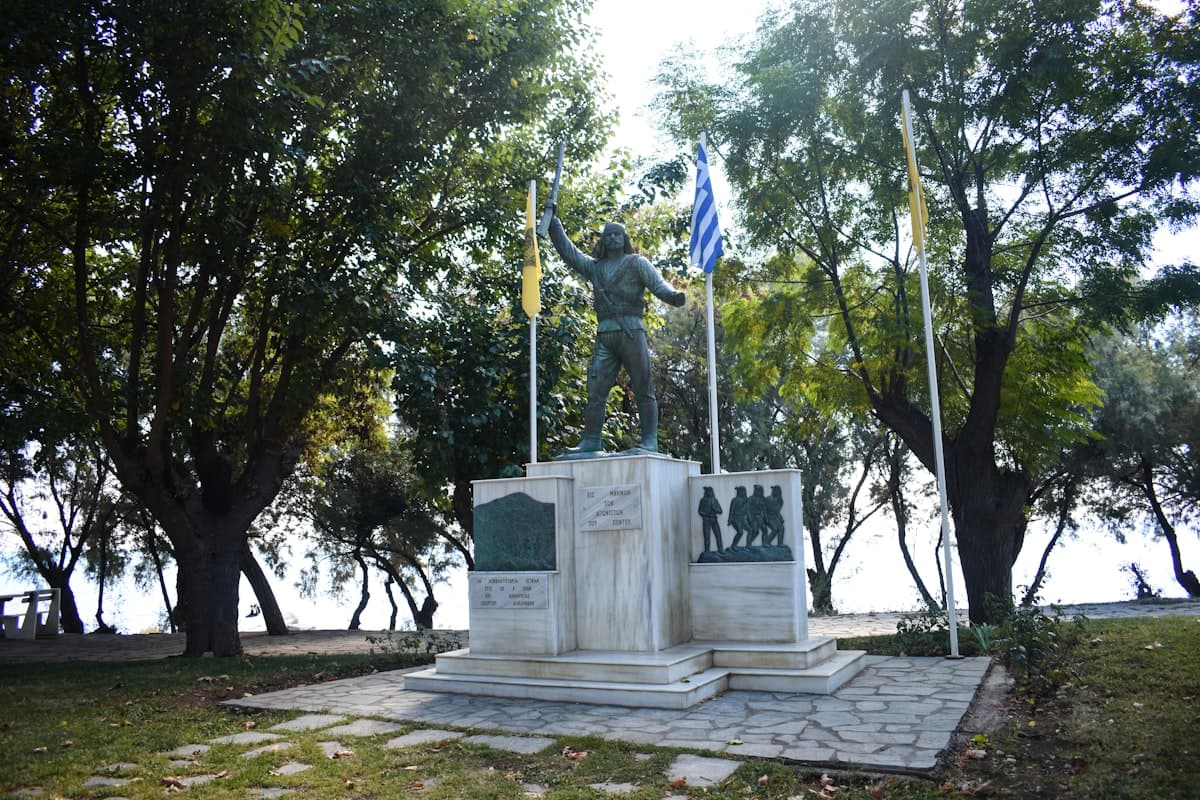
In Albania and Kosovo today, Mohamed Ali is a national hero and the subject of genuine historical pride. A large equestrian statue of him stands in Kavala. His family, the Muhammad Ali dynasty, ruled Egypt from 1805 until the revolution of 1952 that brought Nasser to power, meaning that for 147 years Egypt was governed by a family of Albanian origin who gradually, over generations, became entirely Egyptian. His great-great-grandson was King Farouk, who spoke Arabic, French, and English but reportedly not a word of Albanian.
---
The Connections
The Citadel itself is older than Mohamed Ali by six centuries. Saladin, the Kurdish military commander who founded the Ayyubid dynasty and expelled the Crusaders from Jerusalem in 1187, began construction of the Citadel in 1176 as a fortified royal city on the Muqattam spur overlooking Cairo. He never finished it. His successors did, and subsequent rulers from the Ayyubids through the Mamluks through the Ottomans to Mohamed Ali all used it as the seat of Egyptian government, each one building over, into, or beside what came before.
Beneath the Citadel, the ground contains layers going back further still. The Muqattam limestone used to build the pyramids at Giza was quarried from the hills immediately adjacent to where you are standing. Ancient quarry marks are visible in the exposed rock faces on the hill's eastern side, though no tour operator stops to show them. Saladin's engineers encountered and incorporated pre-existing Roman cisterns into their water system, which Mohamed Ali later expanded using hydraulic pumps designed by his French engineers.
Looking down from the Citadel's western terrace on a clear morning, you see the entire history of Islamic Cairo laid out in stone. The minarets of Ibn Tulun's mosque from 876 AD, the oldest surviving mosque in Africa still in its original form, rise in the middle distance. The complex of Sultan Hassan from 1356, arguably the finest example of Mamluk architecture anywhere, sits almost directly below. The mausoleum of Imam al-Shafi'i, founder of one of Islam's four major schools of law, is visible in the cemetery to the south. Mohamed Ali chose this position deliberately, building higher and more visibly than all of them combined.
---
Common Mistakes
Arriving without knowing which gate to use. The Citadel has multiple entrances and the signage assumes you already know where you are going. Tourists arriving by taxi are frequently dropped at the Bab al-Gadid gate on the north side, which adds a ten-minute uphill walk to reach the mosque. Ask specifically for the Bab al-Mudarraj on the lower southern side, nearest the Mohamed Ali Mosque entrance.
Hiring a guide at the gate. The touts who approach you at the Citadel entrance are overwhelmingly not licensed guides. They know the basic narrative and will charge EGP 200 to 400 for ninety minutes of mostly inaccurate theatre. A licensed Egyptologist guide who actually knows the Ottoman and Albanian history, which is what makes this site specific, should be booked in advance through a reputable agency. Expect to pay EGP 800 to 1,200 for two to three hours.
Skipping the Gawhara Palace Museum. Almost everyone does. The palace was Mohamed Ali's residential quarters within the Citadel and contains his furniture, his personal effects, and the reception room where he met European diplomats. It is awkwardly curated and the labels are sparse, but it is the only place in Cairo where you are standing inside the rooms he actually used.
Doing the Sound and Light Show at the Citadel. It costs EGP 350, runs 45 minutes, and consists of colored lights projected onto the mosque while a recorded narrator explains things you will learn better by reading a single chapter of Khaled Fahmy's biography of Mohamed Ali. Skip it without guilt.
Missing Ibn Tulun on the same day. The mosque of Ahmed Ibn Tulun is a 15-minute walk from the Citadel and contains, in its attached Gayer-Anderson Museum, one of the most compelling collections of Ottoman-era domestic objects in the city. Combining the two creates an accidental narrative about who governed Egypt and what they built, across twelve centuries, in a single afternoon.
Ignoring the view north. The western terrace view toward the pyramids is famous and photographed constantly. The view north from the Citadel's northern tower across the City of the Dead, the vast medieval necropolis where families historically lived among the tombs of their ancestors and where many poor Cairenes still do, is more honest about what Cairo actually is.
Arriving at noon on Friday. The mosque closes for prayer and the courtyard fills with worshippers. This is not a mistake exactly, but if you want the interior to yourself, 8am on a weekday in November gives you the closest thing to solitude a site this famous can offer.
---
Practical Tips
Dress covers shoulders and knees for both men and women. The mosque provides robes at the entrance for EGP 10 if you have forgotten. Remove shoes before entering the prayer hall. This is not a suggestion.
The Citadel plateau is exposed. In summer it is punishing by 10am. Bring water, which is sold inside at tourist markup but available. Sunscreen is not optional.
Photography inside the mosque is permitted without flash. The French chandeliers reflect light in interesting ways in the late morning. The tomb of Mohamed Ali photographs better with a longer focal length from the main prayer hall rather than pressed against the grille.
Combine the Citadel visit with the Khan el-Khalili bazaar and the Al-Azhar mosque complex, which are 15 minutes away by taxi and represent an entirely different phase of Cairo's Islamic history, the Fatimid period that preceded the Mamluks that preceded Mohamed Ali. The connective tissue between these sites is the story of who Cairo has belonged to, and when.
The Citadel's café on the western terrace serves acceptable tea and coffee. The food is mediocre and expensive. Eat before you arrive or wait until you descend into the city.
Frequently Asked Questions
The Weekly Dispatch
More on Egypt, every Friday.
Cultural depth and places most guides never mention.
No spam. Unsubscribe anytime.