Mohamed Ali Pasha: Albania's Gift to Egypt's Last Dynasty
An Albanian soldier who never learned Arabic ruled Egypt for 43 years and remade it so completely that the country he inherited barely resembled the one he left behind.

Quick Facts
- Best time to visit
- October to March. Winter mornings offer clear air, visible pyramid views from the terrace, and manageable crowds before 10am.
- Entrance fee
- EGP 450 (approx $9 USD) for the full Citadel complex including the Mohamed Ali Mosque and Military Museum. Egyptian nationals pay EGP 30. Carriage Museum adds EGP 75.
- Opening hours
- Daily 8am to 5pm. The mosque closes briefly on Fridays during prayer, approximately 12:30 to 1:30pm.
- How to get there
- Metro to Sayyida Zeinab (Line 1, EGP 7) then 20-minute walk, or taxi from central Cairo for EGP 40 to 60. Uber and Careem available with fixed fares. Request Bab el-Gadid entrance specifically.
- Time needed
- 45 minutes for mosque only. 3 to 4 hours for the full Citadel complex. Full day if combining with Ibn Tulun Mosque, Sultan Hassan Mosque, and the Manial Palace.
- Cost range
- EGP 500 to 900 per person for Citadel entrance, transport, and refreshments. Add EGP 200 for Manial Palace. Budget EGP 400 to 600 for a licensed guide booked in advance.
Quick Facts
Best time to visit: October to March, when the Citadel sits above Cairo's haze rather than inside it.
Entrance fee: The Citadel complex (which includes the Mohamed Ali Mosque and museums): EGP 450 for foreigners (approx $9 USD), EGP 30 for Egyptian nationals. The Carriage Museum inside the complex costs an additional EGP 75.
Opening hours: Daily 8am to 5pm. The mosque closes briefly during Friday prayer, usually 12:30 to 1:30pm.
How to get there: From Tahrir Square, take the Metro to Sayyida Zeinab station (Line 1, about EGP 7) and walk 20 minutes, or take a taxi for EGP 40 to 60. From Khan el-Khalili, a taxi costs EGP 30 to 40. The Citadel sits at the eastern edge of Islamic Cairo above the Muqattam Hills. Ride-hailing apps like Uber and Careem are reliable and show fixed prices before you book.
Time needed: The mosque and interior courtyard take 45 minutes if you are curious, 20 if you are not. Budget 3 to 4 hours for the Citadel complex if you include the Military Museum and the views from the walls.
Cost range: EGP 500 to 900 for entrance, transport, and a tea nearby. Combine with the Ibn Tulun Mosque (EGP 80 entrance, a ten-minute walk) and you have the best half-day of Islamic Cairo for under EGP 1,000.
---
An Albanian soldier arrived in Egypt in 1801 as part of an Ottoman force sent to push the French out. He spoke no Arabic. He had no particular ambition to stay. Within four years he had neutralized the Ottomans, outmaneuvered the Mamluks, and made himself the effective ruler of the country. He would govern Egypt for forty-three years, found a dynasty that lasted until 1953, and build the mosque that still dominates Cairo's skyline, visible from almost anywhere in the city on a clear morning.
This is the Mohamed Ali Pasha Albanian heritage story that Egypt does not always tell loudly enough: the man who modernized the country, massacred its previous ruling class, sent his army into Arabia and Sudan, and set Egypt on a course toward eventual independence, was never Egyptian at all. He was from Kavala, a coastal town in what is now northern Greece, where his family had come from the Albanian highlands. He was, by any definition, a foreigner who became the architect of modern Egypt.
The mosque he built to cement his legacy is not where that story ends. It is where you begin.
---
Why This Place Matters
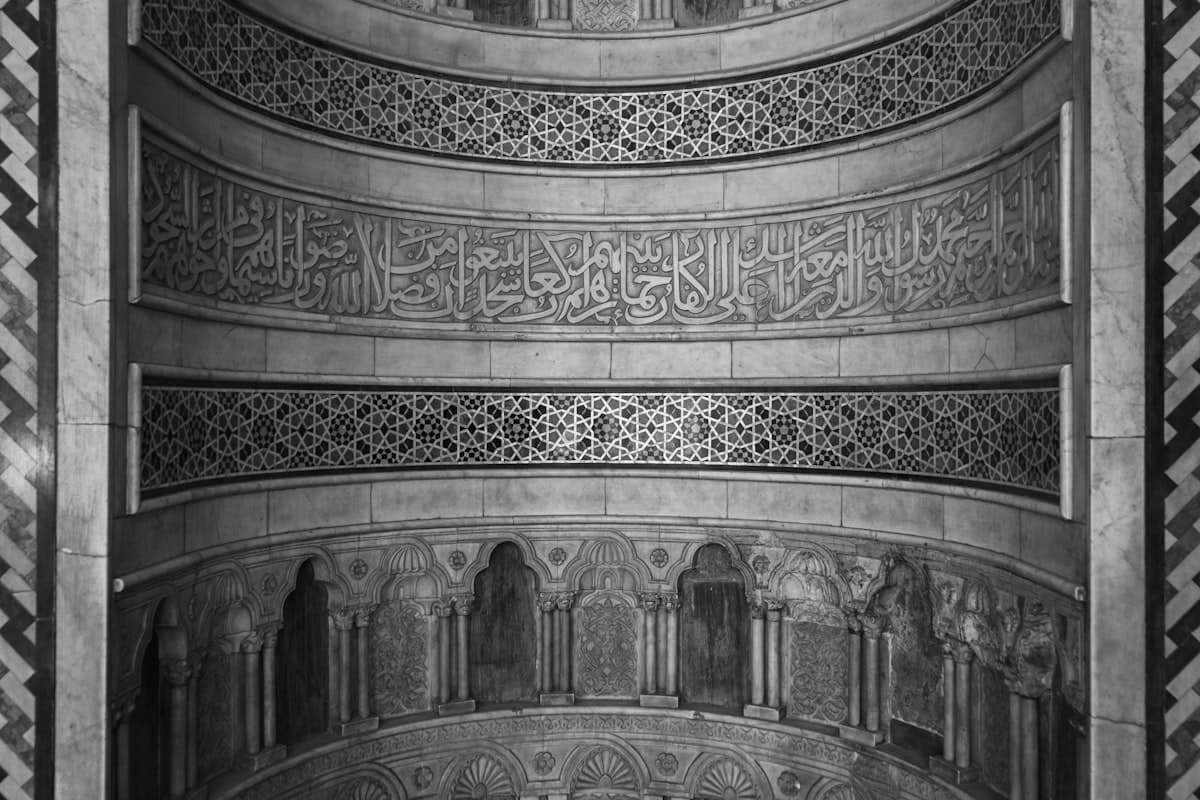
The Mohamed Ali Mosque sits inside the Citadel of Saladin, a fortification begun in 1176 by the Kurdish-born Sultan Salah ad-Din, who was himself not Egyptian. This is a pattern worth noticing: Cairo's most powerful landmarks were almost always built by outsiders who came as soldiers, stayed as rulers, and expressed their ambitions in stone.
When Mohamed Ali chose to build his mosque here in 1830, he was making a deliberate political statement. The Citadel had been the seat of Egyptian power for six centuries. By placing his Ottoman-style mosque on its highest point, directly replacing a Mamluk structure that had stood there since the medieval period, he was rewriting the city's skyline as a declaration of his own authority.
The mosque itself was designed by a Greek architect, Yusuf Boshna, modeled explicitly on the Sultan Ahmed Mosque in Istanbul. This is not coincidence. Mohamed Ali wanted Egypt to look like it belonged to the same world as the great Ottoman cities, even as he was quietly building a state that would eventually challenge Ottoman power directly. His army fought the Sultan's forces to a standstill in 1832 and 1839. Egypt's independence from Istanbul was, effectively, Mohamed Ali's long-term project.
His Albanian origins mattered more than later official histories suggested. He recruited heavily from Albanian soldiers throughout his rule, and the Albanian community in Egypt remained influential well into the twentieth century. His family, the Muhammad Ali dynasty, ruled Egypt through a line that included Khedive Ismail (who built modern downtown Cairo in an attempt to recreate Paris on the Nile), King Fuad, and King Farouk, whose abdication in 1952 ended the dynasty entirely. The dynasty lasted 150 years. It began with a man from Kavala who came to Egypt by accident.
---
What You Will Actually See Inside
The courtyard is where most visitors stall, and rightly so. The central ablution fountain, an elaborate Ottoman design added in 1828, was actually brought from France and was never used for ablutions. It was placed there purely for visual effect. The clock tower opposite the mosque entrance is French as well: a gift from King Louis-Philippe in 1845, sent in exchange for the obelisk that now stands in the Place de la Concorde in Paris. The clock has never worked. The obelisk still does.
Inside the mosque, the scale is deliberately overwhelming. The central dome reaches 52 meters at its highest point, and the semi-domes and smaller domes radiating outward create the sensation of being inside a structure that is still expanding. The alabaster cladding on the lower walls gives the interior its particular quality of light, pale and diffuse, which is why the mosque is formally called the Alabaster Mosque, though few people use that name in conversation.
Mohamed Ali's tomb is here, in a marble enclosure behind a brass grille on the right side of the prayer hall. It is modest in the context of the building around it, which may be intentional. The man who commissioned one of Cairo's most imposing structures buried himself inside it without fanfare. The tomb is real. The body is here. This is not a cenotaph.
What most visitors miss is the small door in the northwest corner of the courtyard that leads to the upper terrace. The views from there are the best in Cairo: the whole of Islamic Cairo below you, the medieval minarets of Ibn Tulun and Sultan Hassan and Al-Rifa'i in the middle distance, the Nile a silver line to the west, and on clear winter mornings, the pyramids at Giza visible on the horizon, 20 kilometers away. Go before 9am and the terrace is nearly empty.
---
The Albanian Thread
Kavala, the city where Mohamed Ali was born around 1769, is a port town in the Eastern Macedonia and Thrace region of modern Greece. His family were Albanian-speaking Muslims, part of a community that had settled along the northern Aegean coast over several centuries. His father died when he was young, and he was raised by a local Ottoman official before entering the tobacco trade and then military service.
The Albanian connection to Egypt did not end with Mohamed Ali himself. His personal guard was heavily Albanian throughout his rule. Later, the Albanian community in Cairo concentrated in specific neighborhoods and maintained distinct cultural practices well into the twentieth century. There are families in Cairo today who will tell you, with some pride, that their ancestors came from the Albanian highlands with Mohamed Ali's army.
The Mohamed Ali Pasha Albanian heritage is not simply a biographical footnote. It reflects something essential about how Egypt has always worked: as a place where outsiders arrived, took power, and then became Egyptian over generations, absorbing and transforming the culture even as they were absorbed by it. The Ptolemies were Macedonian Greeks. The Fatimids came from North Africa. The Mamluks were Circassian and Turkish slaves. The Ayyubids were Kurdish. Mohamed Ali continued a very long tradition of foreign-born rulers who built Egypt rather than merely ruling it.
The Sultan Hassan Mosque, visible from the Citadel terrace, was built by a Mamluk sultan in 1356 using stones reportedly taken from one of the smaller Giza pyramids. The Al-Rifa'i Mosque next to it contains the tomb of the last Shah of Iran, Mohamed Reza Pahlavi, who died in Cairo in 1980 after Anwar Sadat gave him asylum. This is the texture of Cairo: every monument contains another story, and none of them are purely Egyptian by origin.
---
The Connections
The Citadel sits on a spur of the Muqattam Hills above a district called Sayeda Aisha, and directly below it are two mosques that represent the before and after of Mohamed Ali's consolidation of power: the Sultan Hassan Mosque (1356) and the Al-Rifa'i Mosque (completed 1912). Standing on the Citadel terrace and looking at both of them simultaneously gives you 600 years of Egyptian power compressed into a single view.
The massacre that secured Mohamed Ali's rule happened inside the Citadel itself. In March 1811, he invited the Mamluk leaders to a ceremony honoring his son Tusun, then locked the gates and had them killed in a narrow corridor on the slope below the main complex. Between 470 and 500 Mamluk leaders died that day. The corridor still exists. It is not marked. Locals call it "Darb el-Gedawy" and it runs along the outer walls. You can walk it.
Mohamed Ali also commissioned the Manial Palace on Rhoda Island, now a museum of extraordinary quality that almost no foreign tourists visit. His descendants built it in stages between 1901 and 1929. The palace contains Ottoman, Persian, Moorish, and Syrian rooms, a private mosque, and a hunting museum with trophy displays that are jarring by contemporary standards. The garden alone justifies the EGP 200 entrance fee. Take a taxi from the Citadel, it costs EGP 50 to 60 and takes 25 minutes depending on traffic.
---
Common Mistakes
Arriving between 10am and 2pm. The tour groups arrive by 9:30am and the courtyard becomes genuinely difficult to move through by 10. Come at 8am or after 3pm. The quality of your experience will be entirely different.
Paying for a guide at the gate. The unlicensed guides who approach you at the Citadel entrance are persistent and sometimes aggressive. A licensed Egyptologist guide, booked in advance through a reputable agency, costs EGP 400 to 600 for two hours and will show you things you will not find otherwise, including the Mamluk corridor below the walls. The gate guides will not do this.
Skipping the Military Museum. It is housed in what was Mohamed Ali's own residential palace inside the Citadel, and the building itself, with its painted ceilings and Ottoman-era reception halls, is far more interesting than the weaponry on display. Entrance is included in the Citadel ticket. Almost no one goes in.
Doing the Sound and Light Show. It costs EGP 350, runs about an hour, and delivers a surface-level narration that contains less information than this article. The Citadel is more honest and more interesting in daylight. Skip it.
Assuming the mosque is purely Ottoman. The building contains explicit traces of Mohamed Ali's Albanian background: the specific proportions of the minarets, which are taller and more slender than standard Ottoman precedent, reflect a Balkan aesthetic that his Greek architect incorporated deliberately. Most guides do not mention this. It is visible if you know what to compare.
Missing the Al-Rifa'i Mosque. It is a five-minute walk from the Citadel entrance, entrance costs EGP 80, and it contains the tombs of the last Egyptian royal family (Fuad I, Farouk's father, is buried here) alongside the Shah of Iran. The contrast between the medieval Sultan Hassan Mosque next door and the neo-Mamluk Al-Rifa'i, built 550 years later by a Flemish architect named Max Herz, is a lesson in how Egypt has always reconstructed its own past.
Wearing inconvenient clothing. The mosque requires shoes to be removed and shoulders to be covered. The guards will lend women an abaya at the entrance, but carrying your own lightweight scarf is faster and less complicated.
---
Practical Tips
The Citadel is best approached from the Bab el-Gadid entrance on Salah Salem Street, not the lower entrance that most taxis default to. Tell your driver specifically: "Bab el-Gadid, el-Qala'a." The upper entrance puts you immediately at the mosque level rather than requiring you to climb through the complex.
Bring water. There is a small cafe inside the complex but it is overpriced and frequently out of cold drinks. The walk from the lower entrance to the mosque courtyard in summer heat is enough to dehydrate someone who arrives unprepared.
The Citadel is entirely manageable without a guide if you have done some reading beforehand. The on-site signage is inconsistent, with some areas excellently labeled in English and Arabic and others unmarked entirely. The area around the Mamluk massacre corridor has no signage at all.
For the Mohamed Ali Pasha Albanian heritage angle specifically: the Egyptian Museum in Tahrir has a dedicated section on the Mohamed Ali dynasty on its upper floor that almost no one visits because it sits between the mummy rooms and the Tutankhamun galleries. It contains personal objects, portraits, and documents from the dynasty's 150-year history. It is free with the museum entrance and takes 30 minutes. Go there before the Citadel and you will understand what you are looking at when you arrive.
Frequently Asked Questions
The Weekly Dispatch
More on Egypt, every Friday.
Cultural depth and places most guides never mention.
No spam. Unsubscribe anytime.