Mohamed Ali Pasha: Albania's Gift to Egypt's Modern History
An Albanian soldier who never learned Arabic fluently built modern Egypt, and his mosque sits on a citadel the Crusaders tried and failed to take. Here is the full story.

Quick Facts
- Best time to visit
- October to April. October and March offer the clearest air and most comfortable temperatures on the exposed citadel plateau. Avoid July and August midday heat.
- Entrance fee
- EGP 450 (approx $9 USD) for foreign visitors, EGP 200 for foreign students. Covers all citadel sites including the mosque.
- Opening hours
- Daily 8am to 5pm. Mosque interior closes to tourists during Friday midday prayers, approximately 11:30am to 1pm.
- How to get there
- Taxi from Tahrir Square: EGP 50 to 80. Uber: EGP 40 to 60. Metro to Sayyida Zeinab (Line 2) then 15-minute walk. Minibus from Ataba: EGP 5.
- Time needed
- 2 hours minimum for the mosque and courtyard. 3 to 4 hours to include Al-Nasir Muhammad Mosque and a museum. Full day if combining with Ibn Tulun and Sultan Hassan complex.
- Cost range
- Budget day EGP 600 to 900 including transport and local food. Mid-range EGP 1,500 to 2,000 adding a restaurant lunch near Khan el-Khalili.
Quick Facts
Best time to visit: October to April, when the citadel plateau catches a cool northerly breeze and the Cairo smog occasionally lifts enough to see the pyramids from the mosque forecourt.
Entrance fee: The Citadel complex costs EGP 450 (approx $9 USD) for foreign visitors, EGP 200 for foreign students. This covers the Mohamed Ali Mosque, the National Military Museum, and the Police Museum inside the walls.
Opening hours: Daily 8am to 5pm. Friday prayers close the mosque interior to tourists between approximately 11:30am and 1pm. Plan around this or use the time to walk the citadel walls.
How to get there: From Tahrir Square, a taxi costs EGP 50 to 80 depending on traffic. The metro to Sayyida Zeinab station (Line 2) puts you a 15-minute walk from the citadel gate. Minibuses from Ataba run the route for EGP 5. Uber is reliable and typically runs EGP 40 to 60 from Downtown Cairo.
Time needed: Two hours minimum for the mosque and its context. Three to four hours if you want to walk the full citadel, including the Al-Nasir Muhammad Mosque, which most visitors ignore and should not.
Cost range: Budget day EGP 600 to 900 including transport and food nearby. Mid-range EGP 1,500 to 2,000 if you add lunch at one of the Khan el-Khalili restaurants a short walk away.
---
Why This Place Matters
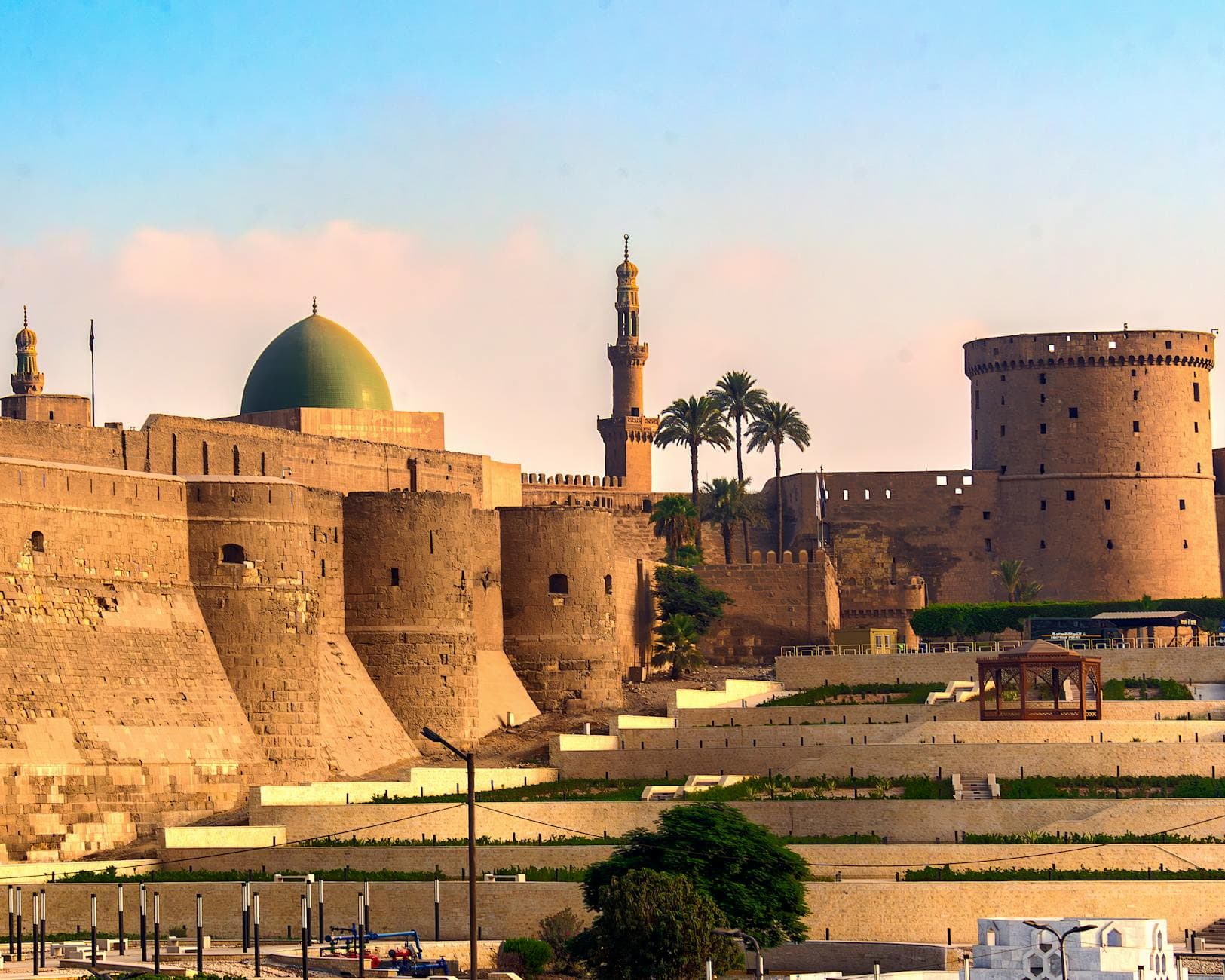
Mohamed Ali Pasha arrived in Egypt in 1801 as a junior officer in an Ottoman-Albanian regiment, sent to help expel Napoleon's forces. He had no particular mandate to stay. He could speak almost no Arabic. He was, by birth and culture, a Macedonian Albanian from the port town of Kavala, a place that is today in northeastern Greece. Within four years he had outmaneuvered the Mamluks, neutralized the Ottoman governor, and had himself declared Wali of Egypt by popular demand from Cairo's religious establishment, who believed he could be controlled. They were wrong.
This is the man whose mosque crowns the Cairo skyline, whose dynasty ruled Egypt until 1952, and whose modernization program, as brutal and extractive as it was, created the Egyptian state as a coherent administrative entity. The Mohamed Ali Pasha Albanian heritage that shaped him was not incidental. His comfort with multi-ethnic power structures, his familiarity with Ottoman court politics, his willingness to import European technical expertise while maintaining Islamic legitimacy: these were the skills of a man who had grown up on the edges of three empires simultaneously.
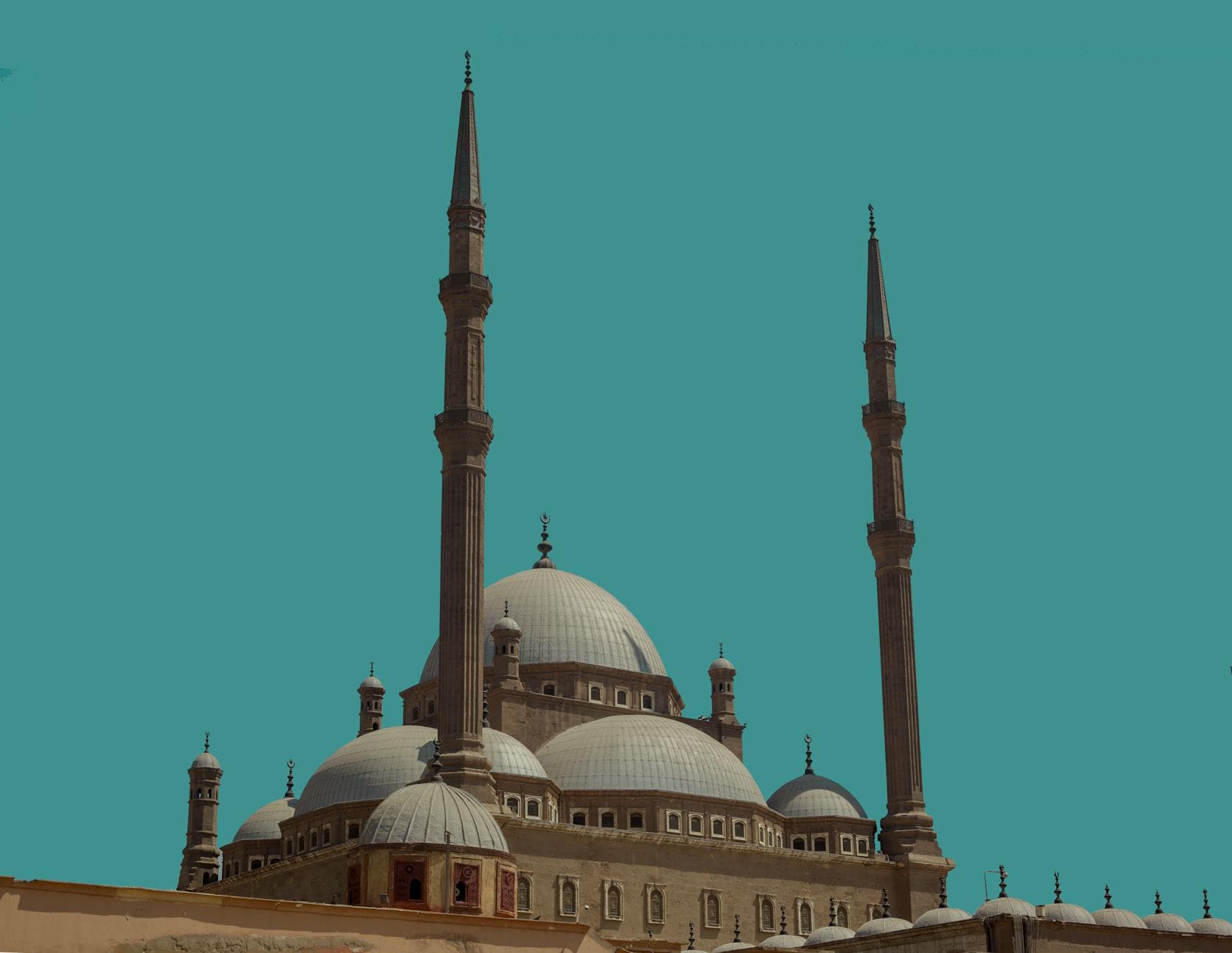
The mosque he built, completed in 1848 after three decades of construction, was modeled directly on the Sultan Ahmed Mosque in Istanbul. He brought an Ottoman architect, Yusuf Bushnak, and used a design so deliberately imperial that Egyptian religious scholars at the time understood immediately what it meant: this was not a local ruler building a local monument. This was a man announcing a dynasty.
---
What You Are Actually Standing Inside
The mosque sits on the highest point of the Citadel of Saladin, which was begun in 1176 by the same Kurdish general who would later become the great adversary of Richard I at the walls of Jerusalem. Saladin chose this specific spur of the Muqattam Hills because it commanded a view of the entire Nile Valley and could not be approached without being seen. He never actually lived here. He died before the citadel was finished, and it was his successors who turned it into the seat of Egyptian power for the next seven centuries.
When you stand in the mosque's alabaster-lined forecourt, the stone beneath your feet is almost certainly Ottoman-era repaving over Mamluk-era foundations over Ayyubid bedrock. The alabaster panels lining the lower walls were removed from the Bes Temple at Bahnasa in Middle Egypt on Mohamed Ali's orders, a fact that Egyptologists still argue about. Whether this was vandalism or pragmatic reuse depends entirely on your relationship to the idea of Egyptian heritage as a single continuous tradition rather than a series of distinct civilizations with competing claims.
The two minarets are slender Ottoman pencil minarets, 84 meters tall, visible from across the city. The clock tower in the forecourt was a gift from the French King Louis-Philippe in 1845, sent in exchange for the obelisk that now stands in the Place de la Concorde in Paris. The clock has never worked properly. The obelisk still stands in Paris. Egyptians have been noting the fairness of this trade ever since.
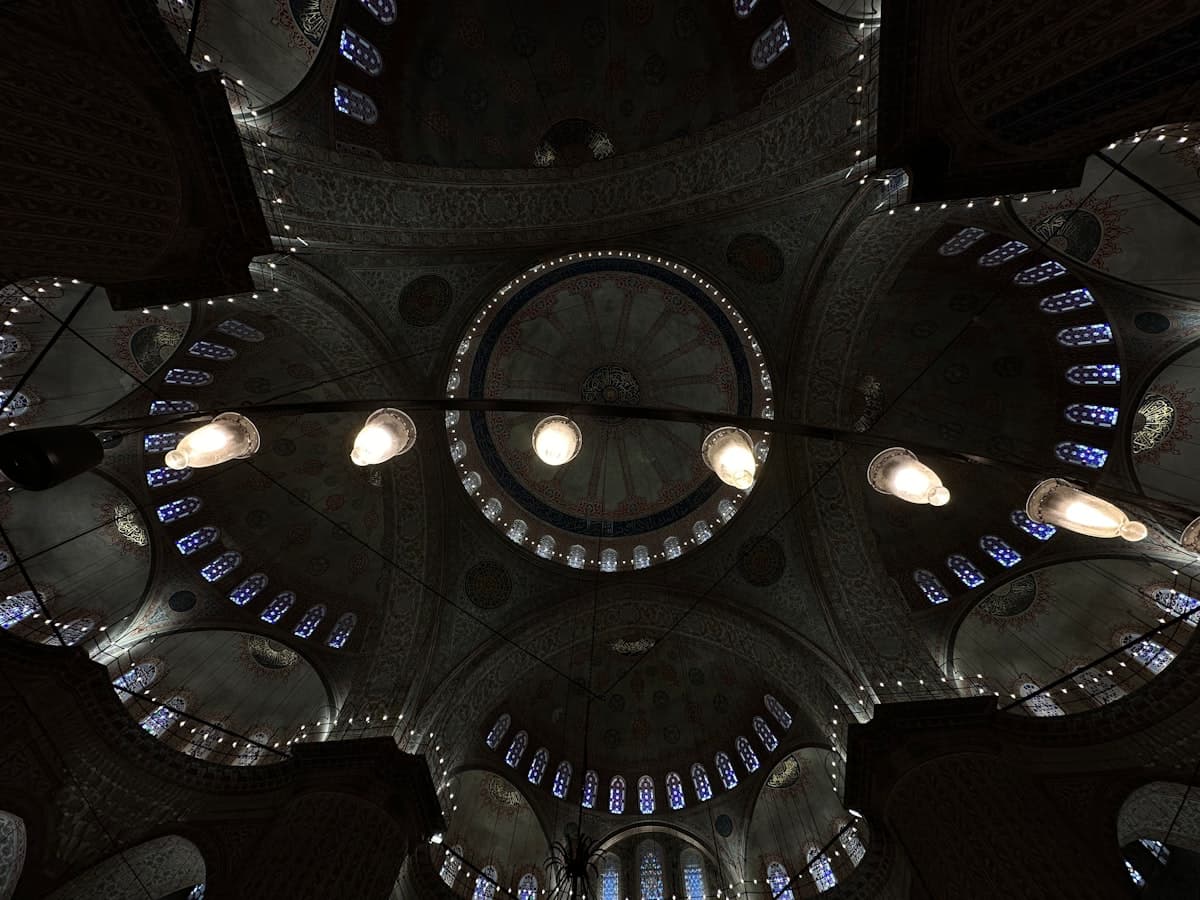
Inside, the central dome reaches 52 meters and the interior volume is immense enough to feel genuinely spiritual rather than merely large. The carpets are modern replacements, but the hanging chandeliers are original Ottoman fittings, restored in the 1930s. Mohamed Ali himself is buried in a marble mausoleum in the southeastern corner, behind an ornate bronze screen. Most visitors photograph the dome and leave without finding it.
---
The Albanian Factor: What Heritage Actually Means Here
The specific weight of Mohamed Ali Pasha's Albanian heritage in Egypt is something the Egyptian historical imagination has never fully resolved. He is taught in Egyptian schools as the founder of modern Egypt, full stop. His Albanian origins are mentioned as a biographical detail rather than a shaping force. But they mattered in ways that are still visible if you know where to look.
The elite military unit he created, the Nizam al-Jadid, was initially staffed almost entirely by Albanian and Macedonian soldiers he recruited from his home region. He sent his grandson to study in Paris and his administrators to train in Milan. He hired a French veterinarian named Antoine Clot to build Egypt's first modern medical school at Abu Zaabal in 1827, a school that trained the first generation of Egyptian doctors in the European tradition. The medical school later became the Qasr al-Ainy hospital in Cairo, which is still functioning today.
His relationship to Egypt was simultaneously colonial and foundational. He conscripted Egyptian peasants into his armies by force, a practice so brutal it caused villages to mutilate themselves to avoid service. He imposed cotton monoculture on the Delta in ways that destroyed the diversified agriculture that had fed the country for millennia. He also built the first irrigation barrages on the Nile north of Cairo, drained the Delta marshes, and created the administrative infrastructure without which a modern Egyptian state could not have existed. Both things are true.
The Kavala connection persists in Cairo in a specific and undervisited place: the Kavala Association building in the Heliopolis neighborhood, established by descendants of the Albanian community he brought with him. It is not a tourist site. It is a community center. But its existence is a reminder that Mohamed Ali did not arrive alone and did not govern alone, and that Cairo contains an Albanian Egyptian community whose roots go back two centuries.
---
The Connections
The Citadel links every major period of Egyptian Islamic history in one place, and the connections are not metaphorical. They are architectural and physical.
The Al-Nasir Muhammad Mosque, built between 1318 and 1335 by the Mamluk sultan who held power longer than any other Mamluk ruler, stands 200 meters from Mohamed Ali's mosque inside the same walls. Al-Nasir Muhammad was a Kipchak Turkic Mamluk, meaning he was born a slave soldier on the steppes of Central Asia and died as the absolute ruler of Egypt, Syria, and the Hejaz. His mosque has a strikingly unusual minaret that uses Gothic ornamentation, believed to have been taken from a Crusader church in Acre after its fall in 1291. This is not speculation. The foliated stonework is identifiably Frankish.
Below the citadel, the neighborhood of Sayeda Aisha contains one of Cairo's great undervisited complexes: the mosque and madrasa of Sultan Hassan, built between 1356 and 1363. It is five minutes by foot from the citadel gate and it is larger than the Mohamed Ali Mosque by volume. Its iwans, the four vaulted halls organized around a central courtyard, were used as artillery positions during the 1798 French occupation, and cannonball marks are still visible on the exterior western wall if you know to look at chest height on the left side of the main entrance.
The road connecting the citadel to the old city follows the approximate line of a Fatimid processional route used for Shi'a religious festivals in the 10th and 11th centuries, before Saladin, himself a Sunni, abolished them. Cairo's geography is a sediment of suppressed and surviving practices, and the Mohamed Ali Mosque sits at the top of that sediment literally as well as figuratively.
---
Common Mistakes
Arriving at midday in summer. The citadel plateau has almost no shade. By 11am from May through September, the stone radiates heat that makes serious looking at anything nearly impossible. Go at 8am when the gates open or after 3pm when the light improves and the tour buses begin to leave.
Paying for the sound and light show. It costs EGP 350 and takes place at the foot of the citadel on a stage facing the mosque's north wall. It tells you nothing you will not learn from reading this article. The recorded narration is written in the promotional register that treats Mohamed Ali as a straightforward hero, skipping the conscription, the Mamluk massacre of 1811, and the cotton monoculture entirely. The view of the illuminated mosque from outside is available for free at any time of night.
Skipping Al-Nasir Muhammad's mosque. It is inside the same ticket. It is 200 meters away. It is architecturally extraordinary and almost always empty while Mohamed Ali's mosque absorbs the crowds. The Gothic minaret alone justifies the detour.
Hiring a guide inside the mosque. The unlicensed guides who approach you in the forecourt typically know three facts and will charge EGP 100 to 200 to tell you all three. The mosque has good English signage. A licensed guide booked in advance through a reputable agency costs more but will tell you things the signage does not.
Treating the Mohamed Ali Mosque as the reason to come to this part of Cairo. The Ibn Tulun Mosque, fifteen minutes by foot south of the citadel, is the oldest intact mosque in Cairo, built between 876 and 879 AD on a design copied from the Abbasid capital of Samarra in Iraq. It receives a fraction of the visitors and charges EGP 80 for foreigners. The combination of Ibn Tulun and the citadel is a better day than either one alone.
Not crossing the road to the Sultan Hassan complex. See above. Free to view from outside, EGP 160 to enter, and the interior scale is something photographs cannot prepare you for.
Assuming Mohamed Ali's Albanian origin is tourist mythology. It is documented, specific, and consequential. He maintained Albanian-speaking households in his palaces, corresponded with family in Kavala throughout his life, and his descendants continued to identify the family's Macedonian Albanian roots until the dynasty was deposed in 1952.
---
Practical Tips
Dress for a working mosque: shoulders covered, knees covered, shoes removable. The mosque provides robes at the entrance for EGP 10 if you arrive underprepared, but they are uncomfortable in hot weather.
The citadel's multiple museums are included in the entrance ticket and most are nearly empty. The National Military Museum in the Harim Palace gives an unexpectedly frank account of Egypt's 19th century wars, including the disastrous 1840 campaign in which European powers forced Mohamed Ali to withdraw from Syria at gunpoint and return the Ottoman fleet he had captured. This is the moment his imperial project ended. The museum treats it as a minor setback. It was not.
Food near the citadel is not good at the tourist price level. Walk ten minutes north into the Sayeda Aisha neighborhood and eat where locals eat. Ful and falafel sandwiches cost EGP 10 to 15. Koshary shops are on every other corner.
The panoramic view of Cairo from the mosque forecourt is best in winter mornings after rain, when the air clears enough to see the Giza pyramids on the horizon. In summer, this view is usually obscured by haze. Manage expectations accordingly.
Booking through the Egyptian e-ticketing portal in advance saves the queue time but not always the entrance price. Bring cash anyway as the card readers inside the citadel are intermittently functional.
Frequently Asked Questions
The Weekly Dispatch
More on Egypt, every Friday.
Cultural depth and places most guides never mention.
No spam. Unsubscribe anytime.