Mohamed Ali Pasha: Albania's Gift to Egypt's Ottoman Throne
He arrived in Egypt as a minor Albanian officer commanding 300 men. Within four years he ruled it. Within twenty, he remade it entirely.

Quick Facts
- Best time to visit
- October through April. The Citadel's open limestone courtyards are fully exposed to sun and hold heat intensely from May through September. January offers the clearest air and the best pyramid views from the northern terrace.
- Entrance fee
- EGP 450 (approx $9 USD) for adults, EGP 225 for students with valid ID. Carriage Museum is a separate EGP 100 ticket.
- Opening hours
- Daily 8am to 5pm. Mohamed Ali Mosque closes to non-worshippers approximately 12pm to 1:30pm on Fridays for prayers.
- How to get there
- Metro to Sadat station, then taxi to Bab al-Gadid (EGP 30 to 50). Uber and Careem ride-shares available from anywhere in central Cairo, typically EGP 40 to 70. CTA bus 404 from Ramses Square to al-Azhar, then short taxi.
- Time needed
- 3 to 4 hours for Citadel and mosque combined. Full day if combining with Sultan Hassan Mosque, al-Rifai Mosque, and walking north into al-Muizz Street.
- Cost range
- Budget EGP 600 to 900 per day including transport, entry, and street food. Mid-range EGP 1,800 to 2,800 including a sit-down lunch and the Carriage Museum.
Quick Facts
Best time to visit: October through April. The Citadel sits on a limestone spur that catches every degree of summer heat. January and February are ideal: cool enough for long exploration, clear enough for views across Cairo to the pyramids at Giza.
Entrance fee: The Citadel complex costs EGP 450 (approx $9 USD) for adults, EGP 225 for students with valid ID. This covers the Mohamed Ali Mosque, the National Police Museum, and several smaller structures inside the walls. The Carriage Museum is a separate EGP 100 ticket and is genuinely worth it for reasons explained below.
Opening hours: Daily 8am to 5pm. The mosque itself closes briefly during Friday prayers, roughly 12pm to 1:30pm.
Getting there: From Tahrir Square, take the metro to Sadat station, then a taxi or ride-share to Bab al-Gadid (the main Citadel gate). The ride is roughly EGP 30 to 50. Alternatively, the CTA bus route 404 runs from Ramses Square and stops at al-Azhar, from which a 15-minute taxi ride reaches the Citadel for under EGP 25. Avoid guided minibus tours from central Cairo hotels: they eat 45 minutes of your morning and deposit you at the same spot.
Time needed: The mosque alone deserves 90 minutes if you read the inscriptions. A full Citadel visit runs 3 to 4 hours. Combine with the Mosque of Sultan Hassan directly across the road and you need a full day.
Cost range: Budget EGP 600 to 900 per day including transport, entry, and street food. Mid-range EGP 1,800 to 2,800 if you add a sit-down lunch in the Islamic Quarter.
---
Why This Place Matters
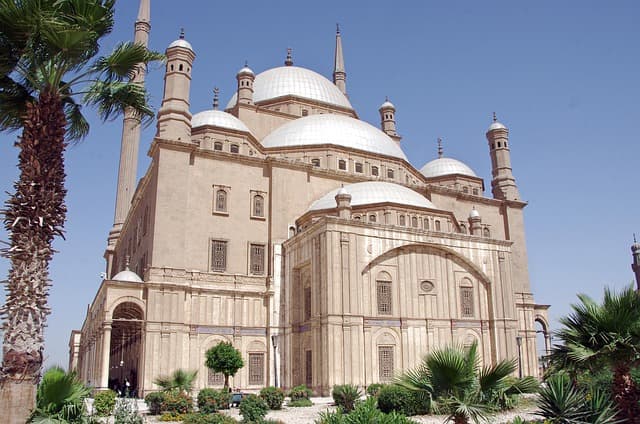
Mohamed Ali Pasha was not Egyptian. He was not Arab. He was not even Ottoman by blood. He was Albanian, born around 1769 in the port town of Kavala in what is now northern Greece, the son of a small tobacco merchant who died when Mohamed Ali was still a child. He came to Egypt in 1801 as second-in-command of an Albanian irregular regiment sent by the Ottoman Sultan to help expel Napoleon's army. Three years later, Napoleon was gone and Mohamed Ali was still here, reading the country like a map.
This is the fact that reframes everything you see at the Citadel: the mosque, the palaces, the military halls, the sweeping views over Cairo. None of it was built by an Egyptian dynasty in any conventional sense. It was built by an Albanian opportunist who understood Egypt better than most Egyptians in power at the time, who played the Mamluks against the Ottomans, the French against the British, and emerged with a personal empire that stretched, at its peak in the 1830s, from the Hejaz in Arabia through Sudan and into Syria, briefly threatening Istanbul itself.
The Mohamed Ali Pasha Albanian heritage in Egypt is not a footnote. It is the central fact of modern Egyptian history. Every institution he built, from the first state-run printing press to the military medical school to the cotton irrigation system that still shapes the Delta, derives from this one Albanian commander who decided that Egypt was worth more than a posting.
---
The Mosque That Is Not What It Looks Like
The first thing visitors notice from anywhere in Cairo is the mosque's silhouette: two slender minarets and a large central dome, hovering above the Citadel's limestone walls. It looks Ottoman. It is supposed to. Mohamed Ali commissioned it in 1830, twelve years before his death, and specifically requested a design modeled on the great imperial mosques of Istanbul, particularly the Sultan Ahmed Mosque, which itself borrowed heavily from Hagia Sophia's structural logic.
The architect was Yusuf Boushnaq, a Greek from Istanbul. The interior alabaster cladding, which gives the mosque its popular name, the Alabaster Mosque, came from quarries near Beni Suef, roughly 120km south of Cairo. The alabaster was chosen not for religious symbolism but for its capacity to diffuse light. Stand inside at 10am and the walls seem to generate their own pale luminosity. This is not an accident of faith. It is an engineering decision.
The clock tower in the outer courtyard is one of Cairo's more useful ironies. It was a gift from King Louis-Philippe of France in 1846, sent in exchange for the obelisk from Luxor's Karnak Temple that Mohamed Ali gave to France in 1833, now standing in the Place de la Concorde in Paris. The clock never worked properly. It was either broken during shipping or simply incompatible with Cairo's climate, depending on which account you trust. Either way, it has stood there telling wrong time for nearly 180 years, a monument to the gap between diplomatic gesture and practical delivery. The Luxor obelisk, meanwhile, still works fine.
Mohamed Ali himself is buried here, behind a white marble screen to the right of the qibla wall. The tomb is not grand. It is deliberately understated relative to the room it occupies, which is itself a deliberate contrast to the pharaonic megalomania of the structure around it. Whether this reflects personal modesty or was a political calculation by his successors is a question Egyptian historians have not fully settled.
---
The Massacre You Are Standing On
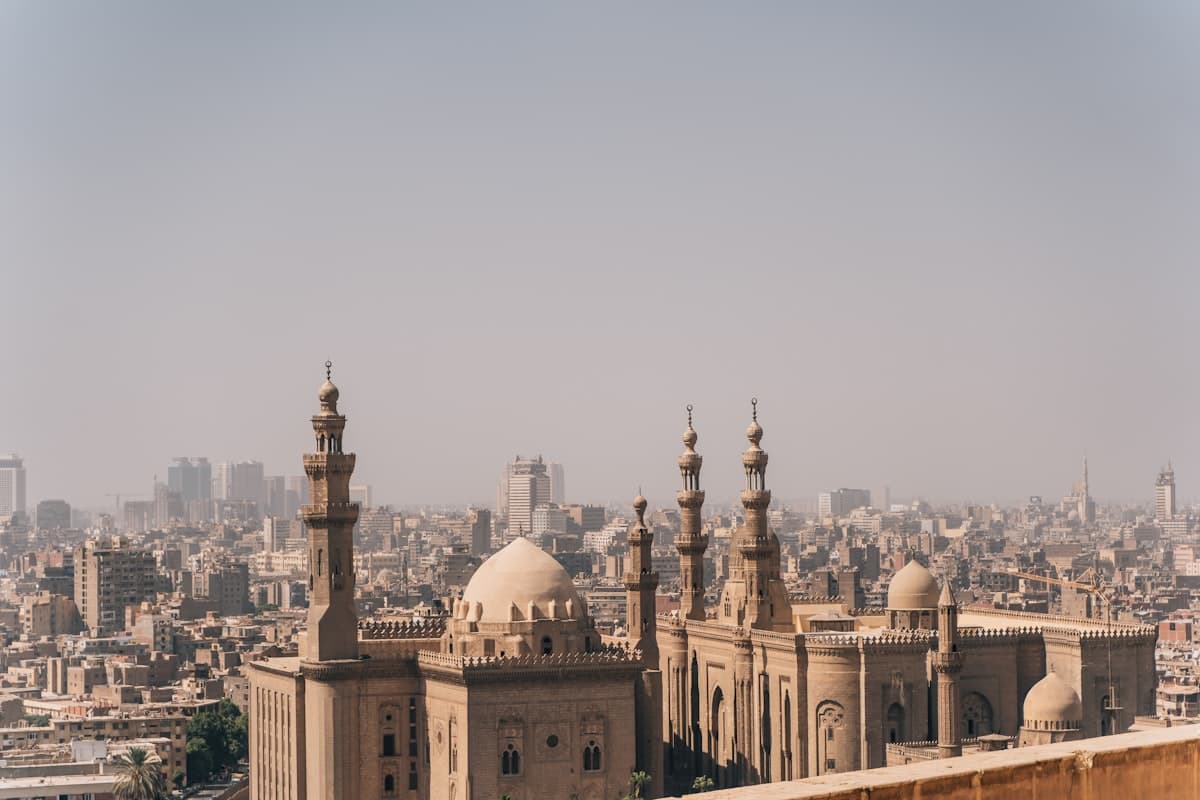
Before Mohamed Ali built his mosque, the Citadel was used for something that defines why he held power so absolutely. In March 1811, he invited the remaining Mamluk leaders, roughly 480 men, to a ceremony celebrating the appointment of his son Tusun as commander of a military campaign against the Wahhabis in Arabia. The Mamluks arrived in full military dress, rode through the Citadel's narrow internal passage called the Muqattam Gate corridor, and were shot from the walls above them. Almost none survived.
This is not disputed. It is documented in multiple contemporary sources including accounts by European consular officials in Cairo. The Mamluks had ruled Egypt, in various configurations, for over 500 years. Mohamed Ali ended that in one afternoon.
The corridor where the massacre occurred still exists. It is called Darb al-Mahruq, which translates roughly as the Passage of the Burnt. You walk through it when you enter the Citadel complex from the main Bab al-Gadid gate, though nothing marks the spot. No plaque. No interpretive panel. This is partly because the Egyptian state has historically been ambivalent about lionizing or condemning Mohamed Ali, who is simultaneously the founder of modern Egypt and a man who ruled with methods that would not survive any contemporary human rights framework. The absence of commemoration is itself a kind of commemoration.
The story of Mohamed Ali Pasha's Albanian heritage and Egyptian power sits entirely within this corridor. He was not constrained by Egyptian social norms, Mamluk loyalty networks, or Ottoman administrative caution. He was an outsider who owed nothing to the existing order, and the existing order paid for it.
---
The Connections
The Citadel itself predates Mohamed Ali by six centuries. Saladin began it in 1176, using stone quarried partly from the smaller Giza pyramids, a fact that tends to produce a visible reaction in visitors who hear it for the first time. For 700 years before Mohamed Ali arrived, it was the seat of whoever held Egypt: Ayyubids, Mamluks, Ottomans in succession. The limestone ridge it sits on was chosen by Saladin's engineers because air circulating from the Nile made it cooler than the city below, a climate logic that also explains why Cairo's medical quarter developed nearby in the medieval period.
The Mosque of Sultan Hassan, directly across the road from the Citadel's main entrance, was built between 1356 and 1363 by a Mamluk sultan whose political career was defined by instability: he came to the throne at age thirteen, was deposed twice, and was assassinated before his mosque was completed. The building is one of the finest pieces of medieval Islamic architecture in the world and receives a fraction of the visitors who go to the Citadel. If you have four hours and must choose one interior in this area, Sultan Hassan is the honest answer. But the Citadel gives you the political history that Sultan Hassan requires as context.
Mohamed Ali's descendants ruled Egypt until 1952, when a military coup led by General Mohamed Naguib, and consolidated by Gamal Abdel Nasser, ended the monarchy. The last king, Farouk, was also of the Mohamed Ali dynasty. He was removed on 26 July 1952 and sailed from Alexandria harbor in a yacht, which by then felt appropriate for a dynasty that had arrived by sea and governed with a foreigner's calculating distance.
---
Common Mistakes
Arriving without water in summer. The Citadel's open courtyards are direct sun with no shade and the nearest vendor is further than it looks. Bring 1.5 liters minimum from April through October.
Spending all your time in the mosque and skipping the Carriage Museum. This is the most consistently overlooked building in the entire complex. It contains the personal coaches, sleighs, and carriages of the Mohamed Ali dynasty from the 1840s through the 1950s, including an absurd gilded French-built carriage ordered by Khedive Ismail for the opening of the Suez Canal in 1869. The objects tell the dynasty's story of European infatuation more honestly than any official monument. The EGP 100 ticket is the best-value decision you will make at the Citadel.
Booking a guided tour that includes the sound and light show at the Citadel. This show costs EGP 350, runs approximately 45 minutes, and narrates a version of Egyptian history so compressed and generalized that it adds nothing to what you have already read. Skip it without hesitation.
Going on a Friday midday. The mosque closes for prayers, the surrounding streets are gridlocked, and the courtyard fills with post-prayer crowds. If Friday is your only option, arrive before 10am or after 2pm.
Treating this as a half-morning detour from the pyramids. The Mohamed Ali Pasha Albanian heritage story embedded in this complex is dense enough to justify its own day. Visitors who arrive at 11am, photograph the mosque exterior, and leave by noon have spent money on a taxi for a view they could have found in a dozen postcards.
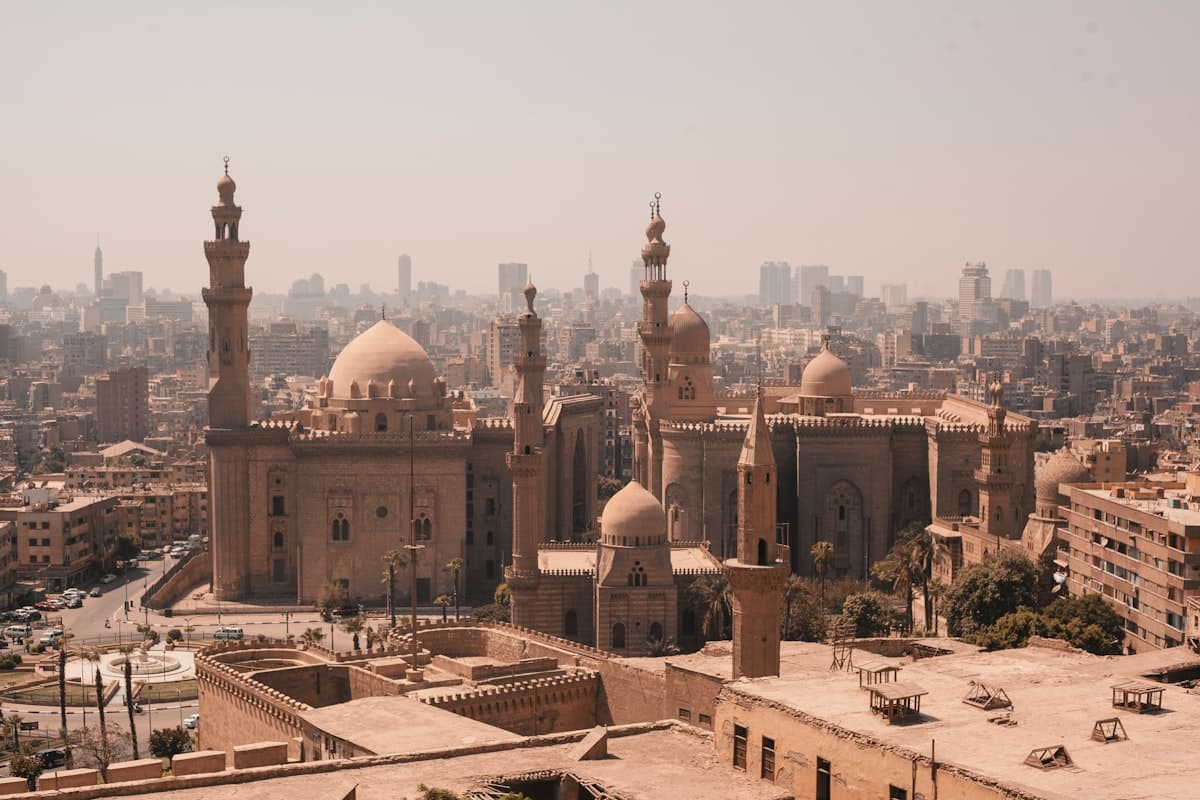
Skipping the view from the northern terrace. Most visitors stand in the main courtyard and look at the mosque. The terrace on the northern side of the complex offers a clear line of sight across Cairo to the Giza plateau. On a clear winter morning, you can see all three main pyramids. This is the only place in Cairo where the full geographic logic of the city, the river, the desert edge, the ancient and the modern, resolves into a single frame.
Expecting staff to provide historical context. The ticket sellers are professional and helpful. They are not tour guides. If you want the political and architectural history of what you are seeing, read before you go or hire a licensed Egyptologist guide, not the freelancers who approach near the gate.
---
Practical Tips
Dress requirements at the mosque are enforced. Cover shoulders and knees, both men and women. Scarves for women are available at the entrance, usually for a small tip. Remove shoes before entering the prayer hall and carry them in your hands rather than leaving them outside: shoe theft is rare but does happen.
The Citadel's main ticket office is at Bab al-Gadid, the gate facing Salah Salem Street. There is a secondary entrance at Bab al-Azab, which is the historically significant gate near the massacre corridor, but it is sometimes closed to visitors. Confirm status before walking the full perimeter.
For photography, the interior of the mosque allows photographs but no tripods or professional rigs without prior permission from the Ministry of Antiquities. Natural light through the alabaster walls is best between 9am and 11am.
If you are combining this visit with the Islamic Quarter, the logical route is Citadel in the morning, then walk north along the Citadel's base toward the Sultan Hassan and al-Rifai mosques, then continue along al-Muizz Street into Khan el-Khalili. The entire walk is roughly 2km and passes through 900 years of continuous urban habitation without a single gap in architectural interest.
Food options inside the Citadel are a single cafe with adequate coffee and mediocre sandwiches. Eat before you arrive or plan lunch outside the walls at one of the small fuul and ta'meya spots on the street below Bab al-Gadid, where the food is better and costs about a tenth as much.
Frequently Asked Questions
The Weekly Dispatch
More on Egypt, every Friday.
Cultural depth and places most guides never mention.
No spam. Unsubscribe anytime.