Mohamed Ali Pasha: Albania's Greatest Gift to Cairo's Skyline
He was an Albanian tobacco merchant's son who never learned Arabic. He rebuilt Egypt, massacred his rivals, and left Cairo a mosque that quotes Istanbul. The full story.

Quick Facts
- Best time to visit
- October to April for clear air and mild temperatures. Arrive at 8am opening to avoid tour groups that arrive by 9:30am.
- Entrance fee
- EGP 450 (approx $9 USD) for the Citadel complex including the mosque. Students EGP 225. Carriage Museum separate at EGP 100.
- Opening hours
- Daily 8am to 5pm. Mosque closes to non-worshippers approximately 11:30am to 1:30pm on Fridays for midday prayer.
- How to get there
- Metro Line 1 to Mar Girgis (EGP 8) then microbus to Citadel gate (EGP 5 to 10). Taxi from Downtown EGP 60 to 100. Uber/Careem EGP 50 to 80.
- Time needed
- 45 minutes for the mosque alone. Four hours for the full Citadel complex. Combine with Islamic Cairo for a full day.
- Cost range
- Budget EGP 500 to 800 including entry, transport, and street food. Mid-range EGP 1,500 to 2,000 with lunch and a licensed guide.
Quick Facts
Best time to visit: October to April, when Cairo's air is clear enough to see the mosque's domes from the Citadel ramparts without haze.
Entrance fee: The Citadel complex, which includes the Mohamed Ali Mosque and the Military Museum, costs EGP 450 for foreigners (approximately $9 USD). Students with valid ID pay EGP 225. The Carriage Museum inside the complex requires a separate ticket of EGP 100.
Opening hours: Daily 8am to 5pm. Friday prayers close the mosque to non-worshippers between roughly 11:30am and 1:30pm. Plan around this or wait outside and watch the congregation.
How to get there: Take the Cairo Metro Line 1 to Mar Girgis station (EGP 8), then a microbus or tuk-tuk to the Citadel gate (EGP 5 to 10). Taxi from Downtown Cairo runs EGP 60 to 100. Uber and Careem are usually EGP 50 to 80. Buses 72 and 951 from Tahrir Square stop near the Salah Salem entrance for EGP 5.
Time needed: The mosque alone takes 45 minutes to an hour. The full Citadel complex, including the Mosque of Sultan al-Nasir Muhammad, the National Military Museum, and the rampart views over Cairo, is a solid four hours. Combine with a walk through the Qasaba of Radwan Bey in Islamic Cairo afterward if your legs allow it.
Cost range: Budget EGP 500 to 800 for entry, transport, and street food nearby. Mid-range EGP 1,500 to 2,000 if you add lunch at a restaurant in the Citadel area and a guide.
---
Why This Place Matters
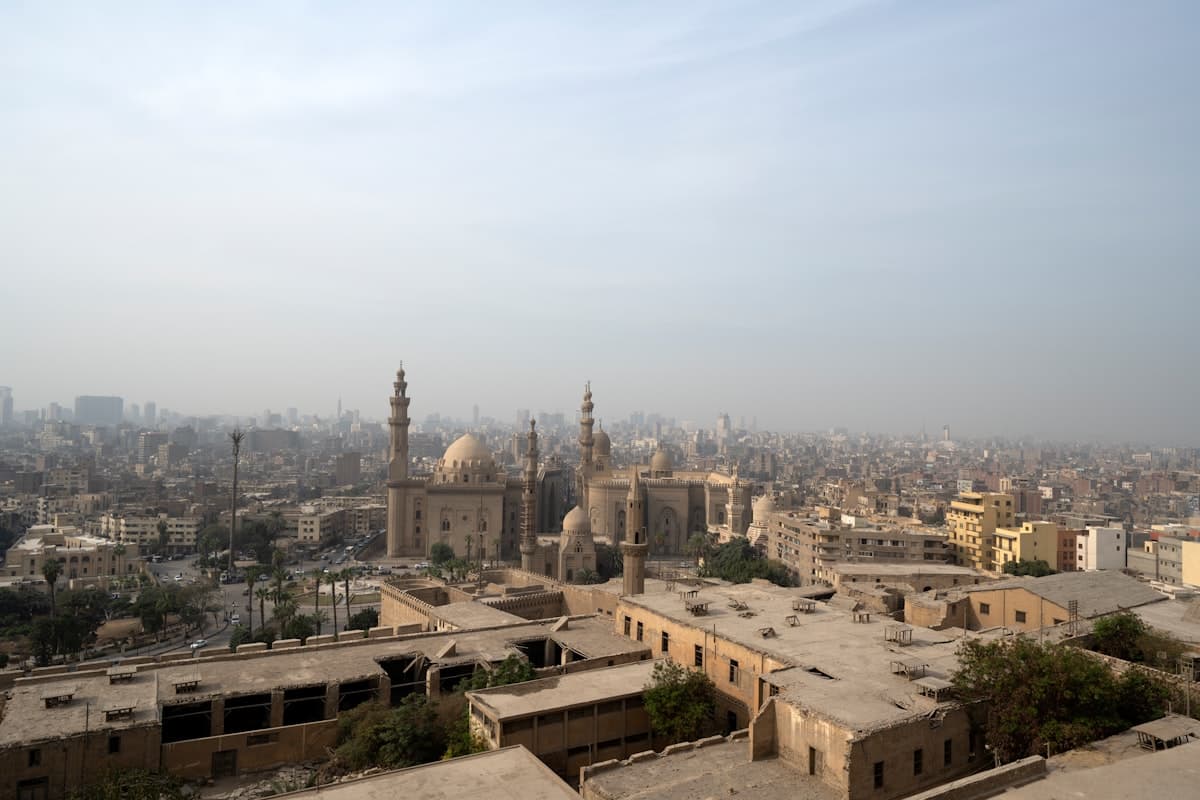
Mohamed Ali Pasha was not Egyptian. He was born around 1769 in Kavala, a port town in what is now northern Greece, to a family of Albanian Muslim merchants. He arrived in Egypt in 1801 as a low-ranking officer in an Ottoman force sent to expel Napoleon's army. Within four years, through a combination of political maneuvering, ruthless alliances, and an instinct for power that bordered on the supernatural, he had made himself ruler of the country. The Ottomans, technically his superiors, could do nothing about it.
This is where the Mohamed Ali Pasha Albanian heritage story gets complicated, and interesting. He ruled Egypt for 43 years, from 1805 to 1848. He never became fluent in Arabic. He conducted state business in Turkish and Albanian through the end of his life. His court was staffed by Albanians, Turks, and imported Europeans. And yet he rebuilt Egypt more fundamentally than any ruler since the Fatimids. He industrialized cotton production, sent Egyptian students to Paris, built a modern army trained by French officers, and briefly conquered territory from Sudan to Syria before European powers forced him to give most of it back.
The mosque he built on top of the Citadel is the physical embodiment of this contradiction: a man with no Egyptian roots who planted the most visible building in Cairo's skyline.
---
What You Are Actually Looking At
The Mohamed Ali Mosque was begun in 1830 and not completed until 1857, nine years after Mohamed Ali himself died, his mind gone in the final years of his life. The architect was a Greek man named Yusuf Bushnaq, and the design was copied directly from the Sultan Ahmed Mosque in Istanbul, the Blue Mosque, right down to the clustering of domes and the two slender minarets that spike above the Citadel at 82 meters each. This was deliberate. Mohamed Ali wanted Cairo's skyline to read as Ottoman imperial in the same way Constantinople's did. He was asserting legitimacy through architecture.
The interior is covered in alabaster quarried from Beni Suef, about 120 kilometers south of Cairo, which gives the walls their particular cold luminescence. The alabaster panels reach about 11 meters up the walls before the design shifts to painted plaster decorated with cartouches and arabesque patterns. The clock in the courtyard, a French clock in a baroque case, was a gift from King Louis-Philippe of France in 1846, given in exchange for the obelisk that now stands in the Place de la Concorde in Paris. The clock has never worked correctly. The obelisk is still in Paris.
Look at the floor when you enter. You are standing on marble imported from Carrara, the same quarries Michelangelo used. This was not accidental extravagance. It was a statement about European taste and Egyptian purchasing power.
The Tomb You Might Walk Past
On your right as you enter the prayer hall, there is a marble tomb enclosure with a cenotaph inside. This is Mohamed Ali himself, or at least the monument to him. His actual remains are here. Take a moment with that. The man buried in this room was born in a tobacco merchant's house in Ottoman Macedonia, spoke Albanian as his first language, and ended up entombed in a mosque he commissioned to crown the medieval citadel that Saladin built in 1176. The layers of history compressed into that single fact are almost absurd.
Most visitors walk past the tomb without stopping because their guides are already moving toward the courtyard views. Stop. Read the inscription if you can find someone to translate it. Then walk to the courtyard and look north toward Cairo. On a clear morning you can see the Pyramids of Giza from here, roughly 20 kilometers away. Mohamed Ali could see them too.
---
The Albanian Thread in Egyptian History
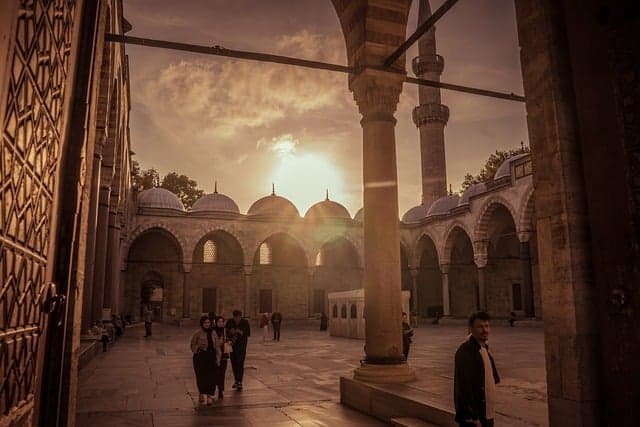
The story of Mohamed Ali Pasha Albanian heritage in Egypt does not end with Mohamed Ali. His descendants ruled Egypt as the Muhammad Ali dynasty until 1952, when his great-great-grandson King Farouk was deposed by Naguib and Nasser in the Free Officers' Revolution. Farouk left Egypt on a yacht from Alexandria on July 26, 1952, ending 147 years of Albanian-origin rule over a country none of them were born in.
This is one of the stranger facts in Egyptian history: the dynasty that modernized Egypt, built its first railroads, created its first modern university system, opened the Suez Canal (under Khedive Ismail, Mohamed Ali's grandson), and oversaw the country's transformation into a cotton-export economy, was Albanian by blood, Ottoman by culture, and French-educated by preference. Khedive Ismail, who rebuilt Cairo's downtown in the image of Paris and personally oversaw the Suez Canal inauguration ceremony in 1869, spoke better French than Arabic.
Mohamed Ali's Albanian origins are not incidental to understanding him. He brought Albanian troops with him, relied on Albanian networks for his initial political consolidation, and maintained ties to the Albanian community throughout his reign. The Albanians who came with him in 1801 formed a significant part of his early military base, the force that allowed him to outmaneuver both the Mamluks and the Ottoman governors who preceded him.
The Connections
The Citadel where the mosque stands was built by Salah al-Din al-Ayyubi, known in Europe as Saladin, between 1176 and 1183, using stone quarried from the smaller pyramids at Giza. Saladin stripped facing stones from the Giza complex to build Cairo's fortress walls. You can still see Pharaonic-era limestone in sections of the Citadel's older walls if you know where to look.
Before Mohamed Ali built his mosque, the dominant structure on the Citadel was the Mosque of Sultan al-Nasir Muhammad ibn Qalawun, completed in 1335, which still stands adjacent to the Mohamed Ali Mosque and is worth at least 20 minutes of your time. Al-Nasir Muhammad was a Mamluk sultan, and the Mamluks were themselves an imported military class, originally enslaved soldiers purchased as children from Circassia, the Caucasus, and Central Asia, who had ruled Egypt since 1250. So the Citadel contains, within a few hundred meters, a Pharaonic-stone fortress built by a Kurdish sultan, a 14th-century mosque built by a Mamluk sultan of Circassian origin, and a 19th-century mosque built by an Albanian pasha. Every stone in this place is from somewhere else.
Mohamed Ali's most infamous act is also connected to this geography. In March 1811, he invited the Mamluk beys to a banquet at the Citadel to celebrate his son's appointment as commander of a military expedition to Arabia. As the Mamluks rode through the narrow passage known as the Bab al-Azab gate on their way out, Mohamed Ali's Albanian soldiers shot them from the walls above. Between 470 and 500 Mamluk leaders died in what became known as the Massacre of the Citadel. One Mamluk, Amin Bey, reportedly escaped by jumping his horse from the walls. Mohamed Ali then sent forces across Egypt to kill the remaining Mamluks. It ended 600 years of Mamluk political power in a single afternoon.
The Bab al-Azab gate is still there. It is currently closed to the public, under restoration. You can see it from the lower Citadel entrance.
---
Common Mistakes
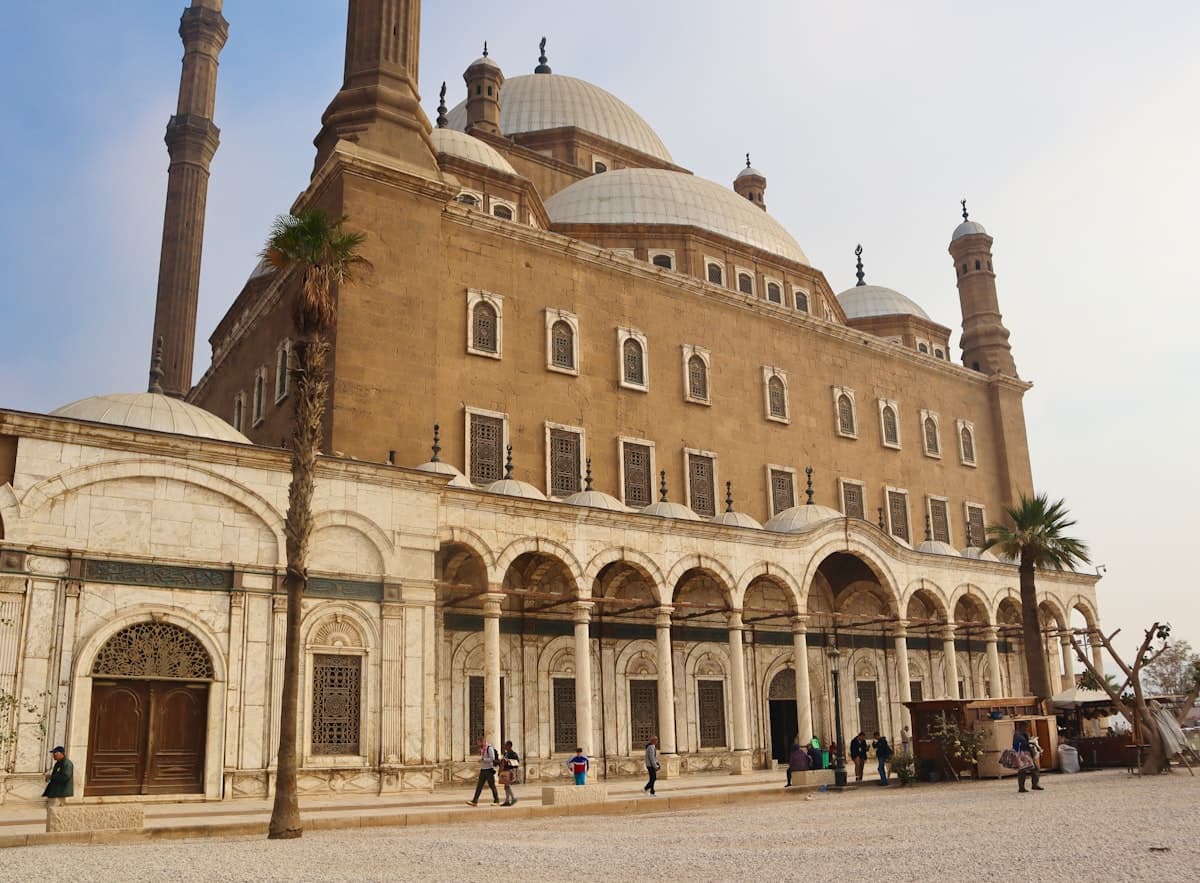
Arriving after 10am on weekends. The Citadel receives tour buses from roughly 9:30am onward on Fridays and Saturdays. By 10:30am the mosque courtyard is dense with groups. Go at 8am when it opens and you will have the alabaster interior nearly to yourself.
Paying for a guide at the gate. Unofficial guides at the Citadel entrance offer tours for EGP 150 to 300 and frequently provide inaccurate information about the mosque's construction and Mohamed Ali's origins. If you want a guide, book through a licensed agency in advance. The stories matter too much to get wrong here.
Skipping the al-Nasir Muhammad Mosque. Most tour groups spend all their time in the Mohamed Ali Mosque and walk past the 14th-century Mamluk mosque next door. The al-Nasir Muhammad Mosque has a Gothic-influenced portal that the Mamluks actually looted from a Crusader church in Acre (now Akko, in Israel) after they destroyed the city in 1291. The portal capital is sitting in a 14th-century Cairo mosque and almost no one mentions this. Walk next door.
Taking the sound and light show seriously. The Citadel sound and light show costs EGP 350, runs about an hour, and tells you nothing you will not learn from reading this article. The lights on the mosque are actually less interesting than the mosque itself at dawn. Skip it.
Assuming the clock in the courtyard is decorative. It is, at this point, but ask yourself why there is a French Baroque clock in the courtyard of an Ottoman-style mosque in Cairo. The exchange it represents, a functioning obelisk for a broken clock, is the most honest metaphor for 19th-century Egyptian-European relations you will find in any single object.
Wearing non-removable shoes. You will remove your shoes to enter the prayer hall. Slip-ons make this faster and more comfortable. The floor is cold marble in winter.
Leaving before the call to prayer. If your timing allows, stay for the azan from the Citadel's minarets. The sound bounces off the Muqattam hills behind you and drops into the city below. It is one of the better acoustic experiences in Cairo and costs nothing.
---
Practical Tips
Dress conservatively. The mosque is an active place of worship. Women should bring a scarf for their hair; the attendants at the door will provide a wrap if you forget, but bringing your own is respectful. Men in shorts will be given a wrap skirt at the entrance.
The Citadel complex is on a hill. The walk from the lower gate to the mosque is moderate, roughly 200 meters uphill on paved paths. In summer this is genuinely taxing by 11am. October through April solves this entirely.
Bring water. There are vendors inside the complex, but they charge 3 to 4 times street price.
The views from the northern ramparts of the Citadel, looking over Islamic Cairo, are as good as or better than the mosque interior for understanding Cairo's geography. The minarets of the Ibn Tulun Mosque, built in 879 AD, are visible from here, as is the Mosque of Sultan Hassan directly below the Citadel walls. Do not rush past the ramparts to get back to your taxi.
If you have a second day in Cairo and want to extend the Mohamed Ali Pasha Albanian heritage context, visit the Mohamed Ali Palace in Shubra, in northern Cairo, built by Mohamed Ali in 1808 as his personal residence. It is largely ignored by foreign tourists, entry costs EGP 100, and it shows you a completely different side of him: the private man who built a pleasure garden with fountains designed by French engineers, where he received foreign diplomats and hosted his Albanian associates far from the formal apparatus of the Citadel.
Frequently Asked Questions
The Weekly Dispatch
More on Egypt, every Friday.
Cultural depth and places most guides never mention.
No spam. Unsubscribe anytime.