Mohamed Ali Pasha: Albania's Most Consequential Export to Egypt
An Albanian tobacco merchant's son seized Egypt in 1805, then rebuilt it from scratch. His mosque still dominates Cairo's skyline. Almost nothing about him is what tourists assume.

Quick Facts
- Best time to visit
- October to March for comfortable temperatures on the exposed Citadel plateau. Early morning arrivals (8am opening) avoid peak domestic tourist crowds, especially on Fridays and Saturdays.
- Entrance fee
- EGP 450 (approximately $9 USD) for adults, EGP 225 for students with valid ID. Covers entire Citadel complex including Mohamed Ali Mosque and Military Museum.
- Opening hours
- Daily 8am to 5pm (winter, October to April), 8am to 6pm (summer). Mosque interior closed to tourists during Friday midday prayers approximately 11:30am to 1:30pm.
- How to get there
- Metro to Sadat or Attaba then taxi EGP 30 to 50. Uber or Careem from Downtown Cairo EGP 60 to 80. Bus 951 from central Cairo under EGP 10. Main entrance on Salah Salem Road.
- Time needed
- 3 hours minimum for mosque and Military Museum. 5 hours for full Citadel enclosure. Full day if combining with Darb al-Ahmar neighborhood walk.
- Cost range
- Budget EGP 600 to 900 including transport, entry, and water. Mid-range EGP 1,500 to 2,000 adding lunch near Khan el-Khalili.
Quick Facts
Best time to visit: October to March, when the Citadel plateau is cool enough to walk without distress.
Entrance fee: The Citadel complex (which includes Mohamed Ali Mosque) costs EGP 450 (approximately $9 USD) for adults, EGP 225 for students. Ticket covers multiple sites within the enclosure.
Opening hours: Daily 8am to 5pm in winter, 8am to 6pm in summer. Friday prayers close the mosque interior from approximately 11:30am to 1:30pm.
How to get there: From Tahrir Square, take the metro to Sadat station, then a taxi to the Citadel costs EGP 30 to 50. Alternatively, from Downtown Cairo the bus route 951 runs to Salah Salem Road near the Citadel entrance. CTA app rideshare from central Cairo typically runs EGP 60 to 80.
Time needed: Three hours minimum for the mosque and the Citadel military museum. Allow five hours if you want to walk the full enclosure and visit the National Police Museum.
Cost range: Budget EGP 600 to 900 including transport and entry. Mid-range EGP 1,500 to 2,000 if you add lunch at one of the Khan el-Khalili restaurants nearby afterward.
---
He spoke no Arabic when he arrived in Egypt. He was not Egyptian, not Ottoman by origin, not even from a military family with obvious political ambitions. Mohamed Ali Pasha was born in Kavala in 1769, a port town in what is now northern Greece, to an Albanian father who traded tobacco and ran a small merchant operation. He came to Egypt in 1801 as second-in-command of an Albanian regiment sent by the Ottoman Empire to help expel Napoleon's forces. Four years later, through a combination of strategic patience, one well-timed massacre, and a genuinely shrewd reading of Egyptian public sentiment, he had made himself the ruler of a country that was not his own and would not have chosen him if offered alternatives.
His mosque, the one that looks like it belongs in Istanbul rather than Cairo, still sits on the highest point of the Citadel with an authority that 180 years have done nothing to erode.
Why This Place Matters
![[The Citadel and the Mosque of Mohammed Ali, Cairo]](/_next/image?url=https%3A%2F%2Fpub-04554b4ed1074e4a91148d8c5d76943b.r2.dev%2Fimages%2Fmohamed-ali-pasha-albanias-most-consequential-export-to-egypt%2F1.jpg&w=3840&q=75)
The Mohamed Ali Pasha Albanian heritage story is not a footnote in Egyptian history. It is the story of how modern Egypt was built, and by whom, and at what cost to the people who were already living there.
Before Mohamed Ali, Egypt was an Ottoman province run by competing Mamluk beys whose power had calcified into dysfunction. The Mamluks themselves were a centuries-old institution of soldier-slaves, mostly Circassian and Georgian in origin, purchased as boys, trained as cavalry, and elevated to rule. Egypt had been governed by foreign elites for so long that the pattern was structural, not accidental. Mohamed Ali did not break the pattern. He replaced one foreign ruling class with another, more efficiently organized one.
What makes his story historically significant is the scale of transformation. Between 1805 and his death in 1849, Mohamed Ali effectively dismantled the old agricultural and political order, introduced conscription for Egyptian peasants for the first time in recorded history, sent Egyptian students to Paris on state scholarships, built a cotton economy that tied Egypt to European industrial markets, and launched military campaigns that at one point brought his forces within reach of Istanbul. The Ottoman Sultan in 1838 came close to being overthrown by his own nominal Egyptian vassal.
The mosque he built to mark his rule is, appropriately, a visual statement of Ottoman ambition executed in a distinctly European-inflected style. The architect was Yusuf Boushnaq, a Greek from Istanbul. The alabaster cladding on the exterior walls came from quarries at Beni Suef. The clock tower in the courtyard was a gift from the French King Louis Philippe, sent in 1846 in exchange for the obelisk now standing in the Place de la Concorde in Paris. That French clock has never worked correctly. The Egyptian obelisk still stands.
The Albanian Connection: What You Are Actually Looking At
When Egyptians talk about the Albanian heritage embedded in Mohamed Ali Pasha's legacy, they are talking about something more specific than ethnic origin. Albanian soldiers formed the backbone of his early power base. He imported Albanian administrators, gave Albanian officers preferential positions in his new military structure, and maintained Albanian as a language of the inner court alongside Turkish. Arabic was the language of the streets and the mosques, but the governing conversation in early 19th-century Cairo happened in Ottoman Turkish with a significant Albanian accent.
The Citadel itself, where you will visit his mosque, carries this layered identity in its stones. Salah al-Din al-Ayyubi, who began building the Citadel in 1176, was Kurdish. The Mamluk sultans who expanded it over the following three centuries were Circassian and Kipchak Turk. The Ottomans who occupied it after 1517 were Anatolian and Balkan. Mohamed Ali, the Albanian, demolished significant portions of the earlier Mamluk palace structures inside the Citadel to build his mosque on the highest point. He did not preserve what came before. He replaced it, as every conqueror before him had done.
Stand in the ablution courtyard and look at the alabaster columns. The material is local, the form is Ottoman imperial, and the man who ordered it built learned to read Arabic only in his forties, studying alongside his own son's tutors because he was embarrassed by his illiteracy. That detail, which appears in Abd al-Rahman al-Jabarti's contemporary chronicle of the period, tells you more about Mohamed Ali than any official portrait.
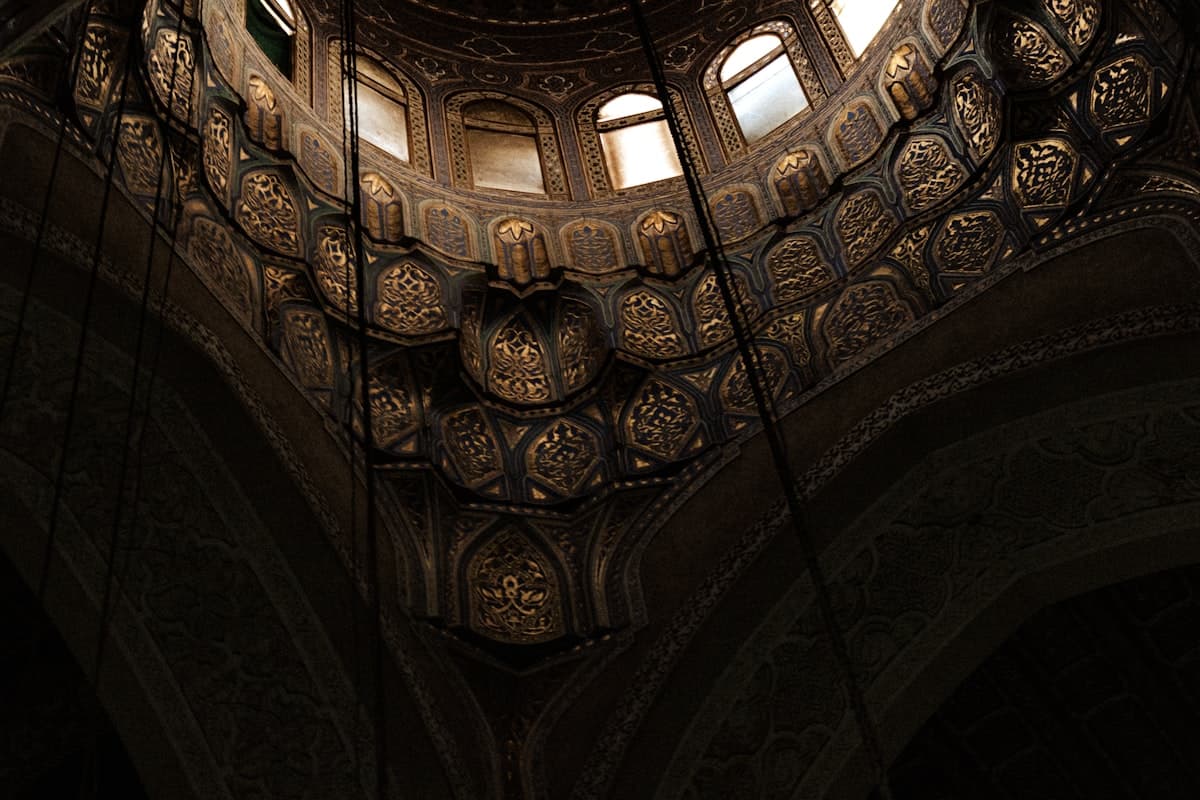
Inside the prayer hall, the dome reaches 52 meters at its apex. Four semi-domes distribute the weight in a direct imitation of the Hagia Sophia model, which had been the template for Ottoman imperial mosques since Sinan built the Süleymaniye in Istanbul in 1558. The resemblance to Istanbul is intentional and political. Mohamed Ali wanted Egypt's skyline to announce Ottoman-scale legitimacy even as his armies were fighting the Ottoman Empire for control of Syria.
The Massacre That Made His Reign Possible
No honest account of Mohamed Ali Pasha's Albanian heritage and its meaning for Egypt can skip March 1, 1811. That is the date of the Citadel Massacre, and it happened in the same enclosure where you will buy your ticket and walk toward his mosque.
Mohamed Ali had consolidated enough power by 1810 to recognize that the remaining Mamluk beys represented the only serious internal threat to his rule. He invited approximately 470 Mamluk leaders to a ceremony at the Citadel celebrating his son Tusun's appointment to lead a military campaign against the Wahhabi movement in Arabia. The Mamluks came in formal procession. The gates of the Citadel were closed behind them. Soldiers positioned on the walls above opened fire.
Nearly all of the Mamluks were killed. The exact number varies by source, with al-Jabarti recording around 470 dead in the enclosure and subsequent street killings of Mamluk households across Cairo bringing the total significantly higher. One Mamluk commander named Amim allegedly escaped by riding his horse off the Citadel walls and surviving, though historians disagree on whether this actually happened or became legend in the retelling.
The massacre effectively ended eight centuries of Mamluk political power in Egypt. Mohamed Ali then sent soldiers across Upper Egypt to eliminate Mamluk remnants who had fled south. Within months, the old order was gone. The man who replaced it was an Albanian tobacco merchant's son who had been in the country for a decade.
There is no plaque marking where the massacre occurred. Tour guides at the Citadel sometimes mention it, often do not. The mosque was begun nineteen years later, in 1830, and finished after his death in 1857.
The Connections
The Mohamed Ali Pasha story connects to almost every other significant thread in modern Egyptian history in ways that most visitors do not stop to trace.
His descendants ruled Egypt until 1952. The monarchy that Nasser's Free Officers revolution overthrew was his dynasty, six generations on. King Farouk, the last Egyptian king, was Mohamed Ali's great-great-great-grandson. The family maintained its Albanian identity in various ceremonial ways even as its members became increasingly Egyptianized over the generations.
The cotton economy Mohamed Ali built to fund his military ambitions is directly connected to why Egypt fell into British debt and then British occupation in 1882. The infrastructure he began, including the irrigation canals of the Delta, was expanded by his successors and funded by loans from European banks at rates that proved unpayable. The Suez Canal, which his grandson Ismail championed in 1869 and which gave Britain the justification to occupy Egypt, was a downstream consequence of the economic model Mohamed Ali established.
The military culture he introduced, with Egyptian peasants as conscripts rather than mercenaries, created the social conditions that eventually produced officers like Nasser, himself the son of a postal worker from Alexandria. The institution Mohamed Ali built eventually overthrew the family that built it.
Five kilometers from the Citadel, in the City of the Dead, the tombs of several Mamluk sultans he displaced still stand in various states of preservation. Walk through the Imam al-Shafi'i complex and you are standing in the world Mohamed Ali destroyed to build the one his mosque represents.
Common Mistakes
Arriving after 10am on a weekend. The Citadel draws significant domestic tourism, particularly on Fridays and Saturdays. By 10:30am the mosque courtyard can be genuinely difficult to move through. Arrive at opening time, 8am, when the light is better anyway and you will have the alabaster courtyard largely to yourself.
Paying for a guide at the gate. The unofficial guides who approach tourists at the Citadel entrance are not licensed and several have been reported for misrepresenting prices. The Ministry of Tourism's official licensed guides can be booked through the Egyptian Tourist Authority office; the difference in knowledge quality is considerable.
Skipping the Military Museum inside the Citadel. It is included in your ticket, most visitors ignore it, and it contains a room documenting Mohamed Ali's military reforms that gives you more context for the mosque than anything a sign in the mosque itself will tell you.
Taking the sound and light show at the Citadel. It costs EGP 300 and reduces the entire complex to a sequence of purple spotlights and dramatic narration you could summarize in a paragraph. The version of history it presents is nationalistic to the point of distortion. Skip it and spend the money on dinner in the Citadel district instead.
Confusing the two main mosques inside the Citadel. The al-Nasir Muhammad Mosque, built between 1318 and 1335 by a Mamluk sultan, sits adjacent to the Mohamed Ali complex and is far less visited. It is worth twenty minutes of your time and represents a completely different architectural tradition. Most visitors walk past it without registering that it is there.
Assuming you need a guide for the mosque interior. The mosque is well-signed in English and Arabic. A self-guided visit with thirty minutes of reading beforehand will serve you better than most paid commentary at this site.
Not going to Kavala. This is not a Cairo mistake, but if you find yourself genuinely engaged by the Mohamed Ali Pasha Albanian heritage story, his birthplace in northern Greece has a restored house-museum dedicated to him. Egypt and Greece have a complicated joint custody of his memory.
Practical Tips
Dress conservatively regardless of the season. Women will need to cover hair inside the mosque; scarves are available at the entrance for a small fee, but bringing your own is easier. Men in shorts may be asked to wrap a cloth around their legs; a lightweight linen trouser solves the problem.
The Citadel sits on a limestone plateau and involves significant walking on uneven surfaces. Comfortable shoes matter more than most visitors anticipate before arriving.
The alabaster exterior of the mosque is brightest and most photographable in morning light. By midday the glare flattens everything. By 4pm in winter the plateau light turns warm and interesting again.
Combine this visit with a walk through the Darb al-Ahmar neighborhood below the Citadel walls, where Ayyubid, Mamluk, and Ottoman-era architecture lines streets that have barely changed in footprint since the 14th century. The Aga Khan Trust for Culture has been restoring this neighborhood for two decades; the quality of the work is worth seeing alongside the Citadel itself.
Water is available inside the complex but expensive. Bring your own from the shops on Salah Salem Road before you ascend.
Frequently Asked Questions
The Weekly Dispatch
More on Egypt, every Friday.
Cultural depth and places most guides never mention.
No spam. Unsubscribe anytime.