Mohamed Ali Pasha: Albania's Son Who Remade Egypt
He arrived in Egypt as a minor Ottoman officer from a Greek-speaking Albanian tobacco merchant family. He left as the man who invented the modern Egyptian state.

Audio Guide: Mohamed Ali Pasha: Albania's Son Who Remade Egypt
Quick Facts
- Best time to visit
- October to March. November is ideal: cool temperatures, thin crowds, and exceptional light over Cairo at sunset from the Citadel walls. Avoid July and August mornings when exposed stone radiates heat by 10am.
- Entrance fee
- EGP 450 (approx $9 USD) for the full Citadel complex including the mosque. Students with valid ID pay EGP 225. No separate ticket for the mosque alone.
- Opening hours
- Daily 8am to 5pm. Arrive by 4pm to explore comfortably. Avoid Friday midday (11:30am to 2pm) when the mosque hosts busy congregational prayer.
- How to get there
- Metro to Sayida Zeinab station (Line 2), then microbus or tuk-tuk to the Citadel for EGP 5 to 15. Ride-hailing app from Downtown Cairo costs EGP 50 to 80 and drops you at the correct Bab al-Gadid entrance. Avoid tourist buses from Tahrir: they drop at the wrong gate and cost significantly more.
- Time needed
- 2 hours minimum for the mosque and courtyard. 3.5 to 4 hours for the full Citadel including Al-Gawhara Palace and walls. Add another 30 minutes if combining with the Ibn Tulun Mosque, a 20-minute walk downhill.
- Cost range
- Budget EGP 600 to 900 per day including entry, street food, and public transport. Mid-range EGP 1,800 to 2,800 per day with a guided tour and sit-down meal near Khan el-Khalili.
Quick Facts
Primary Site: Mohamed Ali Mosque (Alabaster Mosque), Cairo Citadel, Salah Salem Road, Citadel District
Entrance Fee: EGP 450 (approx $9 USD) for the full Citadel complex, which includes the mosque, the Military Museum, and the Carriage Museum. Students with valid ID pay EGP 225. There is no separate ticket for the mosque alone.
Opening Hours: Daily 8am to 5pm (the mosque itself stays accessible slightly longer for prayer; plan to arrive by 4pm to explore comfortably)
Best Time to Visit: October through March. The Citadel sits at the top of the Muqattam escarpment and receives full sun all morning. In July and August, the stone radiates heat by 10am and the interior of the mosque becomes unpleasant by midday. November is ideal: cool air, thin crowds, extraordinary light over Cairo at sunset.
How to Get There: Metro to Sayida Zeinab station (Line 2), then a microbus or tuk-tuk to the Citadel gate, approximately EGP 5 to 15 depending on your bargaining. A taxi from Downtown Cairo via ride-hailing app costs roughly EGP 50 to 80. Do not take the tourist bus from Tahrir: it drops you at the wrong gate and costs four times the microbus fare.
Time Needed: Two hours minimum for the mosque and its courtyard. Add another ninety minutes if you walk the full Citadel walls and visit the Police Museum, which is genuinely worth thirty minutes of anyone's time.
Cost Range: Budget EGP 600 to 900 per day (Citadel entry, street food, public transport). Mid-range EGP 1,800 to 2,800 per day if you add a guided tour and a meal near the Khan el-Khalili.
---
Why This Place Matters
Mohamed Ali Pasha was born in 1769 in Kavala, a port city in what is now northern Greece. His mother tongue was Albanian. He spoke it, ate with it, kept Albanian soldiers as his personal guard, and died in Alexandria in 1849 still more comfortable in it than in Arabic. He is the founder of modern Egypt, its last khedive was deposed by the British-backed revolution of 1952, and the dynasty he established ruled for 150 years. None of that was planned.
He came to Egypt in 1801 as second in command of an Albanian regiment sent by the Ottoman Sultan to help expel Napoleon's occupying French forces. He arrived after the French had already left, part of a chaotic Ottoman reorganization. Within three years, through a combination of military pragmatism, willingness to massacre rivals, and a genuine talent for reading power vacuums, he had outmaneuvered the Mamluks, neutralized the Ottoman governor, and positioned himself as the effective ruler of Egypt. The Sultan in Constantinople formally recognized him as Wali, governor, in 1805.
What followed was one of the most compressed modernization projects in history. Mohamed Ali abolished the tax-farming system that had strangled Egyptian agriculture for centuries, built the first modern Egyptian army trained on European lines, sent student missions to Paris and Milan, founded the first Egyptian newspaper, constructed textile factories along the Delta canals, and began the Mahmoudiyya Canal linking Alexandria to the Nile, a project that transformed a dying desert port into the Mediterranean city it became. He did all of this within roughly thirty years, often brutally, sometimes brilliantly.
The Albanian connection is not a historical footnote. It is the key to understanding why he succeeded where Egyptian-born rulers and Ottoman governors had failed. He had no local loyalties to protect, no Mamluk faction to appease, no religious establishment with claims on him. He was an outsider with power, and outsiders with power in Egypt have always built things that outlast them.
---
The Mosque: Ottoman Skin, Egyptian Ambition
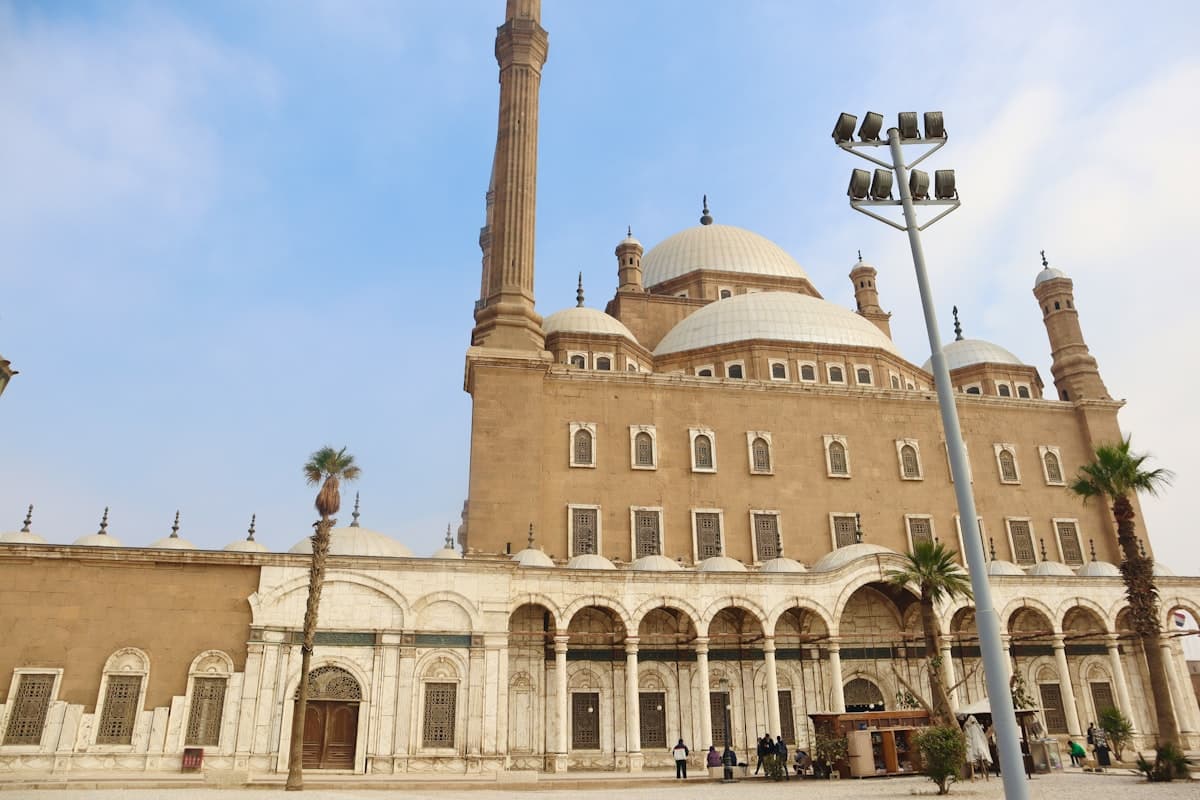
The Mohamed Ali Mosque dominates the Citadel skyline so completely that most visitors assume it is old. It is not, by Egyptian standards. Construction began in 1830 and was completed in 1848, one year before Mohamed Ali died. It was finished by his son Abbas I. Its architect was a Greek named Yusuf Bushnak, and its design is unambiguously Ottoman, modeled on the Sultan Ahmed Mosque in Istanbul, with cascading half-domes and two pencil minarets rising 82 meters above the Citadel courtyard.
This is worth sitting with for a moment. Egypt's most recognizable Islamic monument after the Ibn Tulun Mosque was designed by a Greek architect, commissioned by an Albanian ruler, built in a Turkish style, on the site of Mamluk palaces that Mamluk sultans had constructed on Ayyubid foundations, on a rock spur the Fatimid general Jawhar al-Siqilli had identified as strategically essential in 969 AD when he founded Cairo. Nothing in this city exists in isolation.
The interior is covered in alabaster panels up to a height of about 11 meters, which is where the mosque gets its common nickname. But the alabaster is largely Egyptian alabaster from Beni Suef, quarried from the same geological formation that supplied limestone for Old Kingdom temples. The Ottoman dome above it is painted in a pink and green palette that strikes Western visitors as unusual; it is in fact standard Tanzimat-era Ottoman interior decoration, the same color logic you find in mosques built in the same period in Istanbul and Thessaloniki.
The clock tower in the outer courtyard deserves attention. It is a Rococo French clock, presented to Mohamed Ali in 1845 by King Louis-Philippe of France in exchange for the obelisk that now stands in the Place de la Concorde in Paris. The clock has never worked properly. Egyptians will tell you this with a specific kind of satisfaction.
---
The Albanian Guard and the Massacre Nobody Talks About
Mohamed Ali's Albanian heritage was not just personal identity. It was military infrastructure. His inner security force was composed almost entirely of Albanian soldiers, recruited directly from the same Tosk Albanian communities around Kavala and Monastir that had produced him. They were loyal to him personally rather than to the Ottoman system or to Egyptian political structures, which made them useful for the most politically sensitive operations.
The most consequential of these was the Citadel Massacre of March 1, 1811. Mohamed Ali invited approximately 470 Mamluk beys and their retinues to the Citadel for a celebration honoring his son Tusun, who had been appointed to lead a military campaign in Arabia. As the procession moved through a narrow passage in the Citadel walls, Albanian soldiers locked the gates and opened fire from the walls above. Virtually all of the Mamluks were killed. Estimates of the total dead, including retainers and servants, range from 470 to over 600.
The Mamluks had ruled Egypt, in various forms, for over 500 years. They were eliminated as a political force in the course of a single afternoon. The passage where this occurred is still there, still walkable, currently unpromoted and unsigned. Most tour guides walk past it without comment. If you ask specifically, the guides who know the Citadel well will show you exactly where it happened.
The elimination of the Mamluks removed the last internal obstacle to Mohamed Ali's modernization program. Within a decade he had reorganized Egyptian land ownership, introduced long-staple cotton cultivation that would make Egypt one of the most profitable agricultural territories in the world, and drafted Egyptian peasant farmers, the fellahin, into a conscript army for the first time in any organized way. The violence and the development were not separate chapters. They were the same chapter.
---
The Connections
The Citadel where Mohamed Ali built his mosque and committed his defining act of violence was constructed by Saladin, the Kurdish Ayyubid sultan, beginning in 1176 AD. Saladin built it partly with stones taken from smaller pyramids at Giza, which is why, if you look carefully at certain Citadel walls, you can see dressed limestone blocks with a smoothness inconsistent with Islamic-era quarrying. The Pharaonic, the Ayyubid, the Mamluk, the Ottoman, and the Albanian are all physically present in the same structure.
Mohamed Ali's modernization project also created a direct line to contemporary Egypt. The agricultural canal system he expanded and the irrigation reforms he introduced shaped the Delta landscape that exists today. The school he founded at Qasr al-Aini became the Cairo University Faculty of Medicine, Egypt's oldest and still most prestigious medical school. The student missions he sent to Europe in the 1820s and 1830s produced Rifaa al-Tahtawi, Egypt's first modern intellectual, who translated Montesquieu into Arabic and wrote the first Arabic-language account of Paris. None of this is visible from the Citadel, but all of it flows from the decisions made there.
His Albanian heritage intersects with an often-overlooked strand of Egyptian history: the degree to which modern Egypt was built by people who were not Egyptian by origin. Saladin was Kurdish. The Mamluks were Circassian and Turkic. Mohamed Ali was Albanian. The Khedive Ismail, who built modern Cairo's downtown grid, was educated in Paris and Vienna and thought in French. Egypt has always absorbed its rulers and been shaped by them simultaneously.
---
Common Mistakes
Skipping the Citadel walls in favor of only the mosque. The walls offer a complete panoramic view of Cairo from the Muqattam escarpment, including the City of the Dead, the minarets of Ibn Tulun, and on clear winter days, the Pyramids at Giza. The mosque is the famous structure, but the walls are where you understand the strategic logic of the whole place.
Taking a guided tour that only covers the mosque. Most standard Citadel tours spend ninety minutes in the mosque and walk past the National Police Museum, the Carriage Museum, and the Al-Gawhara Palace without entering any of them. The Al-Gawhara Palace is where Mohamed Ali received European diplomats and conducted formal state business. It survived the 1972 fire that damaged other Citadel buildings. The interiors are strange and revealing, a mixture of French Empire furniture and Orientalist murals that tell you exactly how Mohamed Ali wanted Egypt to appear to the outside world.
The sound and light show at the Citadel costs EGP 300 and tells you approximately nothing that a careful reading of a single good history book would not give you in twenty minutes. Skip it. The Citadel at night, seen from the base of the Muqattam, is worth the journey. The show itself is not.
Visiting on a Friday. The mosque is in active religious use. Friday midday prayer draws large local crowds and the complex becomes difficult to navigate for anyone arriving between 11:30am and 2pm. Come on a Tuesday or Wednesday morning.
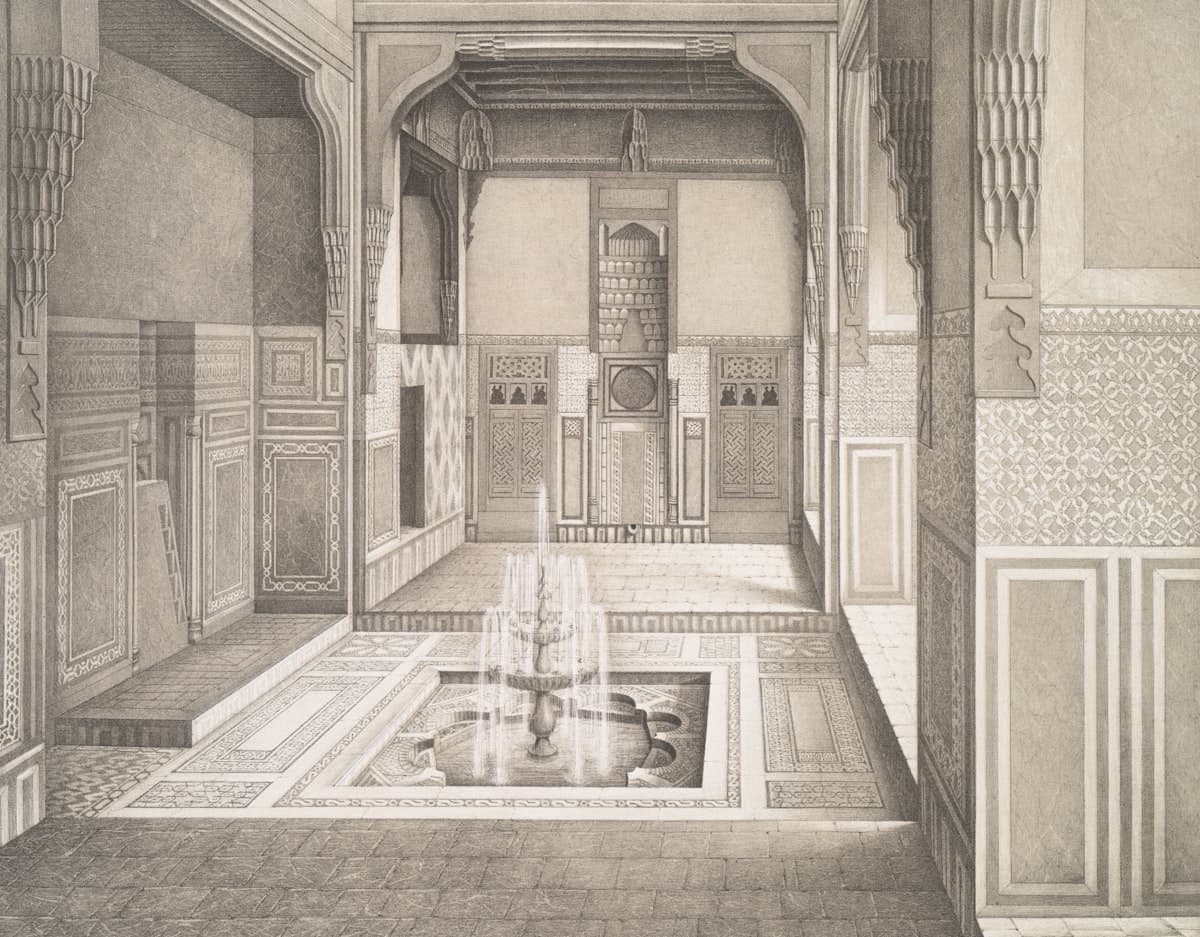
Ignoring the Mohamed Ali Mosque in Shubra. There is a second, less visited Mohamed Ali structure in Cairo: the Shubra Palace, now the Shubra Museum, where he held his private court and entertained European guests in a Nile-side garden. It is accessible by microbus from Ramses Square and is visited by almost no tourists. The fountain pavilion in its central pool is one of the stranger pieces of Neoclassical architecture in Africa.
Assuming the alabaster interior means Pharaonic continuity. The alabaster panels are Egyptian stone but the craft tradition they represent is Ottoman. The carvers were brought from Istanbul. The connection to ancient Egypt is geological, not cultural. Saying otherwise in a caption is the kind of thing that sounds poetic and is factually wrong.
Not asking about the Kavala connection before you visit. The Greek city of Kavala has a well-preserved Ottoman-era neighborhood called the Panagia, where Mohamed Ali's actual birthplace has been maintained as a museum since 1953. If you are interested in his Albanian-Ottoman heritage, that context makes the Cairo sites significantly more legible. It is not a prerequisite, but it changes what you see.
---
Practical Tips
Dress for the mosque with shoulders and knees covered. Shoe removal is required at the mosque entrance; plastic bags for your shoes are provided free. The marble floor is cold in winter and hot in summer, so socks are practical.
The Citadel complex has several gates. The main tourist entrance is the Bab al-Gadid (New Gate) on Salah Salem Road. Ride-hailing apps will deliver you there without confusion. Cairo taxis without apps may try to drop you at the Bab al-Qulla, which adds a steep uphill walk.
For context on the Albanian heritage specifically, the Egyptian-Albanian Cultural Society in Cairo occasionally organizes events and has produced Arabic-language materials on Mohamed Ali's Kavala origins. These are not widely advertised but are worth seeking out if you read Arabic.
The best single-volume English-language account of Mohamed Ali's life and project is Khaled Fahmy's "All the Pasha's Men," which focuses on his army but contextualizes the whole modernization program with unusual precision. Read it before you go, not after.
Photography inside the mosque is technically permitted for personal use. The guards will sometimes ask for a tip to allow camera use; EGP 20 to 50 is the standard range. Video is more contested and best done discreetly.
If you are combining the Citadel with the surrounding district, the Ibn Tulun Mosque is a twenty-minute walk downhill and is the oldest intact mosque in Cairo, built in 876 AD. The contrast between Ibn Tulun's Abbasid austerity and Mohamed Ali's Ottoman grandeur, separated by less than a kilometer and nearly a thousand years, is one of the more instructive architectural comparisons the city offers.
Frequently Asked Questions
The Weekly Dispatch
More on Egypt, every Friday.
Cultural depth and places most guides never mention.
No spam. Unsubscribe anytime.