Mohamed Ali Pasha: Egypt's Albanian Conqueror and His Cairo Legacy
An Albanian tobacco merchant's son became Egypt's modernizer. His mosque sits on a citadel Saladin built. The Ottoman sultan who appointed him later tried to have him killed.

Quick Facts
- Best time to visit
- October to March. The Citadel plateau is exposed and shadeless; winter temperatures make walking comfortable. Summer visits should begin at 8am and be completed before 11am.
- Entrance fee
- EGP 450 (approx $9 USD) for the full Citadel complex including Mohamed Ali Mosque, Al-Gawhara Palace, and Military Museum. Students EGP 225 with valid ISIC card.
- Opening hours
- Daily 8am to 5pm. The mosque closes to tourists during each of the five daily prayers for 15 to 20 minutes per prayer. Friday closures during midday prayer run longer.
- How to get there
- Uber or Careem from central Cairo: EGP 40 to 60, 10 to 15 minutes from Tahrir Square. Bus 951 from Abdel Moneim Riyad Station: EGP 5. Metro to Sadat Station then taxi: EGP 15 metro plus EGP 40 taxi. Drop-off is at Bab al-Gadid gate on Salah Salem Street.
- Time needed
- 2 hours for mosque and ramparts. Half-day for the full Citadel complex. Full day if combining with Islamic Cairo, Sultan Hassan Mosque, and Khan el-Khalili.
- Cost range
- Budget EGP 600 to 900 per day including entry, transport, and street food. Mid-range EGP 1,800 to 2,500 including entry, licensed guide (EGP 600 to 1,200), and sit-down lunch.
Quick Facts
Best time to visit: October to March, when the citadel plateau is cool enough to walk without distress. Summer heat on that exposed limestone ridge is unforgiving by 10am.
Entrance fee: EGP 450 (approximately $9 USD) for the Citadel complex, which includes the Mohamed Ali Mosque, the Military Museum, and Al-Gawhara Palace. Students pay EGP 225 with a valid ISIC card.
Opening hours: Daily 8am to 5pm. The mosque itself observes prayer times; you will be asked to wait outside during the five daily prayers, each lasting 15 to 20 minutes.
How to get there: From Tahrir Square, take the Cairo Metro Line 1 to Sadat Station, then a taxi or ride-share to the Citadel (roughly EGP 40 to 60, about 10 minutes depending on traffic). Alternatively, bus 951 runs from Abdel Moneim Riyad Station near Tahrir for EGP 5. Uber and Careem are consistent and recommended; street taxis at the Citadel entrance will attempt to charge foreigners EGP 150 or more for the same ride back.
Time needed: Two hours for the mosque and immediate surroundings. Add another 90 minutes if you plan to walk the full Citadel complex including Al-Gawhara Palace. A half-day is realistic; a full day is only necessary if you are combining the visit with the Islamic Cairo district below.
Cost range: Budget EGP 600 to 900 per day including entry, transport, and lunch at a local fuul shop on the approach road. Mid-range EGP 1,800 to 2,500 if you add a guided tour and sit-down lunch.
---
Why This Place Matters
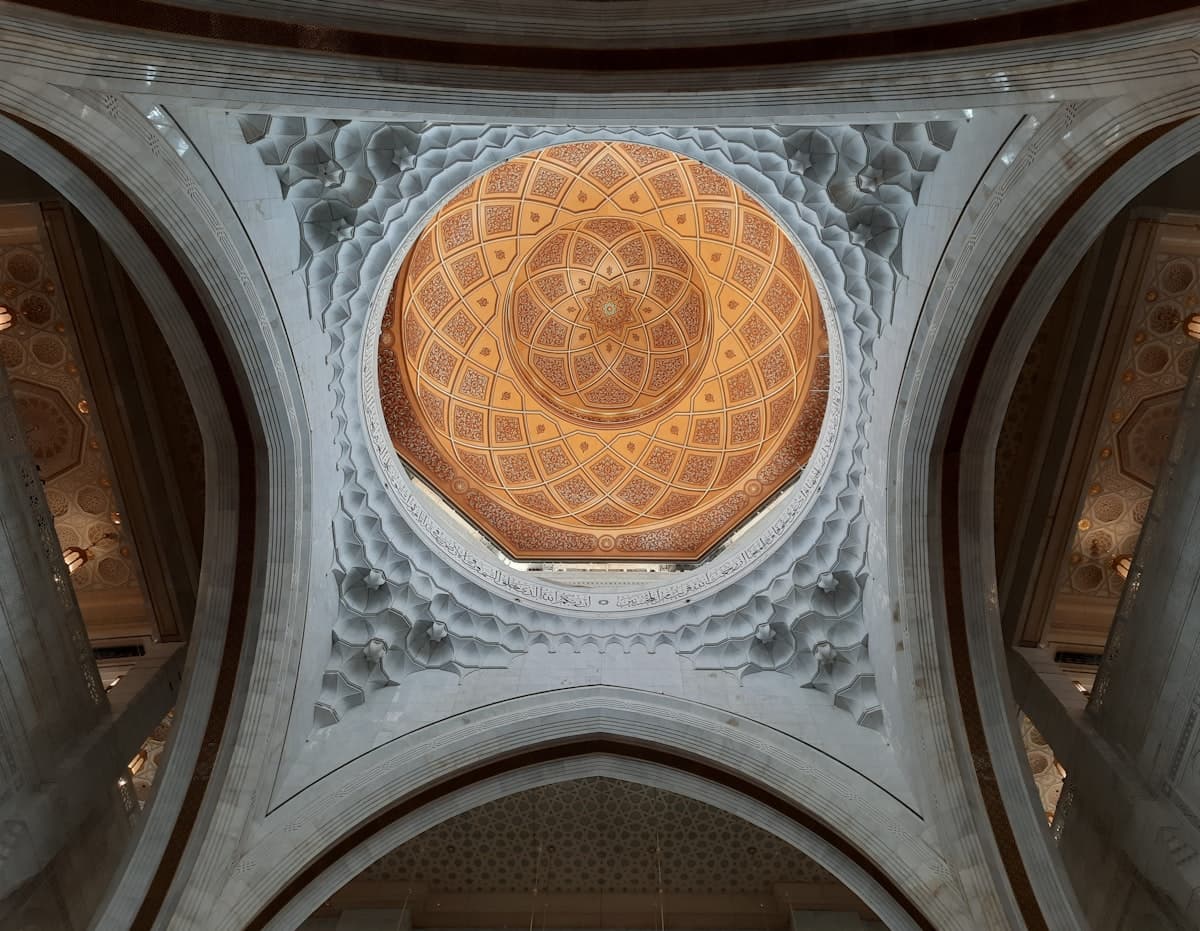
Mohamed Ali Pasha was not Egyptian. He was not Arab. He was not Ottoman in any bloodline sense. He was born in 1769 in Kavala, a port city in what is now northeastern Greece, to an Albanian family that had settled in Macedonia generations earlier. His father commanded a small military unit; his early career was in the tobacco trade. When Napoleon invaded Egypt in 1798, the Ottoman Empire sent a force that included Albanian soldiers. Mohamed Ali came with them. He never went home.
By 1805, through a combination of tactical genius, strategic assassination, and an almost clinical ability to read which way political winds were blowing, he had maneuvered himself into position as the ruler of Egypt. The Ottoman sultan in Istanbul, theoretically his superior, confirmed the appointment because the alternative was a protracted military conflict he could not afford. It was the beginning of a dynasty that would rule Egypt until 1952, when a group of Free Officers ended the monarchy and sent King Farouk, Mohamed Ali's great-great-grandson, into exile with 200 pieces of luggage.
The mosque he built on the Citadel's southern enclosure between 1830 and 1848 is his most visible legacy. It was not finished during his lifetime; he died in 1849 in Alexandria, mentally incapacitated by dementia in his final years. His architect was Yusuf Boshna, a Greek from Istanbul, which adds another layer of irony to a monument everyone calls Egyptian.
---
The Albanian Connection Most Visitors Never Consider
When you stand inside the Mohamed Ali Mosque, you are standing inside a building explicitly modeled on the Sultan Ahmed Mosque in Istanbul, which was itself modeled on the Hagia Sophia, which was built by a Byzantine emperor in 537 AD. The visual logic runs: Christian Byzantine, Ottoman Muslim, then Albanian-ruled Egyptian. Mohamed Ali's Albanian heritage is written into the architecture not as a declaration but as an aspiration. He wanted to announce that Cairo was the equal of Istanbul. He built a skyline to prove it.
The Alabaster Mosque, as it is sometimes called, earned that nickname because its lower interior walls are lined with Egyptian alabaster (technically calcite) quarried from Beni Suef, a city south of Cairo on the Nile. But here is what the name obscures: the upper walls, the domes, the exterior, none of it is alabaster. The building is largely limestone and painted plaster imitating stone. The alabaster is real but it covers roughly 11 meters of wall height in a building that rises to 52 meters at the dome. Visitors who arrive expecting a building made of alabaster leave having seen a building with alabaster in it. This distinction matters less architecturally than it does as a lesson in how Egypt sells its monuments.
The clock tower in the courtyard deserves particular attention, not because it is beautiful but because it is embarrassing in an instructive way. In 1845, the French government sent Mohamed Ali an ornate bronze clock as a diplomatic gift, installed in the courtyard. In return, Mohamed Ali sent France the Luxor Obelisk, which had stood at Karnak Temple for 3,200 years and which now stands in the Place de la Concorde in Paris. The exchange was Mohamed Ali's idea. The clock has never worked reliably. The obelisk stands perfectly today. France got the better deal by such a wide margin that Egyptian tour guides now joke about it openly, which is the most diplomatic response available.
---
The Citadel Before Mohamed Ali
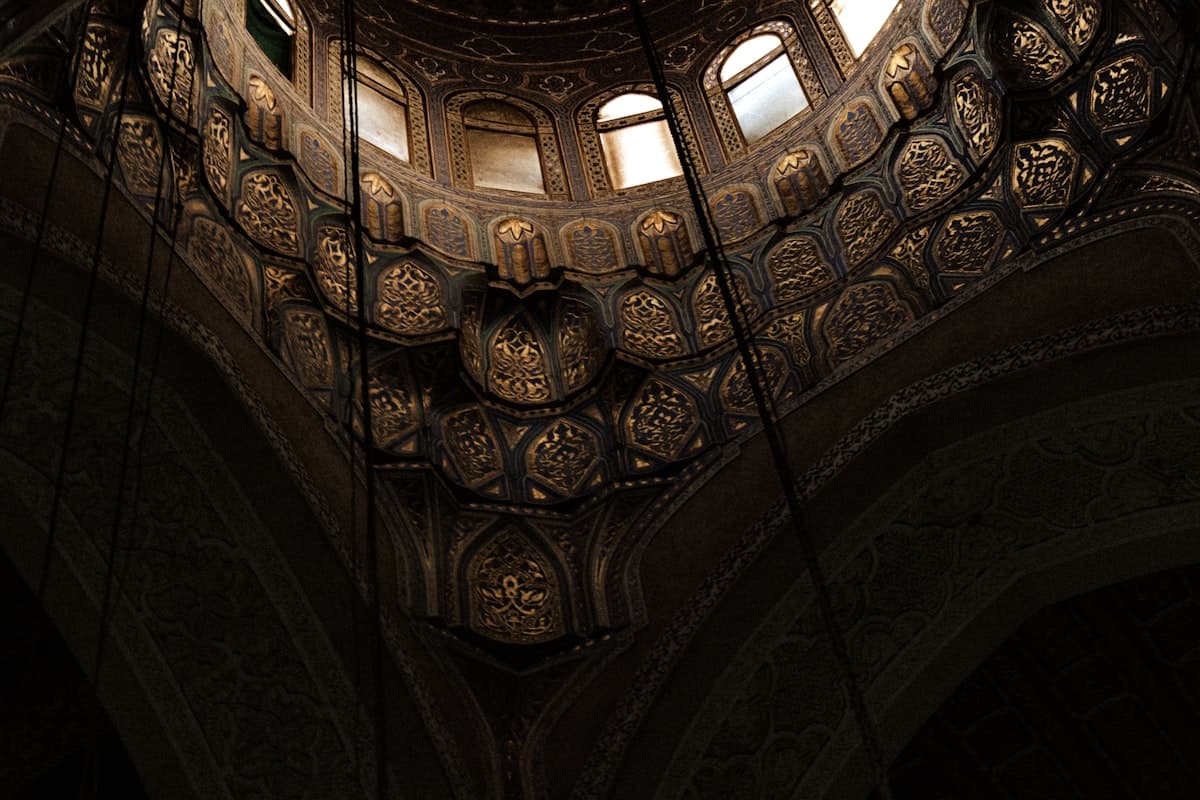
The hill he built on already had 600 years of history under it. Saladin, the Kurdish sultan who defeated the Crusaders and became the dominant figure of medieval Islamic history, began construction of the Citadel in 1176 AD. He needed a fortified height from which to command both Cairo and Fustat, the earlier Islamic settlement to the south. He never finished it; his successors did. For the next 700 years, whoever controlled the Citadel controlled Egypt.
The Mamluks governed from here, a military caste of former slaves who had purchased or been granted their freedom and who proved so formidable that they defeated the Mongol army at the Battle of Ain Jalut in 1260, the first major Mongol defeat in history, a fact that permanently altered the direction of the Mongol Empire. They built their own mosques inside the Citadel walls; the Mosque of Sultan al-Nasir Muhammad, begun in 1318, stands a few hundred meters from Mohamed Ali's mosque and is structurally more interesting to anyone who studies medieval Islamic architecture, even if it is significantly less photogenic.
When the Ottomans took Egypt in 1517, they transferred much of the Mamluk architectural heritage to Istanbul as war trophies, including craftsmen, blueprints, and material. The Citadel they inherited they modified but did not transform. When Mohamed Ali arrived, he tore down most of what the Mamluks had built within the southern enclosure to make room for his mosque and palace complex. He also, in 1811, invited 470 Mamluk leaders to a ceremony at the Citadel and had them massacred in what Egyptian historians call the Citadel Massacre. One Mamluk, the story goes, escaped by jumping his horse off the Citadel wall. The drop is roughly 20 meters. Whether the horse survived varies by telling.
---
The Connections
Mohamed Ali's Albanian heritage places him in a remarkable historical pattern that most visitors to Cairo never register. The Mamluks, whom he destroyed, were themselves outsiders: military slaves purchased in childhood from the Caucasus, central Asia, and the Balkans, trained in Cairo, converted to Islam, and deployed as soldiers who eventually took power. The Ottoman rulers who appointed Mohamed Ali were themselves descended from Turkic nomads who had converted to Islam in the 10th century. Egypt, at almost every period of its history since the Pharaonic collapse, has been governed by people who arrived from elsewhere and were then absorbed.
The Coptic community, who represent the most direct genetic and cultural continuity with ancient Egypt, built their church of Abu Serga directly over the cave where tradition holds the Holy Family sheltered during the Flight into Egypt. That church is 3.5 kilometers southwest of the Citadel, in Old Cairo. Between those two points, within a 30-minute walk, you can trace 2,000 years of layered rule: Roman, Coptic Christian, Arab Muslim, Mamluk, Ottoman, Albanian-Egyptian. This is the actual subject of Cairo. The Citadel is just the most visible node in that network.
If you walk down from the Citadel into the medieval Islamic district, you will pass the madrassa and tomb of Sultan Hassan, completed in 1363, which is by almost any architectural measure one of the most accomplished buildings in Africa. It faces the Al-Rifa'i Mosque, which was finished in 1912 and holds the tomb of Egypt's last king, Farouk, the very descendant Mohamed Ali's dynasty produced. The juxtaposition of those two buildings tells the whole story of Cairo's relationship with power, continuity, and the way Egyptians build monuments to things that have already ended.
---
Common Mistakes
Arriving at midday in summer. The Citadel plateau has almost no shade. By noon in July, the stone radiates heat from both above and below. Come at 8am when it opens, or accept that the experience will be less about culture and more about survival.
Paying for a guide at the gate. The men who approach you at the Citadel entrance offering guided tours are not licensed Egyptologists. They are freelancers of variable quality and fixed price ambitions. A licensed Egyptologist guide for a half-day in Cairo costs EGP 600 to 1,200 when booked through a reputable agency. The gate guides charge similar prices and offer significantly less. Book in advance through a licensed agency if you want a guide.
Spending all your time in the Mohamed Ali Mosque and leaving. The Mosque of Sultan al-Nasir Muhammad, 300 meters north within the same complex, was built in stages between 1318 and 1335 and retains Gothic columns looted from Crusader churches in Acre. That is a specific, remarkable fact and the mosque is included in your entry ticket. Most tour groups never reach it.
Doing the sound and light show. It costs EGP 350 and takes place at the Citadel on selected evenings. The narration covers nothing you would not learn from reading a competent guide, and the lighting design was last updated in a way that suggests the 1990s had opinions. Skip it entirely.
Skipping Al-Gawhara Palace because it sounds secondary. It is not. Built in 1814 as Mohamed Ali's residential palace, it contains his original furniture, his personal library, and painted ceilings that document how a man of Albanian origin processed the aesthetic influences of Ottoman Istanbul, European Baroque, and Egyptian craft tradition simultaneously. It is historically more intimate than the mosque.
Assuming the mosque interior is open at any hour. Prayer times close the mosque to tourists. The five daily prayers during winter months mean closures roughly at 7am, 12:30pm, 3:30pm, 6pm, and 7:15pm. Each closure lasts 15 to 20 minutes. Check the current prayer schedule the morning of your visit and plan around it, or simply wait; the courtyard view during this time is worth the pause.
Forgetting that the views north over Cairo are the monument. From the Citadel's northern ramparts, you can see the Pyramids of Giza on clear mornings, the minarets of Fatimid Cairo directly below, and the Nile beyond. No ticket, no guide, and no tour operator will emphasize this as much as it deserves. Stand there for ten minutes before you go inside anything.
---
Practical Tips
Dress modestly for the mosque: shoulders and knees covered for everyone. Shoe covers are provided at the mosque entrance, but bringing your own lightweight socks is more comfortable than the plastic bags they sometimes offer instead. Women do not need to cover their hair at the Mohamed Ali Mosque, though a scarf is welcome.
The Citadel's single entry point is on Salah Salem Street at the Bab al-Gadid gate. Uber and Careem will drop you directly here. On Friday mornings, the road approach becomes congested after the midday prayer, when local families arrive for weekend visits; arriving before 10am on Fridays avoids this entirely.
There is one cafe inside the complex selling water, soft drinks, and packaged snacks at tourist prices, roughly double street prices. Bring your own water. The nearest good coffee is on Al-Azhar Street, a 15-minute walk or 5-minute taxi ride into Islamic Cairo.
Photography inside the Mohamed Ali Mosque is permitted without a special ticket. Tripods require a separate photography permit, which is EGP 50 and available at the main ticket office.
Combining the Citadel with an afternoon walk through the Khan el-Khalili bazaar and the Al-Azhar Mosque makes for a coherent full day. These are 1.5 kilometers apart and connected by medieval streets that are worth walking slowly. The Mohamed Ali Pasha Albanian heritage story, the story of an outsider who built a dynasty, runs through all of it.
Frequently Asked Questions
The Weekly Dispatch
More on Egypt, every Friday.
Cultural depth and places most guides never mention.
No spam. Unsubscribe anytime.