Mohamed Ali Pasha: Egypt's Albanian Ruler Who Remade Cairo
An Albanian soldier who never learned Arabic became Egypt's greatest modernizer. His mosque still dominates Cairo's skyline, built on a citadel Saladin started.

Quick Facts
- Best time to visit
- October to April. Cairo winters keep the Citadel terrace comfortable for extended visits and the alabaster interior stays cool. Summer visits work best before 9am.
- Entrance fee
- EGP 450 (approx $9 USD) for foreign visitors; EGP 225 for students with valid ID. Covers Mohamed Ali Mosque, Al-Nasir Muhammad Mosque, Military Museum, and Carriage Museum.
- Opening hours
- Daily 8am to 4pm (winter), 8am to 5pm (summer). Mosque closed to tourists Friday 11:30am to 1:30pm for prayers.
- How to get there
- Metro to Mar Girgis (EGP 8), then Uber/Careem to Citadel gate (EGP 15 to 25). Shared microbus from Salah Salem street costs EGP 5. Downtown taxi EGP 50 to 80.
- Time needed
- 2 hours minimum for mosque and courtyard. 3 to 4 hours including Al-Nasir Muhammad Mosque and one museum. Full morning if walking down to Al-Muizz Street afterward.
- Cost range
- Entry plus transport from central Cairo: EGP 500 to 700 per person. Adding a licensed private guide: EGP 300 to 500 extra.
Quick Facts
Best time to visit: October to April, when Cairo temperatures stay below 25°C and the alabaster interior holds cool air.
Entrance fee: The Citadel complex (which includes the Mohamed Ali Mosque) costs EGP 450 for foreign visitors (approximately $9 USD at current rates). Students with valid ID pay EGP 225. The ticket covers the Military Museum and Carriage Museum inside the compound.
Opening hours: Daily 8am to 4pm in winter, 8am to 5pm in summer. Friday prayers close the mosque to tourists between approximately 11:30am and 1:30pm. Plan around this.
How to get there: From Tahrir Square, take the metro to Mar Girgis station (EGP 8), then a microbus or ride-hail to the Citadel gate (EGP 15 to 25 by Uber or Careem, or EGP 5 by shared microbus if you know to ask for Salah Salem street). The Citadel sits on the Mokattam spur and the climb from the street is steep: wear shoes that grip.
Time needed: Two hours minimum for the mosque and immediate courtyard. Three to four hours if you include the National Military Museum inside the Citadel walls. A full morning if you combine it with a walk down to Al-Muizz Street afterward.
Cost range: Entry plus transport from central Cairo runs EGP 500 to 700 for a solo traveler. A private guide licensed for the Citadel charges EGP 300 to 500 extra and is worth it here, because the visual experience is straightforward but the political history is not.
---
Why This Place Matters
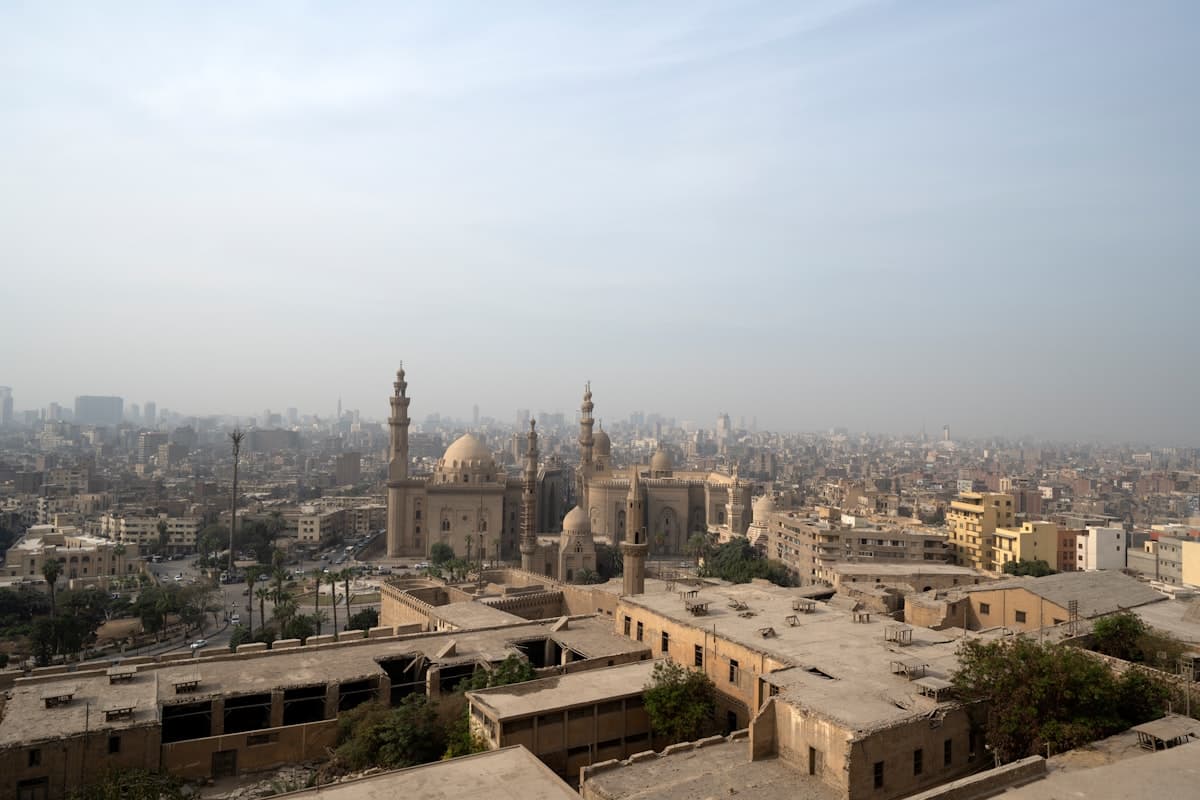
Mohamed Ali Pasha arrived in Egypt in 1801 as a junior officer in an Albanian regiment of the Ottoman army, sent to deal with Napoleon's occupying forces after the French had already left. He could not read or write until he was in his forties, never mastered Arabic, and conducted most state business through translators. By 1805 he had maneuvered himself into the governorship of Egypt, and by 1811 he had invited the entire Mamluk ruling class to a celebration at the Citadel and had them massacred in the courtyard, ending 500 years of Mamluk political dominance in a single afternoon.
This is the man whose mosque dominates Cairo's skyline, whose descendants ruled Egypt until 1952, and whose modernization program built the country's first modern army, its first schools teaching European sciences, and its first state cotton industry. He sent Egyptian students to Paris and brought French engineers to the Nile Delta. He did all of this not out of love for Egypt but out of an exceptionally clear ambition to build a dynasty. The dynasty survived him by 116 years.
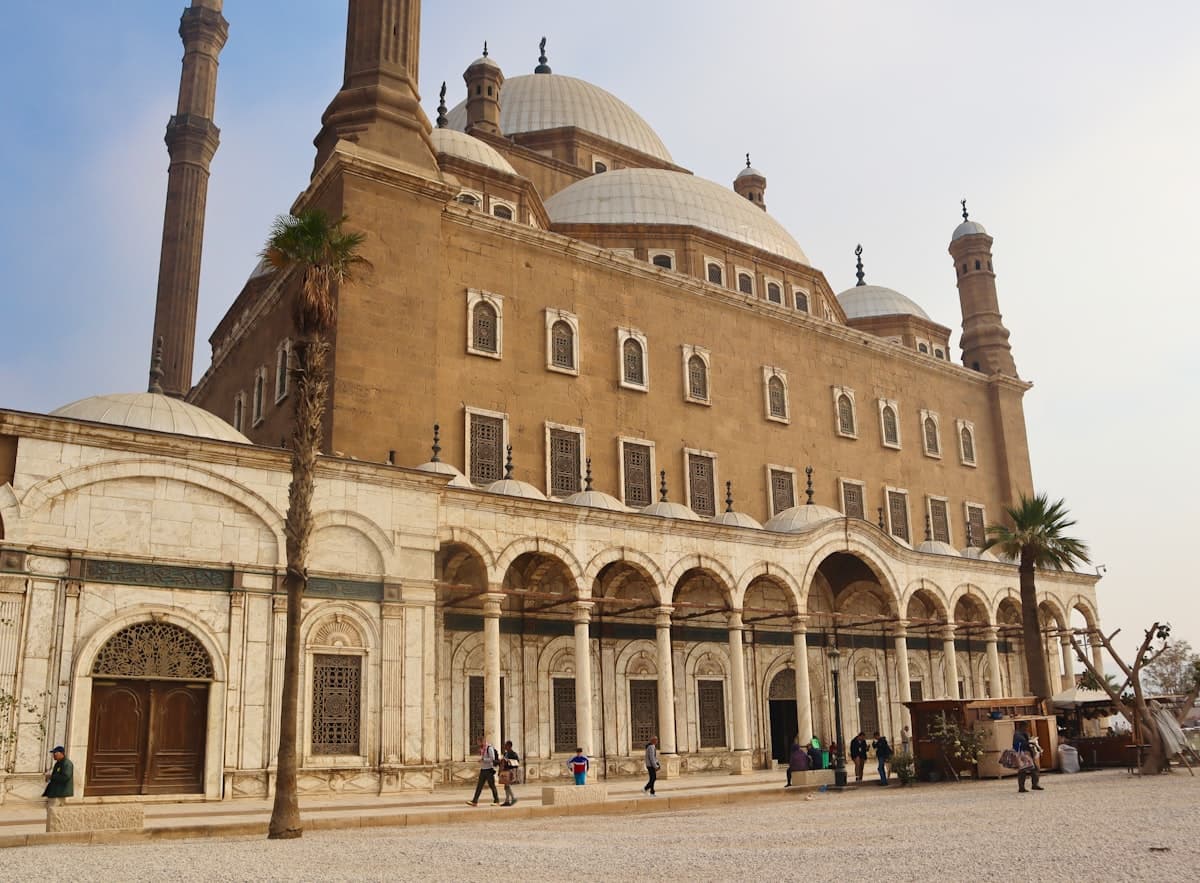
The mosque he commissioned in 1830 is Ottoman in style, deliberately modeled on the Sultan Ahmed Mosque in Istanbul, built with alabaster quarried from the same Mokattam hills it sits upon. It was not finished until 1848, the year of his death. He is buried inside it, in a white marble tomb near the entrance, which most visitors walk past without stopping.
The Mohamed Ali Pasha Albanian heritage connection is not decorative history. It explains the architecture, the political method, the Ottoman rather than Arab orientation of his court, and the particular form of modernization he pursued: European technology grafted onto an Ottoman administrative skeleton, with Egyptian peasants providing the labor and the cotton that paid for all of it.
---
What You Are Actually Looking At
The mosque sits in the northern enclosure of the Citadel, which Saladin began constructing in 1176 on a limestone spur chosen specifically because it caught the breeze that other parts of medieval Cairo lacked. Saladin never finished it. His Ayyubid successors and then the Mamluks built it up over three centuries, and by the time Mohamed Ali took it over, it was a compound of crumbling medieval structures he found embarrassing by comparison to Istanbul.
He demolished most of them. The one significant Mamluk building he left standing, the Mosque of Al-Nasir Muhammad, sits about 100 meters northeast of his own mosque and is worth more of your time than it gets. Al-Nasir Muhammad built it between 1318 and 1335, and its minarets are covered in a green and white faience tile work that is among the most refined decorative work surviving from Mamluk Cairo. Most tourists photograph Mohamed Ali's domes from the courtyard and never walk over to it.
Mohamed Ali's mosque is visually commanding from outside and somewhat cold from within. The two minarets are Turkish pencil-style, 82 meters tall. The interior is a central domed space, the dome reaching 52 meters, surrounded by four semi-domes in the Ottoman tradition. The alabaster cladding on the lower walls gives the interior its particular quality of light: slightly greenish, slightly translucent, unlike anything in the older Cairo mosques. The clock tower in the courtyard was a gift from King Louis-Philippe of France in 1845, sent in exchange for the obelisk Egypt gave France that now stands in the Place de la Concorde in Paris. The clock has never worked properly.
---
The Albanian Soldier and the Making of Modern Egypt
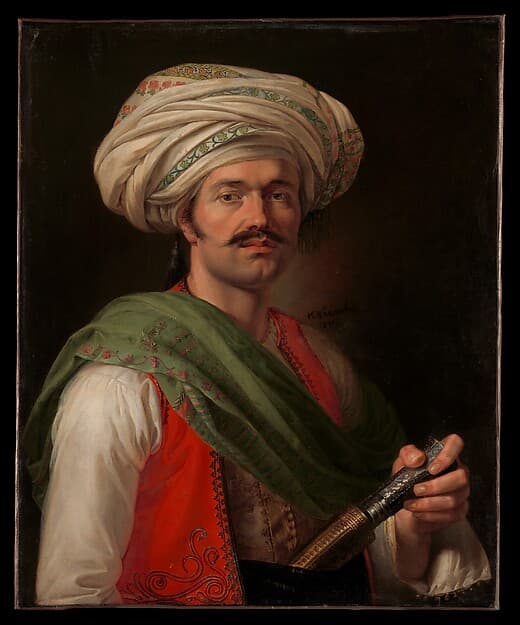
To understand Mohamed Ali's Albanian heritage and what it produced in Egypt, you need to know something about how the Ottoman empire recruited its military class. The Albanians were among the most reliable Ottoman infantry precisely because they were geographically peripheral, tribally organized, and available. Mohamed Ali came from Kavala, a port town in what is now northern Greece, and his family were tobacco merchants. He joined the Ottoman military as a young man not from ideology but from pragmatism, the same pragmatism he applied to every subsequent decision.
When Napoleon invaded Egypt in 1798, the encounter between a modern European army and the Mamluk cavalry it destroyed in minutes at the Battle of the Pyramids convinced Mohamed Ali of something he never forgot: the old military system was finished. His entire subsequent career was an attempt to build something that could resist European military power while using European methods. He hired French officers to train his new army, established a military school at Abu Zaabal, and later at Abbasseya, and sent his best students to study engineering and medicine in Paris. The Egyptian Medical School he founded in 1827 at Qasr Al-Aini is still operating today as one of the region's major medical faculties.
He financed all of this with cotton. After the American Civil War disrupted global cotton supply, Egyptian long-staple cotton became the most valuable agricultural commodity in the world. Mohamed Ali had already restructured Egyptian agriculture around it decades earlier, through a system of forced cultivation that made him wealthy and kept the peasant farmers who grew it in near-servitude. The Suez Canal that his grandson Ismail would build was made possible by the infrastructure Mohamed Ali created, and the debt that Ismail ran up building it was the mechanism by which Britain occupied Egypt in 1882. One man's ambition, traced forward sixty years, explains British colonialism in Egypt. This is not a widely made connection in the Citadel's official signage.
---
The Connections
The Citadel sits at a point where Cairo's layers are physically visible if you know where to look. The Mokattam limestone that Saladin used for his walls is the same stone that the Old Kingdom Egyptians quarried for the Pyramid of Khafre, across the river at Giza. The Roman fortress of Babylon, which you can visit at Coptic Cairo 4 kilometers southwest, established the strategic logic of controlling the narrow point where the Nile valley meets the Delta, and Saladin was following that same logic when he chose the Mokattam spur.
The Fatimid walls that Mohamed Ali could see from his new mosque were built in the 11th century by Badr al-Jamali, an Armenian general who served a Shia Ismaili caliphate, meaning that the founder of what became Sunni Ottoman Cairo was building within walls erected by an Armenian general for a Shia dynasty. The gates of those walls, Bab al-Futuh and Bab al-Nasr, still stand on Al-Muizz Street 15 minutes walk north of the Citadel.
Mohamed Ali's descendants continued this pattern of imported rulers reshaping Egypt's institutions. His great-great-granddaughter Fawzia married the Shah of Iran in 1939. His dynasty's last king, Farouk, was deposed by Naguib and Nasser in 1952, but the family's legal claims to Egyptian royal property were not fully resolved until the 1970s. The Mohamed Ali Club in Zamalek, one of Cairo's oldest sporting clubs, was the dynasty's social institution and still operates, now open to the general public.
---
Common Mistakes
Arriving at Friday midday. The mosque closes to tourists during Friday prayers, typically 11:30am to 1:30pm. The queue of tourists waiting outside in July sun is not a pleasant experience. Come Thursday morning or Saturday at 8am when the light is best and the crowds are thinnest.
Spending all your time in Mohamed Ali's mosque and skipping Al-Nasir Muhammad's mosque next door. The Mamluk mosque is older, more historically layered, and the faience work on its minarets is rarer than anything in the newer building. It is included in your Citadel ticket. Walk the extra 100 meters.
Paying for the sound and light show at the Citadel. It costs EGP 300, runs about an hour, and delivers a theatrical narration of Mohamed Ali's life that is less accurate and less detailed than reading this article. The view of illuminated Cairo from the Citadel terrace at night is genuinely good. You do not need to pay for the show to access the terrace during show hours.
Taking a guided tour that combines the Citadel with the Pyramids in a single day. These tours spend about forty minutes at the Citadel. The Ottoman and Mamluk history is entirely skipped. The guide mentions that the mosque is pretty, points out the broken French clock, and moves on. This is an architectural and historical insult to both sites.
Ignoring the view. The northern terrace of the Citadel offers a line of sight across Islamic Cairo, the medieval minarets of the Ibn Tulun mosque (built 876 to 879 CE, the oldest mosque in Cairo still in its original form), and on clear days, the Pyramids of Giza. This view is the most direct visual proof available that Cairo is not one city but six or seven cities layered on the same ground. Spend fifteen minutes with it.
Buying alabaster souvenirs at the Citadel gate shops. The alabaster items sold there are almost universally made from calcite composite, not the solid alabaster that lines the mosque interior. The vendors will tell you otherwise. The price difference from Khan el-Khalili, five minutes away by taxi, is negligible, and the selection there is wider.
Assuming the Albanian connection is trivia. The most useful thing you can do before visiting is spend twenty minutes reading about the Albanian and Ottoman military recruitment system. It explains why the mosque looks like Istanbul, why Mohamed Ali's court operated in Turkish, and why Egyptian modernization took the specific hybrid form it did. The building makes more sense when you know where its builder came from.
---
Practical Tips
The Citadel's official ticket booth is inside the main gate, not outside where touts will attempt to sell you tickets or tours. Walk past them.
Dress code is enforced at the mosque entrance. Shoulders and knees must be covered. Scarves for women are available to borrow at the entrance, but bringing your own is more comfortable. Shoes come off at the mosque door: wear slip-ons if you are visiting in winter when the marble floor is cold.
The best photography of the mosque exterior happens from the southeastern corner of the courtyard about an hour after sunrise, when the light catches the domes from the east and the Mokattam hills are still in shadow behind. Midday light bleaches the alabaster exterior.
If you are combining the Citadel with Al-Muizz Street, walk downhill from the Citadel's northern gate toward Bab Zuweila rather than taking transport. The walk takes about twenty minutes and passes through the Darb Al-Ahmar neighborhood, where Mamluk-era buildings sit next to 19th century Ottoman merchant houses next to contemporary workshops making copper trays and wooden furniture. It is a better introduction to layered Cairo than any museum.
For context before you arrive: the Egyptian Museum in Tahrir Square has a small but serious section on the Mohamed Ali dynasty, including personal objects and photographs from his court. It takes thirty minutes and significantly deepens what you see at the Citadel.
Frequently Asked Questions
The Weekly Dispatch
More on Egypt, every Friday.
Cultural depth and places most guides never mention.
No spam. Unsubscribe anytime.