Mohamed Ali Pasha: The Albanian Who Remade Egypt
An Albanian tobacco merchant's son became Egypt's most consequential ruler since Saladin. His mosque still dominates Cairo's skyline. Most visitors miss why.

Quick Facts
- Best time to visit
- October to March. The Citadel plateau is exposed and the summer heat makes the esplanade genuinely uncomfortable. Winter mornings offer cool air and the best light for photography.
- Entrance fee
- EGP 450 (approximately $9 USD) for the full Citadel complex including the Mohamed Ali Mosque and Military Museum. Students with valid ID pay EGP 225.
- Opening hours
- Daily 8am to 5pm. The Mohamed Ali Mosque closes to non-Muslim visitors during Friday midday prayer, approximately 12:30pm to 2pm.
- How to get there
- Metro Line 1 to Mar Girgis, then taxi or tuk-tuk uphill (EGP 20 to 40). Taxi from Downtown Cairo: EGP 50 to 80. Uber and Careem are reliable and often cheaper than negotiated taxis.
- Time needed
- 3 hours minimum for the Mohamed Ali Mosque, Al-Nasir Muhammad Mosque, and Military Museum. Full half-day if combining with Sultan Hassan and Al-Rifai Mosques below the Citadel.
- Cost range
- Budget EGP 600 to 900 per day including transport, entry, and a local lunch. Mid-range EGP 1,800 to 2,800 with a licensed guide and sit-down meal in Islamic Cairo.
Quick Facts
Best time to visit: October to March, when the Citadel plateau is cool enough to walk without stopping every ten minutes. Summer heat on the exposed limestone esplanade is serious.
Entrance fee: EGP 450 (approximately $9 USD) covers the Citadel complex, including the Mohamed Ali Mosque and the National Military Museum. Students with valid ID pay EGP 225.
Opening hours: Daily 8am to 5pm. The mosque itself is open to non-Muslim visitors except during Friday prayer, roughly 12:30pm to 2pm.
How to get there: Cairo Metro Line 1 to Mar Girgis station, then a taxi or tuk-tuk up the hill (EGP 20 to 40). Alternatively, a taxi from Downtown Cairo runs EGP 50 to 80 depending on traffic. The 951 and other local buses pass through Salah Salem road below the Citadel; useful if you want the local experience, less useful if you want to arrive with energy to spare.
Time needed: Two hours minimum for the mosque and the view. Four hours if you explore the Citadel's secondary museums, the Al-Nasir Muhammad Mosque, and the southern walls.
Cost range: Budget EGP 600 to 900 per day including transport and lunch at a local koshary shop near the Citadel gate. Mid-range EGP 1,800 to 2,800 if you add a guide and a sit-down meal in the Islamic Cairo quarter below.
---
Why This Place Matters
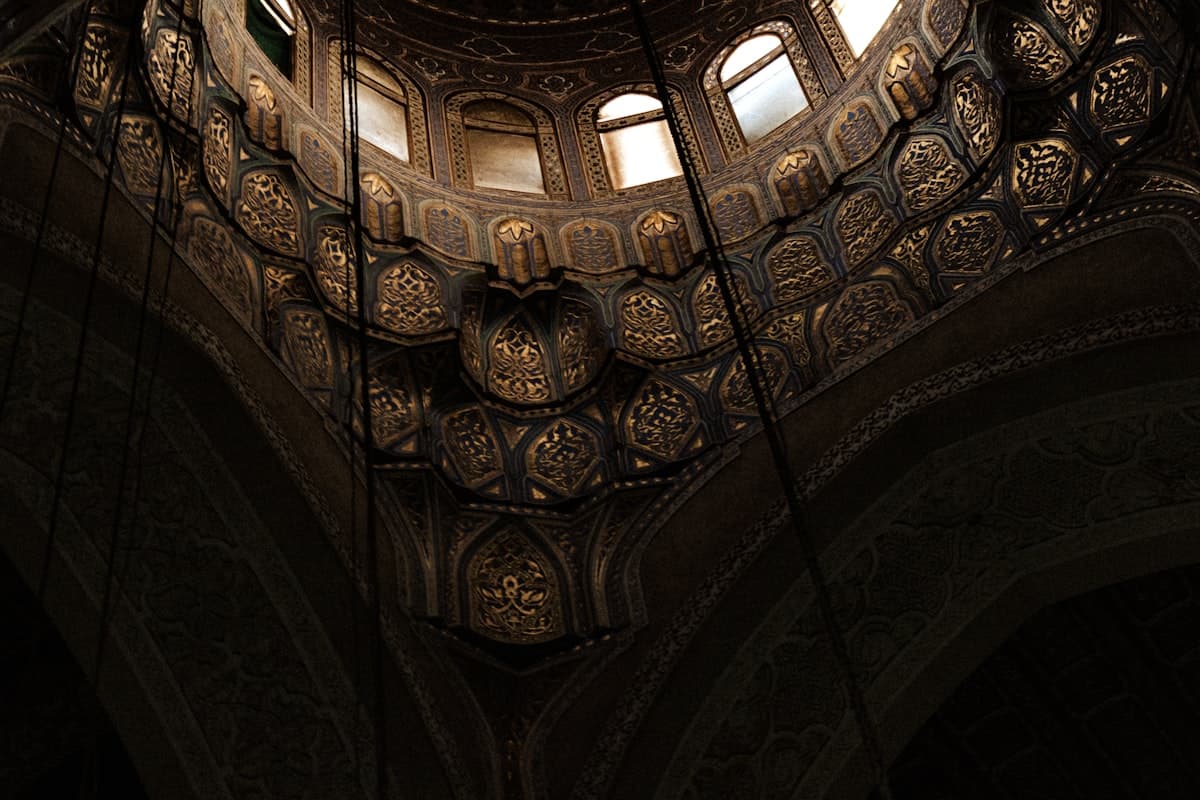
Mohamed Ali Pasha arrived in Egypt in 1801 as the commander of a small Albanian contingent within the Ottoman military force sent to expel Napoleon's retreating army. He was not sent to rule. Within four years, he had outmaneuvered the British, neutralized the Ottoman governor, and positioned himself as the effective power in a country he had lived in for less than a decade. By 1811, he had solved the Mamluk problem, which had resisted every Ottoman governor for 300 years, by inviting their leaders to a banquet at the very Citadel where his mosque now stands and killing them on their way out. The Citadel's narrow gate passage where the massacre occurred is still visible.
The Albanian heritage of Mohamed Ali Pasha is not a footnote. He never fully learned Arabic. He conducted state business through translators. His inner circle was Albanian and Turkish. And yet he became the architect of the Egyptian state that, with modifications, still exists: centralized bureaucracy, a conscript army, industrial cotton production, and a medical school founded in 1827 that is the direct ancestor of modern Egyptian medicine. The country's most consequential 19th-century transformation was designed by a man who came from Kavala, a port city that is now in northern Greece.
The mosque he built between 1830 and 1848 was not built to honor Islam. It was built to dominate the Cairo skyline in a way that announced Egypt was now a regional power with European ambitions. He hired a Greek architect named Yusuf Bushnak to design it in the Ottoman Baroque style, consciously imitating Istanbul's Sultan Ahmed Mosque. The imitation was the message: Mohamed Ali was telling the Ottoman Sultan that Egypt was his equal.
---
What You Are Actually Looking At
The Mohamed Ali Mosque is sheathed in alabaster quarried from Beni Suef, roughly 120 kilometers south of Cairo. This is why it turns a particular shade of cream-gold in the late afternoon, a quality that photographs rarely capture honestly. Up close, the stone has a translucent depth that feels wrong for a building this large, more like a lamp than a wall.
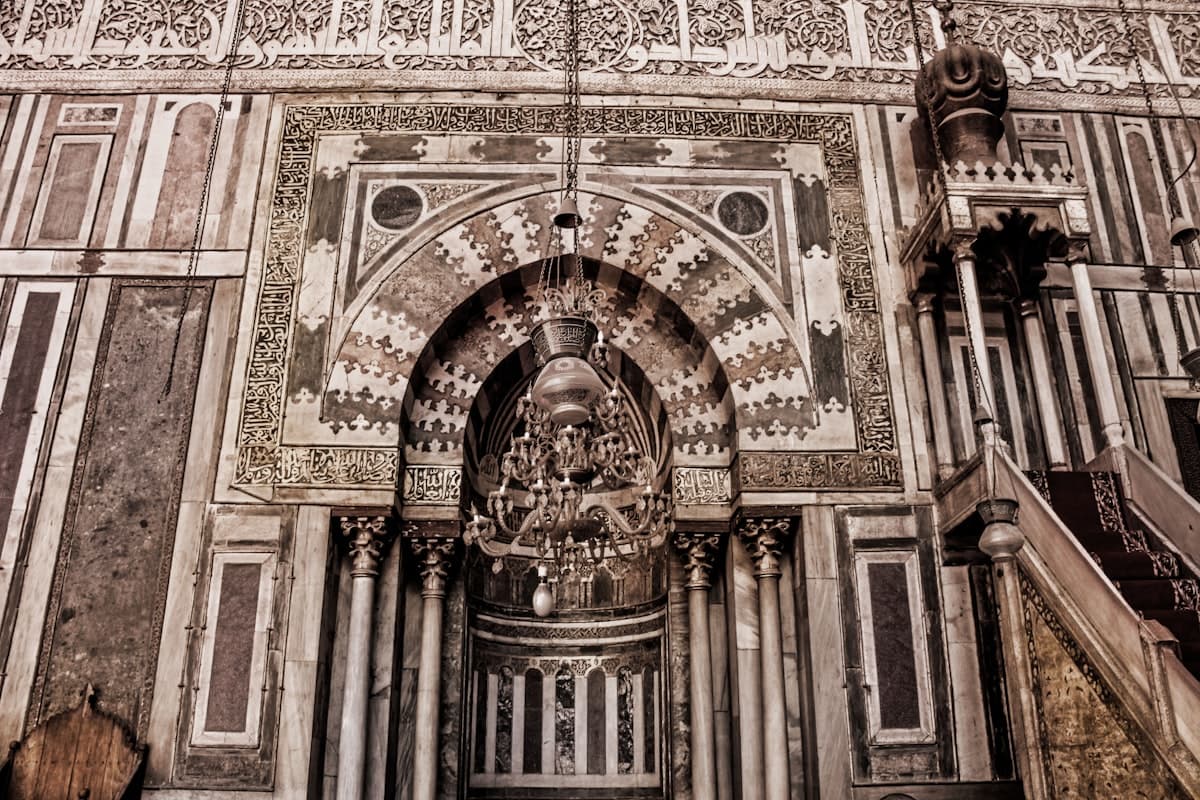
The interior is a single massive domed space, 52 meters high, suspended over an Ottoman-style plan that owes everything to Sinan's mosques in Istanbul and almost nothing to Cairo's own Mamluk tradition of domes and minarets. This was a deliberate break. The Mamluk mosques in the streets below the Citadel, which Mohamed Ali dismantled, repurposed, or simply left to decay, represent a completely different architectural language: smaller domes, striped stone facades, intricately carved wooden screens. Mohamed Ali's mosque says: that era is finished.
In the northwest corner of the courtyard stands a clock tower that France gave to Mohamed Ali in 1845 in exchange for the obelisk he sent to Paris, which now stands in the Place de la Concorde. The clock has never worked properly. Egyptians will tell you this with a particular quality of resignation. The obelisk, meanwhile, was cut from Luxor Temple's entrance pylon, where it stood for 3,200 years next to an identical obelisk that Egypt kept. The Paris obelisk is 23 meters tall and weighs 227 tons. It took a specially designed ship two years of engineering to transport it. The clock was installed broken and has stayed broken ever since.
Mohamed Ali is buried in the mosque, in a white marble tomb on the right side of the main prayer hall. He died in 1849 in Alexandria, where he had retired after suffering what modern historians believe was dementia in his final years. The man who restructured an entire country's economy and army, who fought the Ottomans to a standstill and forced European powers to negotiate with him as a near-equal, died confused and largely unaware of who he was. His body was brought to Cairo and interred in the mosque he had spent two decades building.
---
The Man Behind the Mosque: An Albanian in Ottoman Egypt
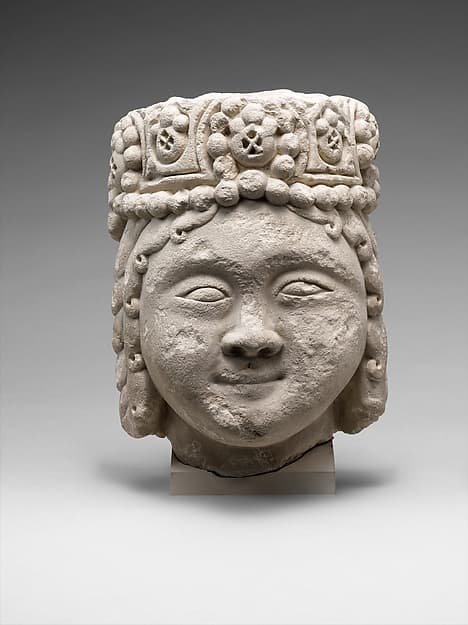
Mohamed Ali was born in Kavala around 1769, the same year as Napoleon, a coincidence he was apparently aware of and enjoyed. His father was a tobacco merchant and local official; his mother died when he was young. He was raised partly by the local Ottoman governor and entered military service in his twenties. He came to Egypt as a relatively junior officer.
What distinguished him was not military genius, though he was competent enough. It was political intelligence of a specifically Ottoman variety: the ability to play factions against each other, delay commitment until a winner was clear, and then attach himself to the winning side with complete conviction. He did this with the British, with the Ottoman Sultan, and with the Egyptian ulama (religious scholars) who initially legitimized his authority.
The Albanian heritage of Mohamed Ali Pasha shaped his approach to Egypt in ways that are still underappreciated. Because he was an outsider with no lineage claim to the country, his legitimacy had to be constructed rather than inherited. This made him relentlessly practical. He brought French military advisors and sent Egyptian students to Paris in 1826, the first educational mission of its kind in the region. He built a printing press. He created a public health system, partly because his army kept dying of plague. His court physician, Antoine Clot (known as Clot Bey), established quarantine systems and vaccination programs that were among the first in the Middle East.
He was also ruthless about using Egypt's resources to fund his ambitions. The corvée system, forced peasant labor, was intensified under his rule. The shift to cotton monoculture enriched the state and impoverished many farmers who lost their food crop diversification. The Egypt he built was modern in its institutions and often brutal in its methods. Both things are true and visitors to his mosque should know both.
---
The Connections: What the Citadel Holds That Most Visitors Walk Past
The Citadel itself was built by Saladin between 1176 and 1183 using stone taken from the smaller pyramids at Giza. Not metaphorically. Saladin's engineers quarried the casing stones from the Giza plateau's minor pyramids to build the Citadel's walls. You can see the joins in the limestone if you walk the southern ramparts: different-aged stone with different weathering profiles, stacked without ceremony.
Within the same Citadel complex, 30 meters from Mohamed Ali's Ottoman Baroque mosque, stands the Al-Nasir Muhammad Mosque, built between 1318 and 1335 by the Mamluk sultan who ruled Egypt three separate times and is considered the apogee of Mamluk political power. Its entrance portal was taken from a Crusader church in Acre after the city fell in 1291. The portal's Gothic stonework is unmistakable against the Mamluk decoration around it. Three civilizations, one doorway.
Below the Citadel, the Ibn Tulun Mosque, built in 876 and the oldest mosque in Cairo still standing in its original form, sits 1.5 kilometers away. Its spiral minaret is the only one of its kind in Egypt and is modeled on the Great Mosque of Samarra in Iraq, which the Abbasid Caliph built in 847. Ibn Tulun was an Abbasid governor who, like Mohamed Ali a thousand years later, arrived as an administrator and stayed as a ruler. The pattern of the talented outsider who transforms a country is not unique to Albanian tobacco merchants.
---
Common Mistakes
Arriving after 11am on a weekend. The Citadel draws both tourists and Cairene families, particularly on Fridays and Saturdays. By noon the esplanade is genuinely packed and the view of Cairo is obscured by haze that builds through the morning. Arrive at 8am when the gates open and you will have the alabaster courtyard largely to yourself.
Skipping the Al-Nasir Muhammad Mosque. It is 30 meters from the Mohamed Ali Mosque and most tour groups walk past it entirely. This is the better building architecturally. The Crusader portal alone is worth twenty minutes of your attention.
Taking the tourist bus from Tahrir Square without checking your itinerary. Several operators run Citadel trips combined with Khan el-Khalili and the Egyptian Museum in a single day. This is too much. You will see the mosque for 25 minutes and remember nothing.
The sound and light show at the Citadel costs EGP 400 and delivers approximately the same historical content as a Wikipedia article read in a theatrical voice. The view of lit-up Cairo from the esplanade at dusk is free and better. Skip the show.
Ignoring the Military Museum inside the Citadel. This is genuinely underrated. It contains Mohamed Ali's personal weapons, correspondence, and a model of the Mamluk massacre that is oddly candid about what happened. It is included in your entrance ticket and takes 45 minutes.
Hiring a guide outside the gate. Unlicensed guides at the Citadel entrance are persistent and often deliver confident misinformation. If you want a guide, book through your hotel or a licensed operator the night before. A good licensed guide for a half-day Citadel visit costs EGP 400 to 600 and is worth it.
Expecting the clock to work. It won't. This has been true for approximately 180 years.
---
Practical Tips
Dress conservatively. The mosque is an active place of worship. Shoulders and knees covered for everyone. Shoes come off at the entrance; the interior floor is carpeted and in summer it is genuinely warm underfoot, so thin socks are better than bare feet.
The best photograph of the mosque exterior is taken from the Military Museum courtyard to the northwest, not from the main esplanade, where you are too close and the minarets foreshorten badly.
If you are combining this with Islamic Cairo, walk down through Bab el-Wazir street after the Citadel rather than taking a taxi. The street runs from the Citadel's lower gate through a neighborhood of Mamluk architecture, including the Sultan Hassan Mosque and the Al-Rifai Mosque directly opposite it. The Al-Rifai Mosque is the burial place of Egypt's last king, Farouk, and also of Muhammad Reza Shah Pahlavi of Iran, whose body was moved there in 1980 after the Islamic Revolution. Egypt was one of the few countries willing to receive it. Both mosques together take another two hours and cost a separate EGP 450 entry.
Water is not sold inside the Citadel at reasonable prices. Bring your own. The kiosk near the main gate charges roughly three times the street rate.
Frequently Asked Questions
The Weekly Dispatch
More on Egypt, every Friday.
Cultural depth and places most guides never mention.
No spam. Unsubscribe anytime.