Napoleon's Egypt: A Guide to the Campaign Sites That Changed History
Napoleon brought 167 scientists to Egypt in 1798. They discovered the Rosetta Stone. His soldiers used the Sphinx for target practice. Most of this is still visible.

Quick Facts
- Best time to visit
- October to March. Heat is manageable in Cairo and Alexandria, and Abukir Bay has clear water visibility. August 1 (battle anniversary) falls in summer and is genuinely uncomfortable outdoors.
- Entrance fee
- Citadel of Cairo EGP 450 (approx $9 USD), students EGP 225. Egyptian Museum EGP 400 (approx $8 USD). Fort Qaitbay EGP 100 (approx $2 USD). Abukir shoreline free; boat hire EGP 150-300.
- Opening hours
- Citadel daily 8am-5pm. Egyptian Museum daily 9am-5pm. Fort Qaitbay daily 9am-4pm. Abukir waterfront has no formal hours.
- How to get there
- Cairo: metro to Sayyida Zeinab (Line 1), 15-minute walk to Citadel. Alexandria: train from Ramses Station, first class EGP 160-200. Abukir from Alexandria: microbus EGP 5-10, taxi EGP 100-150 one way.
- Time needed
- Cairo Napoleonic circuit: 2 full days. Alexandria and Abukir: 1 full day. Full itinerary combining both cities: 4 to 5 days.
- Cost range
- Budget EGP 600-900 per day (transport, entrance fees, local food). Mid-range EGP 1,500-2,500 per day including accommodation and a specialist guide for Cairo sites.
Quick Facts
Best time to visit: October to March. Cairo sites are walkable; the Delta battlefield at Abukir is brutal in summer heat with no shade.
Entrance fees: Citadel of Cairo (includes Mosque of Muhammad Ali): EGP 450 (approx $9 USD), students EGP 225 Egyptian Museum (Rosetta Stone cast + Napoleonic-era collection): EGP 400 (approx $8 USD) Abukir coastal area: no entrance fee for the shoreline; local boat hire EGP 150-300 Fort Qaitbay, Alexandria (site of Nelson's naval victory): EGP 100 (approx $2 USD) Ras el-Tin Palace grounds, Alexandria: currently closed to public
Opening hours: Citadel daily 8am-5pm. Egyptian Museum daily 9am-5pm. Fort Qaitbay daily 9am-4pm.
Getting there: Cairo sites are connected by metro (Citadel is a 15-minute walk from Sayyida Zeinab station, Line 1). Alexandria is 2.5 hours from Cairo by train; first-class tickets run EGP 160-200. Abukir is 25km east of Alexandria by microbus (EGP 5-10).
Time needed: Cairo Napoleonic circuit: 2 full days minimum. Alexandria: 1 day. Abukir: half day. Combining all three: 4-5 days.
Cost range: Budget EGP 600-900 per day. Mid-range EGP 1,500-2,500 per day including accommodation and guided transport.
---
Napoleon Bonaparte was 28 years old when he invaded Egypt, and he brought 167 scientists with him. Mathematicians, chemists, artists, botanists, physicians. The expedition produced the 23-volume Description de l'Egypte, a document so thorough it effectively invented the modern academic discipline of Egyptology. It also produced one of history's most consequential military disasters. Both things happened at the same time. That tension, between intellectual achievement and catastrophic overreach, is what makes the Napoleon Egypt campaign sites worth visiting. Not as monuments to French glory, but as locations where one of history's stranger episodes left marks that Egypt still carries.
The French were in Egypt for three years and four months: from July 1798 to September 1801. In that time they fought the Mamluks, fought the Ottomans, fought the British at sea, survived plague, and failed to take Acre. They also measured everything they could find, drew everything they could not carry, and accidentally discovered the Rosetta Stone in the Delta town of Rashid (Rosette in French). When the British expelled them, the French had to surrender the Stone under the Treaty of Alexandria. It is now in the British Museum. The Egyptians have been asking for it back ever since.
Why This Place Matters
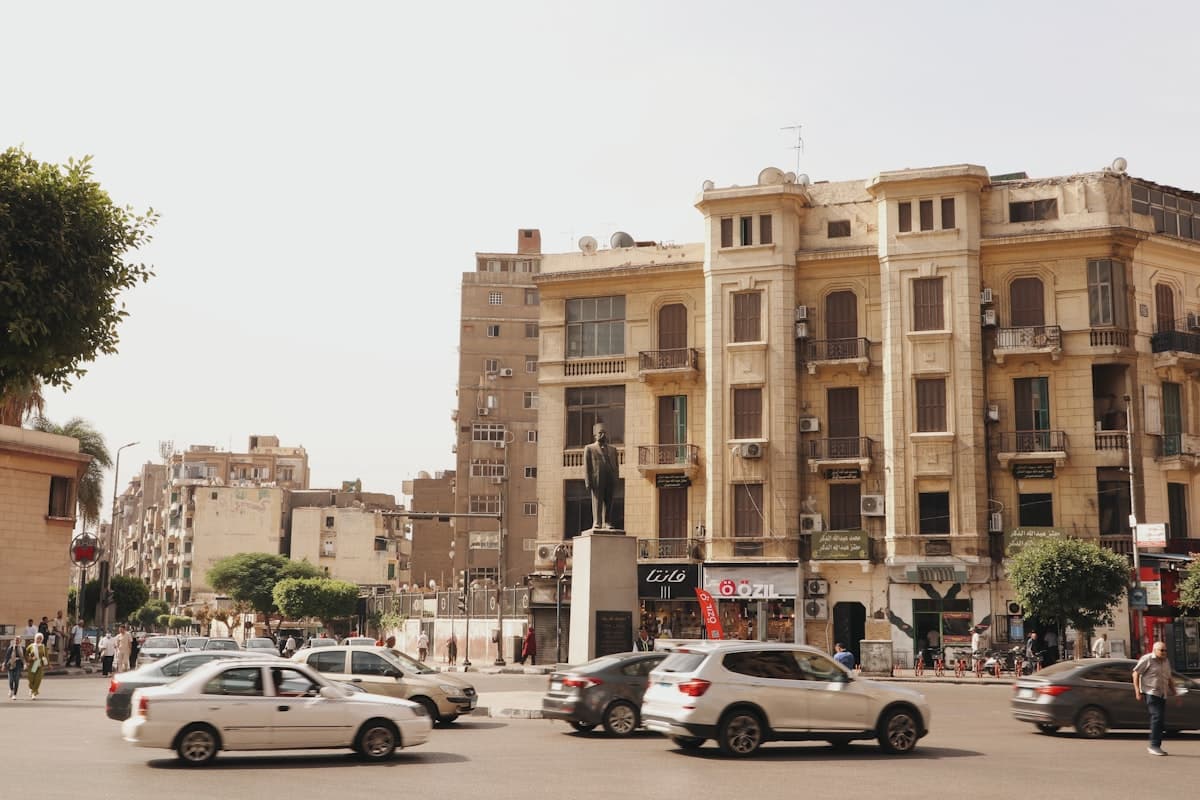
The conventional reading of Napoleon's Egyptian campaign treats it as a footnote. A young general's romantic detour before the real work of European empire. This reading is wrong in almost every measurable way.
Before 1798, European scholarship had no systematic knowledge of ancient Egypt. The hieroglyphic writing system was unreadable. Temple inscriptions were decorative mystery. Napoleon's savants changed that. The Description de l'Egypte, published between 1809 and 1828, contained the first accurate architectural surveys of Karnak, the first geological mapping of the Nile Delta, and enough material to keep European scholars arguing for the next century. Jean-Francois Champollion deciphered hieroglyphics in 1822 using the Rosetta Stone (which his own government had surrendered to Britain). The Stone has three scripts: hieroglyphic, Demotic, and Greek. The Greek was readable. The rest took 23 more years.
The campaign also destroyed the Mamluk ruling class, which had governed Egypt under nominal Ottoman authority for centuries. The Battle of the Pyramids on July 21, 1798 lasted less than two hours. Napoleon's infantry formed defensive squares, the Mamluk cavalry charged, and the Mamluks were destroyed as a military force. Egypt's political landscape shifted permanently. Muhammad Ali, the Albanian-Ottoman commander who would eventually rule Egypt, arrived in 1801 as part of the Ottoman force sent to dislodge the French. He would go on to massacre the remaining Mamluks in 1811 at the very Citadel where tourists now photograph his mosque. None of this is coincidence. Napoleon created the power vacuum that Muhammad Ali filled.
Cairo: The Citadel, the Pyramids Plateau, and What the French Actually Did
The Citadel of Cairo is where you feel the campaign's consequences most directly, even though the French themselves spent less time there than you might expect. They used the Citadel as a military headquarters for part of their occupation, but the structure you see now is overwhelmingly Muhammad Ali's work, built in the 1820s and 1830s on the same Ayyubid foundations that Saladin began in 1176. The Mosque of Muhammad Ali dominates the skyline with its Ottoman-style domes and minarets, deliberately designed to resemble the mosques of Istanbul and project legitimacy. It was Muhammad Ali who modernized Egypt after Napoleon left, and he did it partly using French advisors, French military doctrine, and French educational models. The irony is exact: France lost the campaign but shaped the Egyptian state that followed it.
From the Citadel's northern terrace you can see across Islamic Cairo, and on clear winter mornings the Pyramids are visible to the southwest. The Battle of the Pyramids did not actually take place at the Pyramids. It happened near the village of Embaba, several kilometers north. Napoleon's famous order to his troops, "Soldiers, from the heights of these pyramids, forty centuries look down upon you," was theatrical. The Pyramids were visible in the distance. The real fighting was in the fields.
On the Pyramids plateau itself, look at the face of the Sphinx. French soldiers did use it for artillery target practice; the nose damage is often attributed to Napoleon's troops, though an Egyptian historian named Abd al-Latif documented the nose's absence as early as the 14th century, attributing its destruction to a Sufi who objected to local veneration of the statue. What Napoleon's soldiers definitely did: carve their names into temple walls across Egypt, conduct scientific measurements inside the Great Pyramid, and occupy the interior chambers for survey work. Some of those early 19th-century inscriptions are still visible in the Pyramid interior, though photographing them is now restricted.
The Egyptian Museum on Tahrir Square contains objects recovered or catalogued during the Napoleonic expedition, including pieces documented in the Description de l'Egypte. The Napoleonic-era galleries are not separately labeled, which is a missed opportunity. Ask at the information desk about the early 19th-century acquisition records if you want specifics.
The Institut d'Egypte and Its Second Destruction
Napoleon established the Institut d'Egypte in Cairo in August 1798, housed in a confiscated palace near what is now the Ezbekiya Gardens area. The Institut was the headquarters of the savants, the place where the Description de l'Egypte was compiled. The original building burned during the Egyptian revolution in December 2011 when clashes between protesters and security forces spread to surrounding streets. Thousands of irreplaceable manuscripts and early Egyptological records were destroyed. A rebuilt Institut now stands in roughly the same location, restored with international support and reopened in 2017. It is not a tourist site in any formal sense, but the location, near Ataba Square, is worth a deliberate detour for anyone following the napoleon egypt campaign sites trail. The loss of the 2011 fire was real and specific: some 192,000 books and manuscripts, including original expedition drawings that existed nowhere else.
Alexandria and Abukir: Where the Campaign Actually Ended
Fort Qaitbay and the Battle That Trapped Napoleon
The French landed at Alexandria on July 1, 1798 and took the city within hours. Alexandria in 1798 was a small, declining port town of perhaps 6,000 people, a shadow of its Ptolemaic self. The great ancient city was largely buried under centuries of debris. Napoleon did not linger. He marched his army toward Cairo immediately, leaving a garrison behind.
Fort Qaitbay stands on the eastern harbor of Alexandria, built in 1477 by the Mamluk Sultan Qaitbay on the exact site of the ancient Lighthouse of Alexandria, one of the Seven Wonders of the ancient world. The lighthouse's foundation stones were incorporated directly into the fort's construction. When you touch the lower walls of Qaitbay, some of what you are touching is 3rd-century-BC granite, possibly from the lighthouse structure itself. The fort is compact and genuinely interesting, and the EGP 100 entrance fee is the best value in Alexandria.
Just offshore from where Qaitbay stands, on August 1, 1798, Admiral Horatio Nelson destroyed the French fleet in the Battle of the Nile, also called the Battle of Abukir Bay. Napoleon had already reached Cairo. His army was intact. But his navy was gone, which meant he could not leave Egypt on his own terms. Nelson lost no ships. The French lost eleven ships of the line out of thirteen. Napoleon was, in the bluntest possible terms, stranded.
Abukir village, 25km east of Alexandria, is where you go to stand at the site of that naval battle. There is no museum, no interpretive center, no marked site. There is a bay, a coastline, and local fishermen who will take you out in boats for EGP 150-300. Several French warships are still on the seabed in Abukir Bay, located by underwater archaeologists in the 1990s. They have not been fully excavated. The sea here is shallow and clear in winter. The scale of what happened, an entire fleet destroyed at anchor while the army watched from the shore, hits harder when you are actually looking at the water.
The Connections
The Napoleonic campaign did not arrive in a vacuum. Egypt in 1798 was an Ottoman province governed by Mamluk beys, a military caste descended from enslaved soldiers (mostly Circassian and Georgian in origin) imported to serve medieval sultans. The Mamluks had ruled Egypt in various forms since 1250. Their military culture was cavalry-based, individually brilliant, and tactically unsuited to Napoleonic infantry tactics. The Battle of the Pyramids was not a contest between equals.
The French occupation built directly on existing Cairene infrastructure. They used Mamluk palaces as headquarters. They used the Nile canal system, parts of which followed routes established in Pharaonic times, for supply logistics. The Description de l'Egypte documented Islamic Cairo as thoroughly as it documented ancient sites, producing the first systematic architectural survey of medieval Egyptian monuments, including mosques, madrasas, and caravanserais that would otherwise have no pre-19th-century documentation.
The Rosetta Stone itself connects every Egyptian era simultaneously: written in 196 BC during the reign of Ptolemy V, in three scripts representing three overlapping worlds (Pharaonic, Demotic Egyptian, and Greek), found by French soldiers digging fortifications at a Delta town built on older Egyptian foundations, taken by the British under a treaty signed in Alexandria. It is, in a single object, the entire argument for why nothing in Egypt exists in isolation.
Common Mistakes
Treating this as a single-site visit. The Napoleon Egypt campaign sites are spread across Cairo, the Delta, and Alexandria. Anyone selling you a half-day "Napoleonic tour" is selling you something that does not exist in any meaningful form.
Paying for a guide at Abukir. Self-appointed guides at the Abukir waterfront will approach you with stories of the naval battle. The stories are approximate at best. The site has no infrastructure that requires explanation. Hire a boat directly from the fishermen at the pier instead.
The sound and light show at the Pyramids. It costs EGP 350 and tells you nothing about the actual Napoleonic period, the actual construction of the Pyramids, or anything else you will not get from reading for 20 minutes. The lighting effects are dim and the narration is generic. Skip it.
Skipping the Description de l'Egypte in the Egyptian Museum context. Most visitors to the museum look for Tutankhamun. The early 19th-century acquisitions wing, which documents what the French found and how, is consistently empty and consistently more intellectually interesting than the treasure rooms.
Assuming Alexandria's French-era sites are accessible. Ras el-Tin Palace, which Napoleon used briefly, has been closed to the public for years and shows no sign of reopening. Do not plan around it.
Going to Abukir in summer. The bay is beautiful from October to April. From May to September the heat is serious, there is no shade at the waterfront, and the water visibility drops. The battle anniversary (August 1) falls in the worst possible month for a visit.
Confusing the Battle of the Nile with the Battle of the Pyramids. Two different engagements, two different outcomes, two different locations. The Pyramids battle (July 1798, near Embaba) was a French land victory. The Nile battle (August 1798, Abukir Bay) was a catastrophic French naval defeat. They happened 11 days and 200 kilometers apart.
Practical Tips
The best sequence for this journey is Cairo first, then Alexandria, then Abukir as a half-day addition to the Alexandria visit. Attempting Cairo and Alexandria on the same day is a waste of both cities.
For Cairo, a local guide who specializes in Ottoman and Napoleonic Cairo (rather than Pharaonic Egypt) is worth the cost. Expect to pay EGP 800-1,200 for a half-day. Ask specifically for someone with knowledge of the Institut d'Egypte history and the Mamluk political context. Most Citadel guides default to mosque architecture and ignore the military history entirely.
For Alexandria, the combination of Fort Qaitbay in the morning and Abukir in the afternoon works well. The Corniche microbus from central Alexandria to Abukir runs regularly and costs EGP 5-10. A taxi will cost EGP 100-150 one way.
Winter light in Alexandria, from November to February, is flat and gray by afternoon. Photograph Qaitbay in the morning when the fort catches the eastern light across the harbor.
The Egyptian Museum is closing its main Tahrir location in stages as collections move to the Grand Egyptian Museum at Giza. Check which galleries are still open before visiting specifically for Napoleonic-era material. The transfer is ongoing and unpredictable.
Frequently Asked Questions
The Weekly Dispatch
More on Egypt, every Friday.
Cultural depth and places most guides never mention.
No spam. Unsubscribe anytime.