Napoleon's Egypt Campaign Sites: A Field Guide to the Footprints
Napoleon's scientists discovered the Rosetta Stone, mapped the Sphinx, and founded Egyptology. His soldiers used the Sphinx for target practice. Both things are true.

Quick Facts
- Best time to visit
- October to March for comfortable walking temperatures in Cairo and Alexandria. The Delta sites near Rashid and Abukir are manageable year-round but coastal humidity peaks July to August.
- Entrance fee
- Cairo Citadel (includes Al-Nasir mosque): EGP 450 approx $9 USD, students EGP 225. Egyptian Museum: EGP 450 approx $9 USD. Fort Qaitbay Alexandria: EGP 100 approx $2 USD. Rosetta National Museum: EGP 100 approx $2 USD.
- Opening hours
- Cairo Citadel daily 8am to 5pm. Egyptian Museum daily 9am to 7pm summer, 9am to 5pm winter. Fort Qaitbay daily 9am to 4:30pm. Rosetta Museum daily 9am to 5pm. Abukir: no formal site hours.
- How to get there
- Cairo sites by metro to Al-Sayeda Zeinab then EGP 25 to 30 tuk-tuk to Citadel. Cairo to Alexandria by train from Ramses Station EGP 90 to 300 depending on class. Alexandria to Abukir by microbus from Raml Station EGP 15. Alexandria to Rashid by microbus from Midan al-Gomhoreya EGP 20.
- Time needed
- Two full days in Cairo for main campaign sites. One full day in Alexandria. Half day in Rashid. Half day in Abukir. Four days total for a thorough itinerary.
- Cost range
- Budget EGP 600 to 1,000 per day covering transport, entry fees, and local food. Mid-range EGP 2,000 to 3,500 per day with private guide and restaurant meals.
Quick Facts
Best time to visit: October to March, when Cairo and Alexandria are cool enough to walk between sites without stopping every ten minutes for water. The Delta sites flood emotionally in spring when the light turns golden, but the roads are better in winter.
Entrance fees: Citadel of Cairo (includes Al-Nasir Muhammad Mosque): EGP 450 (approx $9 USD), students EGP 225. Egyptian Museum: EGP 450 (approx $9 USD). Fort Qaitbay, Alexandria: EGP 100 (approx $2 USD). Rosetta/Rashid National Museum: EGP 100 (approx $2 USD). Abukir battlefield area: no formal entrance, accessible by local taxi.
Opening hours: Citadel daily 8am to 5pm. Egyptian Museum daily 9am to 7pm (summer), 9am to 5pm (winter). Fort Qaitbay daily 9am to 4:30pm. Rosetta Museum daily 9am to 5pm.
How to get there: Cairo sites are accessible by metro (Citadel stop: Al-Sayeda Zeinab, then a EGP 30 tuk-tuk). Alexandria is 2.5 hours from Cairo by train from Ramses Station, EGP 90 to 160 for second class, EGP 200 to 300 for first. Abukir is 24km northeast of Alexandria by microbus from Raml Station for EGP 15 or taxi for EGP 120 to 150 return.
Time needed: Two full days in Cairo for the campaign-linked sites, one full day in Alexandria plus half a day in Rosetta if you are serious about tracing the Napoleon Egypt campaign sites comprehensively.
Cost range: Budget EGP 600 to 1,000 per day covering transport, entry fees, and street food. Mid-range EGP 2,000 to 3,500 per day with a private guide and sit-down meals.
---
Why This Matters Beyond the Mythology
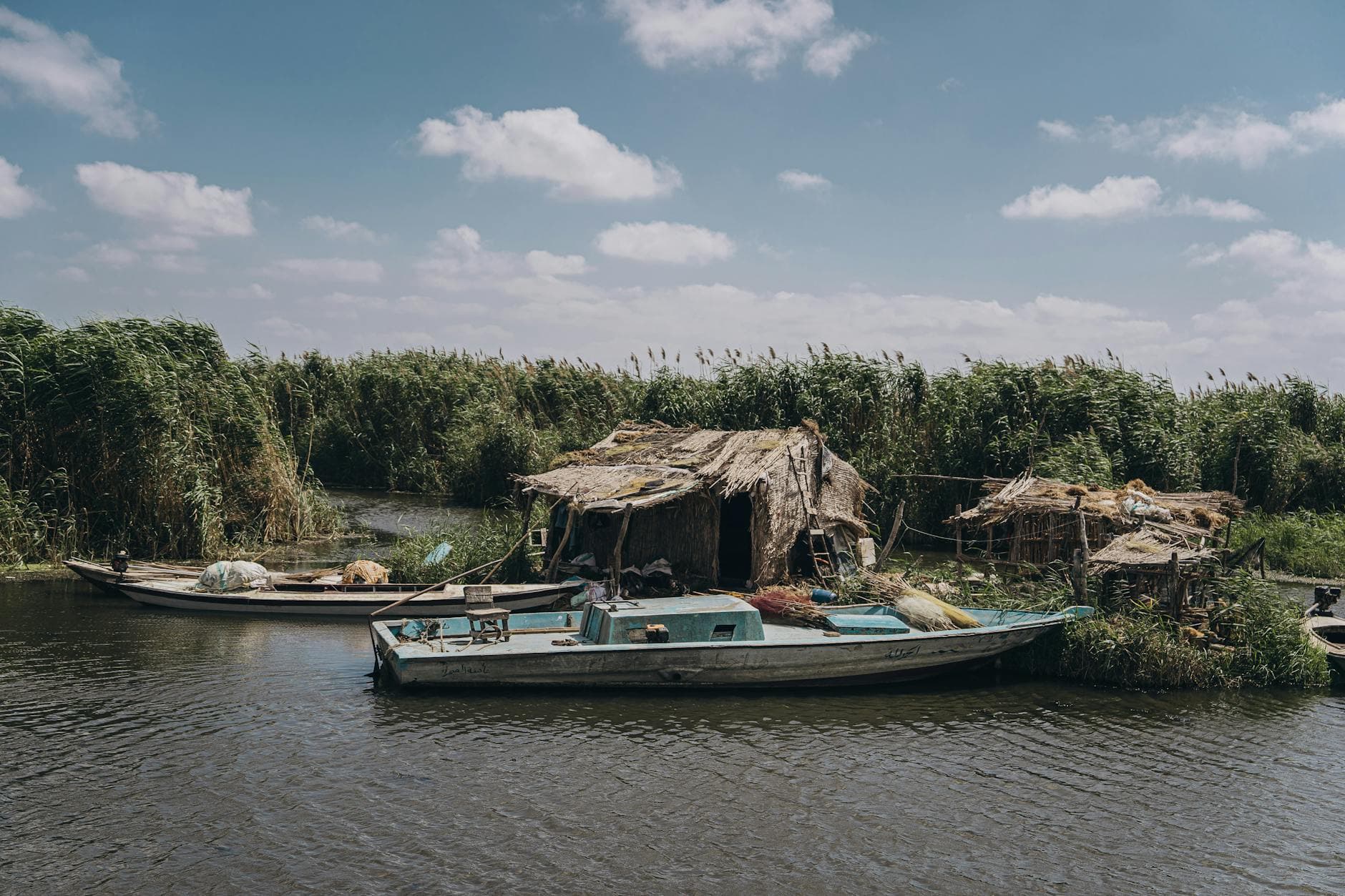
Napoleon landed in Egypt on July 1, 1798, with 38,000 soldiers and, critically, 167 scholars. The soldiers mostly lost. The scholars changed the world.
The Description de l'Egypte, the 23-volume encyclopedic record produced by the savants Napoleon brought with him, was completed in Paris between 1809 and 1828 and remains one of the most detailed surveys of any civilization ever produced. It contained the first scientific drawings of the Sphinx, showed that there was a buried temple between the paws four decades before Auguste Mariette excavated it, and introduced the word "Egyptology" to the European imagination. Without Napoleon's campaign, the Western obsession with pharaonic Egypt that drove the entire 19th-century excavation boom probably happens thirty years later, if at all.
But in Egypt itself, the campaign is remembered differently. The French occupied Cairo from July 1798 until June 1801. They were defeated at sea by Nelson at the Battle of the Nile (fought, confusingly, near Abukir and not on the Nile at all), outmaneuvered in Syria, and finally evacuated under British pressure. What they left behind was not empire but a disruption: a demonstration that a European power could reach the heart of the Ottoman world, which sent tremors through Cairo's political class and helped catalyze the rise of Muhammad Ali just four years after the French departed.
Every site connected to this campaign is also connected to at least two other chapters of Egyptian history. That is the point.
---
Cairo: The Citadel, the Institute, and the Street That Bears His Name
Napoleon made the Cairo Citadel his headquarters, which is worth sitting with for a moment. The Citadel was built by Saladin in 1176, modified by every major ruler of Egypt for the next six centuries, and perched on a spur of the Muqattam Hills specifically because it was militarily indefensible from below. Napoleon recognized this and occupied it for the same reason Saladin built it: height is authority in a flat city.
The French stripped out much of the Mamluk interior and established their Institut d'Egypte in a palace in Azbakeya (now the Ezbekiya area, near Ataba). That institute burned during the 1798 Cairo uprising, and the replacement building was destroyed again in a fire in 2011. The original savants' working notes survived neither catastrophe in full. What did survive is held in Paris.
What you walk through at the Citadel today is not primarily French. The dominant structure is the Muhammad Ali Mosque, completed in 1857, built by the Albanian Ottoman warlord who rose to power in the chaos following Napoleon's departure. It sits directly over the foundations of the Mamluk palace the French occupied. Muhammad Ali specifically demolished the existing Mamluk structures to build his own mosque, cementing his authority visually and literally. He was erasing the recent past to claim the deeper past for himself.
The Al-Nasir Muhammad Mosque, built 1318 to 1335 by a Mamluk sultan who began his reign at age nine, survived the French occupation largely because the French used it as a stable. This is not a small historical footnote. Using a mosque as a stable was a calculated insult that contributed directly to the October 1798 Cairo uprising, in which several hundred Egyptians were killed. The French response was to fire artillery from the Citadel walls into Al-Azhar mosque, where the resistance had gathered. Al-Azhar still bears repair patches from this today, though the mosque staff will not always volunteer this information to visitors.
---
Alexandria and Abukir: Where Napoleon's Egypt Campaign Actually Ended
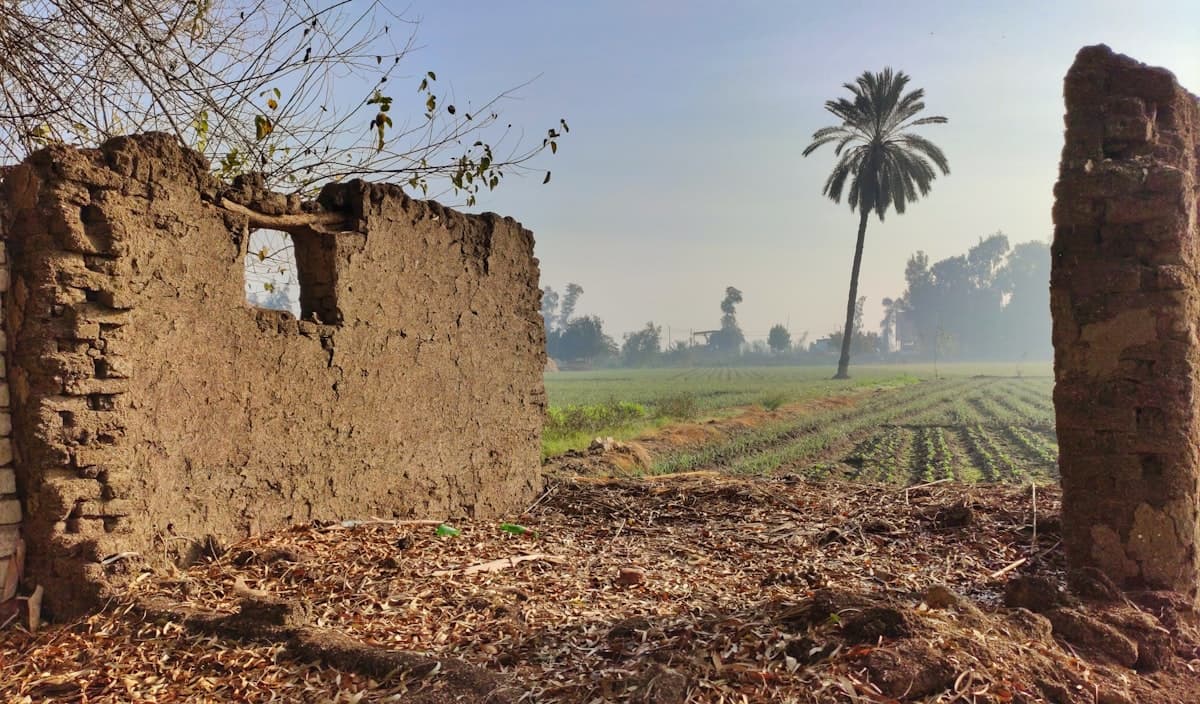
On August 1, 1798, Admiral Horatio Nelson found the French fleet anchored in Abukir Bay, 24km northeast of Alexandria. What followed is called the Battle of the Nile in every British history book, which has confused travelers ever since. The battle was in the Mediterranean, in the bay. Nelson destroyed eleven of the thirteen French ships of the line. Napoleon, who had already marched inland toward Cairo, was now stranded in Egypt with no naval support. He spent the next three years trying to make the occupation work before quietly sailing back to France, leaving his army behind.
Abukir today is a fishing village and a seafood destination for Alexandrians. The actual battle site is in the water. There is nothing to see except the bay itself, which is worth seeing. Sit at one of the waterfront restaurants, order whatever came in that morning, and look out at the water where 1,700 French sailors died. This is as good as battlefield tourism gets in Egypt.
Fort Qaitbay in Alexandria deserves your attention for a different reason. The fort was built in 1477 by Sultan Qaitbay on the exact site of the Pharos of Alexandria, the ancient lighthouse that stood there for sixteen centuries before an earthquake brought it down in 1303. The foundation stones of the lighthouse are literally in the walls of the fort. When Napoleon's forces took Alexandria on July 2, 1798, they occupied Qaitbay immediately. The fort that Mamluk engineers built from the rubble of one of the Seven Wonders of the Ancient World was then garrisoned by French Revolutionary soldiers. This is the kind of compressed timeline that Egypt does without effort.
The Rosetta Stone itself was found by French soldier Pierre-François Bouchard in July 1799 while French engineers were reinforcing a fort at Rosetta (now Rashid), a port city at the Nile Delta's western branch. After the French surrender in 1801, the British confiscated it under the Capitulation of Alexandria and shipped it to London, where it has been in the British Museum since 1802. The original is not in Egypt. The Rosetta National Museum holds a high-quality replica, and the fort where Bouchard found the stone, Fort Julien, is partially accessible and partially unremarkable. The town of Rashid itself, with its Ottoman merchant houses and Delta light, is worth the trip regardless.
---
The Connections: What Napoleon's Campaign Made Possible
Muhammad Ali came to Egypt in 1801 as part of an Albanian Ottoman military contingent sent to restore order after the French departure. By 1805 he was ruler of Egypt. By 1811 he had massacred the remaining Mamluk leadership at the Citadel in what is remembered as the Massacre of the Citadel. By 1820 he had sent armies into Sudan. He is, by general scholarly consensus, the founder of modern Egypt.
None of this trajectory is imaginable without the French disruption. Napoleon's campaign broke the existing Ottoman-Mamluk power balance sufficiently that a fast-moving Albanian soldier could exploit the vacuum. The Description de l'Egypte simultaneously showed the world that Egypt's ancient civilization was on a scale that justified serious scholarly and political investment, which drew European powers into sustained competition over the Nile Valley throughout the 19th century.
The Egyptian Museum in Tahrir Square, opened in 1902, is the direct institutional descendant of the collecting frenzy that the French campaign ignited. The Egyptology departments at the Louvre, the British Museum, and Berlin's Neues Museum all trace their founding collections to objects that moved through the networks the French campaign opened. The Rosetta Stone decipherment by Champollion in 1822 used the French scholars' meticulous copy of the text because the original was already in London. The entire genealogy of how the world learned to read hieroglyphics passes through a fort in Rashid.
---
Common Mistakes When Visiting Napoleon Egypt Campaign Sites
Following a standard Cairo tour and expecting Napoleon. The Citadel tours offered by most agencies focus entirely on the Muhammad Ali Mosque and skip the Mamluk structures entirely. Ask specifically for time in the Al-Nasir Muhammad Mosque and the Citadel Museum, which has French-period artifacts including maps and military equipment.
Skipping Rashid (Rosetta) entirely. The Rosetta Museum is small and the replica stone is a replica. But the town itself is one of the best-preserved Ottoman Delta cities in Egypt, with 22 merchant houses still standing, and the 45-minute trip from Alexandria costs almost nothing. Treating Rosetta as "just a replica" means missing the actual place.
Paying for a sound and light show anywhere on this itinerary. The Cairo Citadel sound and light show costs EGP 300 and delivers a narration you can read in forty-five minutes. There is no show at Abukir, which is the honest battlefield. Skip the shows.
Treating Abukir as a side note. Most Napoleon Egypt campaign guides give Abukir a paragraph. But this is where the strategic logic of the entire campaign collapsed. Spending an afternoon here, eating fish, and understanding that the French were effectively imprisoned in Egypt from August 1798 onward reframes everything that happened afterward. The occupation did not fail in the desert. It failed in that bay.
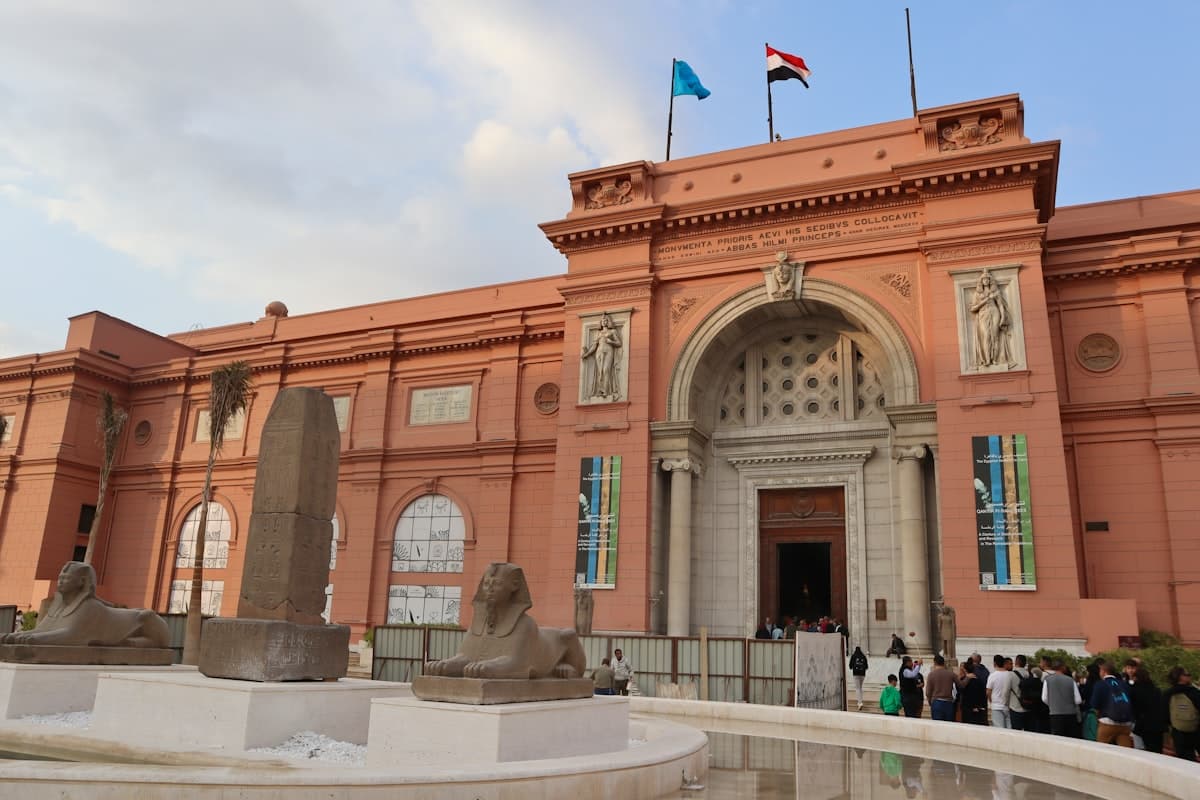
Assuming the Egyptian Museum's Napoleonic connections are labeled. The museum holds artifacts excavated partly as a result of momentum the French campaign created, but the interpretive signage does not make this explicit. Bring a specific reading list or a guide who knows this period. The Louvre App's Egyptian collection notes are actually useful here for cross-reference.
Going to Abukir by private tour car when the microbus is fine. The microbus from Alexandria's Raml Station to Abukir runs every twenty minutes and costs EGP 15. The journey takes forty minutes and passes through working Delta neighborhoods. The EGP 300 private car adds nothing except air conditioning.
Expecting Egyptians to be interested in Napoleon. The campaign is a major chapter in European and American history curricula. In Egypt, it is a three-year foreign occupation that ended in failure and left behind some good maps. Most Egyptians with historical knowledge of the period are more interested in Muhammad Ali, who actually changed the country, than in Napoleon, who passed through it.
---
Practical Tips
For Cairo sites, start at the Citadel no later than 8:30am before tour groups arrive from the cruise ships and Nile hotels. The Al-Nasir Muhammad Mosque is usually empty by 9am and the light through its Gothic-Mamluk windows (the window frames were brought from a Crusader church in Acre) is best in the morning.
Alexandria's Fort Qaitbay is most atmospheric in the late afternoon when the Mediterranean light goes sideways across the stone. The fort closes at 4:30pm, so aim to arrive by 3pm at the latest. The Corniche between the fort and downtown Alexandria is a forty-minute walk that passes the site of the ancient royal quarter of the Ptolemies. Almost nothing of that period is above ground, but it is worth knowing you are walking over it.
For Rashid, go on a weekday. The town is popular with Egyptian domestic tourists on Fridays and Saturdays, and the Ottoman houses are more accessible with fewer crowds. The Amasyali House and the Rashid National Museum are the two essential stops; budget two hours for both.
Dress conservatively for all sites: covered shoulders and knees. The Citadel mosques require shoes to be removed. Bring a bag to carry them or wear slip-ons.
A specific book worth reading before this itinerary: Juan Cole's "Napoleon's Egypt: Invading the Middle East" (2007), which uses French and Arab sources together and is far more honest about the violence of the occupation than most popular accounts.
Frequently Asked Questions
The Weekly Dispatch
More on Egypt, every Friday.
Cultural depth and places most guides never mention.
No spam. Unsubscribe anytime.