Napoleon's Egypt Campaign Sites: The Full Guide
Napoleon brought 167 scientists to Egypt in 1798 and they rewrote Western knowledge of the ancient world. The battle sites are almost never visited. They should be.

Quick Facts
- Best time to visit
- October to February. Delta humidity is extreme in summer and the coastal sites offer almost no shade. Winter light on the bay at Abu Qir is worth the timing alone.
- Entrance fee
- Rosetta National Museum: EGP 100 (approx $3 USD). Fort Qaitbay Alexandria: EGP 60 (approx $2 USD). Abu Qir coastal area: free. Fort Julien Rosetta: free.
- Opening hours
- Rosetta National Museum: daily 9am to 5pm. Fort Qaitbay: daily 9am to 4pm. Abu Qir: open coastal area, no gate or hours restriction.
- How to get there
- From Cairo to Rosetta: microbus from Midan Ghamra, EGP 35 to 50, three to four hours. Abu Qir from Alexandria: coastal tram from Raml Station to Abu Qir terminus, EGP 5, then tuk-tuk EGP 10 to 15. Hired driver from Alexandria for full-day Delta circuit: EGP 600 to 900.
- Time needed
- Abu Qir alone: two hours. Rosetta full exploration including Ottoman houses: one full day. Combined Napoleon Delta circuit: two days from Alexandria base.
- Cost range
- Budget EGP 400 to 700 per day covering transport, entry, and street food. Mid-range EGP 1,200 to 2,000 per day with private driver and local guide.
Quick Facts
Best time to visit: October to February. The Delta sites bake in summer and the logistics of reaching Abu Qir or Rosetta by public transport are genuinely unpleasant above 35°C.
Entrance fees: Rosetta (Rashid) National Museum: EGP 100 (approx $3 USD). Fort Qaitbay Alexandria: EGP 60 (approx $2 USD). Abu Qir battlefield area: free access, no ticketed site. Cairo's Institut d'Égypte reconstruction: not open to independent visitors as of this writing; contact the Egyptian Scientific Council for group arrangements.
Opening hours: Rosetta National Museum, daily 9am to 5pm. Fort Qaitbay, daily 9am to 4pm. Abu Qir is an open coastal area with no gate.
How to get there: From Cairo, microbuses to Rosetta depart from Midan Ghamra, roughly EGP 35 to 50 one way, three to four hours. For Abu Qir, take the Alexandria coastal tram from Raml Station to the Abu Qir terminus, EGP 5, then a tuk-tuk to the shoreline, EGP 10 to 15. A hired driver from Alexandria for a full day covering Abu Qir, Rosetta, and the Corniche sites runs EGP 600 to 900.
Time needed: Abu Qir alone, two hours. Rosetta, a full day if you walk the Ottoman merchant houses. Combined Napoleon circuit from Alexandria, one full day minimum, better as two.
Cost range: Budget EGP 400 to 700 per day covering transport, entry, and food. Mid-range EGP 1,200 to 2,000 per day with a private driver and a guide.
---
Why This Place Matters
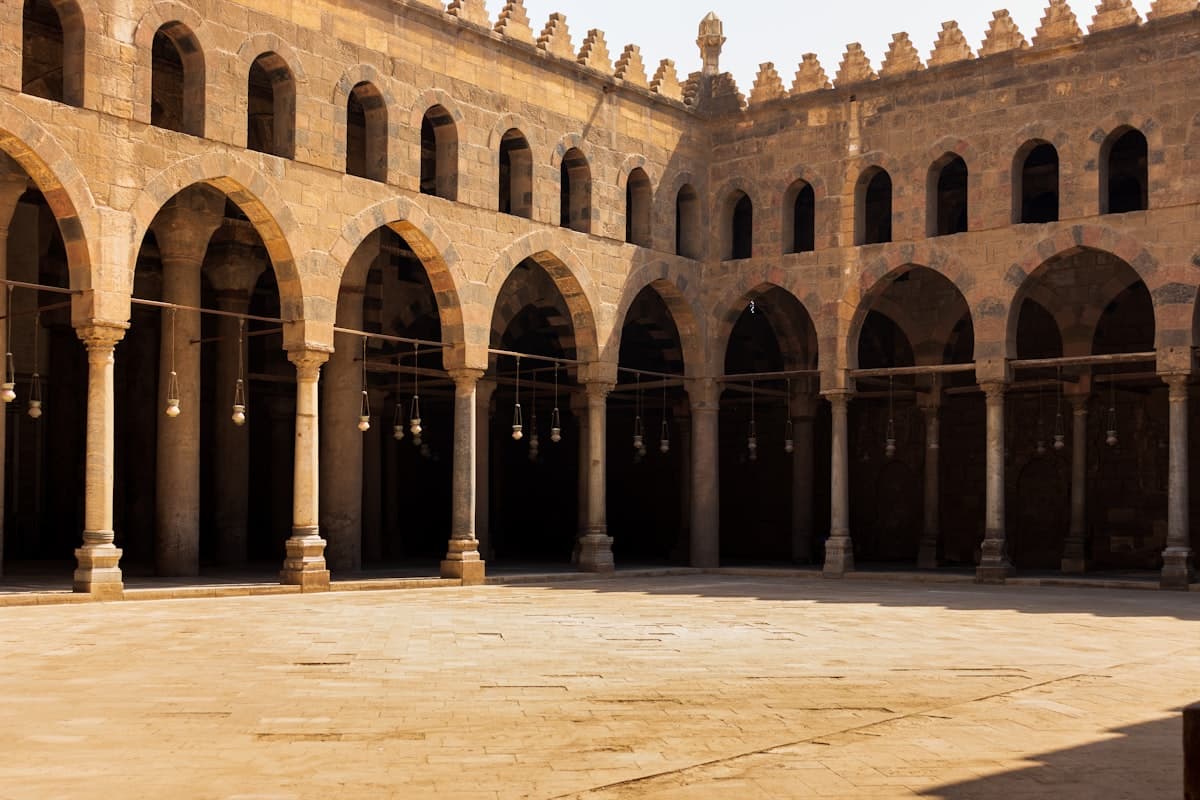
Napoleon arrived in Egypt in July 1798 with 54,000 soldiers and, unusually for a conquering army, 167 scientists, engineers, artists, and linguists. He called them the Commission des Sciences et des Arts. Within three years, they had measured every monument from Alexandria to Aswan, catalogued 3,000 years of plant and animal life, and begun producing the Description de l'Égypte, a twenty-three-volume encyclopedia that took until 1829 to complete and effectively invented Egyptology as a discipline. The soldiers went home in 1801. The knowledge stayed.
The campaign lasted thirty-seven months. In that time it produced the Rosetta Stone (found by a French soldier digging fortifications near Rashid in July 1799), triggered the first serious European scientific examination of the pyramids, and set in motion the chain of events that would end Mamluk rule in Egypt permanently. It also killed roughly 15,000 French soldiers, mostly from plague and dysentery rather than battle.
When people talk about the Napoleon Egypt campaign, they usually mean one of two things: the romantic mythology of the pyramids speech (which he may never have actually given), or the Rosetta Stone, now in London. The actual sites where this campaign unfolded, where the naval battle that destroyed French ambitions was fought, where Kleber was assassinated, where the Description de l'Égypte was compiled, are almost entirely unvisited. This guide covers where to go and what you will actually find.
---
Abu Qir: Where Napoleon Won and France Lost
Two battles happened at Abu Qir, a sandy headland seventeen kilometers east of Alexandria where the Nile Delta meets the Mediterranean. The first, on July 25, 1799, was a French land victory so complete it rehabilitated Napoleon's reputation after the Egyptian campaign's mounting disasters. He drove an Ottoman force of 18,000 men into the sea, literally: thousands of Ottoman soldiers drowned attempting to swim back to their ships rather than surrender. French casualties were around 900. Ottoman deaths exceeded 11,000.
The second battle at Abu Qir, fought fourteen months earlier on August 1 to 2, 1798, was the opposite story. Admiral Horatio Nelson located the French fleet anchored in Abu Qir Bay and attacked at dusk, a move the French commander Brueys considered impossible given the shallow water and failing light. Nelson had noticed that if the French ships had deep enough water on their seaward side to anchor safely, there was room for British ships to pass between them and the shore. He was right. By morning, eleven of thirteen French ships of the line had been captured or destroyed. Brueys was killed on his flagship, the Orient, when it exploded, an explosion reportedly heard in Alexandria seventeen kilometers away. Napoleon and his army were effectively stranded in Egypt from that moment.
Today Abu Qir is a fishing town with good seafood restaurants on the waterfront and almost no acknowledgment of what happened offshore. The bay looks ordinary. There is no marker, no monument. Divers have located the wreck of the Orient in about ten meters of water and recovered bronze cannons and personal objects from the crew, some of which are in the Alexandria National Museum. If you go, go for the grilled mullet and the understanding of what that explosion meant: France's Egyptian adventure was finished before it properly began, they just didn't know it yet.
---
Rosetta: The Stone Was Found Here, But Stay for the Houses
Everyone knows the Rosetta Stone was found near Rosetta (Rashid in Arabic). Almost no one makes the trip.
The stone itself, a granodiorite stele inscribed with a priestly decree in three scripts (hieroglyphic, Demotic, and Greek), was found in July 1799 by a French officer named Pierre-François Bouchard, who was supervising the demolition of an old wall to expand Fort Julien. He recognized that it might be significant. He was right in a way he could not have imagined: the parallel texts allowed Thomas Young and Jean-François Champollion to crack the hieroglyphic code, effectively reopening 3,000 years of Egyptian writing to the world. The British seized the stone when the French surrendered in 1801, under terms Napoleon's generals protested bitterly. It has been in the British Museum since 1802.
Fort Julien, where it was found, still exists about five kilometers east of Rosetta town. It is not well signposted and receives almost no visitors. The structure is largely Ottoman-era, built on earlier foundations, patched and rebuilt across centuries. You can stand at the approximate location of the discovery, which is marked by a small plaque that looks like an afterthought, because it is.
But Rosetta's real reward is the Ottoman merchant houses in the old town. Seventeen of them survive, built between the seventeenth and eighteenth centuries from a distinctive local technique of alternating red brick and black basalt that appears nowhere else in Egypt. The Sinnari House, the Arab Killy House, the Amasyali House: each one is a vertical labyrinth of mashrabiyya screens, painted ceilings, and courtyard wells. Napoleon's soldiers were billeted in houses like these. The Commission scholars sketched them. They appear in the Description de l'Égypte. Walking through them now, the connection between the campaign's documentary ambitions and the actual texture of Delta life is immediate and physical in a way no museum exhibit replicates.
The Rosetta National Museum, installed in a well-restored Ottoman house, has a replica of the Rosetta Stone and reasonable contextual exhibits about the campaign and the Delta's history. It costs EGP 100, takes about ninety minutes, and is genuinely worth it. The replica stone is better lit than the original in London, where it sits in a glass case surrounded by schoolchildren.
---
Cairo: The Institut d'Égypte and What Burned
Napoleon founded the Institut d'Égypte in Cairo in August 1798, modeled on the Institut de France in Paris, and housed it in a confiscated palace near what is now Tahrir Square. It became the operational center for the Commission scholars: the place where specimens were catalogued, manuscripts studied, and the Description de l'Égypte compiled. The original building housed one of the most significant collections of primary research material from any scientific expedition in history.
In December 2011, during the political unrest following the revolution, the Institut building caught fire. An irreplaceable archive of maps, manuscripts, and the original working documents of the Commission, totaling approximately 200,000 items, was either burned or lost in the chaos. Images of scholars forming human chains to pass books out of the burning building circulated globally. What survived was catalogued and moved to a reconstructed facility. The loss is not fully quantifiable.
The rebuilt Institut is not a tourist attraction in any conventional sense. It is a working academic institution. But the site, on Qasr al-Aini Street, is part of the Napoleon Egypt campaign's physical footprint in Cairo, and the story of what was lost in 2011 connects directly to the fragility of historical memory in a country that has been accumulating history faster than it can protect it.
For the Cairo portion of the campaign, the more accessible site is the Citadel, specifically the Mosque of Muhammad Ali, whose construction was made possible by the massacre of the Mamluk leaders in 1811. Muhammad Ali, an Albanian officer who came to Egypt with Ottoman forces to expel the French, used the chaos of the post-campaign period to eliminate his rivals. He invited Mamluk leaders to a celebration at the Citadel and had them killed in the narrow lane between the gates, a passage still called the Corridor of the Mamluks. The mosque he eventually built over the Citadel's highest point is visible from almost everywhere in Cairo. The campaign created the conditions for it.
---
The Connections
The French did not arrive in an empty landscape. They occupied a country that had been under Mamluk rule since the thirteenth century, and under Ottoman suzerainty since 1517, layered over a Coptic population that still spoke a liturgical language descended from ancient Egyptian, and a built environment where mosques stood on the foundations of churches that stood on the foundations of temples.
Napoleon understood this, or tried to. He issued proclamations in Arabic claiming respect for Islam, called himself a friend of the Muslim faith, and briefly toyed with converting to Islam before concluding the requirement to give up wine made it impractical. His scholars documented Coptic manuscripts and Islamic architecture with equal seriousness. The Description de l'Égypte contains detailed surveys of medieval Cairo that are now primary sources for buildings subsequently destroyed.
The campaign also accelerated a connection between Egypt and European medicine. The French military physician Dominique-Jean Larrey developed triage medicine during the Egyptian campaign, treating soldiers under conditions that forced systematic prioritization of wounds by severity. He performed over 200 amputations during the battle of Abu Qir alone. Modern emergency medicine traces one of its direct lineages to a field tent in the Delta.
Rosetta itself sits at the mouth of the western branch of the Nile, on a site occupied since at least the ninth century. It was a major port before Alexandria's commercial dominance was restored under Muhammad Ali. The Ottoman houses where Napoleon's officers slept were built by merchants who traded grain, linen, and rice across the Mediterranean. When the campaign ended and the French left, those merchants continued. The Delta absorbed the occupation and moved on, as it had absorbed Romans and Byzantines and Arabs before them.
---
Common Mistakes
Treating this as a purely military history. The French soldiers are the frame, not the subject. The Commission scholars are the reason this campaign matters intellectually. Read at least a summary of the Description de l'Égypte before you go. It reframes everything you see.
Going to Abu Qir only for the battlefield. There is no battlefield to see. It was a naval engagement, the evidence is underwater, and the town itself is a functional fishing port without interpretive infrastructure. Go because the seafood is excellent and the bay at dusk is worth understanding. Do not go expecting signage or drama.
Spending money on the Alexandria National Museum's Napoleon section before visiting Rosetta. The Alexandria museum has campaign artifacts, but they are better contextualized in Rosetta where the objects actually come from. Do Rosetta first.
The sound and light show at the Pyramids. Directly relevant here because every Napoleon Egypt tour package includes it, on the theory that Napoleon gave his soldiers a speech here. The show costs EGP 350, lasts forty-five minutes, and says nothing about the campaign that this article has not already told you. The pyramids are worth seeing at night for entirely different reasons. The show is not one of them.
Ignoring the Ottoman houses in Rosetta to focus on the Stone. The Stone is not here. A replica is here. The houses are irreplaceable and largely unvisited. Reverse your priorities.
Assuming the Institut d'Égypte is accessible. It is not a walk-in museum. Contact the Egyptian Scientific Council (majlisalilm.eg) well in advance if you want any kind of access. Showing up and hoping for the best will not work.
Going in July or August. The Delta in summer is genuinely difficult. The humidity is extreme, the transport is crowded, and the sites offer almost no shade. October through February, the light is better anyway.
---
Practical Tips
The most useful single purchase for this trip is a copy of Juan Cole's "Napoleon's Egypt: Invading the Middle East," which is available in Cairo bookshops and online. It is specific, revisionist in the right ways, and gives you the Egyptian perspective on the occupation rather than the French one.
For the Rosetta houses, a local guide hired through the Rosetta National Museum for EGP 150 to 200 will open buildings that are otherwise locked. Worth every pound. The city sees few foreign visitors and the guides are genuinely knowledgeable rather than rehearsed.
The Abu Qir tram from Alexandria is one of the more atmospheric rides in Egypt: an old coastal line running through beach towns, past Ottoman forts, along a shore that has been strategically contested since Alexander founded the city. Take it both ways rather than returning by taxi.
If you want to connect the campaign to Cairo sites, the sequence that makes historical sense is: start at the Citadel to understand Mamluk Egypt before the French arrived, then the old Institut d'Égypte site on Qasr al-Aini, then the Egyptian Museum where campaign-era artifacts and Napoleonic-period documentation of pharaonic objects are held. The museum's ground floor contains objects that the Commission scholars drew and measured, which were still in situ in temples at the time. Seeing the Description de l'Égypte engravings alongside the actual objects is genuinely instructive.
For Abu Qir diving to see the Orient wreck, contact Alexandria Diving Center, which operates guided dives to the battle site. Certification required, costs approximately EGP 800 to 1,200 for a guided dive including equipment.
Frequently Asked Questions
The Weekly Dispatch
More on Egypt, every Friday.
Cultural depth and places most guides never mention.
No spam. Unsubscribe anytime.