Ottoman Cairo and Mohamed Ali: A Cultural Guide to the Citadel
Mohamed Ali demolished the Citadel's medieval Mamluk palaces to build his mosque. The rubble he used as fill still sits beneath your feet.

Audio Guide: Ottoman Cairo and Mohamed Ali: A Cultural Guide to the Citadel
Quick Facts
- Best time to visit
- October to March for manageable temperatures and sharp light. Early morning (8 to 10am) any day to avoid tour groups. Friday morning for the atmosphere of the call to prayer across the compound.
- Entrance fee
- EGP 450 (approx $9 USD) for foreign adults, EGP 225 for foreign students with valid ID. Covers the full Citadel complex including Mohamed Ali Mosque, Military Museum, and Carriage Museum.
- Opening hours
- Daily 8am to 5pm. The Mohamed Ali Mosque closes to tourists during Friday prayers, approximately 12pm to 1:30pm.
- How to get there
- Metro to Sadat station then minibus 72 (EGP 5). Uber from central Cairo EGP 60 to 90. Taxi EGP 50 to 80. No direct metro stop at the Citadel.
- Time needed
- 2 hours minimum for mosque and main courtyard. 4 hours for full complex including Military Museum, al-Nasir Muhammad Mosque, and northern walls walk.
- Cost range
- Budget EGP 600 to 900 per day including transport and entry. Mid-range EGP 1,500 to 2,500 adding lunch and supplementary museum visits.
Quick Facts
Best time to visit: October to March, when the light is sharp and the heat is manageable. Friday mornings bring the call to prayer echoing across the full compound, which is worth timing your visit around.
Entrance fees: EGP 450 for foreign adults (approx $9 USD), EGP 225 for foreign students with valid ID. The ticket covers the full Citadel complex including the Mohamed Ali Mosque, the Military Museum, and the Carriage Museum. Buy at the main gate; no online booking required.
Opening hours: Daily 8am to 5pm. The mosque itself closes briefly during Friday prayers, roughly 12pm to 1:30pm.
How to get there: Metro to Sadat station on Line 1 or 2, then minibus number 72 from Midan Tahrir heading toward the Citadel (EGP 5). Taxis from central Cairo run EGP 50 to 80 depending on traffic. Uber is consistent at EGP 60 to 90. Do not accept the first quoted price from tuk-tuk drivers outside the metro, who will ask EGP 200.
Time needed: Two hours minimum for the mosque and main courtyard. Four hours if you want the National Military Museum, the Police Museum, and a walk along the northern walls with the view toward Islamic Cairo.
Cost range: Budget EGP 600 to 900 for the day including transport and entry. Mid-range EGP 1,500 to 2,500 if you add lunch at one of the restaurants below the Citadel on Salah Salem Road.
---
Why This Place Matters
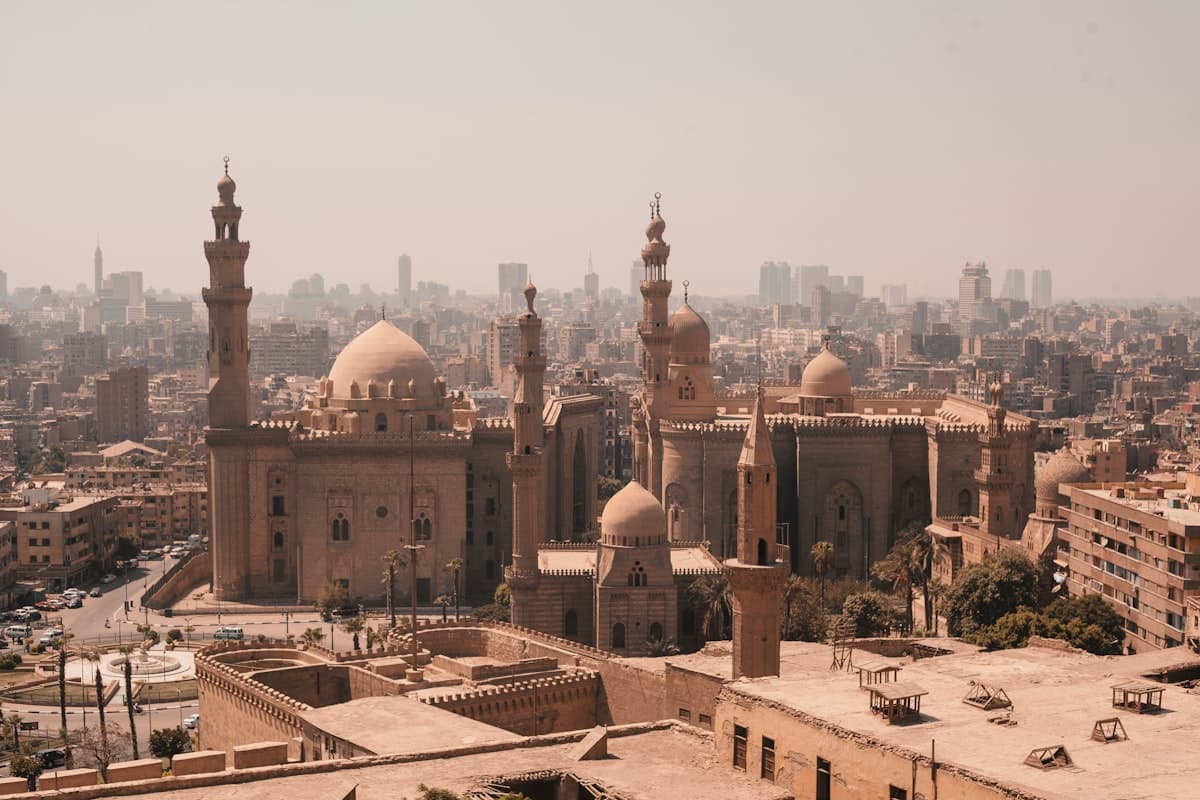
Mohamed Ali Pasha arrived in Egypt in 1801 as a junior officer in an Ottoman Albanian regiment sent to push out the French after Napoleon's failed campaign. Within four years he had outmaneuvered the Ottoman governor, the Mamluk beys, and the British simultaneously. By 1805, the population of Cairo had effectively acclaimed him as ruler, an event with no precedent in Ottoman provincial governance. He was not supposed to be here. He was certainly not supposed to stay.
The Citadel he inherited had been the seat of Egyptian power for six hundred years, built by Saladin in 1176 on a spur of the Muqattam Hills to defend against Crusader threats that never actually materialized from that direction. Saladin used its elevated position to control both the Nile and the desert approaches. The Mamluks who succeeded him added palaces, mosques, and barracks across seven centuries. When Mohamed Ali moved in, he found a medieval fortress city, dense with Mamluk architecture, carved stone, and the institutional memory of a ruling class he needed to destroy.
He destroyed it methodically. The massacre of the Mamluk leaders in 1811, lured into the Citadel under a pretext of a celebration for his son and then shot and cut down in the narrow lane still known as the Well of the Mamluks, is the famous event. Less discussed is the systematic demolition of the Mamluk palaces that followed. Mohamed Ali needed stone, and he used theirs. The rubble of the Great Ablaq Palace of al-Nasir Muhammad, which had stood since 1315 and was considered one of the most refined structures in the medieval Islamic world, now sits as fill beneath the marble courtyard of the mosque that bears Mohamed Ali's name.
This is Ottoman Cairo history in its most literal form: one civilization's foundations literally compressed under another's floor.
---
The Mosque That Looks Like Istanbul But Isn't
The Mohamed Ali Mosque was designed by the Greek-Greek architect Yusuf Bushnaq and completed in 1848, three years after Mohamed Ali's mind had already deteriorated from dementia and one year before his death. Mohamed Ali never saw the finished building clearly. His son Ibrahim, who died four months before him, had effectively governed Egypt in his final years.
The design is deliberately Ottoman imperial in style: a large central dome flanked by four smaller domes, two minarets in the Turkish pencil style, and an alabaster-clad courtyard with a central ablution fountain. The alabaster came from Beni Suef in Upper Egypt, which is why Egyptians call it the Alabaster Mosque. The overall silhouette was intended to announce that Egypt was, formally, an Ottoman province under an Ottoman-affiliated dynasty. The political messaging was architectural.
What Bushnaq built, however, is not quite Istanbul. The proportions are heavier, the interior light is warmer, and the painted ceiling in the Ottoman baroque style, all swirling medallions and gilded arabesques, reads as Cairo even when it is quoting Constantinople. The clock in the courtyard, a gift from French King Louis-Philippe in exchange for the obelisk now standing in the Place de la Concorde in Paris, has never worked. Egyptian guides have multiple theories about why. None of them are verified.
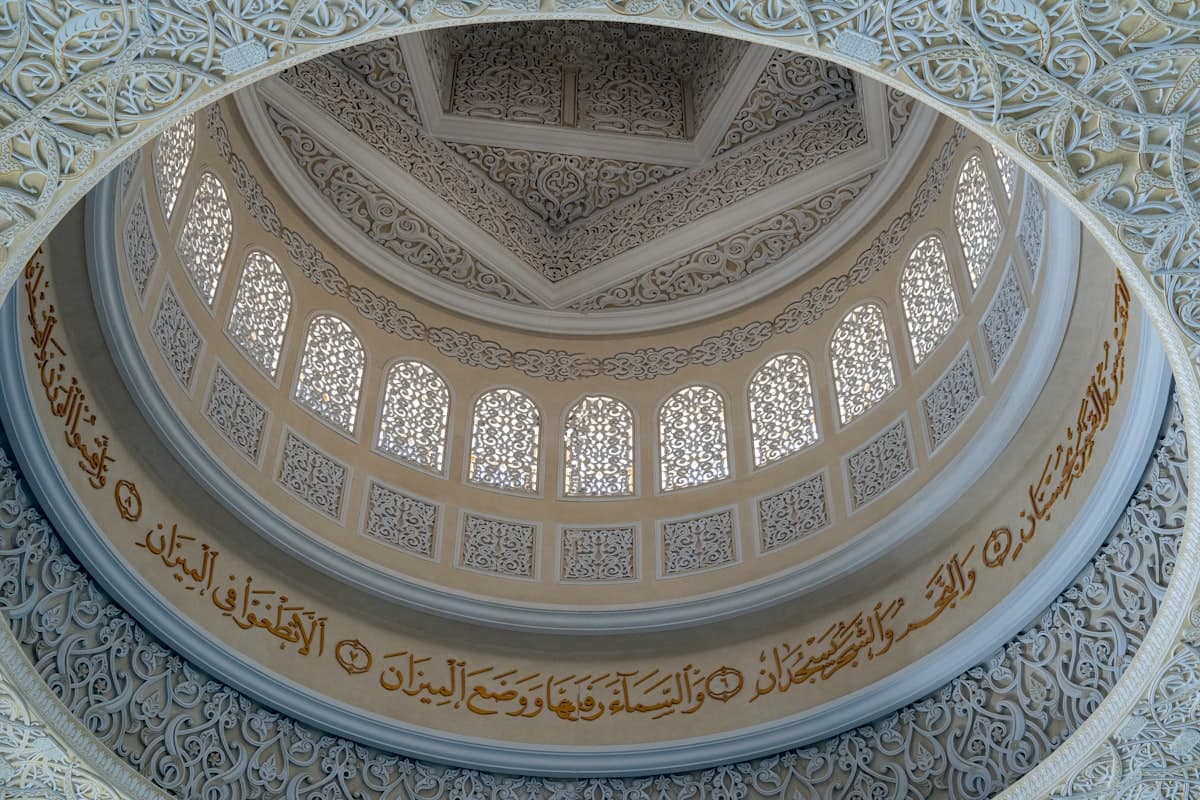
Stand at the qibla wall facing Mecca and look up. The calligraphy around the drum of the main dome was executed by a single calligrapher from Istanbul whose name has not survived in any document held by the Egyptian Museum or the Islamic Art Museum. His work is there. His name is not. This is routine in the history of Egyptian monumental building. The patrons survive; the craftsmen disappear.
---
What Survives of the Mamluks, and Where to Find It
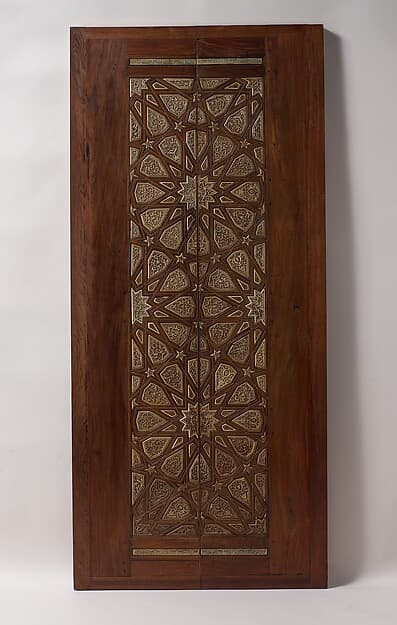
The demolition was not total. One Mamluk structure survived inside the Citadel compound: the Mosque of al-Nasir Muhammad ibn Qalawun, built in phases between 1318 and 1335. It sits slightly downhill from the Mohamed Ali Mosque, less visited, and in considerably worse condition. The minarets are Mamluk in their lower sections and were capped with Gothic stonework, possibly stripped from Crusader churches in Palestine and incorporated here as trophies. This is not speculation; the carved stone bosses on the upper minaret sections have been identified by architectural historians as originating from the Church of Saint John in Acre.
The mosque's interior is empty now, stripped of its marble by the Ottoman governors before Mohamed Ali arrived, but the carved stone ceiling of the entrance porch is intact. Nobody is standing in front of it taking photographs. The tour groups walk past it entirely to reach the Mohamed Ali Mosque, which is the correct destination on their itinerary.
The Well of the Mamluks, where the bodies were allegedly thrown after the 1811 massacre, is a narrow passage in the northern section of the complex that is technically within the Citadel grounds but not on any standard tour route. It is marked with a small sign in Arabic only. You will need to ask a guard, in Arabic or in patient mime, to point you toward it. The passage smells of old stone and pigeons, and there is nothing dramatic to see. The weight of it is entirely historical.
---
The Connections: Six Layers Under One Hill
The Muqattam spur on which the Citadel sits was not chosen arbitrarily. It sits above the ancient water channels that fed pharaonic Memphis, the capital that predated Cairo by three thousand years. The limestone quarries that supplied Giza are visible from the Citadel's eastern walls, close enough that Middle Kingdom administrators would have used this same ridge as a vantage point to track the barge traffic carrying stone toward the plateau.
When Saladin chose the site in 1176, his engineers noted the existing Byzantine and Coptic watchtower foundations in the rock. The Citadel's famous well, the Well of Joseph (which has nothing to do with the biblical Joseph and everything to do with a mistranslation of Salah ad-Din's name in medieval European chronicles), was cut 87 meters down through the Muqattam limestone by Crusader prisoners of war. It reaches a freshwater aquifer that is the same aquifer feeding the Roman-era cisterns beneath Coptic Cairo, nine kilometers away.
The view from the northern terrace of the Citadel shows you almost everything important about how Cairo was laid out across its different eras: the minarets of the Ibn Tulun Mosque (879 CE, the oldest mosque in Cairo with its original form intact), the Mamluk cemetery district of the City of the Dead, the spiral minaret of the Mosque of Ahmad ibn Tulun rising from the Sayyida Zeinab plateau, and, on a clear winter morning, the pyramids at Giza visible to the northwest. The Mohamed Ali guide to the Citadel usually covers one era. The view covers forty centuries simultaneously.
---
Common Mistakes
Arriving after 11am. Tour buses from Giza and Hurghada typically arrive between 10am and noon. By 11am on any day from October through April, the courtyard of the Mohamed Ali Mosque is at capacity with guided groups. Arrive at 8am when the gates open and you will have the alabaster courtyard largely to yourself, which is the only way to hear the acoustic quality of the space.
Paying for a guide at the gate. The men offering English-language tours at the Citadel entrance are not licensed. The licensed guides wear a Ministry of Tourism badge with a number and their photograph. Unlicensed guides frequently provide invented history delivered with great confidence. The story about Napoleon praying in the Mohamed Ali Mosque is anatomically impossible since Napoleon left Egypt in 1799 and the mosque was built starting in 1830.
Skipping the National Military Museum. It occupies the Harim Palace, the last significant Mamluk-era structure in the Citadel, built in the 14th century and used by Muhammad Ali's harem before conversion. The military exhibits are mediocre. The architecture of the halls is not.
The sound and light show at the Citadel costs EGP 300 and covers Ottoman Cairo history in the manner of a television documentary made in 1987. It tells you nothing you will not learn from reading a single good book on the subject, and the lighting effects are poor compared to the Karnak version. Skip it entirely.
Confusing Mohamed Ali Pasha with Mohamed Ali the boxer. This sounds absurd until you have stood beside someone explaining to their family that Cassius Clay was somehow connected to the building in front of them.
Leaving without walking the northern walls. The internal path along the northern fortifications, above the Bab al-Gedid gate, gives you a ground-level view of the city that the standard tourist circuit entirely misses. It takes twenty minutes and costs nothing beyond the entrance ticket.
Combining the Citadel with the Egyptian Museum on the same day. Both require serious attention. Doing both means doing neither properly. The Citadel pairs better with the Islamic Art Museum on Port Said Street, which is forty minutes away by taxi and where the Mamluk objects stripped from Citadel buildings during various renovations now live.
---
Practical Tips
Dress modestly for the mosque: shoulders covered, legs covered to the knee. Scarves are available at the entrance for women who need them, handed out without charge. Remove your shoes before entering the mosque proper; there are wooden racks at the door and a shoe-check attendant who expects EGP 5 as a tip.
The Citadel sits at 70 meters above the city. In summer, between May and September, the temperature on the exposed stone terraces is brutal. Bring water regardless of season; there is one small kiosk inside the compound selling water at EGP 15 per bottle, which is reasonable.
Photography is permitted throughout the complex including inside the Mohamed Ali Mosque, which is not true of all Cairo religious sites. The best light on the interior comes between 9am and 10:30am when the eastern windows illuminate the painted ceiling without glare.
If you speak any Arabic at all, use it with the guards. The Citadel guards are generally from Upper Egyptian families who have held these posts for generations, and a greeting in Arabic opens conversations that no English query will. One of them showed me a photograph of his grandfather standing at the same gate in a photograph dated 1953. The Citadel had the same opening hours then. Some things in Egypt are very consistent.
Frequently Asked Questions
The Weekly Dispatch
More on Egypt, every Friday.
Cultural depth and places most guides never mention.
No spam. Unsubscribe anytime.