Ottoman Cairo and Mohamed Ali: The Citadel Beyond the Postcard
Mohamed Ali built his alabaster mosque to erase the memory of the Mamluks he massacred in its courtyard. The building still works. Most visitors never notice.

Quick Facts
- Best time to visit
- October to March for cooler temperatures and cleaner air. Arrive at 8am to avoid tour groups that begin arriving around 10am.
- Entrance fee
- EGP 450 (approx $9 USD) for the Citadel complex including Mohamed Ali Mosque. Students EGP 225 with valid ID. Sultan Hassan and al-Rifa'i complex below is a separate EGP 160.
- Opening hours
- Daily 8am to 5pm. Mosque interiors close briefly during the five daily prayer times, each lasting roughly 20 minutes.
- How to get there
- Taxi from Downtown Cairo: EGP 60 to 80. Metro to Sayyida Zeinab (Line 2) then tuk-tuk EGP 20 to 30. Bus 72 from Ramses to Citadel gate: EGP 5.
- Time needed
- 3 hours minimum for the Citadel alone. Half-day (5 hours) if combining with Sultan Hassan and al-Rifa'i below.
- Cost range
- Budget EGP 600 to 900 per person including entry, transport, and street food. Mid-range EGP 1,800 to 2,500 with licensed guide and restaurant lunch.
Quick Facts
Best time to visit: October through March, when Citadel light is cooler and the haze over Cairo thins enough to see the Pyramids from the terrace.
Entrance fee: EGP 450 (approx $9 USD) for the Citadel complex including the Mohamed Ali Mosque. Students with valid ID pay EGP 225. The fee covers all open museums inside the walls.
Opening hours: Daily 8am to 5pm. The mosque stays open slightly later for prayers; tourists are asked to wait outside during prayer times, which last roughly 20 minutes.
How to get there: Taxi from Downtown Cairo runs EGP 60 to 80 depending on traffic and negotiation. The metro drops you at Sayyida Zeinab station (Line 2), from which it is a 20-minute walk uphill or a EGP 20 to 30 tuk-tuk ride. Bus 72 from Ramses runs directly to the Citadel gate for EGP 5 and is genuinely reliable.
Time needed: Three hours minimum for the mosque, the terrace, and the Military Museum. A full half-day if you include the Mosque of Sultan Hassan and the Mosque of al-Rifa'i directly below, which you should.
Cost range: Budget EGP 600 to 900 per person including entry, transport, and lunch at a local fuul cart near the Citadel gate. Mid-range EGP 1,800 to 2,500 if you add a guided tour and lunch at one of the restaurants along Salah Salem.
---
Why This Place Matters
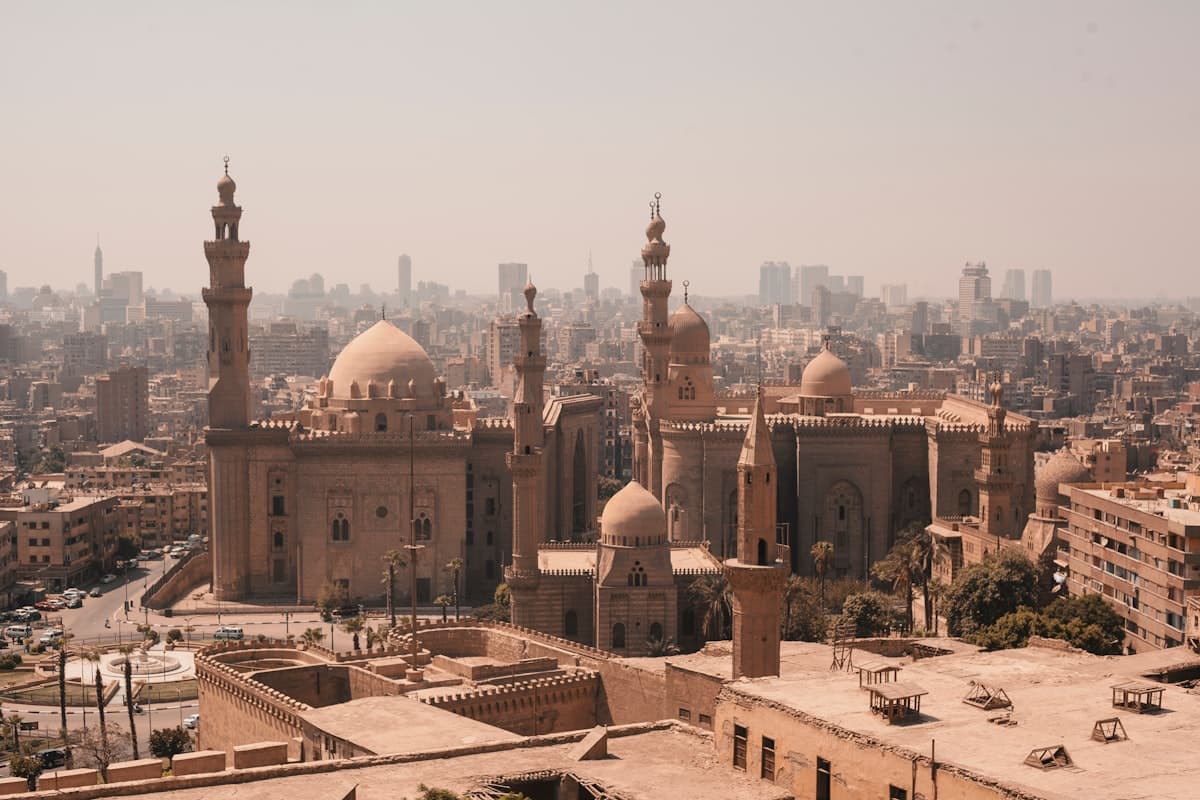
On March 1, 1811, Mohamed Ali Pasha invited 470 Mamluk beys to a celebration at the Citadel. He fed them, honored them, and then sealed the gates. His soldiers killed every one of them in the narrow passage between the Citadel's inner and outer gates, a corridor still called Darb al-Dabbagha. One Mamluk, Amim Bey, allegedly survived by jumping his horse from the Citadel wall into the city below. The story is almost certainly legend. The massacre is not.
That is the context for Mohamed Ali's mosque. He did not build it as an act of faith, or not only as one. He built it where Mamluk power had resided for five centuries, on ground they had fortified, in a city they had shaped, using craftsmen and an architectural idiom imported from Istanbul to make clear that the Mamluks were not only dead but replaced. The alabaster cladding, the Ottoman dome cascade, the Turkish-style minarets: every choice was a political statement dressed in stone.
Understanding this transforms what you see. The Mohamed Ali Mosque is not an expression of Egyptian Islam. It is an act of erasure built by an Albanian soldier who came to Egypt with Napoleon's retreating forces, stayed, seized power, and founded a dynasty that lasted until 1952. Egypt's Ottoman history does not sit neatly alongside its Pharaonic and Islamic stories. It consumed and redirected them.
The Citadel itself was begun by Saladin in 1176, on a spur of the Muqattam Hills that had been used as a quarry for Pyramid casing stones. The same limestone that once covered the Great Pyramid at Giza was stripped and used to build Cairo's defensive walls. The Citadel's position, overlooking the entire Nile Valley, made it the center of Egyptian political power for 700 years without interruption.
---
What You Will See: The Mosque of Mohamed Ali
The mosque took 18 years to build, from 1830 to 1848, and Mohamed Ali died the following year without ever seeing it finished to his satisfaction. The architect was Yusuf Bushnak, brought from Istanbul, and the design borrows directly from the Sultan Ahmed Mosque in that city. The central dome reaches 52 meters. The four minarets are Ottoman pencil-style, slender and vertical, unlike the squat Mamluk minarets you see throughout the rest of Islamic Cairo.
Inside, the scale is immediately felt. The interior is a single unified space under that central dome and four semi-domes, with hanging lamp clusters that were originally oil-fueled and now run on electricity but still create a pooling, layered light. The alabaster on the lower walls is not marble, though it resembles it. It comes from Beni Suef in Upper Egypt, roughly 120 kilometers south of Cairo, and the particular pale yellow-white coloring was chosen to suggest Ottoman grandeur while using Egyptian material. Make of that duality what you will.
Mohamed Ali's tomb sits in the mosque in a white marble enclosure to the right as you enter. It is understated for a man who reorganized Egypt's army, abolished the tax-farming system that had enriched Mamluk elites for centuries, sent the first Egyptian student missions to France, and built the cotton export economy that would make Egypt one of the wealthiest countries in Africa by the late nineteenth century. His ambition eventually made the Ottoman Sultan nervous enough to formally limit his authority to Egypt and Sudan in the 1840 Convention of London.
The courtyard clock tower is a gift from King Louis-Philippe of France, given in 1845 in exchange for the obelisk that now stands in the Place de la Concorde in Paris, taken from Luxor Temple in 1833. The clock has never worked properly. The obelisk has stood in Paris for nearly 190 years.
---
What Most Visitors Walk Past: The Citadel's Other Layers
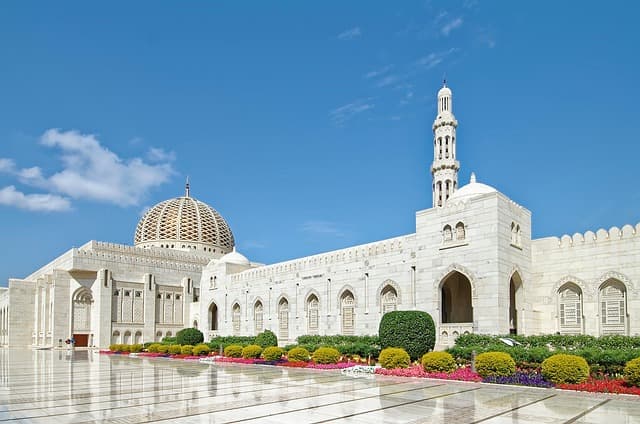
The Mohamed Ali Mosque dominates attention so completely that most visitors miss the other two mosques within the Citadel walls. The Mosque of Sultan al-Nasir Muhammad, built between 1318 and 1335, sits a short walk from Mohamed Ali's mosque and represents the Mamluk architecture that Mohamed Ali's building was designed to overshadow. Its minarets are covered in green and blue faience tile in a style that shows Persian and Central Asian influence, carried to Egypt along the same trade and slave routes that produced the Mamluks themselves.
The Mosque of Suleiman Pasha, built in 1528, is the earliest Ottoman mosque in Cairo, predating Mohamed Ali's by three centuries. It is smaller, quieter, and structurally more honest: you can see exactly how Ottoman builders adapted their Istanbul idiom to Egyptian materials. It is rarely visited even by people who have paid to enter the Citadel. This is a mistake worth correcting.
The Military Museum, housed in the former Harem Palace built by Mohamed Ali, contains a room dedicated to the 1973 October War that is more emotionally direct than most military museums anywhere in the region. Egyptians call it the Ramadan War or the crossing. The dioramas are dated in presentation but genuine in feeling. Allow 30 minutes.
On the northern terrace, particularly in the morning before the tour groups arrive, you can stand with Cairo spread below you: the minarets of al-Azhar to the northwest, the dome cluster of Sultan Hassan immediately below, the Pyramids of Giza visible on clear days to the southwest, and the desert edge of the Muqattam Hills behind you. Saladin chose this spot because nothing in the Nile Delta could be hidden from it. That strategic clarity is still palpable.
---
The Connections: Everything Below the Citadel
The two mosques directly at the base of the Citadel, Sultan Hassan and al-Rifa'i, are worth two hours of their own and are included in a separate entrance fee of EGP 160 for the complex. Sultan Hassan was built between 1356 and 1363 by a Mamluk sultan who was 14 years old when he first came to power, deposed twice, and assassinated before his mosque was finished. At the time of completion it was the largest mosque in the world by volume. The stones used for its foundation came partly from the outer casing of the Pyramids at Giza, a recycling practice so common in medieval Cairo that Mamluk chroniclers recorded it without comment.
al-Rifa'i sits directly opposite and was completed in 1912, though it was designed to look medieval. It contains the tombs of Egypt's last royal family, including King Farouk, who was buried here after dying in Rome in 1965, and Shah Mohammad Reza Pahlavi of Iran, who died in Cairo in 1980 after being given asylum by Anwar Sadat. A Pharaonic-era site, a Mamluk mosque, an Ottoman garrison citadel, and the tombs of a deposed Egyptian king and an exiled Iranian Shah all within a 300-meter radius. This is what the Ottoman Cairo history moment looks like when the layers are visible at once.
The neighborhood below the Citadel, historically called al-Darb al-Ahmar, contains some of the densest concentration of intact Mamluk architecture in the world, most of it unstabilized and partly inhabited. The Aga Khan Trust for Culture spent two decades restoring sections of it. Walking north from Sultan Hassan along Shari' al-Qalaa takes you through it at street level, past sabils, kuttabs, and the facades of Mamluk palaces with families living behind their medieval stone screens.
---
Common Mistakes
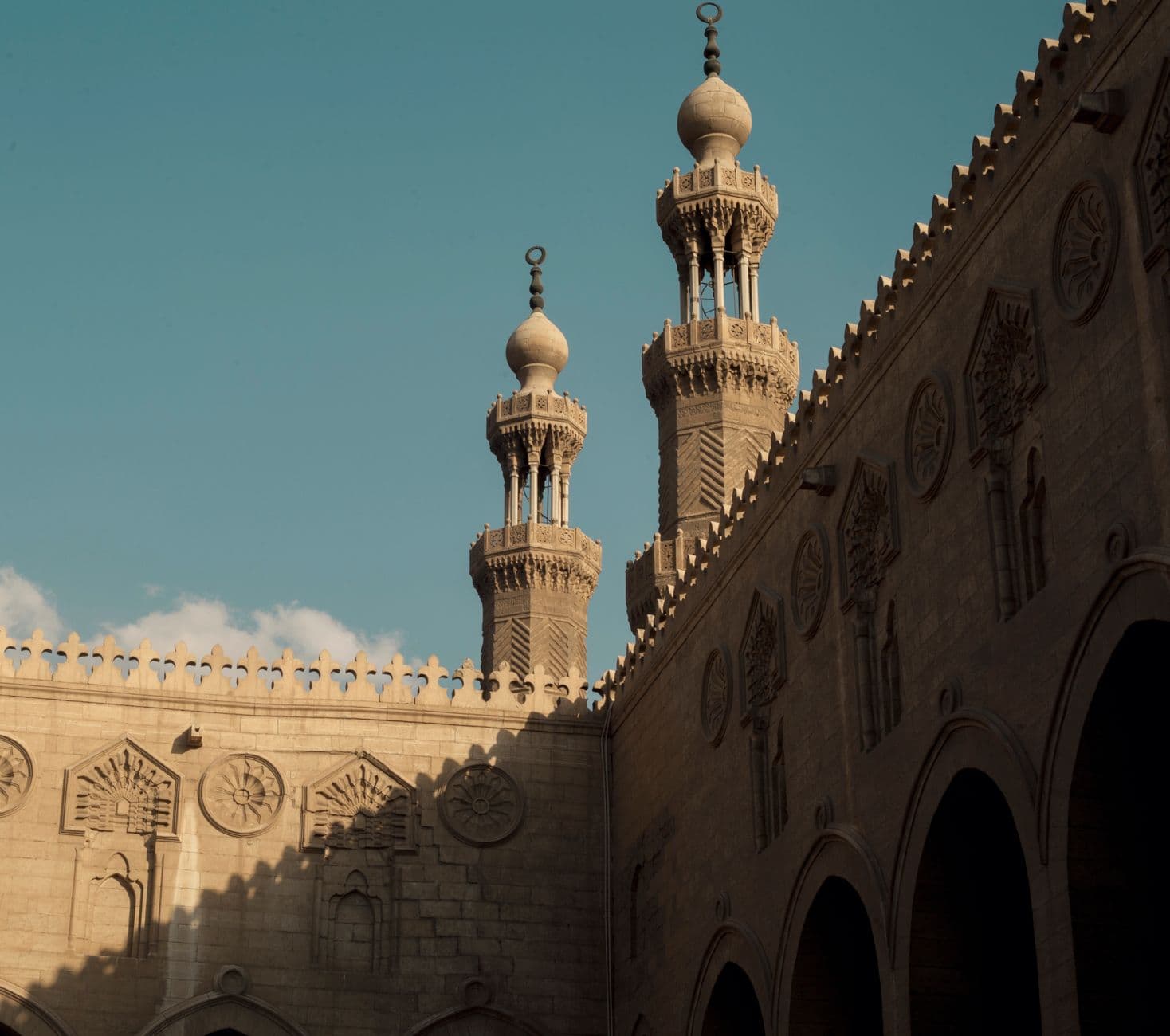
Arriving at 10am. The Citadel opens at 8am and the best light on the mosque's exterior is between 8am and 9:30am. After 10am the tour buses from Giza and Downtown arrive in convoys and the courtyard fills quickly.
Skipping the Suleiman Pasha Mosque. It is the oldest Ottoman mosque in Cairo by two centuries, smaller and less photographed than Mohamed Ali's, and therefore empty on most days. The mihrab tile work alone justifies the detour.
Taking the sound and light show. It runs four nights a week, costs EGP 400 per person, and narrates a version of Cairo's history that a competent Wikipedia article renders redundant. The Citadel at dusk, seen from the terrace for free during a late-afternoon visit, is significantly more interesting. Skip the show.
Paying a guide inside the Citadel gates without agreeing on a price first. Unofficial guides approach visitors in the courtyard and quote EGP 100 for a "quick tour" that expands to EGP 400 to 600 by the end. Either arrange a licensed guide through your hotel in advance, or use the Citadel's own signage, which was upgraded recently and is genuinely useful.
Missing the terrace. The viewing terrace on the northern side of the mosque complex is not marked on most tourist maps. Ask at the entrance for the "terrace viewing point" or follow the wall north past the Military Museum. The view justifies the detour in any weather.
Treating Sultan Hassan as an afterthought. Most Citadel visits include Sultan Hassan as a five-minute stop en route back to the bus. The mosque's interior entrance portal is 38 meters tall and remains one of the largest entrance gates built in the medieval Islamic world. Give it an hour.
Wearing shoes you cannot remove quickly. Both mosques require shoe removal and the surfaces inside are cold stone or carpet depending on the section. Slip-on shoes save time and dignity.
---
Practical Tips
Dress conservatively. The Citadel is a functioning religious site, not a heritage park. Women will be offered abayas at the mosque entrance if needed, but bringing a scarf saves the transaction. Men in shorts may be redirected.
Bring cash in Egyptian pounds. The ticket booth accepts cards intermittently. The vendors outside the gate do not.
The water available inside the Citadel is expensive by Cairo standards (EGP 25 to 35 per bottle). Bring your own from a kiosk below.
Combine the Citadel with an afternoon walk through al-Darb al-Ahmar rather than returning directly to your hotel. The street-level encounter with medieval Cairo that surrounds the Citadel is richer than any museum version of the same story. End at the Mosque of Ibn Tulun, 15 minutes on foot from Sultan Hassan, which is the oldest mosque in Cairo still standing in its original form and charges a separate EGP 100 entry fee that is entirely worth paying.
Crowds peak between 10am and 1pm on weekends and on Fridays. If you visit on a Thursday afternoon the Citadel is noticeably quieter. Avoid national holidays entirely if crowd management matters to you.
Photography inside the Mohamed Ali Mosque is permitted without a fee. Photography inside Suleiman Pasha Mosque may require a small additional fee, typically EGP 30, paid to the custodian on site.
Frequently Asked Questions
The Weekly Dispatch
More on Egypt, every Friday.
Cultural depth and places most guides never mention.
No spam. Unsubscribe anytime.