Ottoman Cairo and Mohamed Ali: The Citadel Guide You Need
Mohamed Ali built his alabaster mosque to erase every Mamluk trace from Cairo's skyline. He had 470 of their leaders massacred at the same fortress first.

Quick Facts
- Best time to visit
- October through March for tolerable temperatures. Early mornings in any season for crowds and light quality. Avoid midday in summer.
- Entrance fee
- EGP 450 (approx. $9 USD) for the full Citadel complex. Students with valid ID EGP 225. No separate fees for individual mosques inside.
- Opening hours
- Daily 8am to 4pm (November to March), 8am to 5pm (April to October). Limited mosque access Friday 11:30am to 1:30pm during prayers.
- How to get there
- Taxi from Downtown Cairo EGP 60 to 100. Uber or Careem are more price-transparent. Nearest Metro station is Sayyida Zeinab (Line 2), then 20-minute walk or EGP 3 microbus. Main entrance at Bab al-Gadid on Salah Salem Street.
- Time needed
- 3 hours minimum for the two main mosques and viewing platform. 4 to 5 hours to include the lower enclosure and Military Museum building.
- Cost range
- Budget day EGP 600 to 900 including transport and entry. Mid-range EGP 1,500 to 2,500 combining Citadel with lunch and a second site.
Quick Facts
Best time to visit: October through March. The Citadel sits on a limestone spur 75 meters above the city, which means full exposure to summer heat and a genuine wind-chill problem in January mornings.
Entrance fee: EGP 450 (approx. $9 USD) for the Citadel complex including the Mohamed Ali Mosque, the Al-Nasir Muhammad Mosque, and the Military Museum. Students with valid ID pay EGP 225. Photography inside the mosques is permitted without an additional fee, which is not always the case at Cairo heritage sites.
Opening hours: Daily 8am to 4pm in winter (November through March), 8am to 5pm in summer. Friday prayers mean limited access to the Mohamed Ali Mosque between approximately 11:30am and 1:30pm. Plan accordingly.
How to get there: A taxi from Downtown Cairo runs EGP 60 to 100 depending on traffic and your negotiating patience. The Cairo Metro does not reach the Citadel directly. The closest station is Sayyida Zeinab on Line 2, from which you walk roughly 20 minutes uphill or take a microbus for EGP 3. Uber and Careem are reliable and price-transparent if you want to avoid the taxi conversation entirely.
Time needed: Two hours minimum for the Mohamed Ali Mosque and the view. Four hours if you add the Al-Nasir Muhammad Mosque and the Carriage Museum. A full morning if you intend to read the place rather than photograph it.
Cost range: Budget day EGP 600 to 900 including transport and entry. Mid-range EGP 1,500 to 2,500 if you combine with lunch in the Khan el-Khalili area and a guide.
---
Why This Place Matters
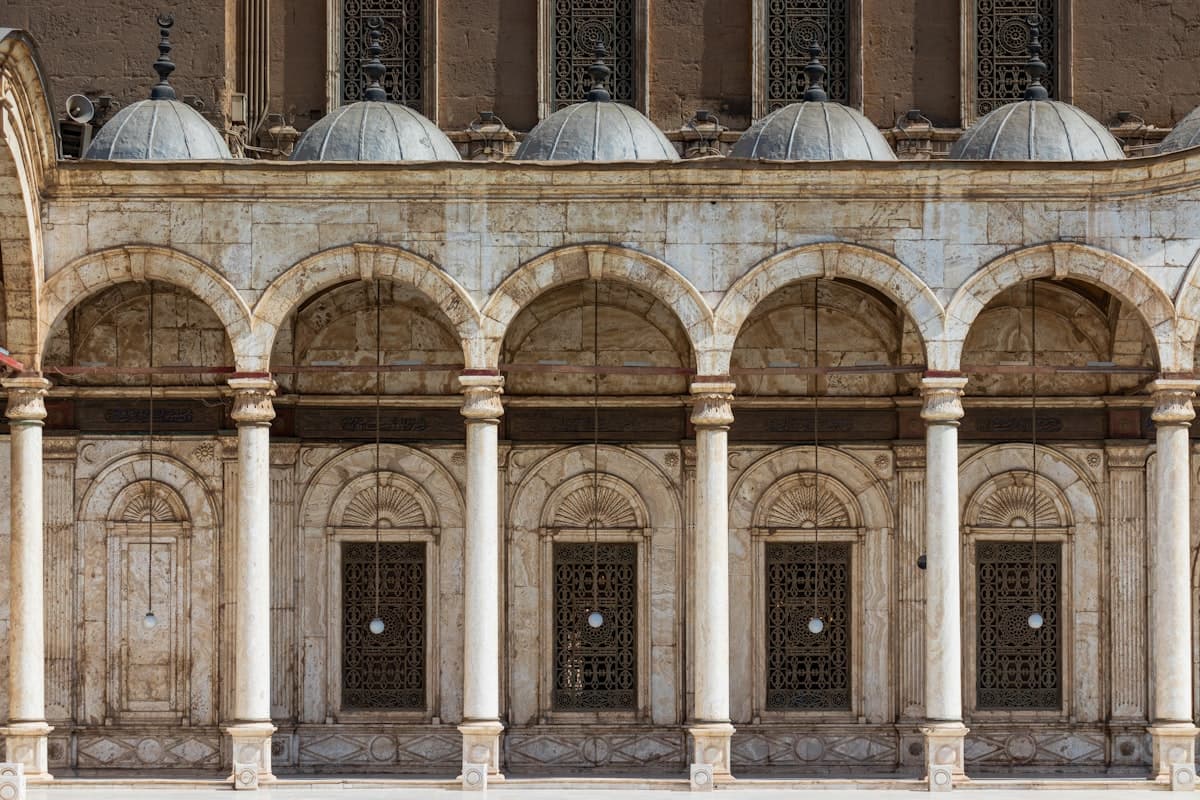
On March 1, 1811, Mohamed Ali Pasha invited the entire Mamluk leadership to a celebration at the Citadel. Between 470 and 500 men, depending on the source, rode through the gate in full ceremonial dress. The gate closed behind them. Not one Mamluk leader left alive. The event is called the Massacre of the Citadel, and it is the founding act of modern Egypt.
The building you see today, the alabaster mosque that dominates Cairo's eastern skyline, was Mohamed Ali's architectural statement of that victory. He began construction in 1830, imported an Ottoman architect named Yusuf Bushnaq from Istanbul, and modeled the interior directly on the Sultan Ahmed Mosque in Istanbul, known outside Turkey as the Blue Mosque. The irony is precise: Mohamed Ali was Albanian by birth, trained in the Ottoman military, appointed to Egypt as an Ottoman governor, and then spent his entire career dismantling Ottoman authority. The mosque he built to symbolize Egyptian independence looks exactly like Istanbul.
What makes Ottoman Cairo history so disorienting is this layering. The Citadel itself was begun by Saladin in 1176, a Kurdish military commander working for a Syrian dynasty, on a site the Fatimid Caliphate had used as a military district, on a limestone ridge that Pharaonic quarrymen had already cut into. Every period of Egyptian history is embedded in this one hill. The Mohamed Ali guide who only tells you about the Pasha is giving you a single thread from a very dense cloth.
---
What Mohamed Ali Actually Built, and What He Destroyed
The first thing Mohamed Ali did when he consolidated power at the Citadel was demolish most of what the Mamluks had built there over the preceding five centuries. This is not a minor footnote. The Bahri Mamluk sultans, who ruled Egypt from 1250 to 1382, had constructed a palace complex inside the Citadel that contemporaries described as among the finest architecture in the medieval Islamic world. Ibn Battuta visited in 1326 and wrote about it at length. Almost none of it survives because Mohamed Ali leveled it to clear ground for his mosque.
What remains from the Mamluk period, barely and gratefully, is the Al-Nasir Muhammad Mosque in the lower enclosure of the Citadel. Al-Nasir Muhammad ibn Qalawun ruled Egypt three separate times between 1293 and 1341, a total of 42 years, and this mosque was his personal project, completed around 1335. Most visitors walk past it to reach the Ottoman building on the hill. This is a mistake. The Al-Nasir Muhammad Mosque contains one of the only intact examples of Gothic columns in any Islamic structure in Egypt. Al-Nasir Muhammad had them brought from the crusader church at Acre after the city fell to Mamluk forces in 1291. They stand at the mosque entrance, carved with European medieval tracery, holding up a structure with Moroccan-style stucco decoration and a Mamluk minaret. Nothing in Cairo says more about the medieval Mediterranean world in less space.
Mohamed Ali's mosque, by contrast, is Ottoman imperial architecture transplanted. The dome reaches 52 meters at its highest point. The twin minarets are Ottoman pencil-style, not Egyptian. The alabaster cladding on the lower walls, which gives the building its common name, was quarried from Beni Suef, 120 kilometers south of Cairo. Mohamed Ali's own tomb is inside, a white marble sarcophagus on the right of the entrance. He died in Alexandria in 1849, but Egypt's modern founder is buried in the fortress where he murdered his predecessors.
---
The View, the City, and What You Are Actually Looking At
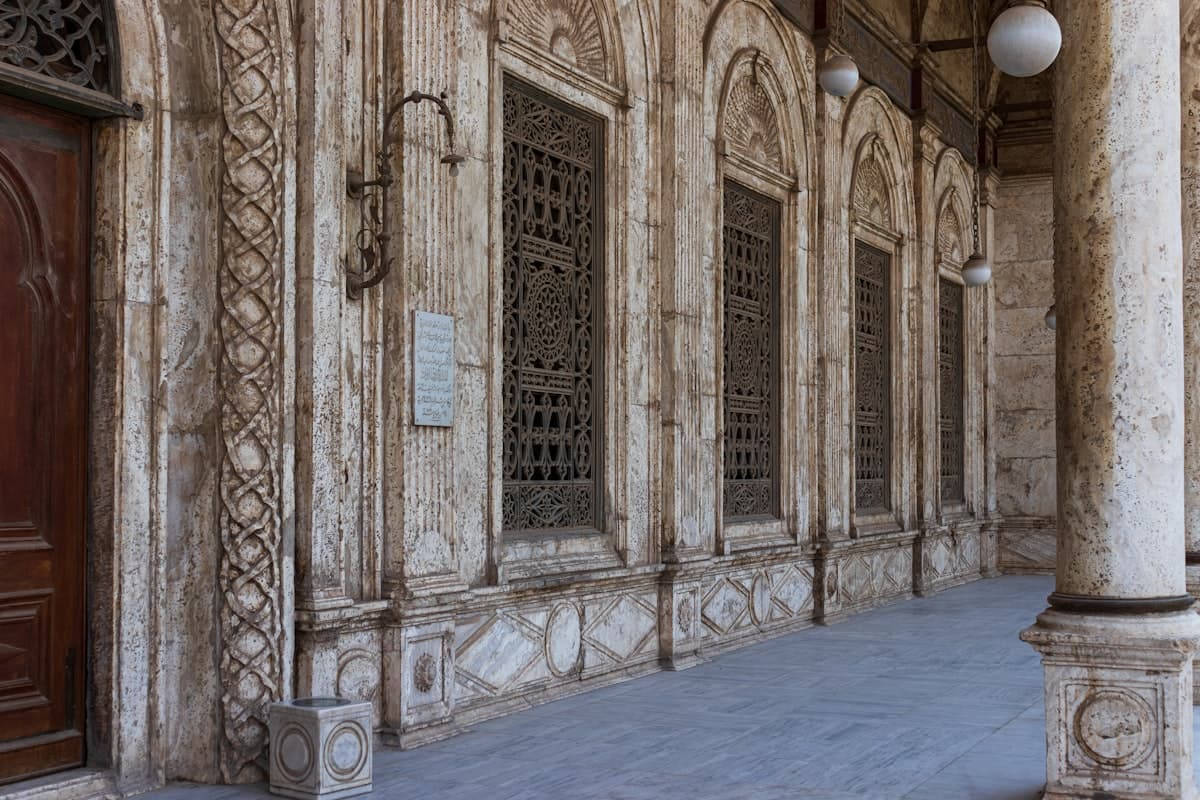
The platform outside the Mohamed Ali Mosque offers the most comprehensive single view of Cairo available anywhere. You are looking at roughly 1,400 years of urban history laid out below you, and it helps to know what you are seeing rather than simply experiencing it as urban density.
Directly north: the minarets of the Mamluk city, the district known as Historic Cairo or Islamic Cairo, a two-square-kilometer zone that contains the highest concentration of medieval Islamic architecture anywhere on earth. The Al-Azhar Mosque, founded in 970 CE by the Fatimid general Jawhar al-Siqilli within months of his conquest of Egypt, is visible in the middle distance. It is the oldest continuously operating university in the world, predating the University of Bologna by approximately a century.
To the west, if the air is clear enough, and increasingly it is not, the Giza plateau. The distance from the Citadel to the Great Pyramid is approximately 15 kilometers. What you are looking at across that distance is four thousand years of Egyptian capital cities: Memphis, Heliopolis, Fustat, Al-Qahira, and the modern sprawl that swallowed them all.
The smog is real and some days obliterates the pyramids entirely. Morning visits, especially after winter rain, give the clearest views. This is not a romantic suggestion. It is practical: Cairo's air quality is worst between 2pm and 6pm due to traffic patterns, and the Citadel platform faces west into whatever the afternoon is offering.
---
The Connections: How the Citadel Links to Everything Else
Saladin built the Citadel not because the site was strategically obvious but because a physician named Abd al-Latif al-Baghdadi observed in the 12th century that the air quality on the Muqattam spur was demonstrably better than in the city below. Saladin's personal doctor confirmed it. Medieval Cairo's leadership chose their fortress location partly based on medical advice. The same Muqattam limestone that forms the ridge was quarried to build the Giza pyramids 2,500 years earlier. The physical material connecting Saladin's fortress to Khufu's tomb is the same stone.
The Mamluks who ruled from this citadel were not a dynasty in the conventional sense. They were a military caste recruited as enslaved boys from the Caucasus, Central Asia, and occasionally sub-Saharan Africa, trained specifically as soldiers and administrators, then manumitted upon completing their training. The word mamluk means, precisely, one who is owned. These men, taken from their families as children, built the most sophisticated military state in the medieval Middle East and held Egypt for two and a half centuries. Their mosques, mausoleums, and madrasas fill the streets below the Citadel, and virtually every one of them is underfunded, understaffed, and undervisited.
Mohamed Ali's own story has the same structural quality. He arrived in Egypt in 1801 as a junior officer in an Albanian regiment of the Ottoman army, sent to expel Napoleon's forces. He had no particular claim to authority. By 1805 he was governor. By 1811 he had no rivals. His descendants ruled Egypt until 1952, when another military man, Gamal Abdel Nasser, completed a different kind of takeover. The Citadel saw both transitions. It has been the seat of Egyptian power, in one form or another, for 850 years.
---
Common Mistakes
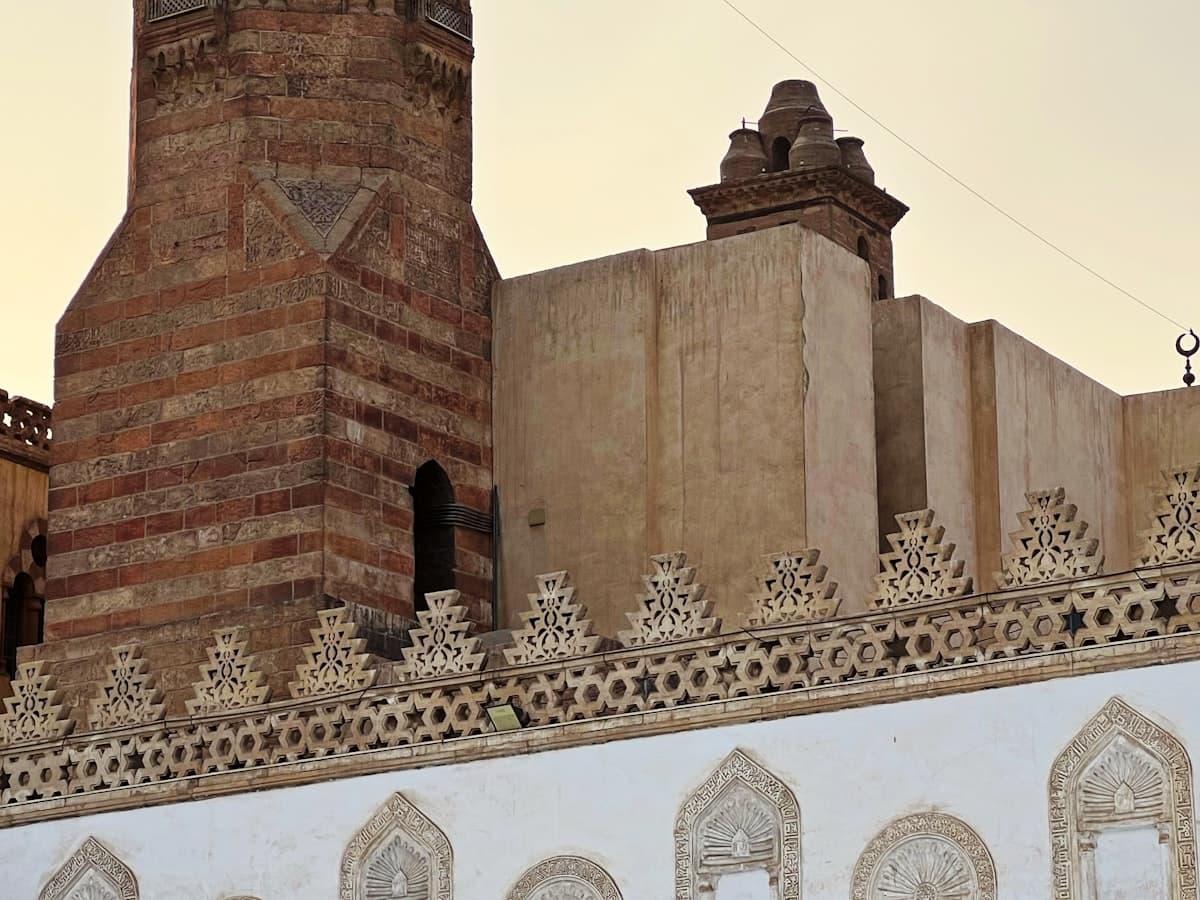
Arriving at midday. The Mohamed Ali Mosque platform is white stone reflecting full Cairo sun. Between 11am and 2pm in any season, the heat and glare make considered looking impossible. Come before 9:30am and the light also does something to the alabaster that the afternoon cannot replicate.
Skipping the Al-Nasir Muhammad Mosque because it looks unimpressive from outside. The exterior is austere and the signage is minimal. Go inside. The Gothic columns from Acre are unlike anything else in Egypt.
Paying for a guide at the gate. The unofficial guides who approach you at the Citadel entrance are not vetted by the Ministry of Tourism. Some are excellent. Many will give you the same surface narrative you could read in fifteen minutes. If you want a guide, book one through a licensed agency in advance and specify that you want someone who knows the Mamluk period, not just Mohamed Ali.
The sound and light show at the Citadel costs EGP 350 and runs roughly 45 minutes. It tells you nothing this article does not already cover, the narration is written for an audience assumed to know nothing, and the lights do not improve architecture that looks better in moonlight anyway. Skip it entirely.
Combining the Citadel with the Egyptian Museum in the same afternoon. Both sites require cognitive engagement, not passive walking. You will do neither justice. The Egyptian Museum needs its own morning. Give the Citadel its own visit.
Not walking down to the Mosque of Ibn Tulun afterward. It is a 20-minute walk from the Citadel's southern gate. Built in 879 CE, it is the oldest mosque in Cairo to survive in its original form. The minaret has an external spiral staircase that exists nowhere else in Egypt and is thought to reference the minaret of the Great Mosque of Samarra in Iraq. It is free to enter and almost always quiet. The contrast with the Ottoman grandeur of the Citadel tells you more about the range of Islamic architecture in Cairo than any single textbook.
Expecting the Military Museum to be interesting. It occupies the former Harim Palace of Mohamed Ali and the building itself is worth ten minutes. The exhibits are not.
---
Practical Tips
Dress: the mosques require removed shoes and covered shoulders and knees for everyone. Loan robes are available at the Mohamed Ali Mosque entrance for EGP 10, but they are worn, numerous hands have worn them before yours, and a light scarf or long shirt in your bag resolves this entirely.
Crowds: Tour groups arrive between 10am and noon. The Citadel is noticeably quieter before 9:30am and after 2:30pm. Friday mornings before prayer are the least crowded weekday window.
The EGP 450 entrance ticket covers the entire Citadel complex. There is no separate ticket for individual mosques within the compound. The ticket booth is at the main Bab al-Gadid gate on Salah Salem Street.
Water: there are vendors inside the compound but prices are inflated. Bring at least one liter per person. The platform is exposed and the walking between structures adds up.
Photography: no restrictions inside the Mohamed Ali Mosque beyond basic respect for worshippers. The light inside is best in the late morning when it enters the upper windows of the dome.
For a concentrated day in Ottoman and Mamluk Cairo, pair the Citadel with a walk through the Darb al-Ahmar neighborhood on your way back toward the Khan el-Khalili. This street runs directly from the Citadel's northern gate through 600 years of continuously inhabited Islamic Cairo, most of it unrestored and therefore legible as a living city rather than a monument.
Frequently Asked Questions
The Weekly Dispatch
More on Egypt, every Friday.
Cultural depth and places most guides never mention.
No spam. Unsubscribe anytime.