Ottoman Cairo and Mohamed Ali: The Citadel Quarter Guide
Mohamed Ali built his mosque to erase Mamluk memory from Cairo's skyline. He had 500 years of architecture demolished first. What replaced it is complicated.

Quick Facts
- Best time to visit
- October to March. The plateau catches a northerly breeze and winter haze clears enough for Pyramid views from the terrace.
- Entrance fee
- EGP 450 (approx $9 USD), students EGP 225 with ISIC card, Egyptian nationals EGP 40. Covers all buildings in the complex.
- Opening hours
- Daily 8am to 5pm. Mohamed Ali Mosque closed to visitors Friday 12pm to 2pm for prayer.
- How to get there
- Taxi from Downtown EGP 60 to 100. Uber EGP 45 to 80. Bus no. 951 from Abdel Moneim Riad station EGP 5. Metro to Sayyida Zeinab then 20-minute walk.
- Time needed
- 2 hours minimum for mosque and terrace. 4 hours for full complex. Full day if walking to Darb al-Ahmar and Khan el-Khalili.
- Cost range
- Budget EGP 600 to 900 per day (bus, street food, ticket). Mid-range EGP 1,800 to 2,500 (taxi, sit-down meals, ticket).
Quick Facts
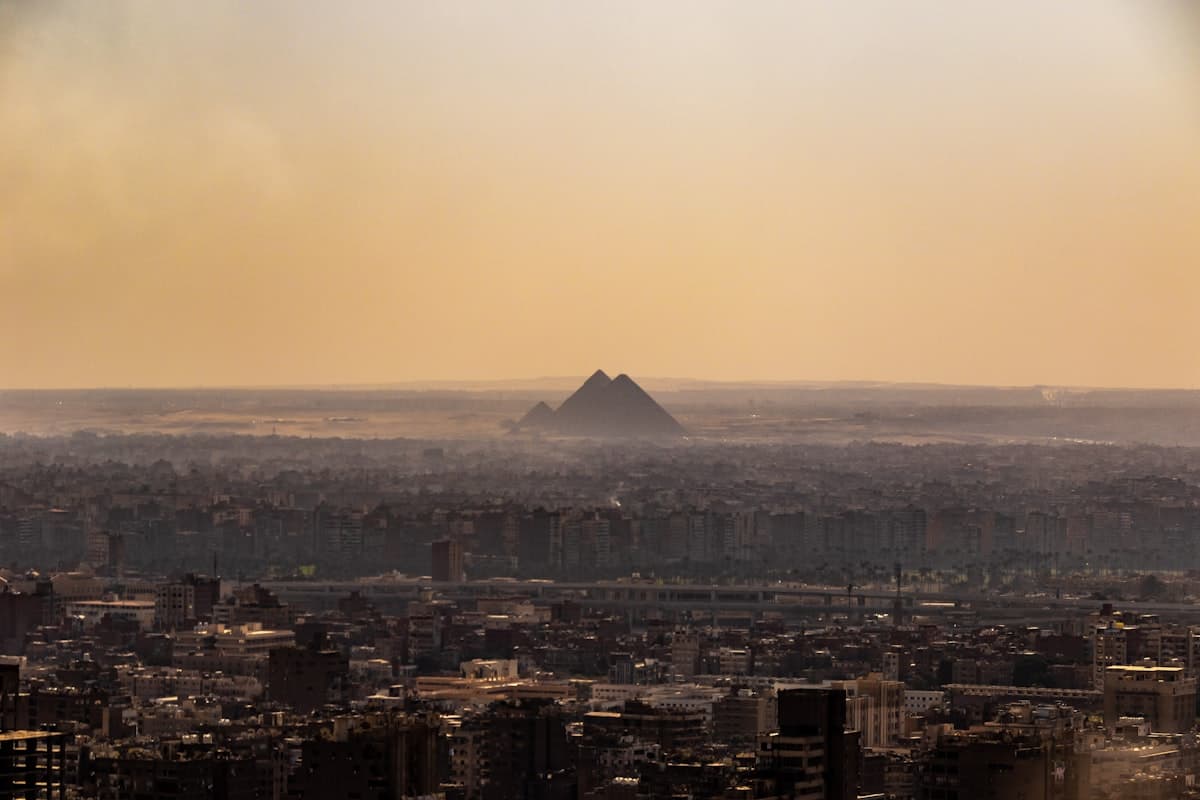
Best time to visit: October to March, when the Citadel plateau catches a cool northerly breeze and the haze over Cairo lifts enough to see the Pyramids from the terrace.
Entrance fee: EGP 450 (approximately $9 USD) for the Citadel complex, which includes the Mohamed Ali Mosque, the Military Museum, and the Carriage Museum. Students with a valid ISIC card pay EGP 225. Egyptian nationals pay EGP 40.
Opening hours: Daily 8am to 5pm. The Mohamed Ali Mosque allows visitors during all hours except Friday prayer (roughly 12pm to 2pm). Arrive before 9am or after 3pm to avoid the worst tour group congestion.
How to get there: Taxi from Downtown Cairo costs EGP 60 to 100. Uber runs EGP 45 to 80 depending on traffic. The no. 951 bus from Abdel Moneim Riad station near Tahrir costs EGP 5 and drops you at the Citadel gate. The metro does not reach the Citadel directly; Sayyida Zeinab station is a 20-minute walk.
Time needed: Two hours for the Mosque and terrace alone. Four hours if you include Al-Nasir Mohamed Mosque and the Carriage Museum. A full day if you walk down into the historic streets of Darb al-Ahmar afterward, which you should.
Cost range: Budget day (public transport, street food) EGP 600 to 900. Mid-range (taxi, sit-down lunch) EGP 1,800 to 2,500.
---
He invited them to a feast and killed every single one of them.
On March 1, 1811, Mohamed Ali Pasha gathered the Mamluk beys, Egypt's military ruling class, inside the Citadel of Cairo for a banquet honoring his son's departure to lead a campaign in Arabia. As the procession wound through a narrow corridor in the fortifications, his soldiers closed the gates at both ends and opened fire. Between 470 and 500 Mameluks died in the passage now called Bab al-Azab. One reportedly survived by jumping his horse off the walls. After that afternoon, six centuries of Mamluk influence in Egypt effectively ended, and the Ottoman Cairo history that defines the Citadel's skyline today could begin.
The Mohamed Ali guide most visitors receive at the gate describes a visionary modernizer who built hospitals, schools, and a cotton economy. All of that is true. It omits the massacre. Both things make the man, and both things make the monument.
---
Why This Place Matters
The Citadel of Cairo is not a single building or a single era. It is twelve centuries of military architecture, political violence, and religious statement stacked on a limestone spur of the Muqattam Hills. Saladin began it in 1176, specifically to protect Cairo from a Crusader attack that never came but felt inevitable after the fall of Jerusalem. He imported Syrian engineers, used stone quarried from the smaller pyramids at Giza, and designed a fortification system that, by medieval European standards, was roughly 100 years ahead of its time.
The Mamluks who followed Saladin's Ayyubid dynasty turned it into a palace city. Sultan al-Nasir Mohamed ibn Qalawun rebuilt it three times during his three separate reigns between 1293 and 1341, and his mosque inside the Citadel walls is one of the few Mamluk structures still standing there, its minaret a Gothic-influenced spike that looks nothing like what most people expect from Egyptian Islamic architecture because al-Nasir's architects were Moroccan.
By the time the Ottomans conquered Egypt in 1517, the Citadel was already 340 years old. The Ottoman governors, called pashas, ruled from here, but they neither demolished the Mamluk structures nor built much of consequence. The great Ottoman contribution to Cairo is elsewhere, in the Khan el-Khalili area and along Muizz Street. The Citadel remained largely Mamluk in character until Mohamed Ali arrived.
This is the context most visitors skip entirely. When you stand in front of the Mohamed Ali Mosque and feel its scale, you need to know that it sits on the site of Mamluk palaces Mohamed Ali had demolished, and that the demolition was not architectural preference but political erasure. He was building in stone what he had done with muskets in the corridor below.
---
The Mosque of Mohamed Ali: What You Are Actually Looking At
The mosque took 18 years to build, from 1830 to 1848, and Mohamed Ali died before its completion. His architect was Yusuf Boshnak, an Ottoman-Greek from Constantinople, and the design is explicitly, deliberately Turkish Ottoman, modeled on the great imperial mosques of Istanbul, specifically the Yavuz Selim Mosque, which Mohamed Ali had admired during a visit to the capital.
This was a political statement written in marble and lead-covered domes. Egypt had been a province of the Ottoman Empire since 1517. Mohamed Ali was technically an Ottoman viceroy. By building a mosque that looked like Istanbul transplanted onto the Cairo skyline, he signaled simultaneously that he was a loyal Ottoman and that Egypt's capital could match the imperial city. The contradiction was the point. He was already trying to break from Ottoman control militarily. His mosque said: we belong to this tradition, and we have surpassed it.
The alabaster that covers the lower interior walls and the courtyard facades comes from Luxor, quarried from the same Eastern Desert hills that supplied the ancient temples. When the light comes through the courtyard at a low angle in winter, the stone glows the exact pale amber of old bone. Inside the prayer hall, a clock tower in the courtyard holds a clock given by King Louis-Philippe of France in 1846, in exchange for the obelisk from Luxor Temple that now stands in the Place de la Concorde in Paris. Cairo got a clock that was broken almost immediately and has never reliably worked. Paris got a 3,000-year-old obelisk of Ramesses II. Make of that exchange what you will.
Mohamed Ali's tomb is in the mosque, behind a gilded screen in the southeast corner. It is the only pharaonic-era equivalent of a royal burial that modern Egypt has produced inside a functioning religious building. Visitors walk past it without pausing. Pause.
---
What Most Visitors Miss: The Terrace and the Layers Below
The terrace on the northern side of the Citadel complex, accessible through the Carriage Museum courtyard, offers the best urban panorama in Cairo. On a clear winter morning before 9am, you can identify the following in a single field of vision: the three Giza pyramids to the southwest, the Saladin fortifications directly below you, the Mamluk minarets of Sultan Hassan and Al-Rifai mosques at the base of the hill, the Ottoman-era streets of Darb al-Ahmar curling toward Khan el-Khalili, the Fatimid walls of old Cairo beyond that, and the Roman fortress of Babylon further south near the Coptic Museum. Four thousand years of urban history, readable as a single landscape.
The two mosques directly below the Citadel wall deserve more time than most visitors give them. The Mosque of Sultan Hassan, completed in 1363, is considered by architectural historians to be the most accomplished Mamluk building in existence. Its entrance portal is 38 meters tall, the highest of any medieval Islamic building. It was designed to be seen from the Citadel above, its scale meant to impress the rulers looking down. Sultan Hassan was nineteen when he commissioned it and was murdered before its completion. His body was never placed in the mausoleum he built for himself because his killers wanted to prevent his tomb from becoming a pilgrimage site.
The Al-Rifai Mosque next door looks older but is not. It was completed in 1912, built to house the tombs of Egypt's modern royal family and, later, Shah Mohammad Reza Pahlavi of Iran, who died in Cairo in 1980 after being refused entry to most of the world. His tomb is inside. The two mosques look like a matched pair. They were built 550 years apart.
---
The Connections: Ottoman Cairo History in Context
The Ottoman Cairo that Mohamed Ali inherited in 1805 was a city of perhaps 260,000 people, significantly smaller than it had been under the Mamluks, depleted by plague, political instability, and the disruption of Napoleon's three-year occupation from 1798 to 1801. The French had used the Citadel as a military headquarters and had blown up part of Saladin's original tower when they evacuated. The damage is still visible on the northern wall.
Mohamed Ali was not Egyptian by birth. He was an Albanian Ottoman soldier from Kavala, in what is now northern Greece, who arrived in Egypt as part of the Ottoman force sent to repel Napoleon. He rose through the chaos of post-French Egypt to become pasha by 1805, at which point the Mameluks still controlled much of Upper Egypt and the Delta. The 1811 massacre was not his first act of political violence against them, but it was the definitive one.
The industrialization he launched afterward was specifically designed to free Egypt from dependence on both Ottoman supply chains and European imports. He brought in French military advisors, Italian opera singers for the cultural establishments he wanted Egypt to have, and Greek merchants for the cotton trade. The cosmopolitan Cairo that persisted through the nineteenth century and into the twentieth, the city of Constantine Cavafy the Greek poet and James Aldridge the English novelist, began in policy decisions made from the Citadel during Mohamed Ali's reign.
His descendants ruled Egypt until 1952. The last king, Farouk, left from Alexandria harbor in July of that year after the Free Officers' Revolution. The dynasty Mohamed Ali built in the corridors of the Citadel lasted 147 years.
---
Common Mistakes
Arriving mid-morning on a Friday. Tour groups from Nile cruise ships that dock in Cairo for day trips are typically bused to the Citadel between 10am and 1pm on Fridays. The Mohamed Ali Mosque also closes for Friday prayer. The combination creates a corridor of bodies and raised camera arms that makes genuine attention to the space nearly impossible. Come before 9am or after 3pm on any day of the week.
Skipping the Al-Nasir Mohamed Mosque. Almost every visitor goes directly to the Mohamed Ali Mosque and leaves. The Mamluk mosque of Al-Nasir Mohamed, built in 1318 and renovated in 1335, is 50 meters away and almost always empty. Its Gothic-influenced minaret reflects the international architectural culture of 14th-century Cairo, when Moroccan builders, Syrian engineers, and Coptic craftsmen worked simultaneously on the same structures. It is a more historically interesting building than the one everyone photographs. The entrance is included in your Citadel ticket.
Paying for a guide at the gate. The informal guides who approach visitors at the Citadel entrance vary from knowledgeable to fictional. One very common script describes the alabaster interior of the Mohamed Ali Mosque as originating from Greece, which is incorrect. It is Egyptian alabaster from Upper Egypt. If you want a guide, book one through a licensed agency in advance, or bring this article.
The sound and light show at the Citadel. It costs EGP 350, runs about 45 minutes, and tells you nothing you will not learn in 20 minutes of reading. The lights themselves are not directed at anything architecturally interesting. Skip it. The city at night from the Citadel terrace, without the narration, is considerably more affecting.
Not walking down into Darb al-Ahmar afterward. The street that runs along the Citadel's western wall is one of the best-preserved Ottoman-era urban corridors in Cairo. The Aga Khan Trust for Culture has been restoring it for 20 years. The craft workshops, the carved stone facades, the teahouses where men play backgammon against a backdrop of 16th-century architecture: this is the lived Ottoman Cairo that the Citadel describes in abstract political terms. It takes 30 minutes to walk to Khan el-Khalili from here. Do not get in a taxi.
Wearing shoes you cannot remove quickly. You will remove your shoes at the Mohamed Ali Mosque entrance and at the Al-Nasir Mosque. Slip-ons or sandals save everyone behind you from waiting.
Assuming the Carriage Museum is for children. The carriages used by Mohamed Ali's descendants, including the gilt landau used at the wedding of King Farouk in 1938, are documents of how the dynasty projected power in its final decades. The museum is small and nearly always empty. Spend 20 minutes inside and you will understand the late Ottoman Cairo history of performance and decline in a way that no mosque can convey.
---
Practical Tips
Dress code is enforced at both mosques. Shoulders and knees covered, shoes removed at the door. Abayas are available for loan at the Mohamed Ali Mosque entrance if you need one, at no charge, though the quality suggests they have been loaned approximately eight thousand times.
The Citadel sits at a slightly higher elevation than central Cairo, which means it catches whatever breeze exists. In summer, this is a marginal improvement. In winter, it is genuinely pleasant. Bring water regardless of season.
Street food on the approach to the Citadel along Salah Salem Street is limited. Eat before you come, or plan to walk down into Darb al-Ahmar afterward, where kushari and falafel spots are cheap and abundant. There is a cafe inside the Citadel complex near the Military Museum that serves acceptable coffee at EGP 40 to 60 per cup.
Photography is permitted throughout the complex including inside the Mohamed Ali Mosque, but tripods require a separate permit. The best light for the exterior of the mosque falls on the western facade in the late afternoon, between 3pm and 5pm, when the lead-covered domes shift from grey to a pale, warm silver.
If you are combining the Citadel with the City of the Dead (the medieval necropolis stretching north along the Muqattam Hills), allow a full day and take a taxi between the two. The walk is possible but involves navigating Cairo traffic on foot for 25 minutes along a route with no footpath.
Frequently Asked Questions
The Weekly Dispatch
More on Egypt, every Friday.
Cultural depth and places most guides never mention.
No spam. Unsubscribe anytime.