Ottoman Cairo and Mohamed Ali: The Citadel's Hidden History
Mohamed Ali built his mosque with stones he stole from Giza. The Ottomans he replaced had ruled Cairo for 280 years. Neither story appears on the signs.

Quick Facts
- Best time to visit
- October to March for comfortable temperatures on the exposed plateau. Arrive at 8:30am any season to beat tour groups. Avoid midday in summer (May to September).
- Entrance fee
- EGP 450 (approx $9 USD) for international visitors, covers the full complex including Mohamed Ali Mosque, Suleiman Pasha Mosque, Gawhara Palace, and Military Museum. Students with valid ID: EGP 225.
- Opening hours
- Daily 8am to 5pm. Mosque accessible during prayer times even outside ticket hours. Best light inside the mosque 9am to 11am.
- How to get there
- Taxi from Downtown Cairo: EGP 60 to 80 (ride-hailing apps recommended to avoid negotiation). Bus 951 from Abdel Moneim Riad terminal: EGP 5 but adds 30 minutes. No direct Metro access.
- Time needed
- 3 hours minimum for Mohamed Ali Mosque, Suleiman Pasha Mosque, and Gawhara Palace. Full day if combining with Sultan Hassan Mosque and Ibn Tulun Mosque below.
- Cost range
- Budget EGP 600 to 900 per person including transport, entry, and tea. Mid-range EGP 1,800 to 3,000 with private guide and lunch in Islamic Cairo.
Quick Facts
Best time to visit: October to March, when the Citadel's exposed plateau is not punishing. Friday mornings bring crowds to the mosque for prayer but also the best light inside the alabaster courtyard before noon.
Entrance fees: The Citadel complex costs EGP 450 (approximately $9 USD) for international visitors. This includes access to the Mohamed Ali Mosque, the Military Museum, and the Police Museum. Photography inside the mosque is free. Students with valid ID pay EGP 225.
Opening hours: Daily 8am to 5pm. The mosque remains open for prayer at all times, which means the 8am ticket window and the mosque entrance operate on slightly different clocks. Arrive at 8:30am to have the courtyard largely to yourself.
How to get there: The Citadel sits above Islamic Cairo on the Muqattam plateau. From Tahrir Square, a taxi should cost EGP 60 to 80. The Cairo Metro does not serve the Citadel directly. Bus 951 from Abdel Moneim Riad terminal reaches the base for EGP 5, but adds thirty minutes. Most visitors take a taxi and walk the final approach on Salah Salem Road.
Time needed: Two hours for the mosque and its terrace alone. Four hours if you add the Gawhara Palace and walk the full Ottoman circuit. Budget a full day if you intend to descend into Islamic Cairo afterward, which you should.
Cost range: Budget EGP 600 to 900 per person including transport, entry, and tea. Mid-range EGP 1,800 to 3,000 if you add lunch at one of the restaurants near Al-Azhar with a guide.
---
Why This Place Matters
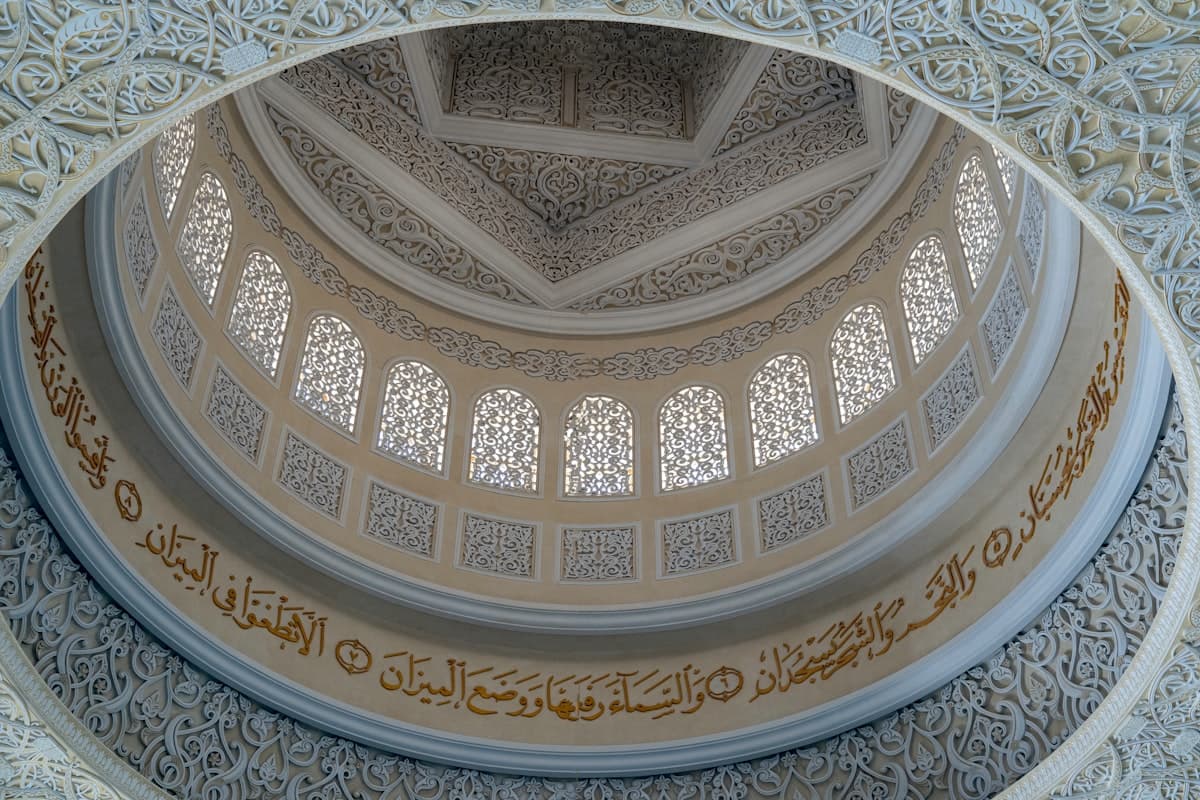
Mohamed Ali Pasha did not arrive in Egypt as a conqueror. He arrived in 1801 as a junior Albanian officer in an Ottoman expeditionary force sent to expel Napoleon. Within four years, he had maneuvered every rival out of power, including the Mameluks who had effectively governed Egypt for five centuries, and the Ottoman governors who technically outranked him. By 1805, the Ottoman Sultan in Constantinople had no choice but to appoint him Wali, governor, of Egypt. Cairo's Ottoman history did not end with Mohamed Ali. It transformed into something stranger: an Ottoman province governed by a man who wanted to build an empire that could replace the Ottomans entirely.
The Citadel itself is older than any of this. Saladin began it in 1176 to defend Cairo against Crusader threats that never fully materialized. Every subsequent power in Egypt, the Ayyubids, the Bahri Mameluks, the Burji Mameluks, and then the Ottomans who conquered Egypt in 1517, occupied, modified, and expanded the Citadel according to their priorities. When you walk through the gate today, you are crossing a site that has been continuously used as a seat of Egyptian power for nearly 850 years.
The Ottomans held Egypt from 1517 to 1798, when Napoleon's invasion briefly interrupted everything. That is 281 years of Ottoman rule that most visitors to the Citadel walk through without registering, because the Mohamed Ali Mosque is so visually dominant it absorbs all available attention. Understanding Ottoman Cairo and Mohamed Ali as a guide to this place means understanding what was here before the mosque, what Mohamed Ali destroyed to build it, and what that destruction reveals about how power announces itself.
---
What Mohamed Ali Built, and What He Tore Down
The Mohamed Ali Mosque was constructed between 1830 and 1848, modeled closely on the mosques of Istanbul, specifically the Sultanahmet style associated with the architect Sinan, who had died 240 years earlier. This was deliberate. Mohamed Ali wanted a mosque that looked Ottoman in the capital of a country he was slowly pulling away from Ottoman control. The message was architectural double-speak: I respect the tradition. I have also mastered it well enough to replicate it without your help.
To build it, he demolished the Mamluk mosque of Al-Nasir Muhammad, which had stood on that spot since 1318. The Al-Nasir Muhammad Mosque is still partially visible on the northern side of the Citadel, stripped of its marble cladding, which the Ottomans had already removed in 1517 to decorate mosques in Istanbul. When you see the bare stonework of that older mosque today, you are looking at two acts of architectural looting separated by three centuries.
The alabaster that clads the Mohamed Ali Mosque's courtyard and lower walls came partly from Giza. Specifically, Mohamed Ali appropriated casing stones from the ancient monuments to use in his own construction projects across Cairo. The Pyramids lost their smooth limestone casing to the builders of medieval Cairo over many centuries, but Mohamed Ali accelerated this systematically as a state policy of material recycling.
Inside the mosque, the clock tower in the courtyard was a gift from King Louis-Philippe of France in 1846, exchanged for the Luxor obelisk that now stands in the Place de la Concorde in Paris. The Cairo clock has never worked reliably. The Paris obelisk has stood for 180 years.
---
The Ottoman Layers Most Visitors Walk Past
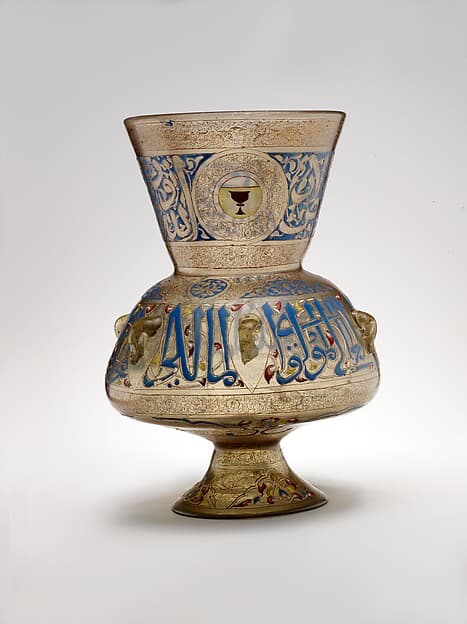
Before Mohamed Ali remade the Citadel's skyline, the Ottomans had spent nearly three centuries building their own Cairo here. The Mosque of Suleiman Pasha, completed in 1528, is the oldest Ottoman mosque in Cairo, and it sits inside the Citadel walls about two hundred meters northeast of the Mohamed Ali Mosque. Most tour groups never reach it.
This matters for two reasons. First, the Suleiman Pasha Mosque is architecturally extraordinary: it integrates the Ottoman dome-on-dome style with Mamluk decorative details in ways that the pure-Istanbul pastiche of the Mohamed Ali Mosque does not attempt. Second, its construction date places it eleven years after the Ottoman conquest of Egypt, which means it was built by men who were still figuring out how to govern a place whose population largely ignored them.
The Ottoman governors of Egypt, called Pashas, ruled from the Citadel but faced a consistent problem: the Mamluk beys who preceded them never fully went away. The Ottomans kept Mamluk administrative structures in place because dismantling them would have collapsed the tax system. This created a layered, contested authority that lasted the entire Ottoman period. When Napoleon arrived in 1798, he found a nominally Ottoman Egypt governed in practice by Mamluk grandees who had reasserted themselves to a remarkable degree.
The Citadel's Gawhara Palace, built by Mohamed Ali in 1814 on the ruins of an Ottoman-era palace, is where this administrative history becomes tactile. You can walk through rooms where Mohamed Ali received European diplomats, and where the last Mamluk beys were invited to a celebration in 1811 and massacred. Estimates of those killed that day range from 470 to 500 men. The narrow passage through which some reportedly tried to escape on horseback is still there, and still called the Bab al-Azab, the Gate of the Soldiers.
---
The Connections: Layers That Explain Each Other
The Citadel stands on Muqattam limestone, which is the same geological formation that provided casing stone for the Pyramids. Cairo was built on what the Pyramids were built from. That is not a metaphor. It is geology and construction history.
The medieval city below the Citadel, which Egyptians call Islamic Cairo but which contains Coptic and Jewish layers underneath, grew up partly in relation to the Citadel's needs. The city fed the garrison, supplied the court, and absorbed the waste of five centuries of concentrated power. The Khan el-Khalili bazaar, established in 1382 by the Mamluk Amir Djaharks el-Khalili, exists partly because the Citadel created demand for luxury goods imported from across the Islamic world.
The Ibn Tulun Mosque, fifteen minutes' walk south of the Citadel, was built in 879 AD on a site that Ibn Tulun, the Abbasid governor who effectively made himself independent of Baghdad, chose specifically for its defensible elevation above the Nile plain. His logic prefigures Saladin's choice of the Muqattam site by three centuries. Cairo's rulers have always instinctively sought high ground. The view from the Mohamed Ali Mosque terrace, across the smog and the minarets to the Pyramids on the western horizon, makes the reason obvious.
The Mohamed Ali dynasty that the Pasha founded in 1805 ruled Egypt until 1952, when his descendant King Farouk was deposed by the Free Officers Movement. The last king of Egypt, whose grandfather had converted the family from Ottoman Albanian origin into a dynasty that thought of itself as Egyptian, was exiled from the same city his ancestor had seized with 500 Albanian soldiers and a talent for political murder.
---
Common Mistakes
Skipping the Suleiman Pasha Mosque. This is the most consistent mistake visitors make, entirely because tour guides default to the Mohamed Ali Mosque and never mention that an older, more architecturally complex Ottoman structure exists on the same grounds. The ticket price covers both. Walk northeast from the main courtyard and find it.
Visiting between 11am and 2pm in summer. The Citadel plateau is exposed. There is no shade on the approach to the mosque. Between 11am and 2pm from May through September, the stone radiates heat in ways that turn an enjoyable visit into an endurance exercise. Arrive at 8:30am or after 3pm.
Paying for the sound and light show. The Citadel runs a sound and light show in the evenings that costs EGP 350 per person and delivers approximately forty minutes of narration you could read in fifteen minutes of the article you are currently reading. The light effects are modest. The seating is uncomfortable. Skip it without guilt.
Not reading the Gawhara Palace exhibits before entering the mosque. Most visitors go straight to the mosque and run out of time for the palace. The palace contains Mohamed Ali's furniture, diplomatic correspondence, and the physical objects of his administration, including the room where he received European advisors. It recontextualizes the mosque entirely. Do the palace first.
Confusing the two Mohamed Alis. The Pasha who built the mosque is not the same person as Muhammad Ali the boxer, whose Egyptian family name was Clay. This sounds obvious but causes genuine confusion on Egyptian tour circuits, particularly with American visitors, particularly when guides with limited English try to navigate it.
Taking a guide who only covers the Mohamed Ali Mosque. Many guides at the Citadel gate are specialized in religious tourism and will take you through the mosque beautifully while treating the Ottoman and Mamluk structures as irrelevant. Ask specifically before engaging anyone whether they cover the full Ottoman Cairo history and the Citadel's pre-Mohamed Ali layers. If they pause, find someone else.
Treating the Citadel as a standalone visit. The Citadel without Islamic Cairo below it is a beautiful building without a city. The Sultan Hassan Mosque and the Ibn Tulun Mosque are each within twenty minutes' walk and together they span five centuries of Islamic architecture in ways that make the Mohamed Ali Mosque's Istanbul-borrowing both more understandable and more complicated.
---
Practical Tips
Dress codes apply to the mosque. Shoulders and knees must be covered. The mosque provides robes at the entrance for those who need them, at no charge, though the robes are shared and vary in cleanliness. Bringing your own scarf or lightweight overshirt is preferable.
The best light for photography inside the mosque falls through the central dome between 9am and 11am, when the sun angle illuminates the hanging lamp clusters without washing out the tile work. The courtyard fountain is photogenic at any time but particularly in the early morning when the alabaster reflects the pale sky rather than direct sun.
Taxis to the Citadel should be negotiated before entering the vehicle. The standard rate from Downtown Cairo or the Islamic Cairo area is EGP 60 to 80. Drivers occasionally attempt EGP 150 to 200 from foreigners. Using a ride-hailing app removes this entirely and is strongly recommended if you are unfamiliar with Cairo's taxi negotiation culture.
The area immediately outside the Citadel gate has several tea stalls and a few basic restaurants serving ful and ta'meya. The food is cheap and good. The tourist-facing restaurants on the nearby Salah ad-Din Square are overpriced and oriented toward tour group stops rather than actual Cairo food. Eat at the stalls or descend into Islamic Cairo proper for lunch.
Friday is both the most atmospheric and most complicated day to visit. The Mohamed Ali Mosque fills for the midday prayer, the streets below fill with informal markets, and the light in the late morning is extraordinary. But crowds inside the mosque between 11:30am and 1:30pm make detailed observation difficult. Arrive Friday at 8:30am, do the Suleiman Pasha Mosque and Gawhara Palace first, then enter the main mosque after 2pm when the prayer crowd disperses.
Frequently Asked Questions
The Weekly Dispatch
More on Egypt, every Friday.
Cultural depth and places most guides never mention.
No spam. Unsubscribe anytime.