Ottoman Cairo and Mohamed Ali: The Citadel's True History
Mohamed Ali built his mosque on top of a Mamluk palace he had just emptied by massacring its occupants. The architecture is gorgeous. The story is darker than the guides admit.

Quick Facts
- Best time to visit
- October to March for clear light and manageable temperatures. Early morning (8 to 10am) on any weekday avoids school groups.
- Entrance fee
- EGP 450 (approx. $9 USD) for the full Citadel complex. Students EGP 225 with valid ID. Sultan Hassan Madrassa is a separate EGP 100 ticket.
- Opening hours
- Daily 8am to 5pm (winter), 8am to 6pm (summer). Mohamed Ali Mosque closes for Friday noon prayer approximately 12pm to 1:30pm.
- How to get there
- Taxi or Uber from Downtown Cairo: EGP 80 to 130. Metro to Sayyida Zeinab plus microbus: under EGP 20. No direct bus from Tahrir without a steep uphill walk.
- Time needed
- 2 hours minimum for mosque and ramparts. 3 to 4 hours for full Citadel complex. Half-day if combining with Sultan Hassan Madrassa below the hill.
- Cost range
- Budget day EGP 600 to 900 including entry, transport, and street lunch. Mid-range EGP 1,800 to 2,500 including a sit-down lunch in Islamic Cairo.
Quick Facts
Best time to visit: October to March, when Citadel light is clear and the heat won't flatten you by 10am
Entrance fee: EGP 450 (approx. $9 USD) for the full Citadel complex including the Mohamed Ali Mosque and the Military Museum. Students pay EGP 225 with valid ID. Keep your ticket; guards check it at multiple points.
Opening hours: Daily 8am to 5pm (winter), 8am to 6pm (summer). The mosque itself closes briefly for Friday prayers around noon, roughly 12pm to 1:30pm.
How to get there: A taxi from Downtown Cairo costs EGP 80 to 120. The metro to Sayyida Zeinab (Line 2) plus a microbus or tuk-tuk to the Citadel runs under EGP 20. Uber is reliable and usually EGP 90 to 130 from Tahrir. No bus route deposits you at the gate without a walk up a steep hill in the sun.
Time needed: The mosque alone takes 45 minutes if you are paying attention. The full Citadel complex with the Mosque of al-Nasir Muhammad and the National Military Museum takes three to four hours. Combine with the Mamluk City of the Dead or Khan el-Khalili for a full day.
Cost range: Budget EGP 600 to 900 for entry, transport, and lunch at a local fuul spot on Salah Salem. Mid-range EGP 1,800 to 2,500 including a sit-down lunch in Islamic Cairo.
---
Why This Place Matters
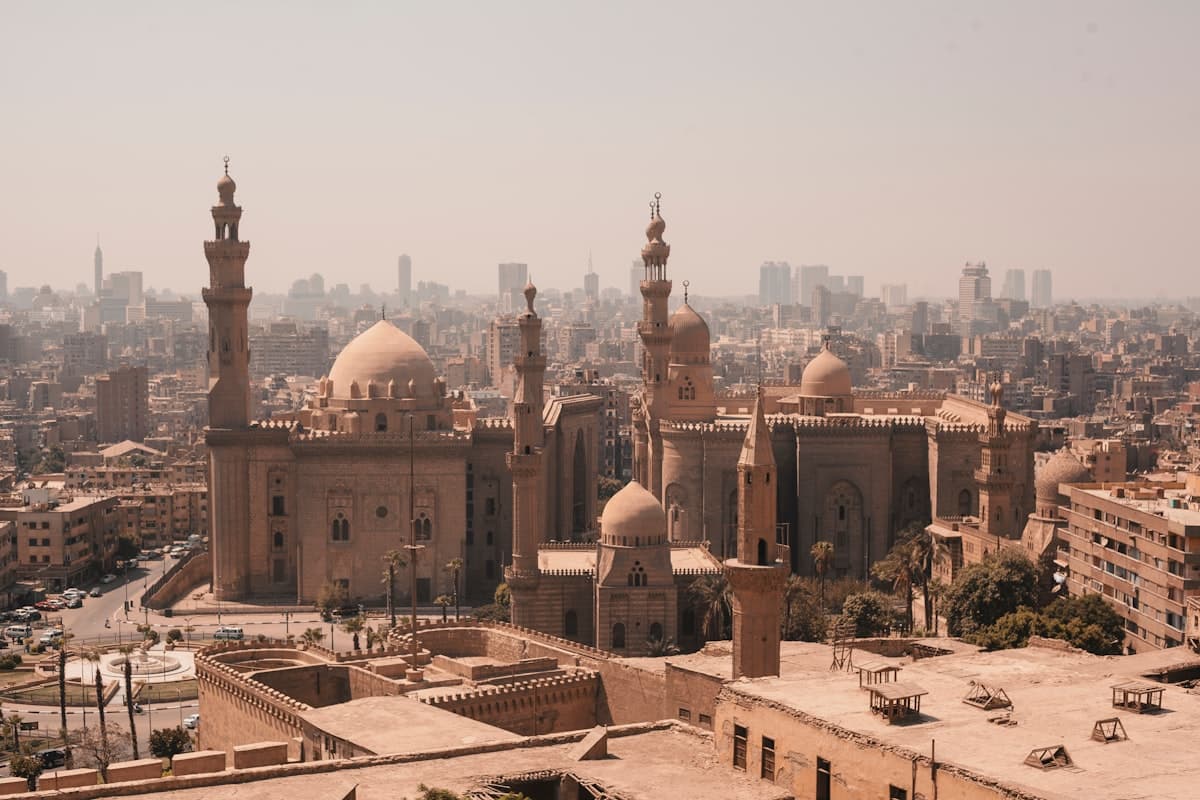
In March 1811, Mohamed Ali Pasha invited 470 Mamluk leaders to a feast at the Citadel to celebrate a military campaign. They rode up the hill in full regalia. The gates closed. By the time the smoke cleared, every one of them was dead, their heads sent to Istanbul as proof that Egypt's old power structure had been dismantled. The location where this happened is now a parking area between the alabaster mosque that bears Mohamed Ali's name and the gate through which the Mamluks rode to their deaths.
This is the founding act of Ottoman Cairo history as Mohamed Ali remade it. And it is almost never mentioned on the guided tours.
The Citadel itself predates Mohamed Ali by six centuries. Salah al-Din al-Ayyubi, whom the crusaders called Saladin, began building it in 1176 CE on a spur of the Muqattam Hills, using a site that gave his archers sight lines across the entire city and the Nile plain to the Pyramids. He chose it after noticing that meat hung in this part of the hills stayed fresh longer than elsewhere, reasoning correctly that the elevation and wind made the site healthy. The Citadel he built became the seat of Egyptian power for 700 years, through Ayyubid sultans, Mamluk sultans, Ottoman governors, and finally an Albanian-born Ottoman officer named Mohamed Ali who would found the dynasty that ruled Egypt until 1952.
Every regime that mattered in Egypt's last millennium either held the Citadel or fell because they lost it. To stand on its ramparts is not to stand in a monument. It is to stand at the exact hinge of Egyptian political history.
---
The Mosque Mohamed Ali Built (and What He Built It Over)
The Mohamed Ali Mosque dominates the Cairo skyline so completely that people assume it is ancient. It is not. Construction began in 1830 and finished in 1848, eight years after the architect, a Greek named Yusuf Bushnaq who worked from Ottoman plans, had completed the main structure. The minarets, which at 84 meters each are the tallest in Cairo, were finished posthumously. Mohamed Ali died in 1849 and was buried in the marble tomb chamber to the right of the prayer hall, beneath a chandelier that holds 365 lamps.
The style is Ottoman Baroque, specifically modeled on the Yeni Cami mosque in Istanbul, built two centuries earlier. This was a deliberate political signal. Mohamed Ali had spent the previous two decades fighting the Ottoman Sultan for autonomy, technically remaining a vassal while building an independent army, navy, and industrial economy. The mosque he built in Istanbul's own architectural language was a message: I am the legitimate heir of Ottoman civilization, not a rebel against it.
The interior is clad entirely in alabaster quarried from Beni Suef, 120 kilometers south. Egyptian alabaster is not true alabaster in the geological sense but a calcite marble with a characteristic honey translucency. When morning light enters the mosque's high windows, the walls seem to glow from inside. This effect was calculated. Yusuf Bushnaq specified the stone thickness to maximize the translucency at the prayer hour.
What you are standing on, however, is the razed footprint of the Mamluk palace complex that Mohamed Ali cleared after the 1811 massacre. The Mamluks had occupied the Citadel for five centuries and left it layered with pavilions, stables, and administrative buildings. Almost all of it is gone. The one surviving Mamluk structure inside the Citadel, and most people walk past it without stopping, is the Mosque of al-Nasir Muhammad ibn Qalawun.
The Mosque Most People Miss
Al-Nasir Muhammad built his mosque in 1318, during his third and final reign as Mamluk sultan. He reigned three separate times because the Mamluk system was so brutally competitive that sultans were routinely deposed, exiled, and occasionally recalled when their replacements proved worse. Al-Nasir managed this system for a combined total of 42 years and during that period commissioned more buildings in Cairo than any ruler before or since.
His Citadel mosque has a Gothic portal that he stripped from a Crusader church in Acre after the Mamluks took the city in 1291. The pointed arch and carved stone rosettes above the entrance are European Christian architecture embedded in a 14th-century Mamluk mosque inside an Ottoman Citadel in the middle of Cairo. Egypt accumulates layers this way. The portal survived because it was too beautiful to destroy and too heavy to steal easily.
Inside, the stone columns are also recycled. Some came from Pharaonic sites, some from Byzantine churches. The capitals are mismatched because al-Nasir's builders took what they could find from wherever Egypt had left it. This is not laziness. It is a medieval building logic that understood reuse as both economical and a form of symbolic conquest: to incorporate the stone of a previous civilization is to absorb its power.
---
The Ottoman Cairo History Mohamed Ali Actually Made
Mohamed Ali arrived in Egypt in 1801 as part of an Ottoman expeditionary force sent to push out Napoleon's army. He was Albanian by birth, Ottoman by service, and brilliant by instinct. Within four years he had outmaneuvered the Ottoman governor, consolidated local support, and forced the Porte to appoint him Wali, governor, of Egypt.
What he built over the following four decades was the first attempt at an industrialized modern state in the Arab world. He sent 339 Egyptian students to France and Italy to study medicine, military science, and engineering between 1813 and 1847. He built textile mills in Mahalla al-Kubra. He dug the Mahmoudiyya Canal to connect Alexandria to the Nile. He created a medical school in Abu Zaabel staffed by French physicians. His son Ibrahim Pasha commanded an army that defeated the Ottoman Sultan's forces so decisively at Konya in 1832 that the European powers had to intervene diplomatically to prevent Egypt from absorbing Syria and Anatolia.
None of this is explained inside the Citadel. The Military Museum adjacent to the mosque focuses on weaponry and battle maps. The human project of the Mohamed Ali era, the state-building, the forced modernization, the cotton monoculture that would eventually make Egypt dependent on a single export crop, is not on display. You have to bring it with you.
His tomb inside the mosque is modest given the scale of his ambitions: a marble cenotaph behind an ornate brass screen, lit by the same alabaster glow that fills the hall. Egyptians of a certain political persuasion still visit it with some reverence. He was a brutal consolidator who also built a country. Egypt has not resolved that contradiction.
---
The Connections
The Citadel sits 74 meters above Cairo on a limestone spur that was already considered significant before Saladin chose it. The Fatimid city of al-Qahira, which gave Cairo its Arabic name, was laid out directly below it in 969 CE by the general Jawhar al-Siqilli on behalf of the Caliph al-Mu'izz. Jawhar was Sicilian by birth and a freed slave by origin, commanded the army that took Egypt from the Ikhshidids, and designed a city that would become the largest in the medieval world.
That Fatimid city is still legible in the street plan of Islamic Cairo. The Mosque of al-Hakim, which flanks the northern gate Bab al-Futuh, was built by the Fatimid caliph who once ordered all dogs in Cairo killed and all women forbidden to leave their homes. The Khan el-Khalili bazaar was built on top of the Fatimid royal cemetery. The madrassa and mausoleum complex of Sultan Hassan, which stands at the base of the Citadel hill and is one of the most technically accomplished buildings in Islamic architecture, was completed in 1363 and cost so much that the treasury ran out of funds before the two rear minarets could be built. Their bases still stand, unfinished.
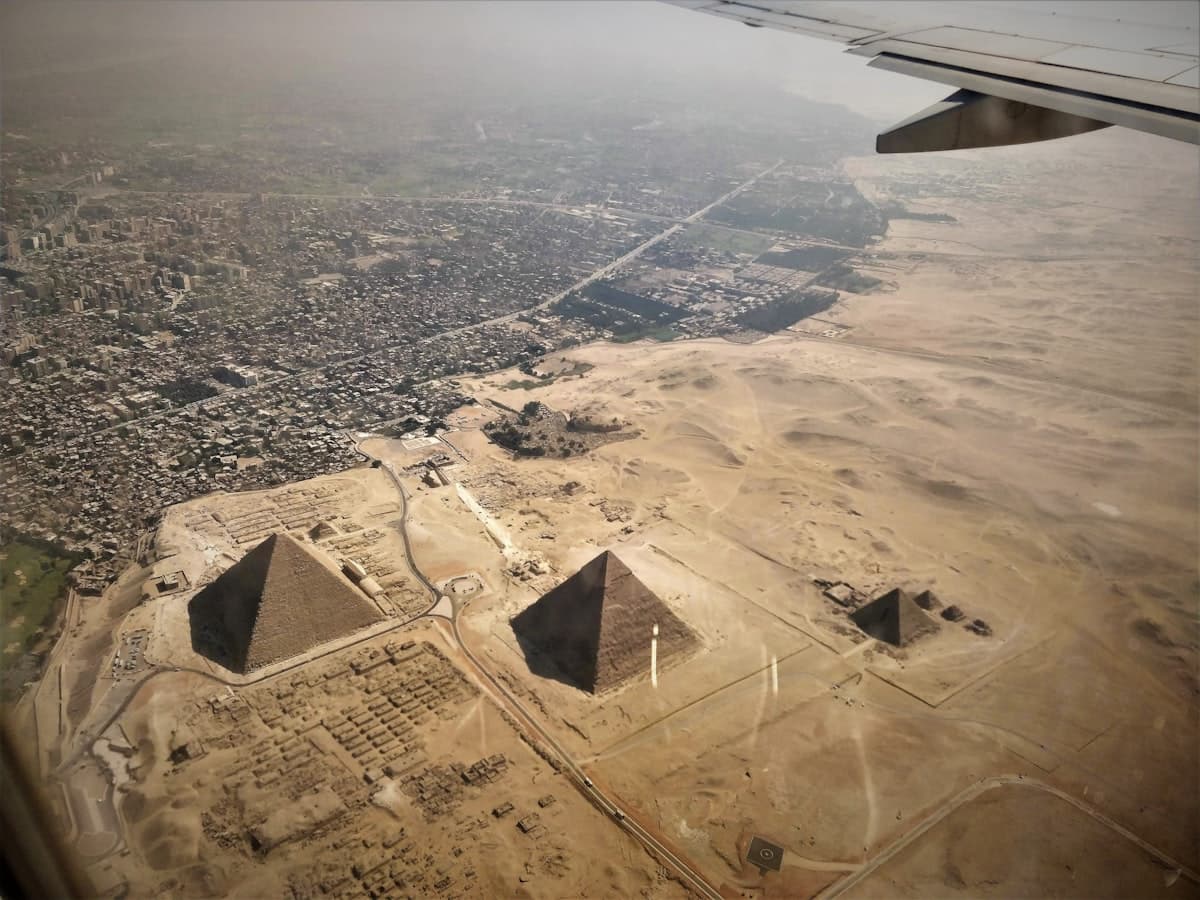
From the Citadel's northern terrace, you can see the Muhammad Ali Mosque, the Sultan Hassan complex, the Ibn Tulun Mosque three kilometers west (built by an Abbasid governor in 879 CE, making it Cairo's oldest intact mosque), and on a clear winter morning, the Pyramids of Giza. Every major period of Egyptian history is visible from this one point.
---
Common Mistakes
Skipping al-Nasir Muhammad's mosque to spend more time in the alabaster one. The Mohamed Ali Mosque is extraordinary, but you will understand it poorly without seeing what it replaced. Spend twenty minutes in the Mamluk mosque first. Look at the Gothic portal. Think about where it came from.
Arriving at noon. The mosque closes for Friday prayers and the Citadel fills with local families and school groups mid-morning on Fridays and Saturdays. Arrive at 8am when the gates open. The morning light on the alabaster is also genuinely different from midday.
Paying for a guide at the gate. The informal guides who approach visitors at the Citadel entrance charge EGP 200 to 400 for tours that last 40 minutes and consist largely of incorrect dates and legend. If you want a guide, book one through a licensed operator in advance. The difference in accuracy is significant.
Doing the Sound and Light Show at the Pyramids the night before and the Citadel the next morning. These two experiences require entirely different kinds of attention and the Sound and Light Show will leave you with clichés that actively interfere with understanding what you see at the Citadel. The Sound and Light Show costs EGP 400, runs 45 minutes, and tells you nothing about Egyptian history that a half-hour of reading would not cover better. It is a laser display with a voiceover. Skip it.
Eating at the restaurant adjacent to the Citadel's main entrance. It is overpriced and mediocre. Walk ten minutes down Salah Salem to Fuul Mohamed Ahmed or find a kushari shop on Port Said Street. You will spend a third of the price and eat a better meal.
Leaving before walking the northern ramparts. The view north from the rampart above Bab al-Qulla shows you the Fatimid city, the Mamluk cemetery, and the Nile plain simultaneously. This is the view that explains why every ruler wanted this hill. Most visitors photograph the mosque and leave without seeing it.
Assuming the Citadel is just Islamic history. The limestone of the Muqattam Hills that the Citadel is built into came from the same quarries that supplied stone for the Pyramids. The hill itself was quarried by Pharaonic workers. Cairo does not have a pre-Islamic era and an Islamic era. It has one continuous material history.
---
Practical Tips
Dress conservatively: shoulders and knees covered for both men and women inside the mosque. Shoe covers are provided at the mosque entrance, or you remove your shoes; bring clean socks. The mosque floor is carpeted and clean but gets cold in winter months.
Bring water. There is a small kiosk inside the Citadel but it charges tourist prices. A 1.5-liter bottle from a shop on Salah Salem before you enter costs EGP 10.
The best photography inside the Mohamed Ali Mosque happens between 9am and 11am when light enters the western windows at an angle that illuminates the alabaster columns without creating harsh shadows. After noon the interior flattens.
If you have time for one additional site, walk fifteen minutes downhill to the Sultan Hassan Madrassa. The entrance fee is separate (EGP 100, approx. $2 USD) and the interior, a 14th-century theological college with four iwans arranged around a central courtyard, is architecturally more sophisticated than anything inside the Citadel. The acoustic quality of the central hall is extraordinary; sound travels around the courtyard in a way that was designed to help students memorize Quran.
The Citadel does not have a left-luggage facility. Large bags are inspected at the gate but can be brought in. Security is present but not onerous; the same airport-style wand check you encounter everywhere in Egyptian public sites.
Frequently Asked Questions
The Weekly Dispatch
More on Egypt, every Friday.
Cultural depth and places most guides never mention.
No spam. Unsubscribe anytime.