Ottoman Cairo and Mohamed Ali: The Citadel's True Story
Mohamed Ali built his mosque to erase the Mamluks from Cairo's skyline. He nearly erased their entire civilization first. The full story is darker than the dome.

Quick Facts
- Best time to visit
- October to March for comfortable temperatures and clear light. Arrive before 9am to beat tour groups. Avoid midday in summer months.
- Entrance fee
- EGP 450 (approx $9 USD) covering the Mohamed Ali Mosque, Gawhara Palace, and Military Museum. Students with ISIC card EGP 225. Sultan Hassan Mosque nearby is a separate EGP 300.
- Opening hours
- Daily 8am to 5pm. Closed to non-worshippers during Friday prayers approximately 11:30am to 1:30pm.
- How to get there
- Taxi or Uber from Downtown Cairo EGP 60 to 90. Metro to Sadat Station plus microbus under EGP 15 with a short uphill walk. No direct bus from most tourist hotels.
- Time needed
- 2 hours minimum for mosque and courtyard. 4 hours for full complex including Gawhara Palace and rampart walk. Half day if combining with Sultan Hassan and Al-Rifa'i Mosques below.
- Cost range
- Budget EGP 600 to 900 including transport, entry, and water. Mid-range EGP 1,500 to 2,000 adding Sultan Hassan entry and a sit-down lunch in Islamic Cairo.
Quick Facts
Best time to visit: October to March, when the light on the alabaster is golden rather than bleached white. Friday mornings before 10am are quieter than you expect.
Entrance fees: The Citadel complex costs EGP 450 (approximately $9 USD) for foreigners. This covers the Mohamed Ali Mosque, the Military Museum, and the Gawhara Palace Museum. Students with valid ISIC cards pay EGP 225.
Opening hours: Daily 8am to 5pm. The mosque closes to non-worshippers during Friday prayers, roughly 11:30am to 1:30pm. Plan around this.
How to get there: A taxi from Downtown Cairo should cost EGP 60 to 80. The Cairo Metro to Sadat Station followed by a microbus to the Citadel costs under EGP 10, but requires a short uphill walk. Uber and Careem run consistently and will save you negotiation energy.
Time needed: Two hours minimum for the mosque and courtyard. A full morning of four hours if you intend to also visit the Gawhara Palace and walk the ramparts. Do not plan the Military Museum unless you have a specific interest: it is large, uneven, and eats time.
Cost range: Budget EGP 600 to 900 for the day including transport and entry. Mid-range EGP 1,500 to 2,000 if you add a long lunch in Islamic Cairo afterward.
---
Mohamed Ali Pasha had 470 Mamluk leaders slaughtered in the corridor of this fortress in March 1811. He invited them to a celebration, closed the gates, and gave the order. One man, according to Ottoman court records, survived by leaping his horse from the ramparts. His name was Amim Bey. The drop was twenty meters. The horse did not survive. Within two years, Mohamed Ali had hunted down and killed virtually every significant Mamluk commander in Egypt. He then commissioned the most visible building in Cairo's skyline on the spot where some of them died. The mosque that carries his name is not just architecture. It is a statement of permanence from a man who understood that civilizations are written in stone or not at all.
---
Why This Place Matters
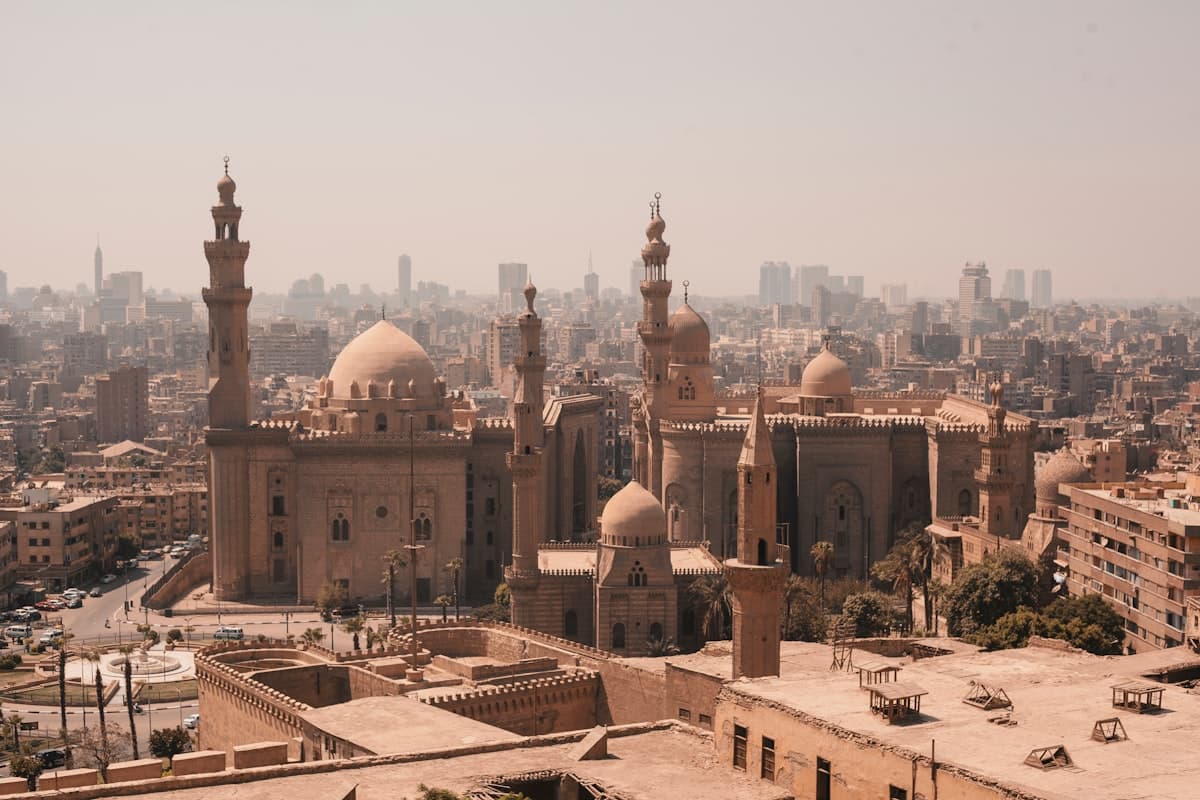
The Citadel of Cairo has been the seat of Egyptian power for longer than most nations have existed. Salah al-Din, the Kurdish general the West calls Saladin, began construction in 1176 AD using stones stripped from smaller Giza pyramids. That detail is not incidental: Saladin was making a political point about where power resided in Egypt, and it was not in the desert with the old gods. It was on this limestone spur above the city, where a commander could see every direction and be seen from everywhere below.
For the next seven centuries, whoever held the Citadel held Egypt. The Mamluks expanded it. The Ottomans occupied it after Selim I defeated the last Mamluk sultan, Tuman Bey, in 1517, then hanged him at one of Cairo's gates. Napoleon briefly made it his headquarters in 1798. The British garrisoned it until 1946. Egypt's modern army finally vacated the last sections in the 1980s.
What most visitors do not realize is that the Ottoman Cairo history embedded in the Citadel is not a single layer. It is four centuries of competing Albanian, Circassian, Turkish, and Egyptian ambitions stacked on top of Crusader-era military architecture, on top of Fatimid foundations, on top of a natural geological formation that the Pharaonic city of Memphis could see from twenty kilometers away. When you stand in the mosque courtyard and look north toward the medieval city, you are looking at the longest continuously inhabited urban landscape in the world.
---
What You Are Actually Looking At
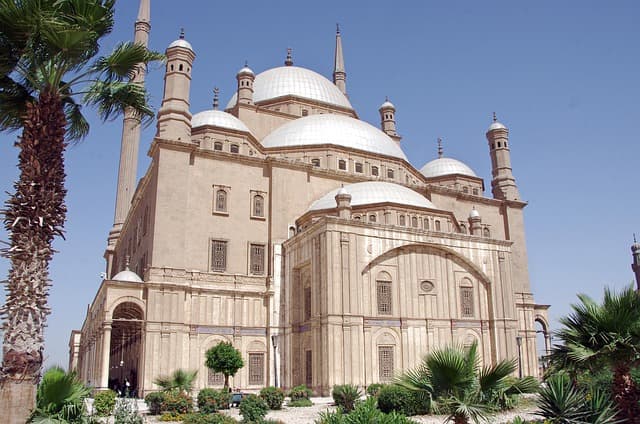
The Mohamed Ali Mosque is often called a copy of the Blue Mosque in Istanbul, and this comparison does more harm than good. Yes, both use the Ottoman half-dome cascade system that Mimar Sinan perfected in the sixteenth century. But Mohamed Ali's architect, Yusuf Boshnak, was working in 1830 with a budget limitation that Sinan never faced, on a cliff rather than a level plaza, and with a patron who had specific political needs the Istanbul mosque did not.
The exterior is sheathed in alabaster quarried from Beni Suef, a province south of Cairo. Alabaster is not a durable material. It is porous, prone to staining, and difficult to maintain. Mohamed Ali chose it anyway because it glows. From the city below, at any angle of light, the mosque reads as white fire against the Muqattam limestone. That was entirely deliberate. He wanted every Cairo resident to look up and see his building, not the older Mamluk minarets of the medieval city below.
Inside, the space is vast and somewhat cold. The original Ottoman fittings were largely replaced during a nineteenth-century renovation that introduced French Second Empire chandeliers and clock towers. The clock on the courtyard's south portico was a gift from King Louis-Philippe of France in 1846, given in exchange for the obelisk now standing in the Place de la Concorde in Paris. Egypt got a clock that stopped working within a decade. France got a 3,300-year-old monument that is still there.
Mohamed Ali's tomb is in the mosque's southeastern corner, a white marble enclosure behind a brass screen. It is quieter than it deserves to be. He died in Alexandria in 1849, having outlived most of his sons and his capacity for governance, his memory deteriorating for his final years. He is buried here not because he wanted to be, but because his successors needed him anchored to Cairo, to this building, to this dynastic statement in stone.
---
The Gawhara Palace: What Everyone Walks Past
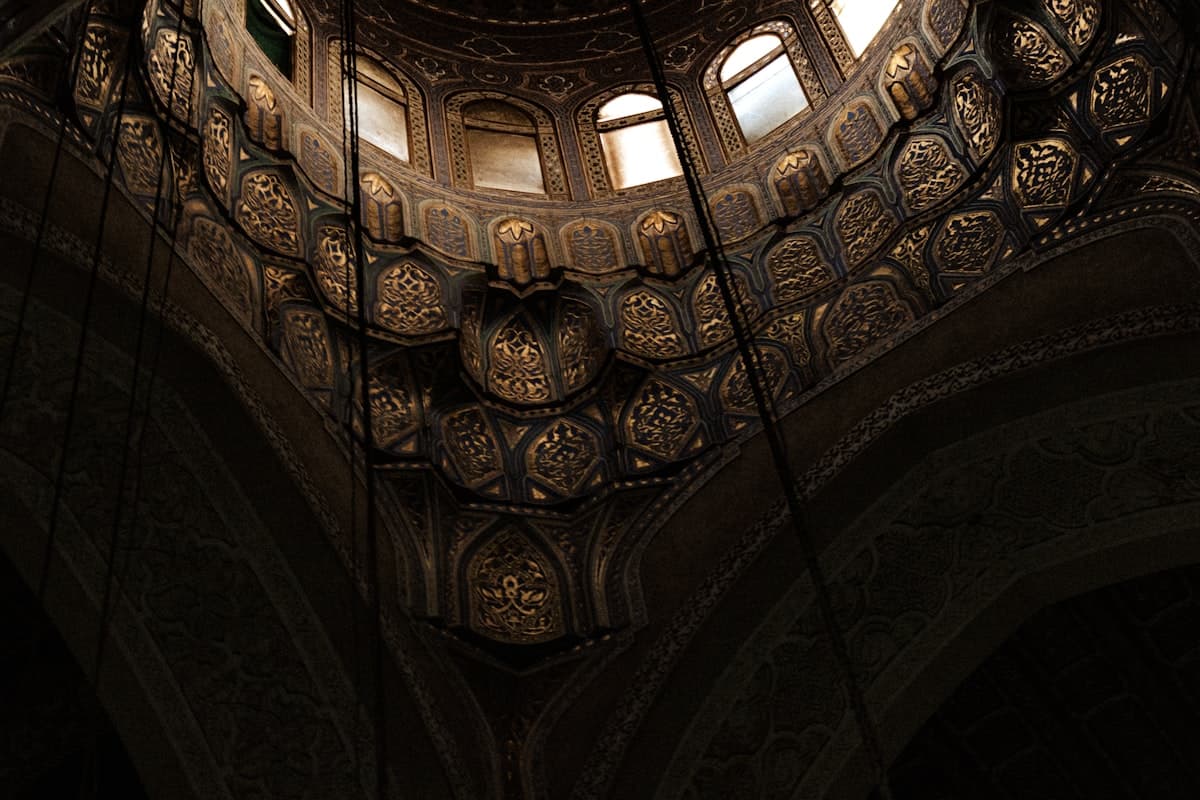
To the south of the mosque, set back from the main courtyard and often bypassed by tour groups on a schedule, the Gawhara Palace is one of the most undervisited significant buildings in Cairo. Mohamed Ali built it in 1814 as a formal reception palace, and it contains the best surviving record of what elite Ottoman Cairo interior life actually looked like.
The name means "jewel" in Arabic, which is unfortunately accurate in the sense that it is small and very easy to miss. What is not small is its historical weight. The palace's reception hall is where Mohamed Ali received foreign dignitaries, including the delegation that negotiated Egypt's cotton trade agreements with Britain. Those agreements, signed in rooms you can walk through for EGP 450, restructured the entire Egyptian agricultural economy and created the conditions that eventually led to the Urabi Revolt of 1879 and the British occupation of 1882.
The furnishings are a mixture of original pieces and period replacements following a fire in 1972. The painted ceilings are largely intact and show the Ottoman court style of the period: geometric borders, floral medallions, and a specific shade of turquoise that was the signature color of Mohamed Ali's patronage program. If you have any interest in how power was performed in nineteenth-century Islamic Cairo, this room is where you spend your time.
---
The Connections
The Citadel sits at the intersection of every Cairo story worth telling. Directly below it to the northwest, the mosque of Sultan Hassan, built between 1356 and 1363, is one of the largest religious buildings ever constructed in the medieval Islamic world. Sultan Hassan himself was assassinated before it was completed. His body was never placed in the mausoleum he built for himself because his killers hid it to prevent his tomb from becoming a pilgrimage site. The mausoleum has been empty for six and a half centuries.
The Al-Rifa'i Mosque next door to Sultan Hassan was completed in 1912 and contains the tombs of Egypt's last khedival and royal family, including King Farouk, who died in Rome in 1965, and, in a historical irony with few equals, Mohammad Reza Shah Pahlavi of Iran, who was buried there in 1980 after being refused entry to almost every country on earth. The last king of Egypt and the last Shah of Iran share a tomb wall in a mosque that was built to look medieval but is younger than the Eiffel Tower.
This is Ottoman Cairo history at its most layered: an Albanian pasha's fortress, a Kurdish general's walls, a Mamluk sultan's mosque, a Khedival family's shrine, and an Iranian shah's exile all compressed into four hundred meters of the same Cairo hillside.
---
Common Mistakes
Arriving at midday in summer. The Citadel's courtyard is white stone and open sky. Between 11am and 3pm from June through August, the heat is not atmospheric, it is physical. You will not enjoy the space, and you will not retain what you are looking at. Come before 9am or after 4pm.
Taking the sound and light show at the Citadel. It costs EGP 300 and delivers a narration you could read in twenty minutes. The lighting is underpowered, the sound design is poor, and the historical script was written before several significant recent interpretations of the Mohamed Ali period were published. The nighttime Citadel is worth experiencing. The show is not the way to do it.
Spending all your time in the mosque and skipping the ramparts. The north ramparts of the Citadel offer an unobstructed view of Islamic Cairo below, the medieval minarets, and on clear days, the Giza plateau. This costs nothing extra and takes fifteen minutes. Almost no one does it.
Hiring a guide at the gate. The informal guides who approach at the entrance are rarely trained archaeologists. Several tell a widely circulated story about Mamluk treasure hidden beneath the mosque that has no historical basis. If you want guided context, book through a licensed Egyptologist in advance.
Treating the Mohamed Ali Mosque as the only building. The Citadel complex contains the Mosque of al-Nasir Muhammad, built in 1318 and 1335, which has the most sophisticated Gothic-influenced Mamluk stonework in Cairo. It is older, more architecturally complex, and almost always empty. Most visitors photograph it from across the courtyard without entering.
Forgetting that the mosque is a working house of worship. Dress appropriately, which means covered shoulders and knees for everyone. Scarves are available at the entrance if needed. Behavior that would be normal in a museum is not always appropriate here, and the attendants will tell you so, which tends to derail an otherwise good morning.
Rushing to complete the Citadel before Islamic Cairo. The two areas together deserve a full day. If you have only a morning, the Citadel is the better single choice. If you have a full day, walk down from the Citadel through the Darb al-Ahmar neighborhood, which runs along the original Fatimid city wall, before entering the Khan el-Khalili area. This sequence makes geographic and historical sense in a way that the reverse does not.
---
Practical Tips
The best light for the mosque exterior is in the early morning from the southern courtyard, when the sun comes over the Muqattam hills and hits the alabaster facade directly. By 10am the light has flattened and the tour buses have arrived.
Water is sold inside the complex but expensive by Cairo standards. Bring your own. The climb from the taxi drop-off to the main gate is longer than it looks on maps, about ten minutes uphill on uneven stone.
The Citadel is occasionally closed for state events with very little public notice. Check with your hotel the evening before. If a head of state is visiting Egypt, the Citadel is among the first sites to close.
Combine the Citadel with the Sultan Hassan and Al-Rifa'i Mosque complex immediately below. Both are accessible on the same morning and together form the most coherent single picture of how Cairo built itself over eight centuries. The entrance fee for Sultan Hassan is separate: EGP 300 for foreigners.
There is a café inside the Citadel complex with a terrace view toward Islamic Cairo. The coffee is adequate. The view justifies the price of a cup.
Frequently Asked Questions
The Weekly Dispatch
More on Egypt, every Friday.
Cultural depth and places most guides never mention.
No spam. Unsubscribe anytime.