Ottoman Cairo and the Mohamed Ali Mosque: A Complete Guide
Mohamed Ali never set foot in the Ottoman court he swore loyalty to. He rebuilt Cairo's skyline to prove it. The mosque on the Citadel is his argument in stone.

Quick Facts
- Best time to visit
- October to March for cooler temperatures. Thursday afternoons and Tuesday mornings for smallest crowds. Avoid Friday midday when prayer and tour group schedules collide.
- Entrance fee
- EGP 450 (approx $9 USD), students EGP 225 with valid ID. Covers multiple sites within the Citadel complex.
- Opening hours
- Daily 8am to 5pm. Mosque closes briefly during each of the five daily prayers. Arrive before 10am to beat tour groups.
- How to get there
- Metro Line 1 to Mar Girgis then microbus/tuk-tuk EGP 10 to 20. Uber/Careem from central Cairo EGP 60 to 100. Taxi from Tahrir no more than EGP 80.
- Time needed
- 2 hours for mosque and Citadel plateau. 4 hours for full complex. Full day if combining with Darb al-Ahmar, Bab Zuwayla, and Khan al-Khalili.
- Cost range
- Budget EGP 600 to 900/day including transport, entry, and street food. Mid-range EGP 1,800 to 2,800 including guided tour and restaurant lunch.
Quick Facts
Best time to visit: October to March, when the Citadel plateau is not a convection oven. Friday mornings bring the thickest crowds after the midday prayer. Thursday late afternoon is the quietest window.
Entrance fee: EGP 450 for foreigners (approximately $9 USD at current rates), included in the Citadel complex ticket, which also covers the Military Museum and the Mosque of al-Nasir Muhammad. Students with valid ID pay EGP 225.
Opening hours: Daily 8am to 5pm. The mosque itself closes briefly during the five daily prayers. Plan around Dhuhr (midday) and Asr (mid-afternoon) if you want uninterrupted time inside.
How to get there: Cairo Metro Line 1 to Mar Girgis station, then a microbus or tuk-tuk up Salah Salem road to the Citadel gate (roughly EGP 10 to 20). Uber or Careem from central Cairo runs EGP 60 to 100 depending on traffic. Taxis from Tahrir should cost no more than EGP 80. The #951 bus from Abdel Moneim Riad terminal reaches the Citadel for under EGP 5 but runs infrequently.
Time needed: Two hours for the mosque alone if you are genuinely looking. Four hours for the full Citadel complex. A full day if you walk down into the neighborhood of Darb al-Ahmar afterward, which you should.
Cost range: Budget EGP 600 to 900 per day including transport, admission, and street food. Mid-range EGP 1,800 to 2,800 including a sit-down lunch at a Khan al-Khalili restaurant and a guided tour.
---
Why This Place Matters
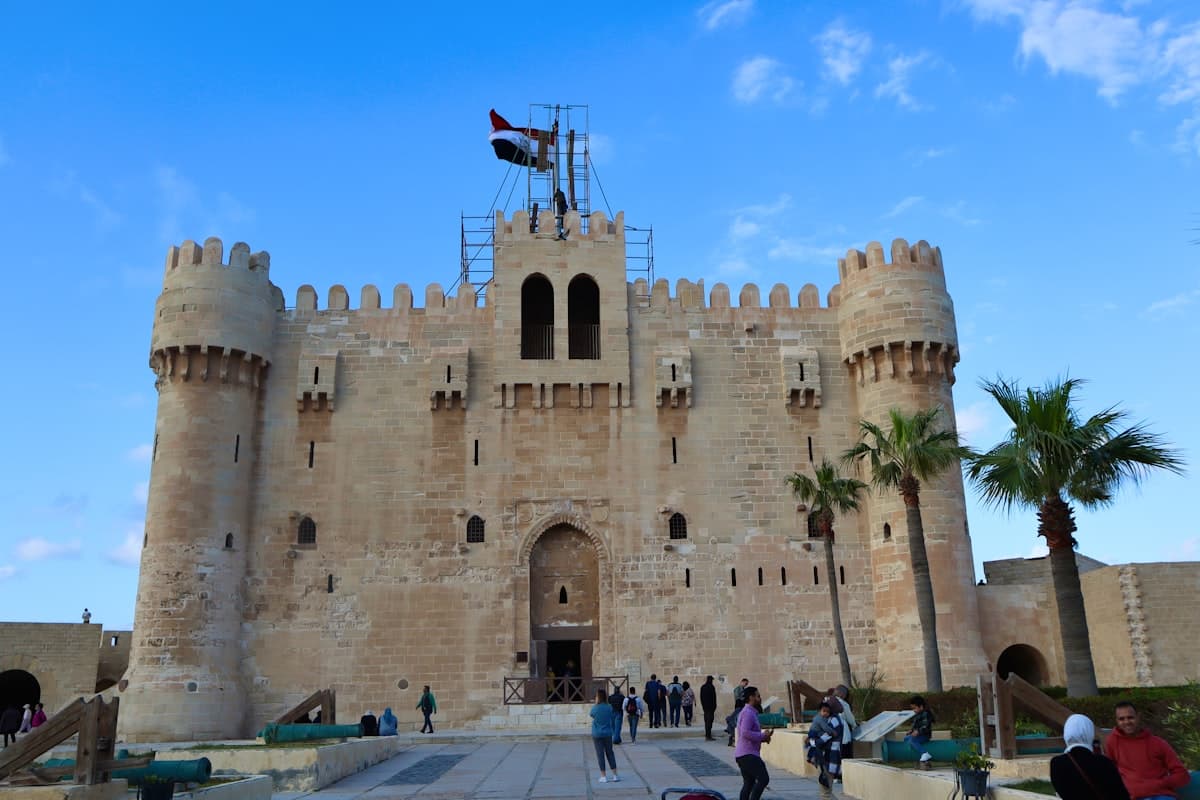
Mohamed Ali Pasha was Albanian. He arrived in Egypt in 1801 as part of an Ottoman force sent to dislodge Napoleon's army, which had already left. He spoke no Arabic. He had no hereditary claim to anything. By 1805, he was governor of Egypt, and by 1811, he had eliminated his last serious rivals by inviting the Mamluk beys to a celebration at the Citadel and sealing the gates. Between four hundred and five hundred Mamluk warriors were killed in what became known as the Citadel Massacre. One man reportedly escaped by jumping his horse from the ramparts. Historians argue about whether this happened. What is not disputed is that Ottoman Cairo history pivoted on that single afternoon, and the skyline you see when you stand anywhere in Cairo today is substantially the one Mohamed Ali ordered built in the aftermath.
The mosque he constructed between 1830 and 1848 was not built to honor Islam. It was built to be seen from Alexandria, from the Delta, from the desert road to Suez. It was a political object before it was a religious one, and understanding that changes everything about how you experience it.
The Ottoman Empire he nominally served was, by the 1820s, visibly weakening. Mohamed Ali had modernized Egypt's army with French military advisors, built a navy, sent the first Egyptian student missions to Europe, and was pressing south into Sudan for gold and enslaved soldiers. He was not a loyal provincial governor. He was building a rival state inside the Ottoman system, and the mosque on the Citadel was the architectural announcement of that ambition.
---
What You Are Actually Looking At
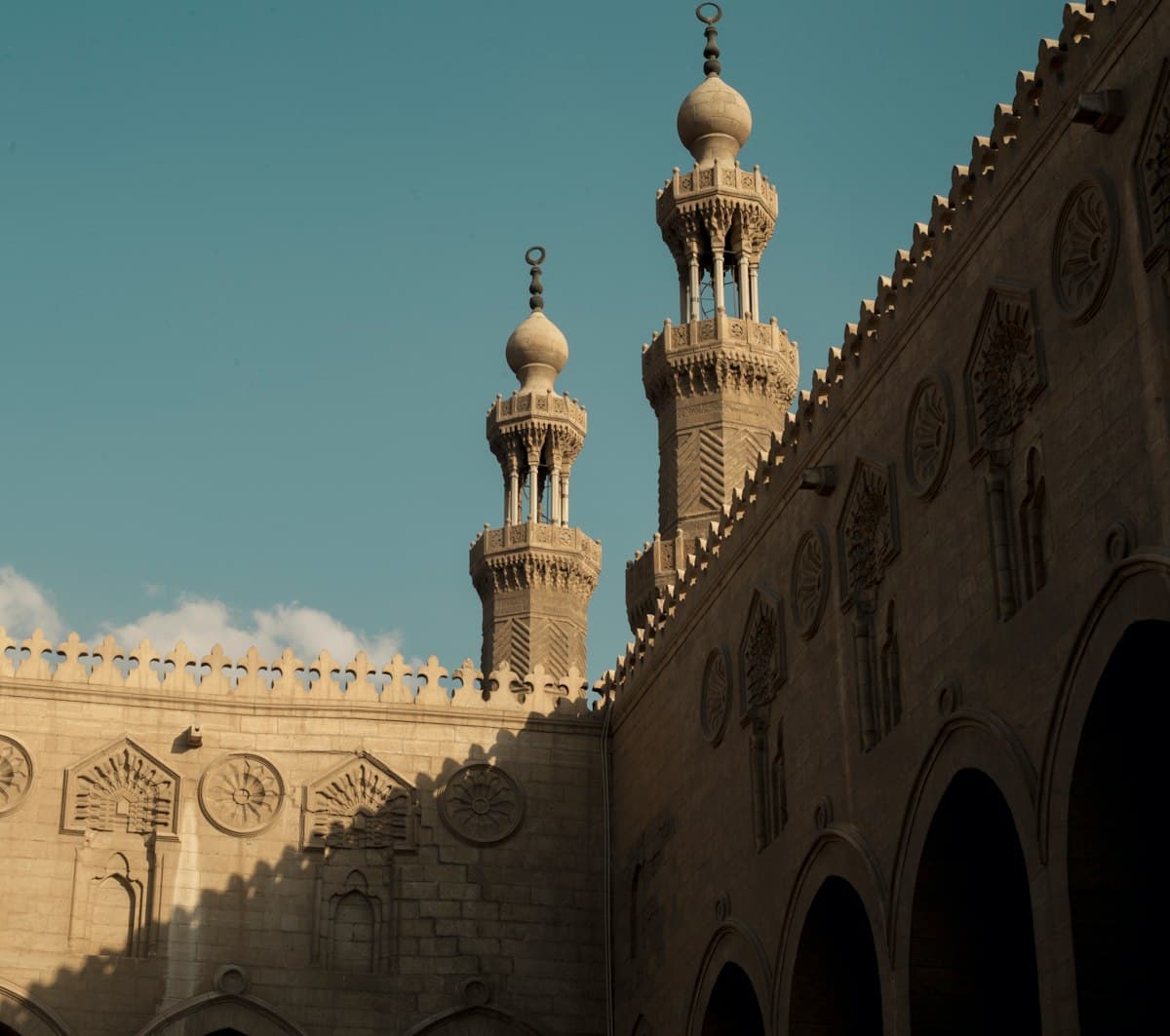
The mosque's silhouette, two minarets flanking a central dome with smaller half-domes cascading beneath, is a direct copy of the Ottoman imperial style established by Sinan's Süleymaniye Mosque in Istanbul, completed in 1557. This was not coincidence and it was not flattery. Mohamed Ali was making a claim to the same tradition of power, the same visual vocabulary of legitimacy, that the Ottoman sultans had used for three centuries.
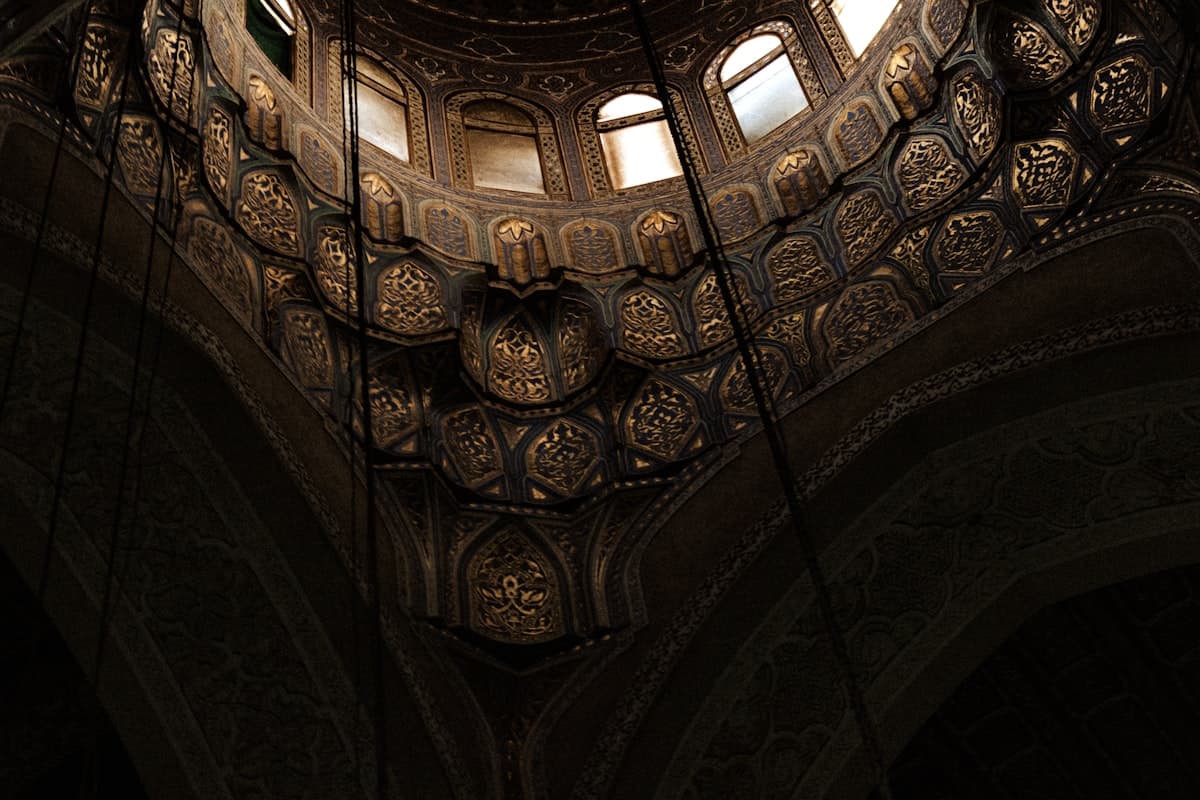
The architect was Yusuf Bushnaq, a Greek from Istanbul. The alabaster cladding on the exterior walls, which gives the mosque its alternative name, the Alabaster Mosque, was quarried from Beni Suef, about 120 kilometers south of Cairo. The interior dome rises 52 meters above the floor. The hanging lamps are modern replicas. The originals, along with much of the original interior decoration, were lost or replaced during a reconstruction ordered in the 1930s when the dome developed serious structural cracks. What you see inside is largely a twentieth-century interpretation of a nineteenth-century building. This does not make it less interesting. It makes it more Egyptian: every layer here covers another layer.
In the courtyard, there is a clock tower that France gave to Egypt in 1845. It has never worked reliably. Mohamed Ali gave France the obelisk from Luxor Temple in return. That obelisk stands in the Place de la Concorde in Paris today and keeps perfect time on every surrounding clock. Egyptians note this exchange without particular bitterness, mostly with recognition.
The Tomb You Walk Past
Mohamed Ali's tomb is inside the mosque, in the southeastern corner, enclosed by a marble screen. Most visitors photograph the dome and leave without finding it. The tomb itself is modest, almost deliberately so, which is strange for a man who redesigned a country's entire administrative, military, and educational structure in forty years. He died in 1849 in Alexandria, senile and no longer legally the ruler of Egypt, deposed by the Ottomans he had spent his career outmaneuvering. His son Abbas I brought his body to Cairo. The dynasty he founded, the Muhammad Ali dynasty, ruled Egypt until the 1952 revolution removed King Farouk, his great-great-grandson.
---
The Citadel Beneath the Mosque
The Citadel of Cairo predates Mohamed Ali by six hundred years. Saladin began its construction in 1176 on a spur of the Muqattam hills that offered a clear view of the Nile and the approaches from the desert. His engineers quarried some of the stone from the smaller pyramids at Giza. There is a specific account in Abd al-Latif al-Baghdadi's twelfth-century manuscript describing how workers dismantled the outer casing stones of the Giza pyramids to build Cairo's fortifications. The smooth white limestone that once covered the pyramids did not vanish. Much of it is in the walls of medieval Cairo.
For seven hundred years after Saladin, the Citadel was the seat of Egyptian government: Ayyubid, Mamluk, and then Ottoman. The Mamluk sultan al-Nasir Muhammad ibn Qalawun rebuilt it substantially in the early fourteenth century, and his mosque still stands on the Citadel plateau, largely ignored by visitors focused on Mohamed Ali's more dramatic structure. This is a mistake. Al-Nasir Muhammad's mosque was completed around 1335 and retains its original Mamluk portal, stripped from a Crusader church in Acre after the city fell in 1291. The portal's Gothic columns stand at the entrance of an Egyptian mosque inside an Islamic citadel. This is Ottoman Cairo history rendered visible in a single doorway: every conquest carries the architecture of the previous one inside it.
Mohamed Ali demolished most of the Mamluk structures on the Citadel to build his mosque and palaces. The Bijou Palace he constructed there later became a military museum. The irony is clean: a man who erased the Mamluks now shares a plateau with their only surviving monument, and most visitors cannot tell which is which.
---
The Connections: What Surrounds the Citadel
Walk down from the Citadel gate along Darb al-Ahmar street and you are inside one of the densest layers of Islamic Cairo. The street itself follows the line of the Fatimid city wall built in 1087. The neighborhood's name means Red Road, likely from the red ochre plaster that once covered the buildings, though some historians connect it to the blood that ran here during the Mamluk period's frequent succession wars.
The mosque of Qijmas al-Ishaqi on Darb al-Ahmar, built in 1481, is one of the finest late Mamluk buildings in Cairo and receives almost no visitors. The Mamluk woodwork inside is original. The stonework on the facade uses the black and white ablaq pattern that defines the Mamluk aesthetic. It sits between a mechanic's shop and a children's school. You can walk in during non-prayer hours. There is no ticket.
Three hundred meters north, the mosque and khanqah of Sultan Barsbay, built in 1432, occupies a site where Roman-period structures have been found in the foundations. The Fatimid street grid overlaid the Roman one. The Mamluk buildings replaced the Fatimid ones. The Ottoman buildings filled the gaps. Mohamed Ali and the Mohamed Ali mosque guide conversations tend to focus on the nineteenth century, but the nineteenth century here is the newest coat of paint on a very old wall.
If you continue north into Khan al-Khalili, you are in a market district established by the Mamluk emir Jarkas al-Khalili in 1382 on the site of the Fatimid royal cemetery. The Fatimid caliphs are buried somewhere beneath the current market stalls. No excavation has been permitted.
---
Common Mistakes
Arriving without covering your shoulders and knees. The mosque is an active place of worship. Coverings are available at the entrance for EGP 10 to 20, but they are thin, ill-fitting, and slow down your entry. Dress for the site.
Spending all your time inside and none of it on the terrace. The external terrace of the Citadel offers the clearest view of Cairo's layered geography: the medieval city piled against the base of the Muqattam hills, the Nile beyond, and on clear winter days, the Giza pyramids to the southwest. This is free with your entry ticket and most visitors miss it by heading directly inside.
Taking the offered guide at the gate without agreeing on a price first. Unofficial guides at the Citadel gate will attach themselves to you and then name a price at the end. Agree on EGP 150 to 200 for one hour before you begin, or decline entirely.
Paying for the Sound and Light Show at the Citadel. It costs EGP 350 and delivers generic narration about Saladin and Mohamed Ali that you will have already read in this article. The lighting is pointed at a building you can see in full daylight for a fraction of the cost. Skip it.
Skipping al-Nasir Muhammad's mosque. It is thirty meters from the entrance to Mohamed Ali's mosque, it is included in your ticket, and it contains that extraordinary Gothic portal from Acre that most visitors walk past without registering. It is better architectural history than anything in the larger building.
Coming on a Friday midday. The combination of the prayer crowd and tour groups peaks between 11am and 2pm on Fridays. If your schedule allows, Thursday afternoon or Tuesday morning will give you the same site with a fraction of the people.
Eating lunch inside the Citadel complex. The single cafe inside the walls is overpriced and mediocre. Walk ten minutes down to Darb al-Ahmar or fifteen minutes to Bab Zuwayla and eat at a local fuul and ta'meya shop for EGP 30 to 50 instead.
---
Practical Tips
The Citadel complex ticket covers multiple sites but does not always include temporary exhibitions, which run EGP 50 to 100 extra. Check at the gate before you pay.
The plateau is exposed. In summer the heat between 11am and 3pm is serious. Bring water. There are vendors inside but they charge three times the street price.
The mosque floors are marble and cold in winter. Bring socks if you plan to spend significant time inside.
For the Ottoman Cairo history and Mohamed Ali guide context at depth, the Egyptian Museum in Tahrir holds the personal effects and state documents of Mohamed Ali's court, including correspondence with Napoleon's marshal Kleber and early maps of his Sudanese campaigns. This is not well-signed and most visitors skip the upper floor entirely where this material lives.
If you want a licensed Egyptologist guide for the full Citadel and surrounding medieval city, expect to pay EGP 500 to 800 for a half-day. The Egyptian Tourist Authority maintains a list of registered guides at the Citadel gate. Ask specifically for someone who covers the Islamic period rather than a general Cairo guide, as the difference in knowledge depth is considerable.
The Aga Khan Trust for Culture has been restoring parts of Darb al-Ahmar since the early 2000s. Their restoration work on al-Azbakiyya garden and several Mamluk facades is technically excellent and they publish a free walking map of the district available at the Bab Zuwayla ticket office.
Frequently Asked Questions
The Weekly Dispatch
More on Egypt, every Friday.
Cultural depth and places most guides never mention.
No spam. Unsubscribe anytime.