Suez Canal: British Egypt, Colonial History & How to Visit
Britain occupied Egypt in 1882 specifically to control a canal it didn't build and didn't own. The full story is stranger than that.

Audio Guide: Suez Canal: British Egypt, Colonial History & How to Visit
Quick Facts
- Best time to visit
- October to April. The canal zone is Delta-humid in summer. Winter mornings give clear light and tolerable temperatures for walking the corniche and French Quarter.
- Entrance fee
- Canal corniche areas: free. Ismailia Museum: EGP 80 (approx $2.60 USD). Port Said National Museum: EGP 60 (approx $2 USD). Port Fouad public ferry: EGP 5 per person.
- Opening hours
- Ismailia Museum: Tuesday to Sunday 9am to 4pm, closed Monday. Corniche and canal viewing: accessible at all hours. Canal Authority visitor area: typically 9am to 3pm on weekdays.
- How to get there
- Bus from Cairo Turgoman station to Ismailia: EGP 45 to 65, approximately 2 hours. Service taxi Cairo to Ismailia: EGP 60 to 80 per seat, 90 minutes. Private car hire from Cairo: EGP 900 to 1,400 for the day.
- Time needed
- Ismailia alone: 4 to 5 hours for museum, corniche, and French Quarter. Full canal zone including Port Said: full day or overnight stay recommended.
- Cost range
- Budget EGP 300 to 600 per day in Ismailia including transport, entry fees, and meals. Mid-range with hotel and restaurant meals: EGP 1,200 to 2,000.
Quick Facts
Best time to visit: October to April, when the Delta heat is manageable and the canal light is clear in the morning.
Entrance fees: The Suez Canal Authority Museum in Ismailia: free entry to the grounds, small exhibits accessible without charge. The Canal Zone itself is a working waterway visible from public corniche areas at no cost. Organized ferry crossings at Port Said: approximately EGP 5 per person (under $0.20 USD). The National Museum of Egyptian Civilization in Cairo, which holds the best canal-era artifacts: EGP 200 (approx $6.50 USD), students EGP 100.
Opening hours: Canal observation areas along the Ismailia corniche are accessible at all hours. The Ismailia Museum: Tuesday to Sunday, 9am to 4pm, closed Monday. EGP 80 (approx $2.60 USD).
How to get there: Ismailia by bus from Cairo's Turgoman station, approximately EGP 45 to 65 one way, journey around two hours. By car from Cairo via the desert road, 120 kilometers. Service taxis from Cairo to Port Said run EGP 70 to 90 per seat. A private car hire from Cairo for the day costs EGP 900 to 1,400 depending on the season and your negotiating.
Time needed: A serious Ismailia day trip covers the museum, the corniche, the De Lesseps house site, and the French Quarter in four to five hours. Add Port Said if you want the full canal-mouth experience: budget a full day or an overnight.
Cost range: Budget traveler EGP 300 to 600 per day in Ismailia. Mid-range with a decent hotel and meals: EGP 1,200 to 2,000.
---
Britain seized Egypt in 1882 to protect a canal it did not build, did not finance, and technically did not own. The Suez Canal was a French and Egyptian project. It was funded by a bond issue that the British government itself refused to join. Then, twelve years after the canal opened, British forces landed at Alexandria, shelled the city's forts into rubble, and began an occupation that would last seventy-four years. They called it a "temporary measure."
This is the central fact of Suez Canal history in the British Egypt period: the most consequential waterway of the nineteenth century was used to justify a colonial occupation that its original builders never intended to enable. Understanding this requires going to the canal itself, not just reading about it. The canal is still there, still operating, and the layered evidence of who wanted it and who took it is visible in the architecture of Ismailia, the geography of Port Said, and the conversations you will have if you stop and listen.
Why This Place Matters
The canal that opened on November 17, 1869 was the project of Ferdinand de Lesseps, a French diplomat turned engineer, and Khedive Ismail, Egypt's ruler, who wanted so badly to appear as a modern European sovereign that he invited Empress Eugénie of France, Emperor Franz Joseph of Austria, and the Crown Prince of Prussia to the opening ceremony. He built an opera house in Cairo for the occasion. The premiere of Verdi's Aida, often cited as the opening commission, was actually delayed by the Franco-Prussian War and did not happen until 1871, two years later. This fact matters because it illustrates how thoroughly the historical record around the canal has been romanticized into something that serves everyone's preferred narrative.
The canal itself cut 193 kilometers through the Isthmus of Suez and reduced the sea journey from Britain to India by approximately 7,000 kilometers. That number explains everything about why Britain, which had voted against the canal project in the 1850s as too expensive and impractical, became obsessed with controlling it once it was built. In 1875, Prime Minister Benjamin Disraeli purchased 44 percent of canal company shares from a cash-strapped Khedive Ismail for 4 million British pounds, borrowed overnight from the Rothschild banking family. Britain owned nearly half the canal before a single British soldier arrived.
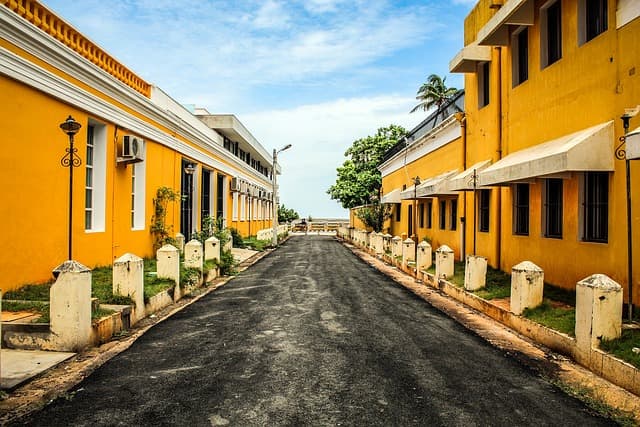
The occupation began in 1882 after a nationalist revolt led by Colonel Ahmed Urabi challenged Khedive control and, by extension, European financial dominance of Egypt. Britain framed the intervention as protecting order and protecting the canal. The real cost was borne by Egypt: the Urabi revolt was suppressed, Egyptian sovereignty was suspended in all but name, and British advisors effectively ran Egyptian ministries for the next seven decades. The canal zone itself was administered almost as a separate territory, its towns built in a colonial European style that you can still walk through today in Ismailia.
The Canal You Can Still See
Ismailia is the place to understand the canal as a lived environment rather than a historical abstraction. The city was built by the Suez Canal Company as its operational headquarters, and the French Quarter near the lake is almost entirely intact: wide boulevards, colonial villas with wraparound verandas, the De Lesseps Garden where a statue of the canal's chief engineer stood until it was pulled down after the 1956 nationalization. The plinth is still there.
The Ismailia Museum holds objects from the canal construction period alongside pharaonic artifacts from the region, which forces the useful comparison: this strip of land between the Mediterranean and the Red Sea has been a transit point for the ancient world since at least the 13th century BC, when Ramesses II built a series of fortresses along the "Ways of Horus," the military road connecting Egypt to Canaan along almost exactly the route the canal now follows. Napoleon surveyed this same isthmus in 1799 for a potential canal and received an incorrect survey suggesting the Red Sea was ten meters higher than the Mediterranean. That error delayed the canal by sixty years.
From the Ismailia corniche, on a clear morning, you can watch container ships moving north and south through the canal as if they are crossing a field. The scale is disorienting. A vessel 400 meters long, carrying 20,000 containers, moves past you at walking speed and nearly in silence. The canal handles approximately 12 percent of global trade. This is not a relic. It is the reason Egypt's geography still determines geopolitics.
Port Said: Where the Canal Meets the Sea
Port Said sits at the northern mouth of the canal and has a specific character that Ismailia does not. It was founded in 1859 as the construction base for the northern section of the canal and became, almost immediately, a free port and a byword in British writing for moral danger. Every ship transiting the canal stopped here. The city developed the entire service economy that followed: money changers, merchants, entertainment, and the particular social world of a port where sailors from forty countries spent layovers.
The architecture of Port Said's old center is extraordinary and almost entirely undiscussed in conventional tourism. The covered wooden balconies on the colonial-era buildings are a style found almost nowhere else in Egypt, a hybrid of Levantine, European, and North African elements that developed locally because the city had no architectural precedent to draw from. The Port Said National Museum covers the 1956 war specifically, when Egyptian and British accounts of the same events diverge so completely that you wonder if they are describing the same weeks. They are. Gamal Abdel Nasser nationalized the canal on July 26, 1956. Britain, France, and Israel launched a military operation in October. The United States, under Eisenhower, forced all three to withdraw. It was the moment Britain understood its empire was over.
The Connections
The Suez Canal sits inside a much longer argument about who controls the movement between Africa and Asia, and that argument runs through almost every period of Egyptian history you encounter elsewhere. The pharaonic "Canal of the Pharaohs," a waterway connecting the Nile to the Red Sea rather than cutting directly through the isthmus, was reportedly completed under Darius I of Persia around 500 BC after earlier attempts by Necho II of Egypt. It was later restored by the Roman emperor Trajan and used into the early Islamic period before silting up. Arab geographer al-Idrisi noted its remnants in the 12th century.
When you visit the Egyptian Museum in Cairo and look at the New Kingdom military reliefs, you are looking at armies moving along the same geographic corridor the British used in 1882 and that container ships use today. In the Islamic Egypt collection, the story of the Mamluk sultans is partly a story of controlling Red Sea trade routes, the same routes that made the Suez Canal worth fighting over.
The 1956 nationalization connects forward to the Aswan High Dam, which Nasser built partly with Soviet financing after the United States withdrew funding following the canal crisis. The High Dam, which you can visit at Aswan, submerged ancient Nubian temples and displaced tens of thousands of people. The political chain from the canal to the dam to the displacement is continuous, and almost no tour guide in Egypt will tell it to you in full.
Common Mistakes
Going only to Cairo to learn about the canal. The canal-related exhibits in Cairo are fine. But the canal is a living infrastructure, and the argument for going to Ismailia and Port Said is that you can stand next to it and understand scale in a way that photographs do not convey. Do not skip the canal zone itself.
Taking a Nile cruise operator's "Suez Canal excursion." Several operators run day trips that spend three hours in transit and forty minutes at a viewing point. You will see a ship from a distance and be handed a laminated fact sheet. The independent bus to Ismailia costs EGP 65 and gives you five hours in a real city. The organized excursion costs EGP 800 to 1,200 and gives you a parking lot.
Visiting only in summer. The canal zone in July and August is among the most humid environments in Egypt. The Mediterranean coast pulls moisture over the Delta and concentrates it here. October to April is genuinely better in every respect.
Missing the Ismailia Museum because it looks minor. It is a small museum. It is also one of the only places in Egypt where the construction history of the canal is treated as a story about Egyptian labor rather than European engineering. Approximately 1.5 million Egyptians worked on the canal's construction between 1859 and 1869. The early years relied on a forced labor system called corvée, which Egypt's government officially banned under British pressure in 1863, though enforcement was inconsistent. The museum addresses this directly. Most guides do not mention it at all.
Expecting the French Quarter in Ismailia to be curated or explained. It is not a museum district. It is a residential neighborhood where people live in colonial-era villas. Walk it, look at the architecture, note what has been maintained and what has not. The De Lesseps house is now a government guesthouse and not publicly accessible. The garden adjacent to it is accessible and worth thirty minutes.
Treating the canal as a British story. The British occupation is one chapter. The Ottoman suzerainty that preceded it, the French engineering that built it, the Egyptian labor that dug it, and the Nasserist nationalism that reclaimed it are all present in the physical landscape. If you visit thinking primarily about British Egypt, you will miss most of what you are looking at.
The sound and light show at Port Said, if you encounter it offered as a package add-on. Skip it. The harbor at night, watched from the corniche with tea from a local cafe, tells you more and costs nothing.
Practical Tips
The best single day for a canal visit from Cairo is a Tuesday or Wednesday: weekends in Egypt run Friday and Saturday, and the museums in Ismailia are closed Monday. Tuesday gives you a full working week day without the weekend crowds from Cairo families who use Ismailia as a lake destination.
Dress for a conservative Delta city, not a Nile tourist corridor. Ismailia is not Luxor. Women wearing shorts will attract sustained attention that makes the day uncomfortable. Light long trousers and a loose shirt work in all seasons.
The Ismailia corniche has several cafes with canal views where you can spend an hour watching ship traffic. The Panorama Restaurant near the canal authority building is the standard choice and is decent rather than good. The fish restaurants near the lake are better and cheaper. Ask locally for the tilapia, which comes from Lake Timsah and is as fresh as fish gets.
If you want to cross the canal by vehicle, the Ahmed Hamdi Tunnel runs under the canal near Suez city and is free to transit. The experience of driving under the canal is genuinely strange in a way worth doing once. For the ferry experience at Port Said, the public ferry between Port Said city and Port Fouad on the opposite bank runs constantly and costs effectively nothing. Five minutes, EGP 5, and you are standing on the Asian side of the Suez Canal watching container ships pass.
For the Suez Canal history British Egypt context specifically: the canal authority's official visitor center in Ismailia has improved in recent years and now includes a timeline exhibit that covers the 1869 opening, the 1882 occupation, the 1956 nationalization, and the 1973 war during which the canal was blocked by sunken ships and closed until 1975. That six-year closure is something most visitors do not know happened. It nearly bankrupted the Egyptian economy and accelerated the Camp David peace process with Israel, which reopened the canal to Israeli shipping. The timeline is dense and the English translations are imperfect, but the facts are there if you read carefully.
Frequently Asked Questions
The Weekly Dispatch
More on Egypt, every Friday.
Cultural depth and places most guides never mention.
No spam. Unsubscribe anytime.