Suez Canal History, British Egypt, and the 1956 Crisis Explained
Britain seized the Suez Canal Company's shares in 1875 for £4 million. Eighty-one years later, Nasser nationalized it in a speech where every time he said 'de Lesseps,' it was a codeword.

Quick Facts
- Best time to visit
- October to March. Temperatures are manageable and the Ismailia lakeside is comfortable for walking. Avoid July and August: humidity from Lake Timsah and the Bitter Lakes makes the heat significantly worse than Cairo.
- Entrance fee
- Suez Canal Authority Museum Ismailia: EGP 60 (approx $1.25 USD). Port Said National Museum: EGP 100 (approx $2 USD), students EGP 50. Canal viewing platforms: free.
- Opening hours
- Suez Canal Authority Museum: Daily 9am to 3pm, closed Fridays. Port Said National Museum: Daily 9am to 4pm. De Lesseps villa: nominally daily but hours are inconsistent; best before 11am on weekdays.
- How to get there
- Bus from Cairo Turgoman Station to Ismailia: EGP 60 to 80 (approx $1.25 to $1.65 USD), roughly 1.5 to 2 hours. Bus to Port Said: EGP 80 to 100, roughly 3 hours. Private taxi Ismailia to Port Said: EGP 350 to 450. Microbus Cairo to Suez City: EGP 30 to 50 from Abboud terminal.
- Time needed
- Ismailia alone: 4 to 5 hours minimum. Port Said alone: 4 to 6 hours. Full canal zone itinerary combining both cities works better as two days with an overnight in Port Said.
- Cost range
- Budget EGP 400 to 700 per day including bus transport, museum entries, and local food. Mid-range EGP 1,200 to 2,000 per day with private driver and hotel. Port Said hotels EGP 1,200 to 2,000 per night mid-range.
The Canal That Ended Two Empires
Britain seized the Suez Canal Company's shares in 1875 for £4 million, paid in cash, over a single weekend, because the Khedive of Egypt needed to cover gambling debts. The British government did not consult Parliament. Disraeli wrote to Queen Victoria: "It is settled. You have it, Madam." Eighty-one years later, Gamal Abdel Nasser gave a speech in Alexandria in which every single time he said the name "de Lesseps," it was a prearranged codeword to Egyptian army units to seize control of the canal's operating stations. By the time the crowd realized what was happening, it was done. This is the story most visitors to the Suez Canal zone never hear: not an engineering triumph, not a colonial convenience, but a 163-kilometer strip of water that detonated the British Empire and built the modern Middle East.
Quick Facts
Best time to visit: October through March. The canal zone cities of Ismailia and Port Said are tolerable in these months. Summer temperatures in Ismailia regularly exceed 38°C and the humidity from the lakes makes it worse than Cairo.
Entrance fees: Suez Canal Authority Museum (Ismailia): EGP 60 (approx $1.25 USD) Canal House / Ferdinand de Lesseps Villa, Ismailia: EGP 40 (approx $0.85 USD) when open to visitors, though opening hours are inconsistent Port Said National Museum: EGP 100 (approx $2 USD), students EGP 50 Viewing platforms along the canal: free
Opening hours: Suez Canal Authority Museum: Daily 9am to 3pm, closed Fridays Port Said National Museum: Daily 9am to 4pm
How to get there: Ismailia from Cairo: Air-conditioned bus from Turgoman Station, EGP 60 to 80 (approx $1.25 to $1.65 USD), roughly 1.5 to 2 hours Port Said from Cairo: Bus from Turgoman, EGP 80 to 100 (approx $1.65 to $2 USD), roughly 3 hours. Taxi from Ismailia to Port Said: EGP 300 to 400 by private car Suez City from Cairo: Microbus from Abboud terminal, EGP 30 to 50, roughly 1.5 hours
Time needed: Ismailia alone deserves 4 to 5 hours. A full canal zone day trip combining Ismailia and a canal viewing point requires an early start from Cairo. Port Said is better as an overnight.
Cost range: Budget EGP 400 to 700 per day including transport, food, and entry fees. Mid-range EGP 1,200 to 2,000 per day with a private driver and decent hotel.
Why This Place Matters
The canal opened on November 17, 1869, after ten years of construction that killed an estimated 120,000 Egyptian laborers, most of them corvée workers, meaning they were legally compelled to work without pay under a system the French company revived from Pharaonic practice. Ferdinand de Lesseps, the French engineer who built it, is still celebrated in Europe as a visionary. In Egypt, the moral accounting is different.
What most visitors do not register is how thoroughly the canal reshaped global geography. Before 1869, the journey from London to Bombay required sailing around the Cape of Good Hope: roughly 24,000 kilometers. The canal cut it to 15,000 kilometers. This did not merely speed up trade. It made British India dramatically cheaper to administer, which made the British Empire structurally dependent on keeping the canal open and friendly. When that dependency was threatened in 1956, Britain and France launched a military invasion of Egypt, and the United States, furious at being kept out of the plan, forced them to withdraw. The Suez Crisis effectively ended Britain's role as a global military power. A single canal, 163 kilometers long, accelerated the end of European empire.
The canal also sits on top of ancient geography. The Pharaonic canal, sometimes called the Canal of the Pharaohs, connected the Nile to the Red Sea as early as the reign of Senusret III around 1850 BC. The Romans re-excavated it. The Arabs reopened it again under Amr ibn al-As in 642 AD, primarily to ship grain from Egypt to Arabia during a famine. It silted over again by the 8th century. The modern canal is therefore the fourth iteration of the same basic idea, each one built by a different civilization reading the same geography.
Ismailia: The Colonial City That Still Feels Inhabited
Ismailia is the city de Lesseps built to house his engineers, and it remains the best place to understand the Suez Canal history in physical terms. The old European quarter around the Suez Canal Authority headquarters still looks, in places, like a French colonial street lifted from Algiers: wide tree-lined avenues, whitewashed villas, bougainvillea. De Lesseps' house is still standing. His furniture is still inside. His garden still has the fig tree he planted.
The Suez Canal Authority Museum in Ismailia holds the operational core of the story. There are maps showing the original French surveys, scale models of the canal under construction, photographs of the 1869 opening ceremony that was so expensive it financially destroyed the Khedive. Khedive Ismail spent the equivalent of today's $100 million on the opening celebrations alone, commissioning Verdi to write Aida (the opera was delivered two years late and premiered in Cairo in 1871, not at the opening). The debt from this period was the direct cause of Egypt falling under British financial control within a decade.
The viewing platforms near the Ismailia Ferry crossing are free and open. You can watch container ships, tankers, and LNG carriers pass at close range, close enough to read the names on their hulls. The canal here is roughly 300 meters wide. The ships look impossibly large for the space. The average vessel pays between $400,000 and $700,000 in transit fees for a single crossing. In 2021, the Ever Given container ship ran aground and blocked the canal for six days, costing global trade an estimated $9.6 billion. Standing at the bank, watching a ship the size of a city block slide past date palms, the arithmetic starts to feel real.
Port Said and the Idea of a Free City
Port Said sits at the Mediterranean entrance to the canal, and it has a specific character that Ismailia and Suez City do not. From 1945 to 1956, it was a duty-free port, and the architecture of that era, the covered arcades, the wooden balconies on iron brackets, the narrow commercial streets, reflects a city that was briefly very wealthy from retail. Egyptian families made day trips to Port Said to buy European goods they could not afford in Cairo. The Port Said National Museum covers the 1956 battle directly, when British and French forces bombed and then invaded the city following Nasser's nationalization announcement.
What most guides skip: the resistance that came from the population itself. The Egyptian army was outgunned and tactically unprepared, but civilian fighters in Port Said held out long enough to embarrass the invaders diplomatically. The museum documents this with photographs, weapons, and testimony that are genuinely affecting rather than merely nationalist. The British and French ceasefire was not primarily military: it came because the United States threatened to collapse the British pound sterling by dumping its sterling reserves unless Britain withdrew. Eisenhower called Eden and told him, bluntly, that the US would not support the pound. Britain withdrew within days.
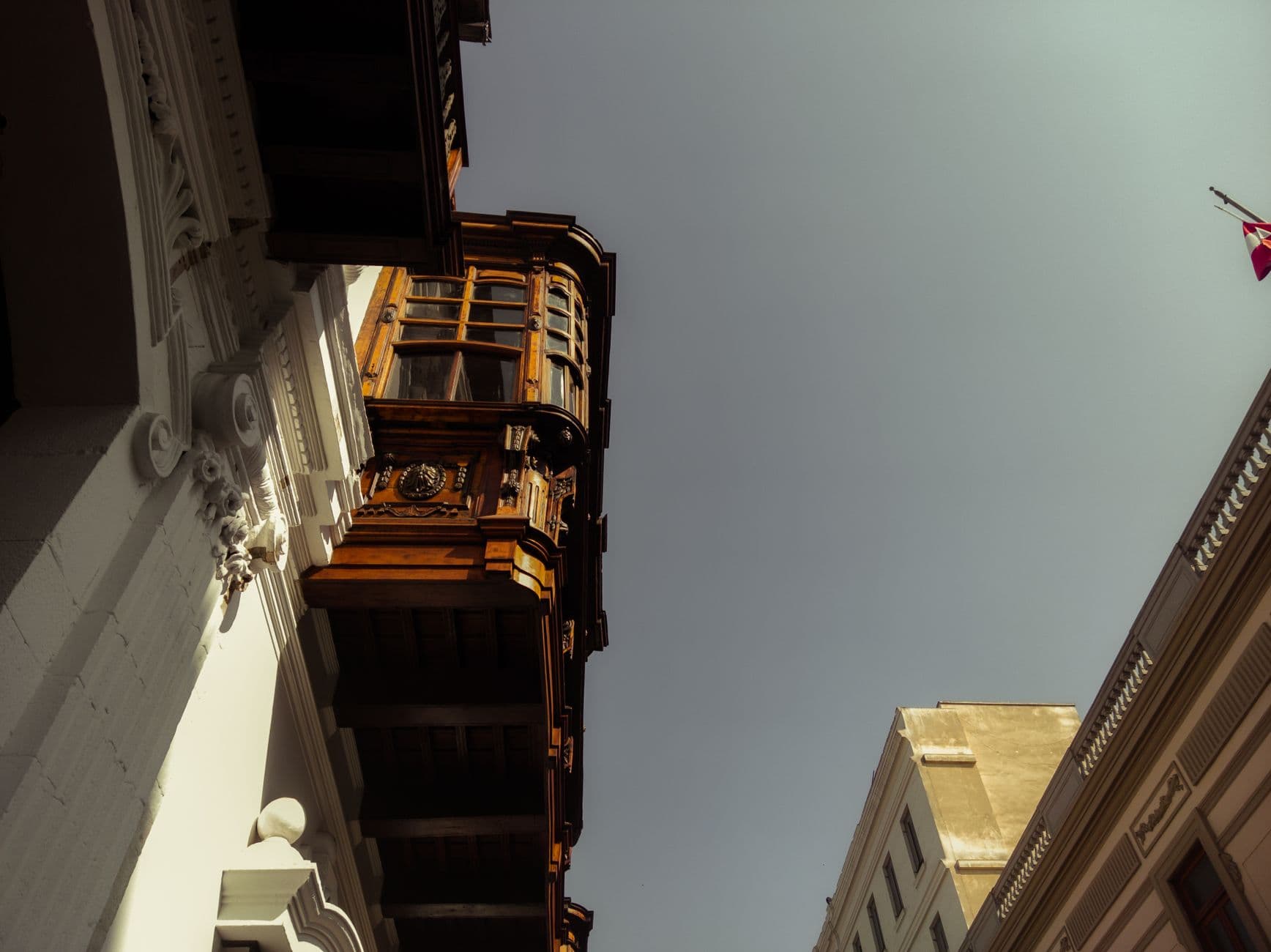
The wooden-balconied buildings of the old downtown are worth an hour of walking, though several have been demolished in recent years and not all of what remains is well-maintained. The harbor itself, where the canal meets the Mediterranean, has an observation area with a statue of de Lesseps that was pulled down by a crowd in 1956 and later partially restored. The empty plinth phase of that statue's history lasted thirty years.
The Connections
The canal zone sits within a geography dense with layered history that most day-trippers from Cairo never connect. The city of Suez at the canal's southern end stands near the ancient port of Clysma, which was the Roman terminus for Red Sea trade routes bringing pepper, silk, and ivory from India. The same stretch of water that Roman merchants crossed to reach the Sinai coast is now crossed by the canal ferries serving Sinai tourism.
The 1882 British military occupation of Egypt, which followed the financial control established after the canal share purchase, established a template for informal empire that Britain used across the Middle East for the next seventy years. The officers who administered Egypt studied Cromer's model. Cromer himself, Evelyn Baring, was British Agent and Consul-General from 1883 to 1907 and effectively ran the country while nominally serving the Khedive. His papers are in the British Library. His reforms modernized Egyptian irrigation and extended the railway network. They also suppressed Egyptian industrial development to protect British textile exports. The same canal that made Egypt strategically necessary also made Egypt politically unfree for seven decades.
Nasser's 1956 nationalization speech was delivered in Alexandria, not Cairo, deliberately: Alexandria was the commercial heart of foreign-owned Egypt, and saying it there meant something. The canal revenue he seized, roughly $100 million per year at the time, was what he used to finance the Aswan High Dam after the World Bank withdrew its offer under American and British pressure. The High Dam, completed in 1970, transformed Egyptian agriculture. The canal funded the dam. The dam ended the annual Nile flood that had fertilized Egypt for six thousand years. Everything is connected.
Common Mistakes
Treating this as a side trip rather than a destination. Ismailia especially rewards a night's stay. The early morning light on the canal, the relative quiet of a weekday, the food along the lakeside: none of this is accessible to someone who arrives on a day trip from Cairo at noon and leaves by four.
Taking a tour from Cairo that includes the canal as a thirty-minute photo stop. These tours typically drive you to a canal viewing point, give you fifteen minutes, and return. You will learn nothing and see a ship from a distance. The Suez Canal history is a story about economics, empire, and engineering. You need the museum, the city, and some time.
Skipping Ismailia for Port Said. Port Said is more photogenic and better known. Ismailia is actually more interesting. The de Lesseps house, the museum, and the canal crossing are all here, and the city itself is calmer, greener, and more navigable.
The Suez Canal Authority boat crossing. Some travel agents sell this as a highlight. It takes roughly twenty minutes on a functional ferry and shows you the canal from water level, which is less informative than seeing it from the bank. Skip it unless you need to get to the other side.
Coming in August. The humidity at the Great Bitter Lakes section is physically oppressive. You will be thinking about the weather, not the history.
Not reading the 1956 backstory before you arrive. The Port Said museum is excellent but assumes context. Arriving without knowing the basic sequence of nationalization, invasion, and American intervention means the exhibits will feel like disconnected objects. Thirty minutes of preparation before you come makes the whole visit three times more meaningful.
Expecting the canal to look dramatic. It is a canal. It is flat. The drama is entirely conceptual and historical. If you need visual spectacle, the canal delivers it only when a very large ship happens to pass. Time your visit to the Ismailia viewing platform using the publicly available ship schedule at VesselFinder to increase your chances of seeing transit traffic up close.
Practical Tips
The Ismailia bus from Cairo's Turgoman station runs frequently from early morning. Book no advance ticket: buy at the station. Carry small bills because the museums have difficulty making change.
Food in Ismailia is genuinely good. The lake fish, tilapia and mullet from Lake Timsah, is fresher here than anything you will eat in Cairo. The lakeside restaurants near the corniche are cheap and reliable. A full meal runs EGP 150 to 250 per person.
The de Lesseps villa hours are unpredictable. It is formally administered by the Suez Canal Authority and staff access is inconsistent. Arriving before 11am on weekdays gives you the best chance of finding it open. If it is closed, the garden perimeter is still visible from the road.
Port Said requires a hotel if you want more than four hours there. Decent mid-range options run EGP 1,200 to 2,000 per night. The downtown area is walkable from most hotels. A private car from Ismailia to Port Said, negotiated at the Ismailia taxi rank, should cost EGP 350 to 450 and takes about an hour.
Bring a hat, water, and comfortable shoes. The interesting parts of both cities require walking on uneven surfaces, and the canal bank is exposed with no shade.
For the politically interested traveler: the archive of the Egyptian National Archives holds documents from the 1956 crisis period, but access requires an academic affiliation and advance application. The reading room is in Cairo, not in the canal zone.
Frequently Asked Questions
The Weekly Dispatch
More on Egypt, every Friday.
Cultural depth and places most guides never mention.
No spam. Unsubscribe anytime.