Suez Canal History, British Egypt, and the Fight for the Water
Britain occupied Egypt in 1882 over a canal it didn't build and didn't own. Ismailia still carries the scar. Here's what the water actually tells you.

Quick Facts
- Best time to visit
- October to March. The canal corridor is flat and fully exposed; summer temperatures reach 40°C with no meaningful shade in the port towns.
- Entrance fee
- Ismailia Museum of Antiquities: EGP 200 (approx $6.50 USD), students EGP 100. Canal Authority Museum: EGP 50 (approx $1.60 USD). De Lesseps House Museum: EGP 30 (approx $1 USD). Canal corniche viewing: free.
- Opening hours
- Ismailia Museum: Saturday to Thursday 9am to 5pm, closed Friday. Canal Authority Museum: Saturday to Thursday 9am to 3pm. Port Said Military Museum: daily 9am to 4pm.
- How to get there
- East Delta buses from Cairo's Turgoman terminal to Ismailia: EGP 55 to 70, every 30 minutes from 6am, 1.5 to 2 hours. To Port Said: EGP 75 to 100, 2.5 to 3 hours. Shared taxis from Abbasiya (Cairo): EGP 80 to 100 per seat.
- Time needed
- Ismailia as a full day trip from Cairo is ideal. Port Said warrants a separate trip and benefits from one night's stay to walk the old European quarter at different times of day.
- Cost range
- Budget EGP 400 to 700 per day including transport, museums, and food. Mid-range EGP 1,200 to 2,000 per day including a lakeside hotel in Ismailia.
Quick Facts
Best time to visit: October to March. Summer heat along the canal corridor reaches 40°C and the industrial port towns offer no shade worth mentioning.
Entrance fees: The Suez Canal Authority Museum in Ismailia costs EGP 50 (approx $1.60 USD). The Ismailia Museum of Antiquities charges EGP 200 (approx $6.50 USD), students EGP 100. Canal viewing from the public corniche is free.
Opening hours: Ismailia Museum: Saturday to Thursday 9am to 5pm, closed Friday. Canal Authority Museum: Saturday to Thursday 9am to 3pm.
How to get there: From Cairo's Turgoman bus terminal, East Delta buses run to Ismailia roughly every 30 minutes from 6am. Cost: EGP 55 to 70 (approx $1.80 to $2.30 USD). Journey time is 1.5 to 2 hours. Shared service taxis from Abbasiya leave when full and cost EGP 80 to 100 per seat. For Port Said, buses from Cairo take 2.5 to 3 hours and cost EGP 75 to 100.
Time needed: Ismailia as a day trip from Cairo works well. Port Said deserves a separate trip and at least one night if you want to walk the old European quarter properly.
Cost range: Budget EGP 400 to 700 per day including transport, food, and museum entry. Mid-range EGP 1,200 to 2,000 per day including a hotel in Ismailia.
---
Why This Place Matters
Fifteen hundred ships pass through the Suez Canal every month, each paying a toll that goes directly to the Egyptian government. That arrangement has existed only since 1956, when Gamal Abdel Nasser stood in Alexandria's Manshiyya Square and nationalized the canal by uttering the name "de Lesseps" three times as a code word to begin the takeover. For the 87 years before that, the profits flowed to European shareholders while Egyptian laborers died building the thing in the first place.
Ferdinand de Lesseps, the French diplomat who secured the concession from Said Pasha in 1854, has a statue in Port Said that locals have repeatedly tried to remove. It survived until 1956, when it was pulled down during nationalization. The plinth stood empty for decades, a more honest monument than any replacement would have been.
The canal opened in 1869. The British government owned zero shares. Within six years, the British government had purchased 44 percent of the Suez Canal Company from a cash-desperate Khedive Ismail for 4 million pounds, a transaction arranged privately by Prime Minister Disraeli before Parliament had approved the funds. When a nationalist Egyptian army officer named Ahmed Urabi threatened European financial interests in 1882, Britain occupied Egypt militarily. It would not leave for 74 years.
This is the compressed history of the Suez Canal and British Egypt. But the canal corridor, the three cities of Port Said, Ismailia, and Suez, holds the full, complicated, layered version in its streets, its architecture, and its waterline.
---
Ismailia: The City Built to Run the Canal
Ismailia was planned from nothing in 1863 to serve as the administrative headquarters for canal construction. De Lesseps lived here. His house still stands, now a small museum on Mohammed Ali Quay, and it is barely visited, which is a mistake.
The house is a French villa with a garden running to the edge of Lake Timsah, a natural saltwater lake that the canal passes through. Inside are de Lesseps' personal belongings, original maps of the canal route, and period photographs of the construction workforce. That workforce is the part the official Suez Canal history tends to understate: Egypt's corvée labor system, abolished on paper in 1854 but reinstated for canal construction, forced an estimated 20,000 Egyptian men per month to work the canal route under conditions that killed thousands. Cholera outbreaks in 1865 killed workers and foreign engineers indiscriminately. The canal cost the Egyptian government approximately 100 million francs in forced labor alone, value never compensated.
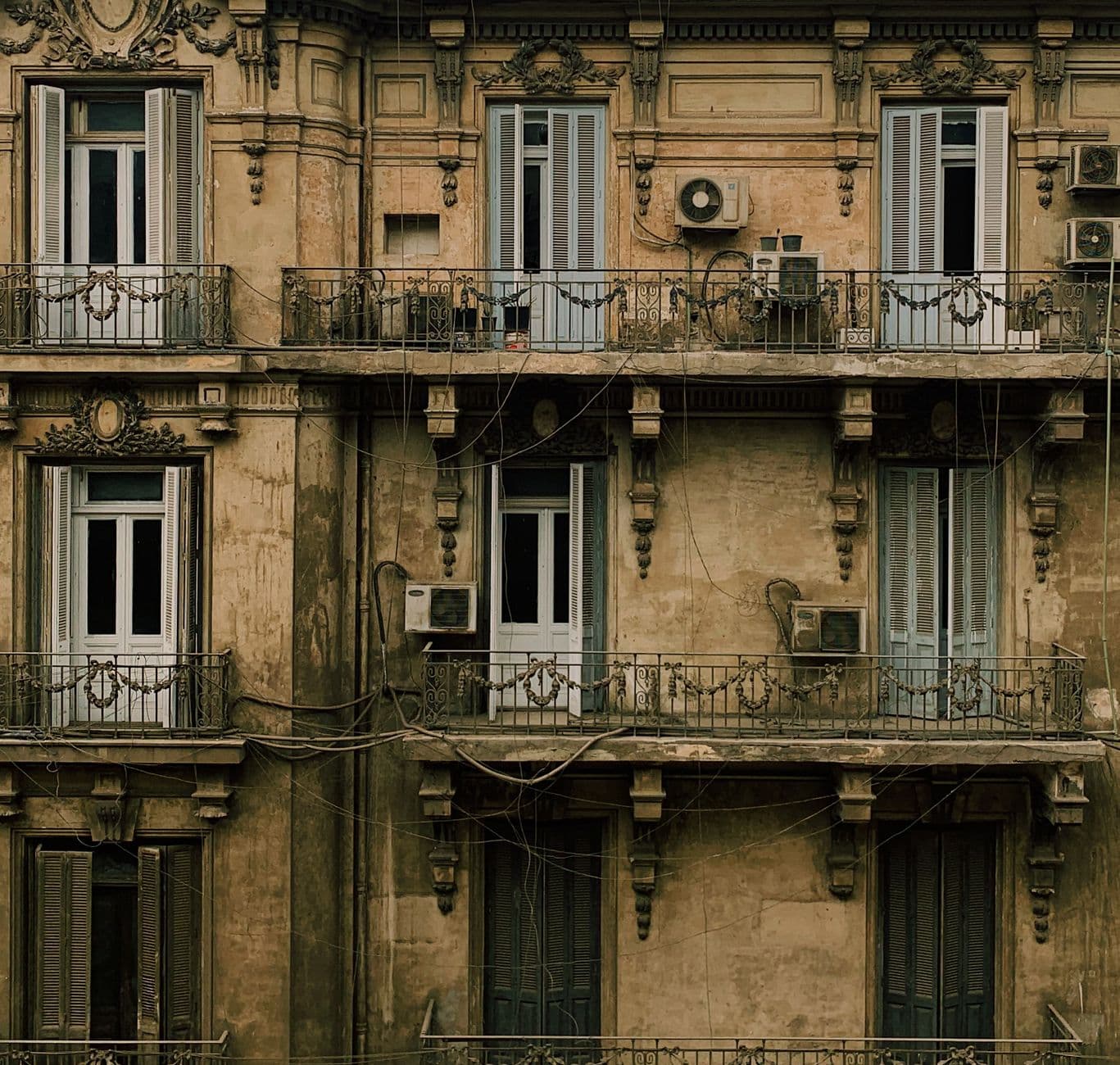
Ismailia's European quarter is an architectural time capsule in partial decay. The broad streets with their colonial villas and gardens were designed to house the canal company's foreign staff, segregated by income and nationality from the Egyptian quarters to the south. Walking Mohammed Ali Quay on a winter morning, past the jacaranda trees and the old casino building, you can feel the deliberate planning of a city that was never intended for the people who built what it managed.
The Ismailia Museum of Antiquities is underrated and genuinely worth two hours. It holds pre-dynastic and Pharaonic artifacts from the eastern Delta region, including objects from Tell el-Maskhuta, an ancient site near Ismailia that was likely the biblical city of Succoth and was a staging post on the ancient military road connecting Egypt to Sinai. The canal, in other words, was not the first time this particular strip of land was strategically important.
---
Port Said: Where Europe Arrived
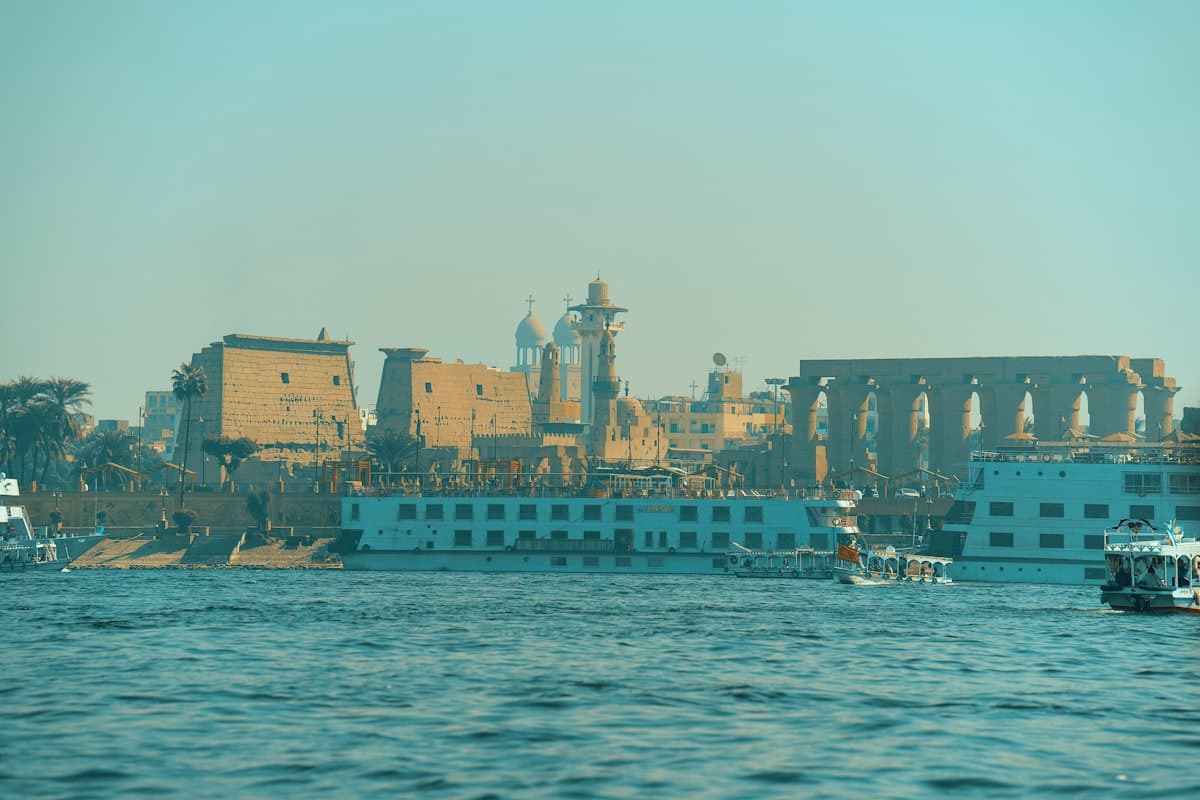
Port Said was founded in 1859 as a construction base at the Mediterranean end of the canal. By the time the canal opened a decade later, it had a population of 10,000 people and a reputation as one of the most cosmopolitan and disorderly ports in the eastern Mediterranean. Greeks, Italians, Maltese, Syrians, and French traders mixed with Egyptian workers and British administrators. The duty-free status granted to the port in 1866 made it a shopping destination for ships transiting between Europe and Asia.
The old city center around Palestine Street retains some of this layered character. The architecture is specific to Port Said: wooden balconies with ornate screens, buildings raised on columns against flooding, facades that combine Ottoman, French colonial, and Mediterranean vernacular elements in ways you won't see anywhere else in Egypt. Many of these buildings are deteriorating. Several are already gone. If you want to walk this neighborhood, go now.
Port Said was bombarded by British, French, and Israeli forces in November 1956, after Nasser nationalized the canal. The attack, known in the West as the Suez Crisis and in Egypt as the Tripartite Aggression, failed politically within days: the United States, in one of the Cold War's stranger moments, sided with Egypt against its own allies and forced a ceasefire. Britain and France withdrew in humiliation. The event effectively ended Britain's role as a global military power and is remembered in Port Said with a combination of genuine pride and the specific Egyptian way of treating historical trauma as material for dry humor.
The Military Museum in Port Said covers the 1956 battle in detail, including dioramas of the landings and a collection of weapons from the period. Admission is EGP 80 (approx $2.60 USD). It is more honest about the attack's human cost than most official military museums manage to be.
---
The Connections
The Suez Canal did not create the strategic importance of this corridor. It formalized and mechanized something that had existed for millennia.
The ancient Egyptians dug a precursor canal connecting the Nile to the Red Sea, possibly as early as the reign of Senusret III in the 19th century BCE. Darius the Great of Persia completed a version of it after conquering Egypt in 522 BCE, and left a trilingual inscription recording the achievement. Cleopatra reportedly considered moving her fleet through a version of this waterway before the Battle of Actium in 31 BCE. The Abbasid Caliph al-Mutawakkil closed a later version in 767 CE to prevent supplies from reaching a Hijaz rebellion.
The story Europeans tell about the Suez Canal, beginning with de Lesseps and the 1869 opening, skips 4,000 years of humans trying to solve the same logistical problem.
The British occupation of Egypt that the canal enabled had consequences running far forward in time. Lord Cromer, the British Consul-General who effectively ran Egypt from 1883 to 1907, deliberately suppressed Egyptian cotton manufacturing to protect British textile industry. He reduced spending on Egyptian education. He described Egyptians in his memoirs as incapable of self-governance. The 1919 Egyptian Revolution, the 1952 military coup, the 1956 nationalization: each of these events is a direct response to decisions made in the 24 years of Cromer's administration. Understanding the canal means understanding Cromer, and understanding Cromer means understanding why 1956 was not simply a political dispute about waterway ownership.
---
Common Mistakes
Visiting only Port Said and skipping Ismailia. Port Said gets more attention because it is more photogenic and has the canal viewing platforms. Ismailia carries more historical weight and has far fewer tourists. The de Lesseps house alone justifies the trip.
Expecting dramatic canal views. Ships appear to glide through the desert because the canal banks are low and the land is flat. From the Ismailia corniche or the Port Said waterfront, you will see large vessels appearing to move through sand. It is genuinely strange. But if you are expecting a dramatic gorge or a visible engineering feat on the scale of, say, the Panama Canal locks, you will be puzzled. The Suez Canal is impressive because of what it connects, not how it looks.
Taking an organized Suez Canal tour from Cairo. Most Cairo-based tours spend 45 minutes in Port Said, take a photograph of a container ship, and return. This is not a visit. It is a logistical alibi. Go independently by bus, give yourself a full day, and walk.
The Canal Authority building tour in Ismailia is not worth the bureaucratic effort. Arranging a visit requires advance permission from the Suez Canal Authority, which is possible but slow. The view of the canal from inside is not substantially different from what you get from the public corniche. Reserve that energy for the museums.
Arriving in Port Said without cash. ATMs exist but can be unreliable on weekends and near holidays. Bring EGP in hand.
Reading only the Western account of the 1956 crisis before you arrive. The British and French governments described the attack as a police action to protect canal traffic. Egypt lost 1,650 soldiers and an unknown number of civilians in the Port Said fighting alone. The Egyptian account is available and it changes what you see when you look at the Military Museum's dioramas.
Skipping the food. Ismailia's fish restaurants along Lake Timsah serve tilapia and mullet from the lake itself, grilled simply and served with bread and salad for EGP 120 to 200 per person. It is some of the best straightforward fish cooking in Egypt and most visitors walk past it entirely.
---
Practical Tips
October through February is the only sensible time to visit. The canal corridor is flat and exposed and the summer sun is serious.
The bus from Cairo is the most practical option for most travelers. The journey to Ismailia from Turgoman is predictable and comfortable. For Port Said, the East Delta company runs direct services that are slightly longer but equally reliable.
Ismailia has good mid-range hotels along the lake corniche. The Mercure Forsan Island (EGP 2,500 to 4,000 per night) is the most comfortable option and sits on a small island in Lake Timsah. Budget travelers can find adequate rooms in the city center for EGP 500 to 800.
In Port Said, the old city is best walked in the morning before noon. The heat and the midday quiet both make the afternoon harder for exploration.
If you are serious about the Suez Canal history and British Egypt context, read Robert Tignor's "Egypt: A Short History" and John Marlowe's "Anglo-Egyptian Relations" before you go. The physical experience of standing on the canal bank is significantly altered by knowing what you are looking at and why it was fought over.
Photographing the canal and ships from public areas is generally accepted. Photographing military or authority infrastructure is not. The distinction is not always clearly marked. When in doubt, do not.
The canal itself never closes. Ships pass 24 hours a day. A night visit to the Ismailia corniche, watching lit container ships move silently through the dark, is one of the stranger and more memorable things Egypt offers.
Frequently Asked Questions
The Weekly Dispatch
More on Egypt, every Friday.
Cultural depth and places most guides never mention.
No spam. Unsubscribe anytime.