Suez Canal History, British Egypt, and the Ismailia Guide
Britain occupied Egypt in 1882 ostensibly to protect the Canal it didn't build and didn't own. The full story is stranger than any textbook version.

Quick Facts
- Best time to visit
- October to March. Canal Zone summers combine 40-degree heat with lake humidity that makes the region significantly more uncomfortable than inland Egyptian cities.
- Entrance fee
- Ismailia Museum of Antiquities EGP 180 (approx $3.50 USD), students EGP 90. Canal Authority Museum EGP 100 (approx $2 USD). Corniche and harbor viewpoints free.
- Opening hours
- Ismailia Museum daily 9am to 5pm, closed Friday 11:30am to 1:30pm. Canal Authority Museum Saturday to Thursday 9am to 4pm.
- How to get there
- East Delta Bus from Cairo Turgoman station to Ismailia: EGP 80 to 100, approx 2 hours. Bus to Port Said: EGP 90 to 120, approx 2.5 hours. Private car from Cairo: EGP 600 to 800 return.
- Time needed
- Ismailia alone: full day. Ismailia plus Port Said: two days minimum, one overnight. Adding Suez city and the Bitter Lakes: three days.
- Cost range
- Budget EGP 700 to 1,200 per day including accommodation. Mid-range with private driver and better hotels EGP 2,000 to 3,500 per day.
The British never owned the Suez Canal. Not a single share. When they occupied Egypt in 1882, the Canal had been operating for thirteen years under a Franco-Egyptian company in which the Egyptian government held 44 percent of the stock. Britain invaded to protect a waterway it had no legal claim to, citing a debt crisis it had partly engineered. They stayed for seventy-two years. That contradiction is the whole story of the Canal, and understanding it changes how you read everything you see along its 193-kilometer length.
Quick Facts
Best time to visit: October through March, when canal-zone temperatures stay between 15 and 25 degrees Celsius. Summers in Ismailia and Suez hit 40 degrees with high humidity from the lakes.
Entrance fees: The Suez Canal Authority Museum in Ismailia charges EGP 100 (approx $2 USD). The Ismailia Museum of Antiquities charges EGP 180 (approx $3.50 USD), students EGP 90. Viewing the Canal from the Ismailia Corniche or the Suez Canal Bridge observation area is free.
Opening hours: Ismailia Museum daily 9am to 5pm, closed Fridays 11:30am to 1:30pm. Canal Authority Museum Saturday to Thursday 9am to 4pm.
How to get there: From Cairo, take the East Delta Bus Company service from Turgoman station to Ismailia (EGP 80 to 100, roughly 2 hours). Private car from Cairo runs EGP 600 to 800 return with a driver. For Port Said, direct buses from Cairo take 2.5 hours and cost EGP 90 to 120. Trains from Cairo to Ismailia exist but run infrequently and take longer than the bus.
Time needed: Ismailia alone deserves a full day. A proper Canal-zone trip covering Ismailia, Port Said, and Suez city requires two nights minimum.
Cost range: Budget EGP 700 to 1,200 per day including accommodation in Ismailia's cheaper hotels. Mid-range EGP 2,000 to 3,500 per day with a private driver and better hotels.
Why This Place Matters
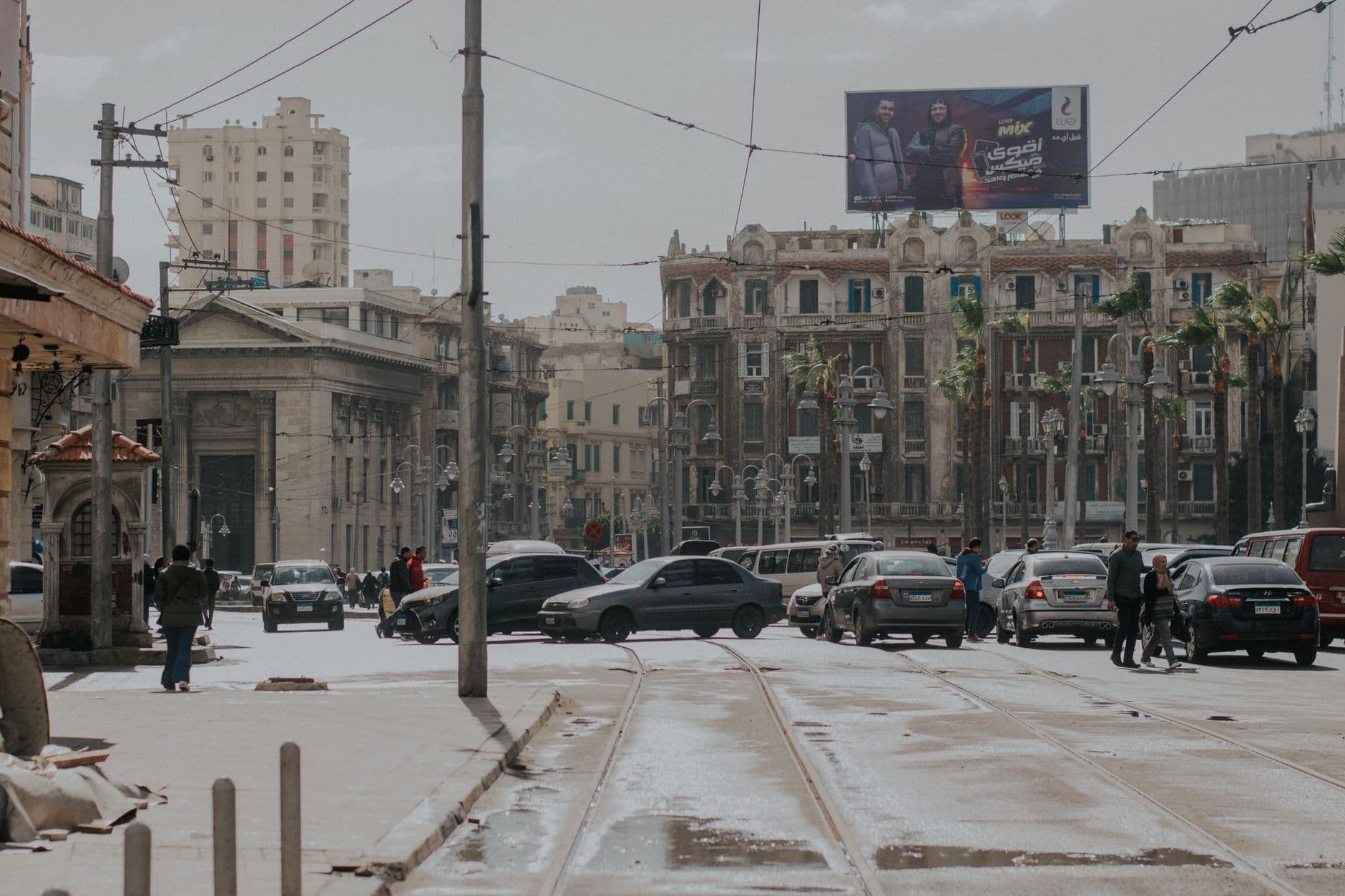
The Canal took ten years and an estimated 1.5 million Egyptian laborers to build, between 1859 and 1869. At least 125,000 of them died, mostly from cholera, dysentery, and exhaustion. Ferdinand de Lesseps, the French engineer who oversaw the project, used a system called corvée labor, the same forced-labor mechanism the Pharaohs had used to build monuments three thousand years earlier. The Khedive Ismail, Egypt's ruler, agreed to it. The fellahin, Egypt's peasant farmers, had no say.
When the Canal opened in November 1869, Empress Eugénie of France attended the inaugural ceremony at Port Said aboard the imperial yacht. Khedive Ismail had built a new opera house in Cairo specifically for the occasion. He commissioned Giuseppe Verdi to write an opera set in Pharaonic Egypt. Verdi's Aida was delivered two years late and premiered in 1871, but the opera house itself, the original Khedivial Opera House on Opera Square, became the heart of European Cairo for a century before burning down in 1971. The building that replaced it is now a parking garage.
The Canal's financial logic undid Egypt almost immediately. Ismail had borrowed heavily from European banks to fund the construction and the lavish opening celebrations. By 1875 he was forced to sell Egypt's 44 percent stake in the Suez Canal Company to Britain for 4 million pounds, roughly 430 million pounds in today's value. It was a fire sale arranged by Prime Minister Disraeli, who convinced Parliament to purchase the shares using a personal loan from Lionel de Rothschild. Egypt had sold control of its most valuable asset to pay interest on debts incurred partly to celebrate the same asset's opening.
The British on the Canal: What You Can Still See
The occupation that followed the 1882 Battle of Tel el-Kebir was never supposed to be permanent. British Foreign Secretary Lord Granville promised Egypt it would be a temporary arrangement. The temporary arrangement lasted until 1956.
Ismailia is where you feel this most directly. The city was built from scratch by de Lesseps in 1863 as the administrative headquarters of the Canal Company, and the British simply inherited its architecture and expanded it. The area known as the European Quarter still exists along the shores of Lake Timsah. Walk down Mohammed Ali Quay and you will find a grid of wide, tree-lined streets with villas set back behind gardens, their verandas and shuttered windows designed to catch the lake breeze. These houses were occupied by Canal Company employees, then British administrators, then Egyptian families after nationalization. Some are still private residences. None are marked or interpreted for tourists, which means almost nobody visits them.
De Lesseps' own house stands in Ismailia and is technically accessible as a small museum. It is modestly furnished and largely unvisited, which makes it one of the more honest colonial interiors you will find in Egypt. His personal documents, Canal Company papers, and period furniture are displayed without any particular narrative intervention. You are left to form your own conclusions about what kind of man lived here while 125,000 of his workers died in the desert.
The Ismailia Museum of Antiquities is the underrated institution in this story. It holds one of Egypt's least-visited but genuinely important collections, including sphinxes and statuary from the Hyksos period (roughly 1650 to 1550 BC) and inscribed blocks from the ancient city of Avaris, which the Hyksos used as their capital. This is not incidental. Avaris sat in the eastern Nile Delta along what was already an ancient route connecting Egypt to the Sinai and the Levant. The Suez Canal follows, with near-geometric precision, the same geographic logic that made this corridor strategically essential for four thousand years before de Lesseps ever arrived.
Nationalization and 1956: The Day Everything Changed
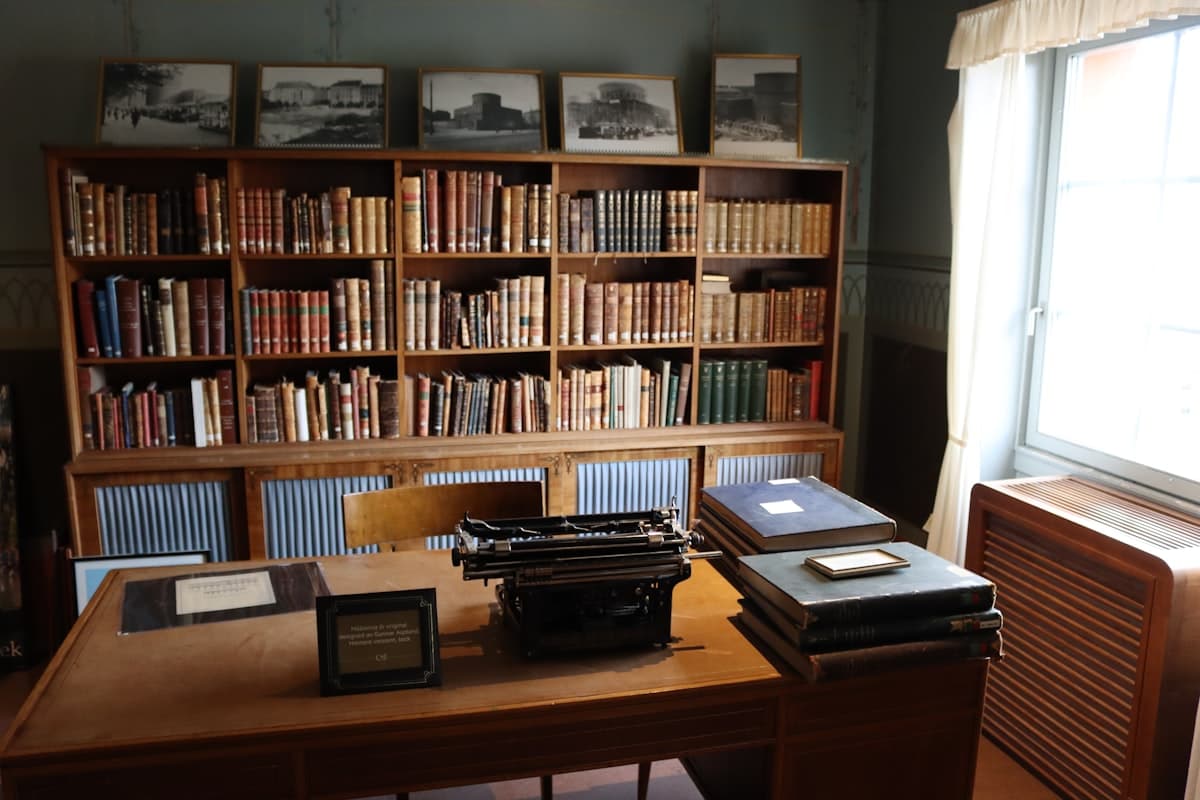
On July 26, 1956, Gamal Abdel Nasser gave a four-hour speech in Alexandria. Buried inside it was a code word: "de Lesseps." The moment Nasser said it, Egyptian intelligence officers who had been waiting in safe houses along the Canal moved simultaneously to seize every Canal Company installation. The nationalization of the Suez Canal took approximately one hour. The British and French, who had been warned nothing was coming, learned about it on the radio.
What followed was the Suez Crisis: Britain, France, and Israel invaded Egypt in October 1956. The United States, under Eisenhower, forced them to withdraw. It was the moment the British Empire effectively acknowledged it could no longer act independently of American power. Egypt kept the Canal. Nasser became the most popular Arab leader of the twentieth century. The Canal Zone cities, particularly Port Said, had been bombed. Port Said remembers this differently than London does.
In Port Said today, the area around the harbor entrance still has the feel of a city that knows it survived something. The Port Said Military Museum covers the 1956 war with an honesty about Egyptian casualties that Western accounts often skip. The entrance to the Canal itself, where the first ships passed in 1869, is visible from the harbor corniche. Container ships pass at close range, close enough that you feel the displacement of water. There is no fence, no visitor platform, no admission charge. You simply stand on the corniche and watch one of the world's most consequential waterways do its work.
The Connections: Canal, Pharaohs, and the Islamic World
The Suez Canal history British Egypt connection is often told as a Victorian story, but the Canal sits inside a much longer sequence. The ancient Egyptians built a forerunner of the modern Canal, a waterway connecting the Nile to the Red Sea via the Bitter Lakes, known as the Canal of the Pharaohs. Ramesses II used it. Darius I of Persia restored it after his conquest of Egypt in 525 BC and left four granite stelae along its banks recording the achievement, one of which is in the Ismailia Museum. The canal fell into disuse and was restored again by the Roman emperor Trajan, then again by the Umayyad Caliph Omar ibn al-Khattab in the seventh century AD, who used it to ship grain from Egypt to Arabia. It silted up definitively around 775 AD, when the Abbasid Caliph al-Mansur deliberately blocked it to prevent supplies reaching a rebellion in the Hejaz.
When de Lesseps arrived in the 1850s, he was not pioneering a new idea. He was executing a very old one with French engineering and Egyptian labor.
Port Said itself is a city that did not exist before 1859. It was built entirely to service Canal construction, named after Khedive Said Pasha who granted de Lesseps the Canal concession. Said's decision to grant that concession was arguably the single most consequential act of any modern Egyptian ruler, setting in motion the debt crisis, the British occupation, and ultimately the 1952 revolution that ended the monarchy. Said had been a friend of de Lesseps from childhood. He gave away the Canal because of a personal friendship. Egypt spent eighty years dealing with the consequences.
Common Mistakes
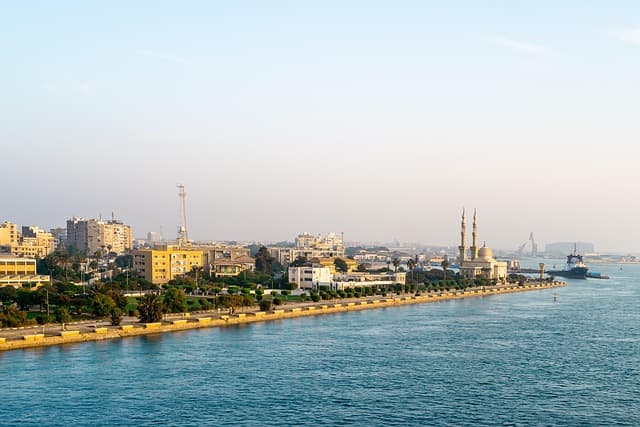
Spending all your Canal time in Suez city. Suez is the less interesting end. It is an industrial port with limited visitor infrastructure. Ismailia and Port Said offer far more in terms of architecture, museums, and the actual experience of watching the Canal operate at close range.
Taking the organized Canal cruise tours from Cairo. These day trips cost upwards of EGP 1,500 per person, rush you through Ismailia in three hours, and include a Canal crossing by ferry that you can do yourself for EGP 5 as a local passenger. The money buys you a bus and a guide reading from a script. Do it independently.
Skipping the European Quarter in Ismailia. Every group tour goes to the museum and the Canal Authority gardens and then leaves. The colonial architecture of Mohammed Ali Quay is the actual physical evidence of British Egypt in this region. You cannot understand the occupation from inside a museum. You understand it by walking streets designed for European administrators who never intended to leave.
The Sound and Light Show at Port Said. It costs EGP 300 and tells the story of the Canal in an order specifically designed to avoid mentioning British financial manipulation of the 1870s. The harbor corniche at night, watching lit container ships pass in silence, is a better experience and costs nothing.
Visiting in July or August. The Canal Zone in summer is genuinely hostile. High humidity from the lakes compounds the heat in a way that makes Luxor in August feel temperate by comparison.
Missing the Bitter Lakes. The Great Bitter Lake, midway along the Canal, is where the Yellow Fleet was trapped. In 1967, fourteen cargo ships from eight countries were caught between the Israeli and Egyptian lines after the Six-Day War closed the Canal. They sat in the lake for eight years, unable to move. The crews formed their own community, held their own Olympics, printed their own stamps. The Canal reopened in 1975 and the ships finally left. The Great Bitter Lake is visible from the road between Ismailia and Suez. Almost nobody stops.
Practical Tips
Bring your own water in summer, more than you think you need. The Canal cities are not as well-stocked with cafes and rest stops as Cairo.
For the Ismailia Museum, hire a local guide rather than using the museum's printed materials, which have not been updated in years. Ask your hotel to recommend someone. EGP 200 to 300 for two hours is a fair rate.
Stay at least one night in Ismailia rather than day-tripping from Cairo. Lake Timsah at dusk, when the light goes orange and the Canal pilots are changing shift, is worth the extra night.
For Port Said, the harbor area around the Canal Authority building is where the shipping traffic is densest. Go early morning when northbound convoys pass: container ships stacked forty feet high, moving in convoy formation through a channel barely wider than their beams. It is one of the most extraordinary things you will see in Egypt and it is completely free.
Photography of Canal Authority installations is technically restricted. In practice, nobody enforces this against tourists photographing ships from the corniche. Use your judgment about photographing anything that looks like active infrastructure or military equipment.
The border crossing to Sinai at Port Said exists but is not a practical tourist option. Use the Ahmed Hamdi Tunnel south of Suez or the Abu Rudeis ferry for Sinai access.
Frequently Asked Questions
The Weekly Dispatch
More on Egypt, every Friday.
Cultural depth and places most guides never mention.
No spam. Unsubscribe anytime.