Suez Canal History, British Egypt, and the Ismailia Question
Britain occupied Egypt in 1882 ostensibly to protect the Canal. They stayed 72 years. The town built to run it still looks like a stolen suburb of Lyon.

Quick Facts
- Best time to visit
- October to April. November is ideal for comfortable walking temperatures and clear Canal-bank visibility without the Delta summer humidity.
- Entrance fee
- Ismailia Museum: EGP 100 (approx $2 USD) foreigners, EGP 30 Egyptians. Canal bank viewing: free. De Lesseps house: EGP 50 to 80 (approx $1 to $1.50 USD), variable. Port Said Military Museum: EGP 60 (approx $1.20 USD).
- Opening hours
- Ismailia Museum daily 9am to 4pm, closed Mondays. Port Said Military Museum 9am to 3pm, closed Tuesdays. Canal bank and waterfront areas: accessible at all hours, with morning convoys from approximately 6am.
- How to get there
- Cairo to Ismailia: East Delta Bus from Turgoman terminal every 30 to 45 minutes, EGP 40 to 60 (approx $1 to $1.20 USD), 2 hours. Cairo to Port Said: East Delta Bus, EGP 60 to 80, 3 hours. Private taxi Cairo to Ismailia: EGP 600 to 900 (approx $12 to $18 USD).
- Time needed
- Ismailia: full day minimum, ideally one night. Port Said: 4 to 5 hours. Both cities combined: 2 days with a night in Ismailia.
- Cost range
- Budget EGP 600 to 900 per day. Mid-range EGP 1,500 to 2,200 per day including Mercure Forsan Island hotel and a proper lakefront fish lunch.
Quick Facts
Best time to visit: October to April, when the Delta heat drops to something a human can walk through without misery. November is ideal: clear skies, cool mornings, and far fewer visitors than Luxor or Cairo draws.
Entrance fees: The Canal Promenade in Ismailia is free. The Suez Canal Authority building and viewing areas in Port Said require no ticket but access to official viewing platforms for convoy watching can be arranged through local guides for EGP 200 to 400 (approx $4 to $8 USD). The Ismailia Museum costs EGP 100 (approx $2 USD) for foreigners, EGP 30 for Egyptians.
Opening hours: Ismailia Museum is open daily 9am to 4pm, closed Mondays. Canal viewing from the Ismailia or Port Said banks is possible at any hour, though morning convoy passages (from approximately 6am) are the main event.
How to get there: Buses from Cairo's Turgoman terminal to Ismailia run every 30 to 45 minutes, cost EGP 40 to 60 (approx $1 to $1.20 USD), and take roughly 2 hours. A private taxi from Cairo costs EGP 600 to 900 (approx $12 to $18 USD). To Port Said, buses from Cairo cost EGP 60 to 80 and take 3 hours. The East Delta Bus Company serves both routes reliably.
Time needed: Ismailia deserves a full day and ideally a night. Port Said benefits from 4 to 5 hours. Combining both in one trip requires a car or the willingness to take two buses.
Cost range: Budget EGP 600 to 900 per day. Mid-range EGP 1,500 to 2,200 per day including a decent hotel in Ismailia and a proper fish lunch at Lake Timsah.
---
Why This Place Matters
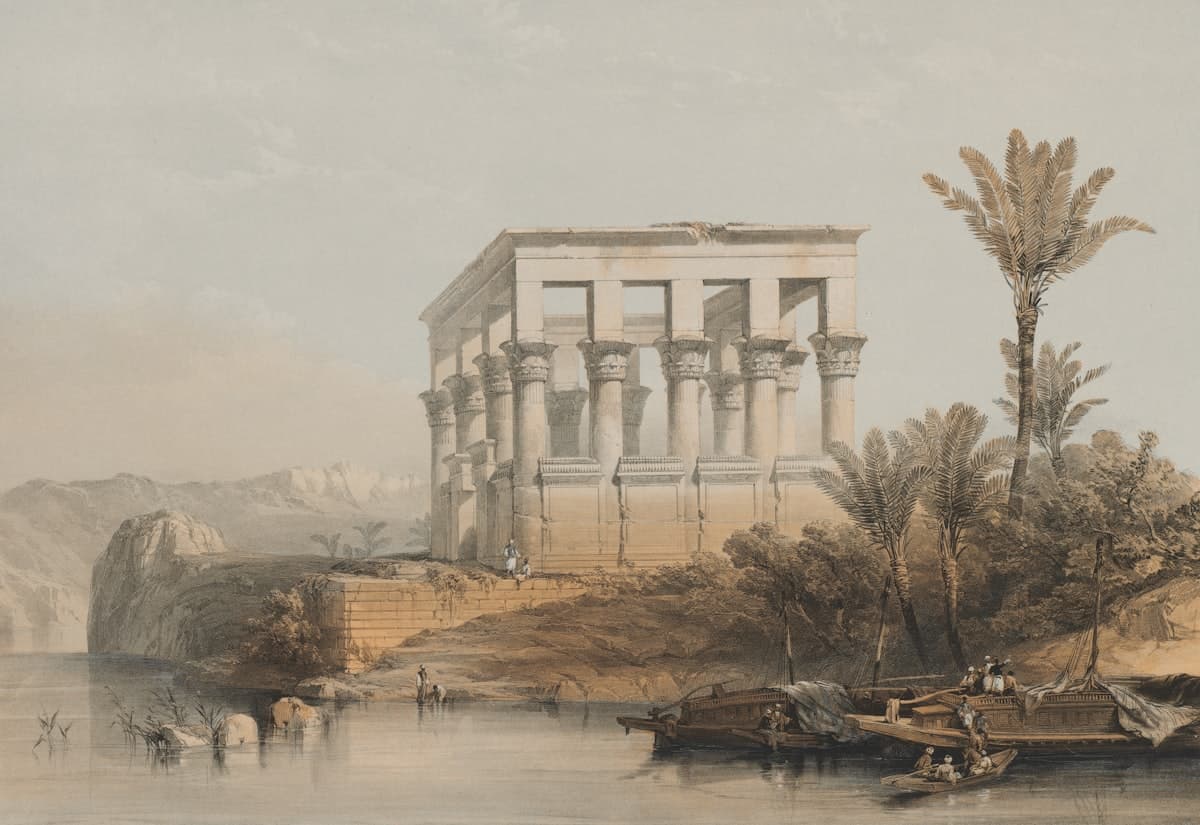
The Suez Canal did not make Egypt rich. That is the fact the monuments and the pageantry of its 1869 opening were designed to obscure. Ferdinand de Lesseps, the French diplomat who fronted the project, built the Canal using forced Egyptian labor, a system called the corvée that the Egyptian government had nominally abolished. An estimated 1.5 million Egyptians worked on the Canal between 1859 and 1869. Somewhere between 10,000 and 120,000 died, depending on which historian you trust and how they count the dead from disease, accident, and exhaustion. When it opened, Egypt owed so much to French and British creditors that Khedive Ismail was forced to sell his 44 percent stake in the Canal to the British government in 1875, for £4 million, a deal arranged in 48 hours by the Rothschild Bank. Britain owned nearly half a waterway cutting through a country it did not yet govern. Seven years later, it governed it too.
The British occupation of 1882 is the hinge on which modern Egyptian history swings. Officially triggered by a nationalist uprising under Colonel Ahmed Urabi, the occupation was fundamentally about protecting the Canal and the route to India. Britain called it a temporary measure. It lasted until 1954, and British troops remained in the Canal Zone until 1956. The Suez Canal history and British Egypt are not two separate topics. They are the same story told twice.
What makes this matter for travelers is that the physical evidence of all of this is still standing. Ismailia, the administrative city de Lesseps built to manage the Canal, looks today like a colonial fantasy interrupted mid-sentence. The villas are still there. The French Garden is still there. De Lesseps' own house is still there, with the furniture.
---
Ismailia: The City the Canal Built
Ismailia was designed in 1863 as a company town for the Suez Canal Company, and it has the uncanny quality of all company towns: it is too coherent, too planned, its proportions too deliberate for an Egyptian city. The streets are wide enough for a car and a thought to pass simultaneously. There are flame trees and bougainvillea and garden walls that belong somewhere in the south of France. This is not an accident. De Lesseps built it for Europeans, specifically for the engineers, managers, and administrators of the Canal Company, who were overwhelmingly French.
The Ferdinand de Lesseps House, now a museum though it operates on vague hours that do not always match what is posted, contains his original furniture, his writing desk, and a collection of objects that make you feel the particular discomfort of a preserved colonizer's domestic life. The garden has a statue of de Lesseps that was toppled in 1956 after nationalization and replaced with one of Nasser, then replaced again in a quieter edit of history. Ask the caretaker about the statues. He has opinions.
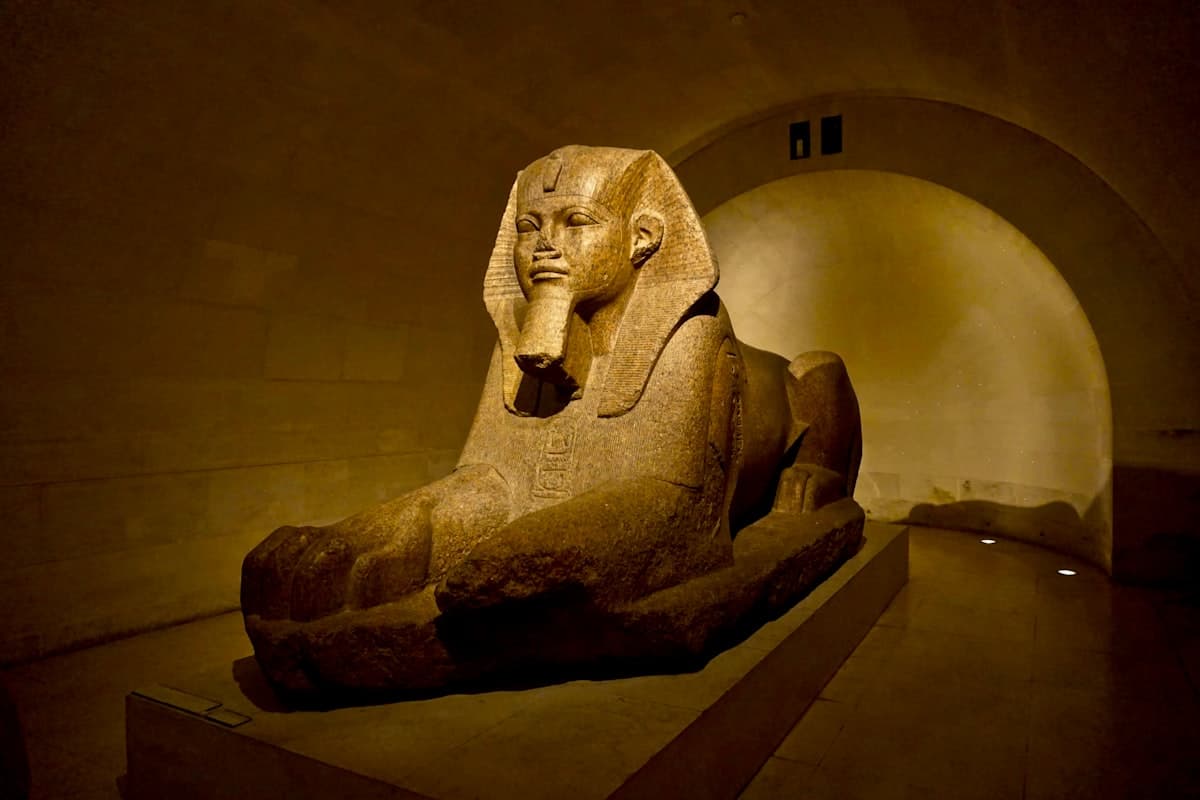
The Ismailia Museum nearby holds something genuinely unexpected: a sphinx of Ramesses II found in the area, because this region was not empty before the Canal. The ancient Egyptians built a water channel through this same isthmus, connecting the Nile to the Red Sea, approximately 3,500 years ago. Necho II started it around 600 BC. Darius the Great of Persia finished it a generation later. It silted up, was reopened by Trajan, silted up again, was reopened by the Arab general Amr ibn al-As in 641 AD to ship grain to Arabia, and was then deliberately blocked by the Abbasid caliph al-Mansur in 767 AD to starve a rebellion. The Suez Canal is not an engineering invention. It is a restatement of a very old geographic argument.
The Lake Timsah waterfront in Ismailia is where you eat: grilled fish from the lake, shrimp that arrive from the Red Sea through the Canal itself, and bread so fresh it steams in the December cold. The restaurants are unlabeled. Walk toward the water and someone will lead you in.
---
Port Said: The Duty-Free City That Forgot What It Was Selling
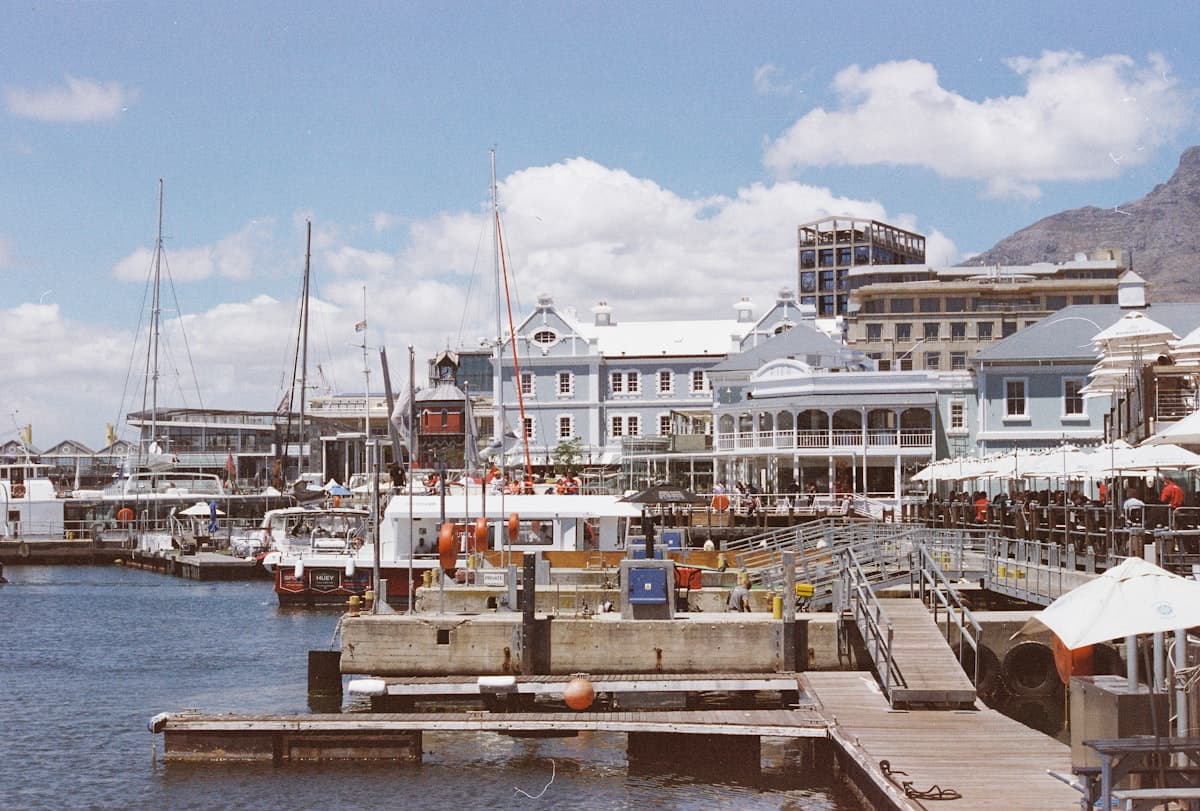
Port Said was built from nothing in 1859, when work on the Canal began. It did not exist before. The city was literally constructed on a sandbar at the northern mouth of the Canal, and everything in it, the soil, the stone, the timber, arrived by boat. It was named for Khedive Said Pasha, who granted de Lesseps the concession and probably did not fully understand what he was granting.
By the late nineteenth century, Port Said was one of the most cosmopolitan ports in the world, which is another way of saying it was a city of people with nowhere else to go. Greeks, Italians, Maltese, Syrian Christians, and Sephardic Jews ran shops and coffeehouses alongside Egyptian merchants and British officials. The architecture of the old city, when you can find it under the salt corrosion and the decades of neglect, is a Mediterranean hybrid: iron balconies over deep arcaded walkways, a style sometimes called Levantine or sometimes called Port Saidian, which is its own thing.
Most of the interesting buildings are on Muhammad Ali Street and Commerce Street near the harbor. The Eastern Telegraph Company building, from which Britain controlled its cable communications to India through the Canal, is still standing. The Port Said Lighthouse, completed in 1869 for the Canal opening, was the first building in Africa to use reinforced concrete construction. This is a specific and largely forgotten fact: Africa's first reinforced concrete structure was not a bridge or a dam but a lighthouse built for a party, for the premiere of the Suez Canal that Verdi was supposed to commemorate with Aida but was late delivering, so they opened with Rigoletto instead.
The military museum in Port Said covers the 1956 Suez Crisis and the 1973 October War in the granular detail that Egyptian military museums favor: maps, uniforms, photographs, models. It is earnest and partisan and worth three hours of your time if you understand that every military museum tells you more about the country that built it than the war it documents.
---
The Connections
The 1956 nationalization of the Canal by Gamal Abdel Nasser is inseparable from what you are looking at when you watch a container ship slide through the desert. Nasser announced the nationalization on July 26, 1956, in a speech in Alexandria in which he repeated the name of Ferdinand de Lesseps as a coded signal to Egyptian army units to seize Canal infrastructure simultaneously across the zone. The speech lasted four and a half hours. By the time it ended, the Canal was Egyptian.
Britain, France, and Israel responded with a coordinated military attack in October 1956. The United States, in the sharpest foreign policy rupture in the postwar Atlantic alliance, forced them to withdraw. Eisenhower threatened to sell US sterling reserves and destroy the pound if Britain did not cease fire. Britain ceased fire. This moment, the Suez Crisis, is generally understood by historians as the formal end of British imperial power, the point at which the postwar order made clear that empire was finished as a geopolitical instrument.
The irony is visible in Ismailia today. The villas that Canal Company engineers built are now used by Suez Canal Authority employees, who are Egyptian, who run one of the largest revenue-generating waterways on earth. The Canal earns Egypt approximately $9 billion per year in transit fees. It is the country's second or third largest source of foreign revenue depending on the year. De Lesseps built this as a French enterprise controlled by French capital. It generates income for Egypt, distributed partly to fund the Bibliotheca Alexandrina, the opera house, and the university scholarships that connect to Alexandria, where this story begins and where, if you trace the Mediterranean history carefully enough, it never quite ends.
Ismailia also connects to the Coptic experience through an overlooked detail: the forced labor that built the Canal included Coptic Egyptians from Upper Egypt, many of whom were recruited or coerced from the same communities that had been building, quarrying, and farming this land since before the Pharaohs were a coherent concept. The Canal's human cost crossed religious and ethnic lines in the way Egyptian suffering has always crossed lines that its rulers preferred to draw.
---
Common Mistakes
Skipping Ismailia for Port Said. Most tour operators default to Port Said because it is slightly closer to Cairo and has a bigger hotel stock. Ismailia is the more interesting city. It has the museum, the de Lesseps house, the colonial street grid that tells the story physically, and a waterfront that is actually pleasant. Go to Ismailia first.
Arriving expecting infrastructure. The Ismailia Museum's posted hours are aspirational. Arrive before noon, bring EGP 100 in cash, and if the museum is locked, ask the guard at the gate. There is usually a guard. He can usually open it. This is Egypt: the building being locked does not mean it is closed.
Taking the sound and light show at Port Said. It costs EGP 300, runs for 50 minutes, and tells you nothing you will not get from reading the military museum plaques with more patience. Skip it. The money is better spent on dinner.
Ignoring the architectural context. The arcaded buildings of Port Said are collapsing. Within a decade, significant portions of the heritage streetscape will be gone or unrecognizable. Walking the old commercial district now is not tourism. It is witnessing. Do it with intention and a decent camera.
Expecting to watch a ship and feel dramatic emotion immediately. The ships are enormous, which you expect, but the Canal is narrow enough that they seem to be moving through the desert itself, with no visible water beneath them. This is the visual surprise. Give yourself time to sit with it. Bring water. There is no shade on the Canal bank.
Treating the Canal as one site. The Suez Canal history and British Egypt unfold across a 190km stretch with three distinct cities, each with its own character. Ismailia is colonial administration. Port Said is cosmopolitan trade. Suez city at the southern end is industrial and harder-edged and mostly skipped by travelers, which means its Ottoman and British-era buildings are still there and still largely unstudied. If you have a fourth day, go south.
Assuming all of this is safely in the past. The Canal Zone was the site of sustained guerrilla warfare between Egyptian fedayeen and British troops from 1951 to 1952, a period Egyptians call the Suez Intifada. British troops burned the city of Ismailia's police barracks in January 1952, killing 50 Egyptian policemen who refused to disarm. Three days later, on January 26, downtown Cairo burned. This sequence of events led directly to the Free Officers' coup of July 1952 and everything that followed. The Canal is not a historical curiosity. It is the ignition point of modern Egypt.
---
Practical Tips
Ismailia has one genuinely good hotel: the Mercure Forsan Island, situated on an island in Lake Timsah, which feels improbably pleasant given its surroundings. Rates run EGP 1,800 to 2,500 per night (approx $36 to $50 USD). Book directly through the hotel. Budget accommodation exists in the city center at EGP 400 to 600 per night, variable in quality.
For convoy watching, ships transit the Canal in convoys, northbound in the morning and southbound in the early afternoon. The morning convoy at Ismailia passes from approximately 6am to 8am and is worth setting an alarm for. The scale becomes clear at dawn when the light is flat and the ships appear over the desert horizon like moving buildings.
The Ismailia Museum's collection of pre-Canal-era artifacts, particularly the Pharaonic material from the Eastern Delta, is consistently underrated. Plan 90 minutes minimum.
From Cairo, the 8am East Delta Bus from Turgoman gives you a full day in Ismailia. Last bus back is around 9pm. Do not miss it: taxis at that hour from Ismailia to Cairo run EGP 800 to 1,000.
Bring a physical map of old Port Said if you plan to walk the heritage district. Navigation apps lag in areas where streets have multiple names or where the physical street does not match the registered one, which in Port Said's older quarters is frequent.
Frequently Asked Questions
The Weekly Dispatch
More on Egypt, every Friday.
Cultural depth and places most guides never mention.
No spam. Unsubscribe anytime.