Suez Canal History, British Egypt and the Politics of a Ditch
Britain occupied Egypt in 1882 over a canal it didn't build, didn't own, and couldn't afford to lose. The ditch changed everything. Here's what to see.

Quick Facts
- Best time to visit
- October through March. Summer months bring high humidity and temperatures above 38°C in an already hot corridor between two bodies of water.
- Entrance fee
- Suez Canal Authority Museum: EGP 60 (under $2 USD). Port Said National Museum: EGP 100 (approx $3 USD). Canal viewing areas: free.
- Opening hours
- Suez Canal Authority Museum: Sat to Thu, 9am to 2pm, closed Fridays. Port Said National Museum: Daily 9am to 4pm.
- How to get there
- Buses from Cairo's Turgoman station to Ismailia every 30 min, 1.5 hours, EGP 35 to 50. Buses to Port Said take 2.5 hours, EGP 55 to 80. Private taxi Cairo to Ismailia: EGP 600 to 900.
- Time needed
- Ismailia: full day, ideally overnight. Port Said: 4 to 5 hours. Both together: 2 days minimum.
- Cost range
- Budget EGP 600 to 900 per day. Mid-range EGP 1,500 to 2,500 per day including accommodation at Mercure Forsan Island.
Suez Canal History, British Egypt and the Politics of a Ditch
In 1956, Gamal Abdel Nasser nationalized the Suez Canal in a speech that lasted four hours. Hidden inside that speech was a code word: "de Lesseps," the name of the French engineer who built the canal. Every time Nasser said it, Egyptian officers moved to seize Canal Zone installations across the country. By the time the world's press realized what had happened, the canal was Egyptian. It had taken one afternoon. The British, French, and Israeli military response that followed, known as the Tripartite Aggression in Egypt, ultimately failed, and the canal stayed Egyptian. That sequence of events, one speech, one code word, one military humiliation of two European empires, is the best possible introduction to understanding what the Suez Canal actually is: not an engineering project, but a political object that reshaped the modern world.
Coming to Ismailia and Port Said to understand Suez Canal history and British Egypt is not the same as visiting Luxor or Aswan. There are no carved inscriptions here, no colossal statues. The monuments are administrative buildings, colonial villas, a freshwater canal that most visitors don't know exists, and the water itself. You have to be willing to read the landscape.
Quick Facts
Best time to visit: October through March. The Canal Zone sits on the desert edge of the Delta. Summer temperatures routinely exceed 38°C with high humidity from the lakes. Spring and autumn give you workable light and bearable heat.
Entrance fees: The Suez Canal Authority Museum in Ismailia charges approximately EGP 60 (under $2 USD). The De Lesseps House museum in Port Said charges around EGP 50 (under $2 USD). Neither price reflects the quality of what's inside. The canal viewing areas in Ismailia and Port Said are free and open to the public at all hours.
Opening hours: Suez Canal Authority Museum: Saturday through Thursday, 9am to 2pm. Closed Fridays. Port Said National Museum: Daily 9am to 4pm, EGP 100 (approx $3 USD).
How to get there: From Cairo, buses to Ismailia depart from Turgoman station every 30 minutes from 6am. Journey time is around 1.5 hours. Cost: EGP 35 to 50. Buses to Port Said take 2.5 to 3 hours and cost EGP 55 to 80. A private taxi from Cairo to Ismailia runs EGP 600 to 900 depending on negotiation. Trains exist but are slow and infrequent on this route. For the full Canal Zone experience, base yourself in Ismailia and take a day trip to Port Said.
Time needed: Ismailia deserves a full day, ideally with an overnight. Port Said can be done in 4 to 5 hours. Combining both, with travel between them, requires two days minimum.
Cost range: Budget EGP 600 to 900 per day including transport, meals, and entry fees. Mid-range EGP 1,500 to 2,500 if you stay at the Mercure Forsan Island hotel in Ismailia, which sits on a private island in Lake Timsah and was built on land originally allocated to canal administrators.
Why This Place Matters
The canal that exists today was not the first attempt to connect the Mediterranean to the Red Sea. Pharaoh Necho II began digging a canal linking the Nile Delta to the Red Sea around 600 BC. He abandoned it after an oracle warned that he was "working for the barbarian." Darius the Great of Persia completed a version of it around 500 BC. The Emperor Trajan restored it in 117 AD. That ancient waterway, which ran east from the Nile rather than straight south to north as the modern canal does, was called the Canal of the Pharaohs. Parts of its bed are still visible if you know where to look, running through the Wadi Tumilat east of Zagazig.
The modern Suez Canal, dug between 1859 and 1869, was Ferdinand de Lesseps's project, funded by French investors and built largely by Egyptian corvée labor: forced conscription of Egyptian peasants who were paid almost nothing and died in significant numbers from cholera and workplace conditions. Estimates of Egyptian worker deaths during construction range from 15,000 to 120,000, a variance that reflects how little anyone recorded their lives. The canal opened in 1869 with an opera at the Khedive's new opera house in Cairo, a party so expensive that it contributed materially to Egypt's bankruptcy six years later.
That bankruptcy is the direct mechanism by which Britain arrived. When Egypt defaulted on its foreign debts in 1875, Khedive Ismail sold his government's 44 percent stake in the Suez Canal Company to the British government for £4 million, a sum provided overnight by the Rothschild banking house when Prime Minister Disraeli needed cash before Parliament could debate it. This is one of the most consequential overnight loans in modern history. Within seven years, Britain had used canal protection as a pretext for military occupation. The occupation was supposed to last months. It lasted 72 years.
Ismailia: The Colonial City Built for the Canal
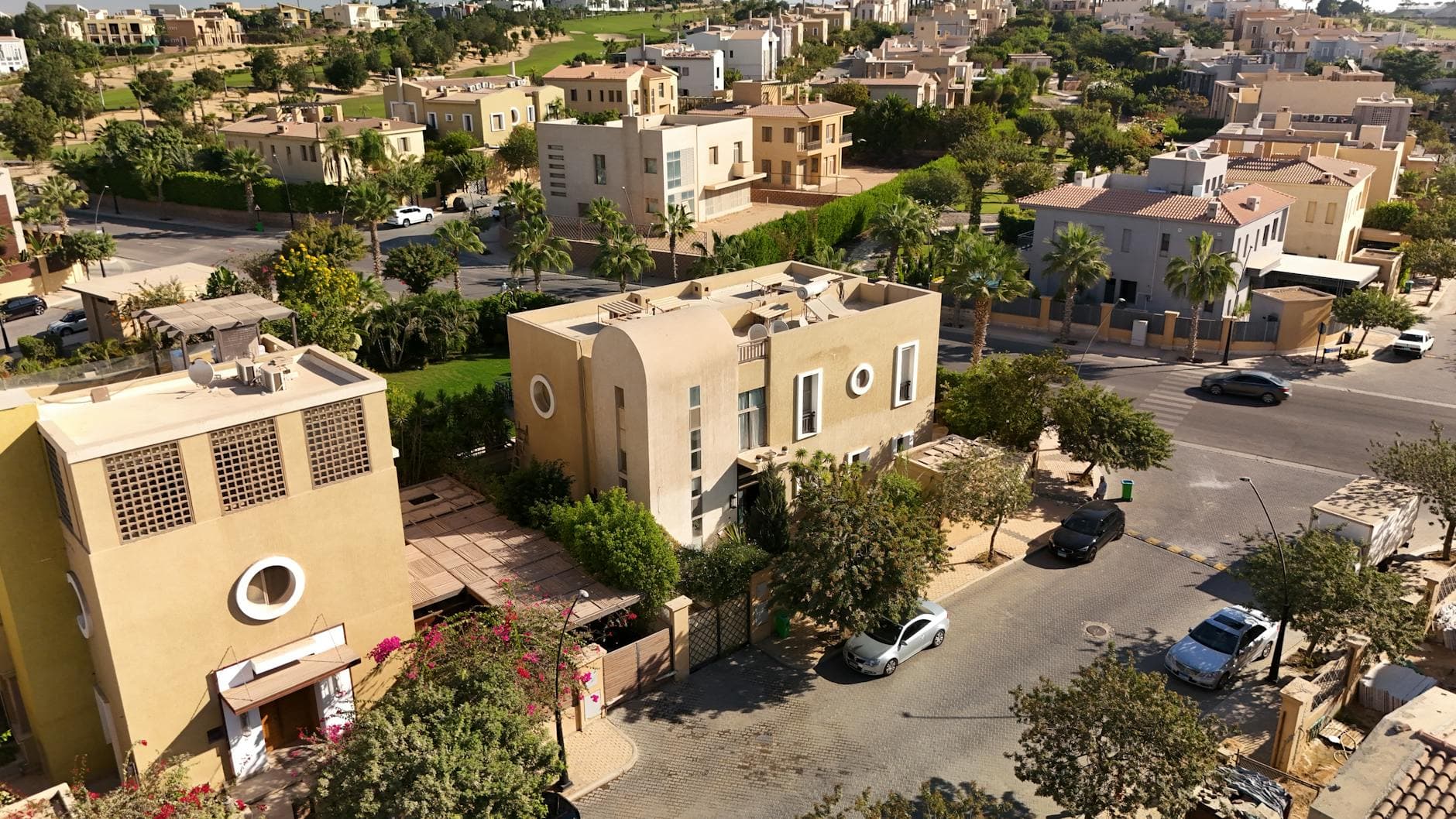
Ismailia was purpose-built by de Lesseps as the administrative heart of the canal project, and it shows. The European quarter, centered around the tree-lined Boulevard Mohamed Ali and the Garden City district around Lake Timsah, is one of the best-preserved colonial urban environments in Egypt, and almost nobody comes here for it.
The villas are still there: colonnaded, high-ceilinged, surrounded by gardens with bougainvillea gone leggy and unattended. Some are now government offices. Some are abandoned. A few are still private residences occupied by Egyptian families who have lived in them for three generations. Walk the streets around Sharia Sultan Hussein in the early morning, before 8am, and you will have them almost to yourself. The light comes in low off Lake Timsah and the whole neighborhood smells of jasmine and old plaster.
The Suez Canal Authority Museum sits at the edge of the Garden City district and contains something extraordinary that it underplays badly: a collection of documents, maps, and objects from the canal construction including original surveys by de Lesseps's engineers and photographs of the 1869 opening ceremony. There is also a scale model of the canal system that makes clear something most visitors don't register: the canal is not a simple trench. It is a managed system of lakes, the Bitter Lakes and Lake Timsah, that ships traverse as part of the crossing. The Bitter Lakes were landlocked hypersaline basins for thousands of years before the canal filled them with seawater. When that happened, the unique fauna of those lakes was destroyed within decades as Red Sea species colonized the new saltwater environment.
De Lesseps's own house, a modest two-story villa, still stands near the museum. It is visitable, contains period furniture, and is staffed by a single elderly caretaker who will tell you everything he knows if you have enough Arabic or enough patience with gesture.
Port Said: Where Empire Watched the Ships
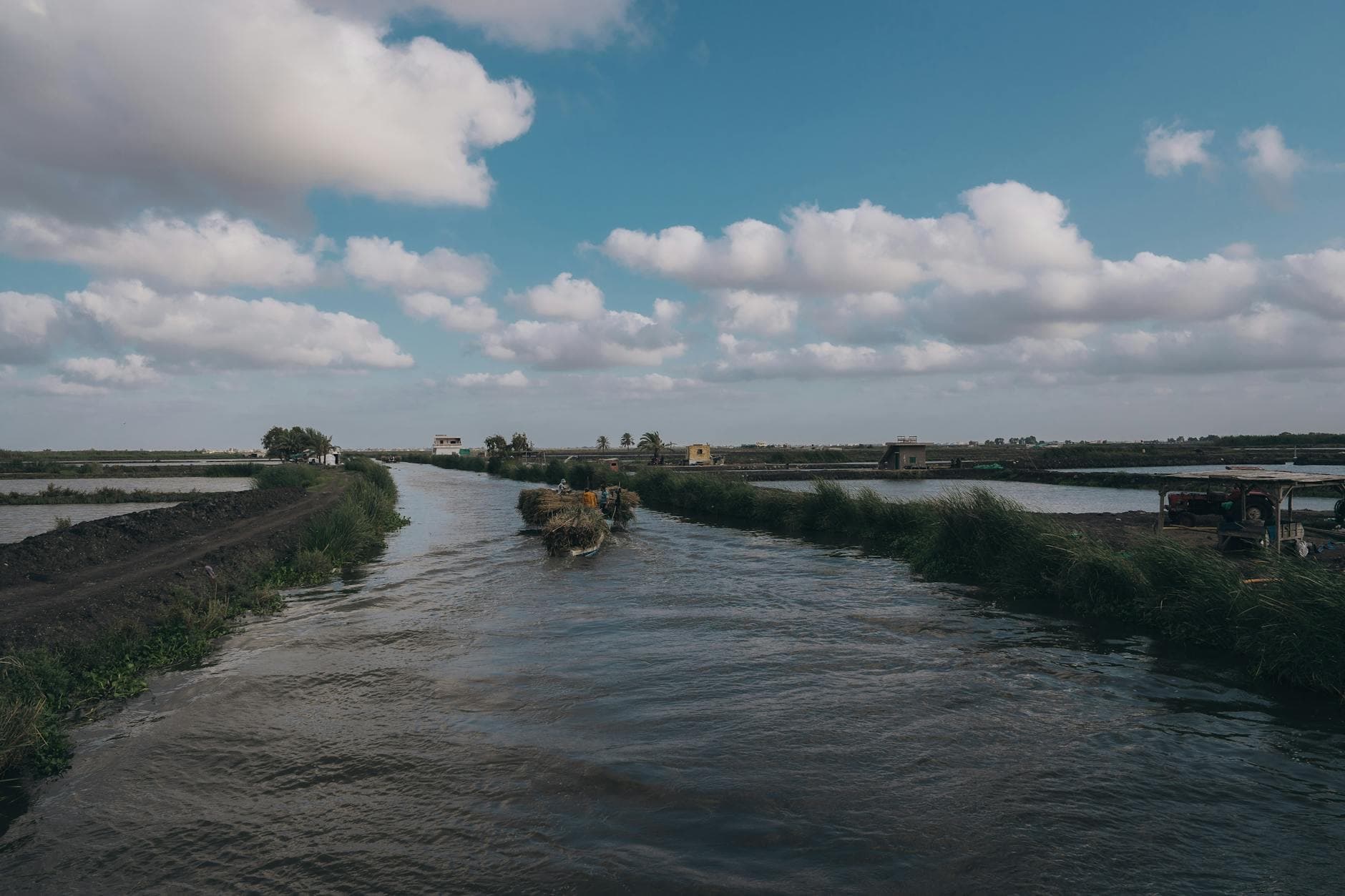
Port Said sits at the Mediterranean end of the canal, and it was built, like Ismailia, from nothing. Before the canal, there was a sandbar. After 1869 there was a city, and by the early twentieth century it was one of the busiest transshipment ports in the world, a place where sailors from every empire stopped, changed ships, bought contraband, and moved on.
The architecture of the old city reflects this: a district of colonnaded buildings with deep shaded walkways that keep the ground floor perpetually cool, designed for a port city where you spend the hottest hours waiting. These are not the colonnades of a European city transplanted to Egypt. They are a hybrid form that emerged from the specific needs of this specific place, and they are being demolished block by block as Port Said modernizes.
The Port Said National Museum has the best material on the 1956 crisis: photographs, weapons, propaganda posters from both sides, and an account of the city's resistance to the Anglo-French bombardment that is presented from the Egyptian perspective with considerable directness. Rooms cover Pharaonic objects found in the Delta region, but the colonial and modern history material is what you came for. The exhibit on the Canal Zone British military presence, which at its peak housed 80,000 British troops and their families in an area roughly the size of Wales, is specific and damning in ways that official British history has generally avoided.
At the canal's edge in Port Said, you can stand at the viewing area near the lighthouse and watch container ships pass at eye level, close enough that you could read the names of the crew if they leaned over the rail. The ships are enormous by any measure. The canal was widened in its 2015 expansion project to accommodate vessels that would not have fit the original nineteenth-century channel. Watching a Panamax-class vessel slide silently past at 13 kilometers per hour, displacing almost no visible wake, is genuinely disorienting in a way that no description prepares you for.
The Connections
The Suez Canal's history does not start in 1869 and it does not end in 1956. Both dates are merely the most dramatic moments in a much longer story.
The ancient Canal of the Pharaohs connects Suez Canal history to the Eastern Delta sites most visitors ignore entirely: Tell el-Maskhuta, near Ismailia, which was a staging post on the ancient waterway and contains the remains of a Ramesside city. The site is unexcavated, unguarded, and you can walk through it in the company of water buffalo and nobody else.
The 1882 British occupation that began with canal protection connects directly to Cairo's downtown architecture: the entire Khedival downtown grid, the Opera House district, the Corniche along the Nile, all were shaped by British administrative needs and British urban assumptions layered over Ismail's Haussmann-inspired redesign. You cannot understand why central Cairo looks the way it does without understanding that it was an occupied city for most of the time it was being built.
The 1956 nationalization connects to Nasser's Cairo: the Radio and Television Building on the Corniche from which Nasser broadcast the nationalization speech, the Arab League headquarters, the wave of Egyptian institutional architecture from the 1950s and 1960s that tried to express sovereignty in concrete and glass. That architecture is now being demolished and replaced in Cairo's current building boom, which makes the connection more urgent, not less.
Common Mistakes
Treating Ismailia as a day trip from Cairo. It can be done, but you lose the evening, and the evening is when the Garden City district becomes what it actually is: a quiet, strange, beautiful place where you can eat fish from Lake Timsah at a waterfront restaurant and watch Egyptian families do exactly the same thing that British canal administrators did in 1910. Spend the night.
Skipping the freshwater canal. The Sweet Water Canal, running parallel to the main shipping channel through Ismailia, was built during the original construction to provide drinking water to workers and is now a shaded, lush corridor through the city. Most visitors don't know it exists. Walk along it.
Going to Port Said for shopping. Port Said is a duty-free zone and Cairenes go there to buy electronics and imported goods. The shopping malls and duty-free outlets are what most Egyptian visitors prioritize. You are not most Egyptian visitors. The old colonial center and the canal viewing area are what you came for, and they require you to get away from the port market district.
Taking the organized Suez Canal "cruise" marketed from Cairo. These are short ferry crossings that take you across the canal and back, marketed as a "Suez Canal experience." They cost around EGP 800 to 1,200 per person, take 45 minutes total, and tell you nothing about the history, the politics, or the place. Standing at the viewing area in Port Said for free for one hour will give you more.
Underestimating the heat between June and September. The Canal Zone is not the dry desert heat of Luxor. It is humid, reflecting off water on both sides, and it is genuinely dangerous in the middle of the day in July. If you must come in summer, the canal viewing is a dawn activity.
Missing the British cemetery in Ismailia. There is a Commonwealth War Graves Commission cemetery near the center of Ismailia containing graves from both World Wars and from the various engagements of the British occupation. It is maintained to the Commission's usual meticulous standard, which makes it strange and slightly surreal surrounded by Egyptian urban life. It is also, if you read the dates and ages on the stones, a very direct statement about what occupation costs in human terms, on both sides.
Expecting clear interpretation at the sites. The museums have improved their English-language materials in recent years, but the explanatory panels are still thin and the curatorial logic is not always evident. Read before you go. The canal's history in Egypt is covered well in Khaled Fahmy's work on modern Egyptian history and in Anthony Sattin's writing on the British in Egypt. Neither is a long read. Both will make the landscape make sense.
Practical Tips
Book accommodation in Ismailia in advance if visiting on a Thursday night or Friday, when Cairene families come for weekend trips. The Mercure Forsan Island is the most comfortable option at around EGP 2,800 to 3,500 per night. Budget travelers will find adequate guesthouses in the city center for EGP 400 to 600.
The canal viewing area in Port Said is busiest in the early morning, when the first convoy of the day passes through. Convoys travel in groups: northbound in the morning, southbound in the afternoon. Check the Suez Canal Authority's published schedule online before you go so you arrive when ships are actually moving.
Dress modestly outside the hotel areas. Both Port Said and Ismailia are conservative Egyptian cities, not tourist zones. Women should have a headscarf accessible. This is not about temples or mosques specifically: it is about being in places where foreigners are uncommon and where your behavior reflects on how you are received.
The best meal in the Canal Zone is grilled Timsah Lake fish, specifically bolti (Nile tilapia) or mullet, at any of the waterfront restaurants in Ismailia's Garden City district. Order by weight, ask the price per kilogram before you agree to anything, and eat outside in the evening when the lake reflects the last of the light.
Frequently Asked Questions
The Weekly Dispatch
More on Egypt, every Friday.
Cultural depth and places most guides never mention.
No spam. Unsubscribe anytime.