Suez Canal History, British Egypt, and the Politics of Water
Britain occupied Egypt in 1882 to protect a waterway it didn't build and initially refused to fund. The Canal changed who owned the world. Here's what that looks like on the ground.

Quick Facts
- Best time to visit
- October to March. Summer humidity and heat along the canal corridor are significant and the light is harsh. Winter mornings on the water are clear and the temperatures make walking the cities comfortable.
- Entrance fee
- Ismailia Museum: EGP 100 (approx $2 USD), students EGP 50. Port Said National Museum: EGP 80 (approx $1.50 USD). Canal viewing areas along the corniche: free.
- Opening hours
- Ismailia Museum: Tuesday to Sunday 9am to 4pm, closed Monday. Port Said National Museum: Daily 9am to 4pm. Canal waterfront viewing areas have no formal hours but security presence varies.
- How to get there
- Bus from Cairo Turgoman station to Ismailia: EGP 45 to 70, approx 2 hours. Service taxi: EGP 60 to 80. Ismailia to Port Said by bus: EGP 25 to 40, approx 1 hour. Private car hire from Cairo return: approx EGP 1,200 to 1,800.
- Time needed
- Ismailia alone: 4 to 5 hours. Ismailia plus Port Said: full day or overnight. To cover both cities properly with the museums: 2 days.
- Cost range
- Budget EGP 400 to 700 per day including transport, entry fees, and local meals. Mid-range EGP 1,200 to 2,000 per day with hotel accommodation and restaurant dining.
Forty-three percent of the British cabinet voted against funding the Suez Canal's construction. Then, in 1875, Prime Minister Disraeli borrowed four million pounds overnight from the Rothschild bank, no parliamentary approval, and bought Egypt's 44 percent share from a bankrupt Khedive Ismail. Britain owned nearly half a waterway it had called a French vanity project seven years earlier. Within seven years, it had occupied the entire country to protect the investment.
This is the Suez Canal story that most visitors to Ismailia and Port Said do not get. They get the engineering. They get the numbers. They do not get the mechanism by which a shipping lane became a colonial justification, or why Nasser's decision to nationalize it in 1956 made him the most popular leader the Arab world had seen in centuries. Understanding the canal means understanding how Egypt spent eighty years being managed by a foreign power that was perpetually embarrassed about being there.
Quick Facts
Best time to visit: October through March. The canal corridor sits between desert and sea, and summer temperatures in Ismailia and Port Said regularly reach 38C with humidity that makes Cairo feel temperate. Winter light on the water in the early morning is worth the season alone.
Entrance fees: The Suez Canal Authority headquarters in Ismailia is not a standard tourist site. Viewing platforms along the canal in Ismailia and Port Said are generally free. The Ismailia Museum charges EGP 100 (approx $2 USD), students EGP 50. The De Lesseps statue base area and Port Said National Museum charge EGP 80 (approx $1.50 USD). Expect fees to update; verify on arrival.
Opening hours: Ismailia Museum: Tuesday to Sunday, 9am to 4pm, closed Monday. Port Said National Museum: Daily 9am to 4pm. Canal viewing areas: no formal hours, though security personnel manage access at some points.
How to get there: Buses from Cairo's Turgoman station to Ismailia run roughly every 30 minutes and cost EGP 45 to 70 (approx $1 to $1.50 USD), journey time around 2 hours. Service taxis cover the same route for EGP 60 to 80. Port Said is a further hour north by bus from Ismailia (EGP 25 to 40). Private car from Cairo costs approximately EGP 1,200 to 1,800 return depending on vehicle and negotiation. There is no passenger train to Ismailia from Cairo currently.
Time needed: Ismailia alone requires 4 to 5 hours. Combining Ismailia with Port Said makes a long day trip or an overnight. To do the canal corridor properly, including the war memorial sites and the monuments related to the 1956 nationalization speech context in Port Said, budget two days.
Cost range: Budget EGP 400 to 700 per day covering transport, entry fees, and local food. Mid-range EGP 1,200 to 2,000 per day with a hotel in Ismailia and restaurant meals.
Why This Place Matters
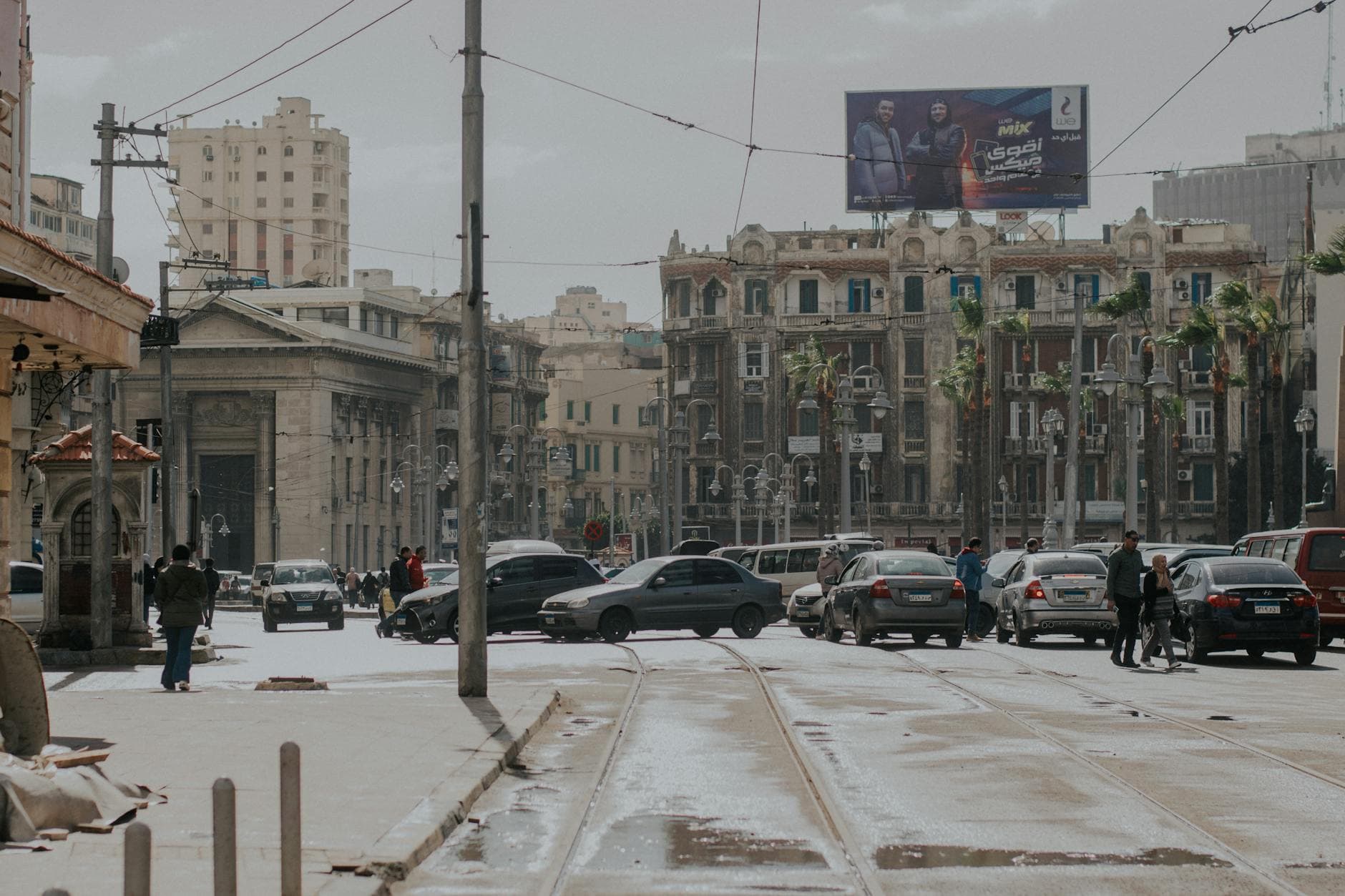
The Suez Canal is 193 kilometers long and connects the Mediterranean at Port Said to the Red Sea at Suez city. It has no locks because the Mediterranean and Red Sea are at the same level, which is the single most counterintuitive engineering fact about it: the project that consumed a decade, cost the lives of an estimated 120,000 Egyptian laborers, and reshaped global trade required no locks at all. Water simply flows.
What required engineering was the human cost. Ferdinand de Lesseps, the French diplomat who drove the project, relied on a system called corvée labor, the forced conscription of Egyptian peasants from the Delta. At peak construction in the 1860s, approximately 20,000 workers were laboring on the canal at any given time, rotating through on compulsory terms. When international pressure finally ended the corvée system in 1864, de Lesseps simply replaced human labor with the most advanced dredging machinery in the world, machines that his company could now afford because Khedive Said had granted the Suez Canal Company rights to any uncultivated land adjacent to the canal, approximately 80,000 acres of what turned out to be some of the most fertile terrain in Egypt.
The canal opened on November 17, 1869, with a party that Khedive Ismail spent approximately 28 million francs on, including constructing an opera house in Cairo specifically for the occasion. The opera performed at the opening was not Verdi's Aida, as the story often goes. Aida premiered in Cairo in 1871, two years later. The opening night featured Rigoletto. The Aida story is cleaner, so it survived.
The British Occupation and What It Left Behind
Britain's 1882 military occupation of Egypt was framed as a temporary measure to restore order after the Urabi Revolt, an Egyptian military uprising against both the Khedive's government and growing European financial control. British troops would stay for 74 years.
The occupation created a specific colonial geography along the canal that you can still read in the built environment. Ismailia, the canal's administrative headquarters, was designed by de Lesseps as a garden city and remained a European enclave of wide tree-lined streets, villas, and a freshwater lake well into the twentieth century. The Ismailia neighborhood called the European Quarter still exists. Its architecture, low-slung colonnaded houses built for French and later British administrators, sits in visible contrast to the densely built Egyptian neighborhoods that grew up around it. The physical segregation of the city was not incidental. It was policy.
The British military presence clustered along the canal zone in a network of bases that at peak strength in the late 1940s housed over 80,000 troops, making it the largest British military installation in the world at that time. The canal zone bases were a recurring humiliation for successive Egyptian governments. Negotiations over their removal consumed Egyptian politics from 1936 onward. The Anglo-Egyptian Treaty of 1936 promised British withdrawal but delivered only a reduced footprint. Full evacuation was not completed until June 1956, barely seven weeks before Nasser announced nationalization.
In Ismailia, the canal authority building, a solid 1860s French structure, still anchors the city center. The house where de Lesseps lived during construction still stands and is viewable from the exterior. The Ismailia Museum, housed in a 1930s building, holds artifacts from the ancient canal routes, Pharaonic inscriptions marking the earlier Wadi Tumilat waterway that connected the Nile to the Red Sea long before de Lesseps, and objects from the construction period that give some material reality to numbers that are otherwise too large to hold.
The 1956 Crisis and Port Said's Memory
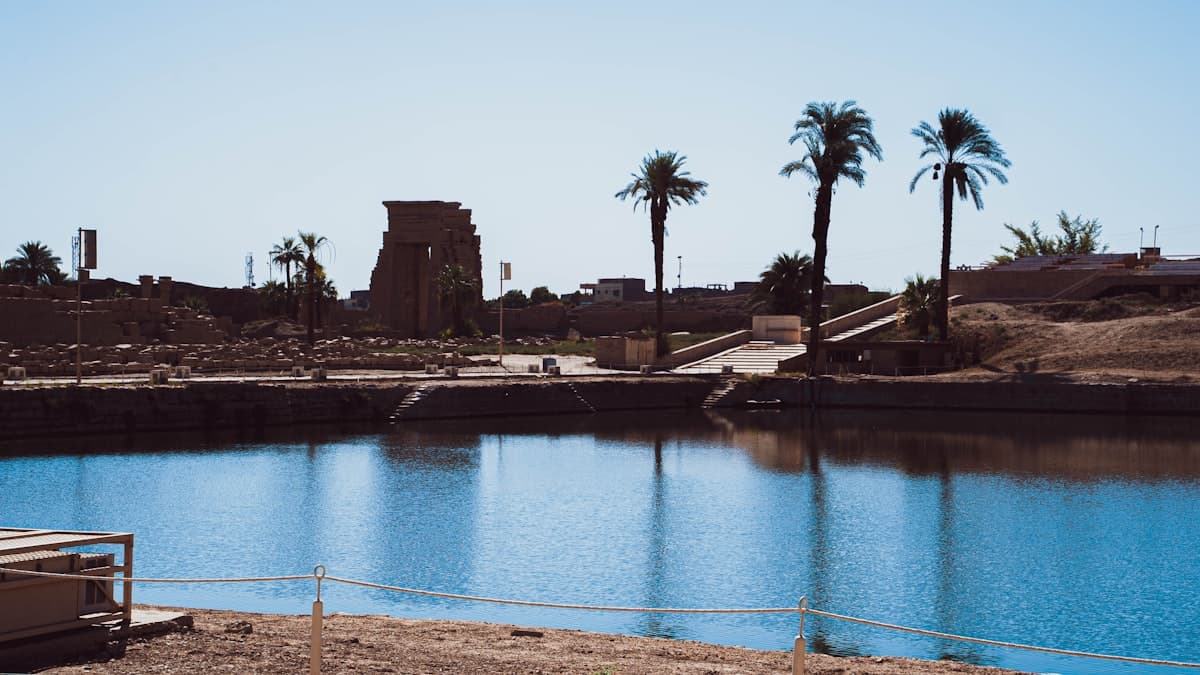
On July 26, 1956, Nasser gave a speech in Alexandria announcing the nationalization of the Suez Canal Company. He embedded the name "de Lesseps" as a coded signal in the speech; when officers in Alexandria heard it, they moved to seize the canal authority offices simultaneously with the announcement. The operation took about an hour. France and Britain spent the next three months planning a military response.
The Suez Crisis that followed, including the Israeli invasion of Sinai in October, the Franco-British bombing campaign, and the amphibious assault on Port Said in November 1956, ended with one of the most decisive American diplomatic interventions of the Cold War era. Eisenhower, furious that Britain and France had acted without informing Washington and alarmed about Soviet threats, pressured both countries to withdraw by threatening to withhold support for the British pound during a currency crisis. Britain and France withdrew. Nasser, who had lost militarily, won completely.
Port Said remembers this in specific and physical ways. The city has a monument to the resistance at the canal entrance. The Port Said National Museum holds weapons, documents, and photographs from the 1956 battle that are more honest about what happened here than most official narratives allow. The building where the ceasefire was negotiated still exists. The city sustained significant damage in the assault; British and French aircraft hit the waterfront and parts of the city center. The war graves of Egyptian defenders are maintained and visited.
Port Said also has a texture that Ismailia does not. It was always a port city, always mixed, always a transit point. Its architecture runs from nineteenth-century French colonial through art deco through the functional buildings of the 1960s reconstruction. The covered market near the waterfront sells goods at duty-free prices, a holdover from Port Said's status as a free zone established in 1976. The coffee shops by the canal are full of men watching container ships pass at extremely close range. The ships are larger than the buildings. This is worth sitting with.
The Connections
The Suez Canal sits on a route that Egyptians have been using for trade since at least 1850 BC. The ancient Egyptians dug a canal connecting the Nile at Bubastis to the Bitter Lakes, which in turn connected to the Red Sea. This Wadi Tumilat canal was used by Ramesses II, restored by the Persian king Darius I around 500 BC, and referred to in a trilingual inscription (hieroglyphic, Aramaic, and Old Persian) that still exists. Ptolemy II Philadelphus extended it further. It silted, was cleared, silted again.
The Roman Emperor Trajan ordered another restoration, and what became known as Trajan's Canal was used through the early Arab period. When Amr ibn al-As conquered Egypt in 641 AD, he reopened the canal to ship grain from Egypt to Arabia during a famine. The Abbasid caliph al-Mansur ordered it closed in 767 AD, apparently to prevent supplies reaching a revolt in the Hejaz. The route fell out of use and was not seriously reconsidered until the Napoleonic period, when French engineers surveyed it and incorrectly calculated a 10-meter difference in sea levels. That error delayed the project by sixty years.
The Ismailia Museum contains objects from the Pharaonic and Roman canal phases alongside the nineteenth-century construction material. Most visitors spend thirty minutes in the museum. Budget ninety. The Pharaonic section alone reframes the entire de Lesseps narrative.
Common Mistakes
Taking the guided tour from Cairo. The standard day tour from Cairo focuses almost entirely on watching ships pass. This is impressive for approximately twenty minutes. The rest of the tour time goes to logistics and a buffet lunch. If you make this trip, go independently, spend time in Ismailia's museum and European Quarter, and go to Port Said separately.
Skipping Ismailia for Port Said. Port Said has better name recognition and the 1956 monuments, but Ismailia has the deeper historical material and the canal authority architecture. Most organized tours go only to Port Said. This is backwards for anyone interested in the full Suez Canal history and British Egypt story.
The Suez Canal viewing platform at the New Administrative Capital tourist packages. These exist and should be avoided entirely. They sell a canal experience that consists of a distant view from a highway. Go to the actual canal city instead.
Not timing arrival for a ship convoy. Northbound convoys typically pass through the Ismailia section in the late morning. Southbound convoys pass in the early afternoon. The Canal Authority website publishes general convoy schedules. A container ship passing thirty meters from where you are standing is a genuinely different experience from a photograph.
Ignoring the 1956 Port Said National Museum because it seems like nationalist propaganda. It is, partly. It is also one of the more detailed primary-source collections about a crisis that reshaped international law on nationalization, ended British imperial ambitions in the Middle East, and introduced the concept of the UN peacekeeping force. The museum contains actual documents and operational maps. Go with context and go critically.
The Suez city end of the canal. Suez city itself suffered severe destruction during the 1967 and 1973 wars and was largely evacuated. It was rebuilt functionally but holds little of the historical texture of Ismailia or Port Said. It is worth visiting only if you are specifically researching the October 1973 crossing.
Expecting dramatic desert scenery. The canal zone is flat, industrial, and in significant parts looks like a major port facility. It is interesting for what it means and what happened here, not for landscape. Manage expectations accordingly.
Practical Tips
Ismailia is a manageable, relatively calm city by Egyptian standards. It has hotels ranging from budget guesthouses (EGP 400 to 600 per night) to a mid-range Mercure property (EGP 2,000 to 3,000 per night) on Lake Timsah. The lake swimming area is popular with Egyptian families on weekends; if you are visiting Friday or Saturday, the lakeside gets crowded in the afternoon.
Port Said's duty-free zone means certain imported goods are cheaper there than Cairo. This attracts significant domestic tourism and makes Port Said hotels more expensive and harder to book around Egyptian public holidays.
For the canal history specifically, read or skim David Landes on the canal financing and either Robert Tignor's work on British occupation or Khaled Fahmy's writing on Egyptian modernity before you go. Arriving with context transforms what you see. The physical sites are not spectacular. The meaning behind them is.
Photography along the canal is generally tolerated at the public viewing areas in both cities. Do not photograph military installations, security checkpoints, or the Canal Authority's operational infrastructure. The rules are enforced and the penalties are not worth testing.
Water in the canal zone is fine for locals; drink bottled water. Food in both cities is standard Egyptian street and restaurant fare; the fish in Port Said is particularly good given the city's position on the Mediterranean.
Frequently Asked Questions
The Weekly Dispatch
More on Egypt, every Friday.
Cultural depth and places most guides never mention.
No spam. Unsubscribe anytime.