Suez Canal History, British Egypt and the War for a Waterway
Britain occupied Egypt in 1882 specifically to control a canal it didn't build and a country it didn't colonize. The Canal Zone still holds the scars. Here's how to read them.

Quick Facts
- Best time to visit
- October to April. Summer humidity from Lake Timsah and the canal makes outdoor sites punishing above 40°C.
- Entrance fee
- Ismailia Museum: free. De Lesseps House: EGP 50 (approx $1 USD). Suez Panorama War Museum: EGP 30 (approx $1 USD).
- Opening hours
- Ismailia Museum: Tue to Sun 9am to 4pm, closed Monday. De Lesseps House: daily 9am to 3pm. Panorama Museum Suez: daily 9am to 5pm.
- How to get there
- Bus from Cairo Turgoman terminal to Ismailia: EGP 50 to 70, 2 hours. Private taxi from Cairo: EGP 400 to 600 return. Microbus Ismailia to Port Said: EGP 20 to 30, 1 hour.
- Time needed
- One full day for Ismailia. Two days minimum to cover Ismailia, Port Said, and Suez city properly.
- Cost range
- Budget EGP 300 to 600 per day including food, transport, and all entry fees. Mid-range EGP 1,200 to 2,000 with private driver and hotel on Lake Timsah.
Quick Facts
Best time to visit: October to April. The Canal Zone in summer sits at 40°C with humidity that makes Cairo feel dry. The light is better in winter and the crowds thinner.
Entrance fees: The Suez Canal Authority Museum in Ismailia: free entry. The de Lesseps House Museum: EGP 50 (approx $1 USD). The War Memorial and 1973 Crossing Museum in Suez city: EGP 30 (approx $1 USD). Viewing platforms along the canal are accessible without charge.
Opening hours: Ismailia Museum: Tuesday to Sunday 9am to 4pm, closed Monday. De Lesseps House: daily 9am to 3pm, though hours are loosely enforced. Arrive before noon to be safe.
How to get there: Ismailia by bus from Cairo's Turgoman terminal, roughly EGP 50 to 70 one way, two hours. Taxi from Cairo runs EGP 400 to 600 for the day return. Microbus from Cairo's Abbassiya area costs EGP 25 but drops you at the edge of town. Port Said is accessible by bus from Cairo for EGP 60 to 80, two and a half hours.
Time needed: One full day for Ismailia alone. Two days if you want Ismailia plus Port Said plus the Suez city war memorials properly.
Cost range: Budget EGP 300 to 600 per day including food and transport. Mid-range EGP 1,200 to 2,000 if you add a private driver and a decent hotel in Ismailia.
---
Why This Place Matters
The British Empire seized Egypt in 1882 not because of Egypt. It seized Egypt because of 193 kilometers of water connecting the Mediterranean to the Red Sea. The Suez Canal had been open for thirteen years. British investors held nearly half the shares. When Egypt's debt crisis threatened that investment, Lord Wolseley's army landed at Alexandria, defeated Ahmed Urabi's nationalist forces at Tel el-Kebir in September, and installed a colonial administration that would run the country for the next seventy years, all while insisting, with a straight face, that Britain had no intention of staying.
The canal itself was built by Ferdinand de Lesseps, a French diplomat who had never built a canal before. Construction began in 1859 and involved an estimated 1.5 million Egyptian laborers over the decade it took, many of them compelled by the corvée system, the legal forced labor that Egypt had inherited from its Ottoman administrators and that de Lesseps exploited with the Khedive's blessing. Somewhere between 120,000 and 125,000 of those workers died during construction from cholera, exhaustion, and accidents. This is not a figure that appears on the plaques in Ismailia.
The canal opened in November 1869 with a ceremony so extravagant that Khedive Ismail commissioned Verdi to write an opera for it. Verdi declined to rush. Aida was performed two years later. The opening went ahead without it, attended by Empress Eugénie of France, Emperor Franz Joseph of Austria, and the Crown Prince of Prussia, all arriving in a procession of ships through a waterway that Egypt had paid for with labor and money it could not afford, a debt that would eventually cost Egypt its sovereignty.
---
The Colonial Geography: Reading Ismailia
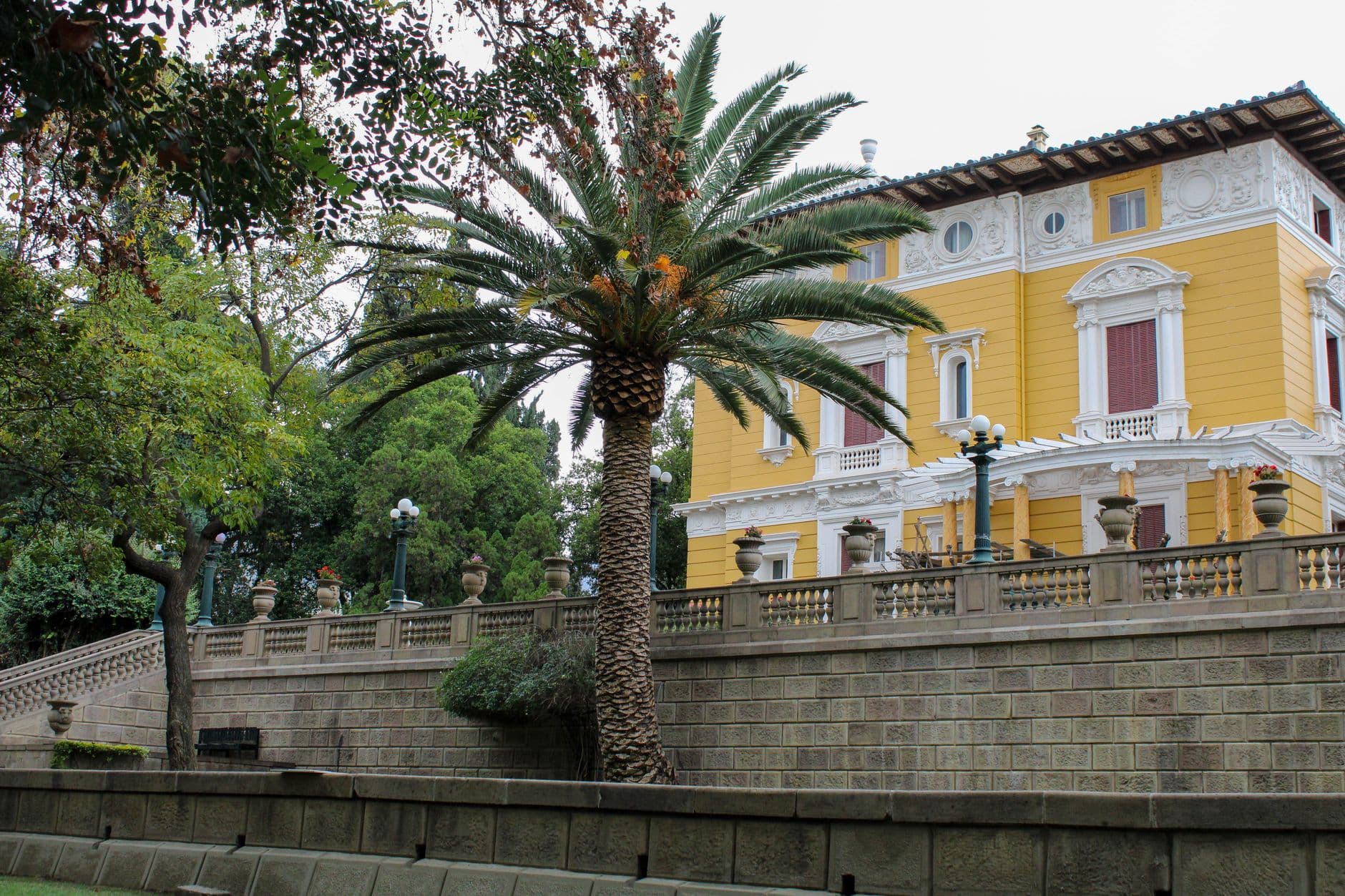
Ismailia was designed as a company town, and it still reads like one if you know what you are looking at. Ferdinand de Lesseps built himself a house here in 1869, a low colonial villa with wide verandas and a garden that backs onto Lake Timsah. It is still standing, still called the de Lesseps House, and you can walk through it for fifty Egyptian pounds and feel the particular chill of a space that has been preserved without being understood. The furniture is period French, the garden is overgrown in the precise way that signals maintenance without investment, and the guides will tell you that de Lesseps was a great man without mentioning the forced labor.
The town was divided with a clarity that colonial planners considered rational. The European quarter sat west of the fresh water canal that de Lesseps had constructed to supply the workforce: wide streets, French villas, trees. The Egyptian quarter sat east: narrower streets, different materials, different logic. You can still walk this boundary today. The architecture changes in about forty steps.
The Ismailia Museum, small and criminally undervisited, holds artifacts pulled from construction of the canal itself, including items from the ancient Way of Horus, the military road that connected Egypt to the Levant and that Ramesses II used to move armies. The canal, in other words, was cut through one of the oldest transit routes in the world. The Egyptians had been moving things across this neck of land for four thousand years before de Lesseps arrived with his maps.
One room of the museum contains a mosaic floor from a Roman villa, lifted from the canal zone during excavation. The Romans, too, had contemplated connecting the two seas. Trajan extended an ancient Pharaonic canal from the Nile to the Red Sea in the second century AD, a route that silted up and was periodically revived until the Arab general Amr ibn al-As cleared it again in 642 to ship grain to Arabia. The Abbasids closed it in 767 for political reasons. This is how Egypt works: every modern project finds something older underneath it.
---
Port Said and the Weight of 1956
At the northern end of the canal, Port Said holds the heaviest history in the Canal Zone, and it carries it with a certain defiant civic pride. In July 1956, Gamal Abdel Nasser nationalized the Suez Canal Company in a speech delivered in Alexandria, dropping the name "de Lesseps" as a codeword to trigger Egyptian forces to begin the takeover of canal facilities. By November, Britain, France, and Israel had launched a coordinated military assault on Egypt, an operation so thoroughly miscalculated that it ended Anthony Eden's career and confirmed the end of Britain as a global power.
Port Said was bombed. Civilians died. British and French paratroopers landed at Port Fuad, across the water. American pressure and a UN ceasefire stopped the advance before it reached Cairo. Egypt kept the canal. Nasser became the most popular leader in the Arab world. The British government fell.
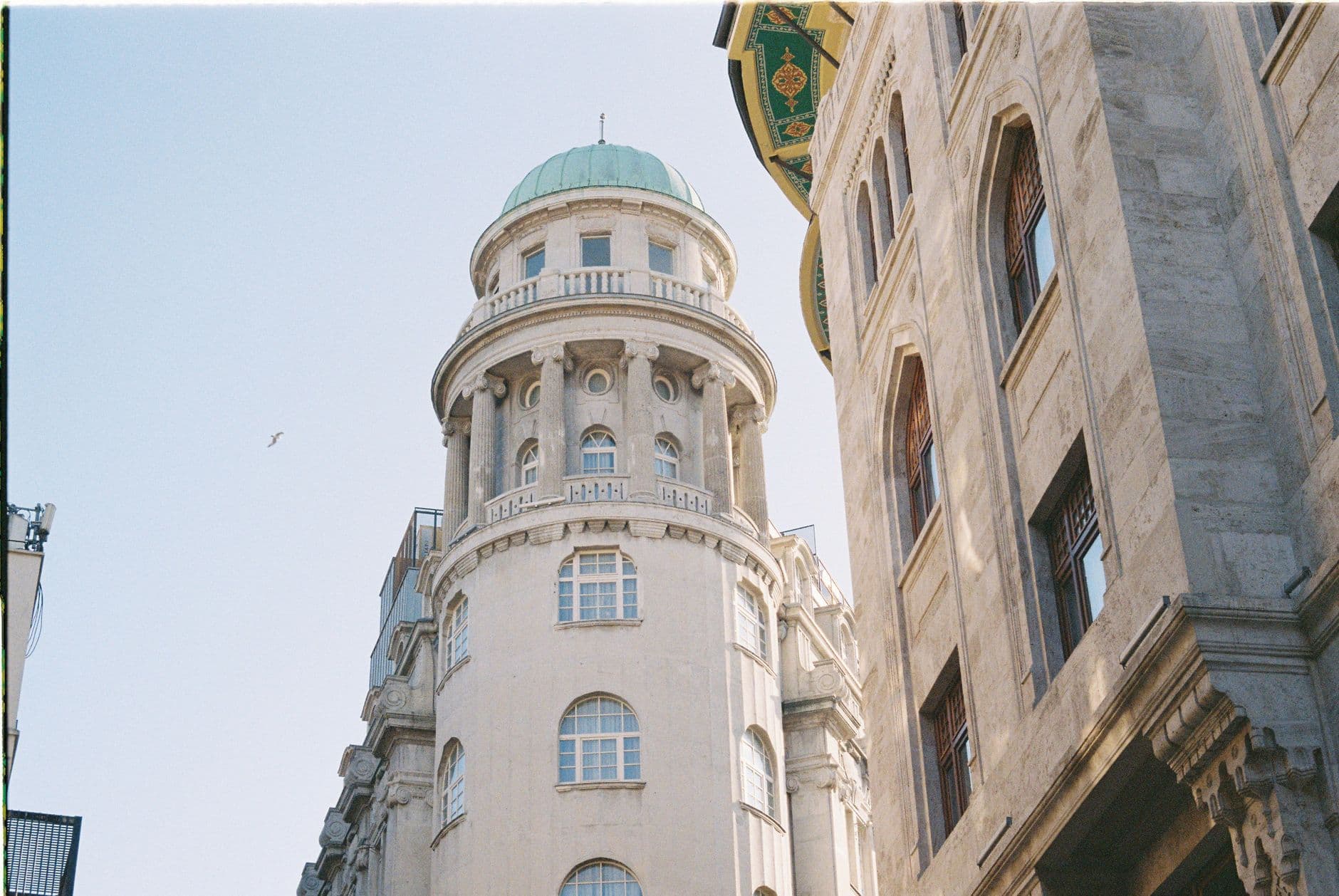
Walking Port Said now, you find the Canal Authority Building, a French colonial structure from 1869 with a green dome that was the operational heart of the entire enterprise for decades. It still functions as a canal administration building. Inside, in a small room rarely opened to visitors but accessible if you ask specifically and persistently, there are original navigation charts from the early canal operations. The building took damage in 1956. The repairs are visible if you look at the dome from the north side, where the stonework changes color slightly above the second story.
The harbor corniche in Port Said has a statue of de Lesseps that was torn down after 1956 and never replaced. The plinth is still there. Locals use it as a bench.
---
The 1973 Crossing and the Suez City Memorials
Suez city sits at the southern end of the canal and sustained some of the most intense fighting of the 1973 October War, when Egyptian forces crossed the Bar-Lev Line, an Israeli fortification on the eastern bank that had been called impregnable by Israeli military analysts, in an assault that involved simultaneously crossing the canal at multiple points with water cannons borrowed from East German engineering documents that described how to blast through sand berms. The crossing took seventeen minutes at several points along the front. Israel did not believe it was possible.
The Panorama Museum on the outskirts of Suez city presents this story in a circular diorama that is earnestly executed and genuinely moving, even accounting for its triumphalist framing. The detail on the military equipment is accurate. The crossing is shown at 2:05pm on October 6th, the moment Egyptian forces entered the water across a 160-kilometer front. For EGP 30, this is one of the better history experiences in the Canal Zone and almost nobody outside Egypt visits it.
The city itself bears marks of the 1967 to 1973 War of Attrition: buildings in the center have been rebuilt in a style that manages to look both functional and provisional, as if Suez city never quite committed to permanence after being evacuated and shelled for three years. That quality is itself historical. You are looking at a city that was empty from 1967 to 1975 and repopulated gradually. The demographic gaps this created, a generation raised as refugees in Cairo and Alexandria, shaped modern Suez in ways local residents will tell you about if you eat in their restaurants and stop performing tourist.
---
The Connections: Ancient, Islamic, Colonial
The Suez Canal route corresponds almost exactly with the ancient Wadi Tumilat, the corridor through which the biblical Exodus story is thought by some scholars to have traveled, and through which the Hyksos invaded Egypt around 1650 BC. This is the same geographical neck through which every conqueror from the Assyrians to Napoleon tried to enter or exit Egypt. Napoleon sent an expedition to survey a canal route in 1799. His engineers miscalculated the sea level difference between the Mediterranean and Red Sea by ten meters, concluding a canal would flood the delta. They were wrong. De Lesseps proved it sixty years later.
The Ottoman administration of Egypt, which formally owned the territory before Muhammad Ali's descendants consolidated power in the 19th century, had considered the canal question repeatedly since the 16th century, when Suleiman the Magnificent commissioned a feasibility study. The Ottomans declined, fearing it would give European powers a direct naval route to undercut their Indian Ocean trade advantages. They were correct about the geopolitics, wrong about the outcome.
The Coptic community of Ismailia, small and often overlooked, preserves a church near the old European quarter dedicated to the Virgin that was founded in the 1880s when Coptic workers arrived to provide skilled labor for canal maintenance. This is the pattern you find everywhere in Egypt: the grand narrative of empires and canals contains, if you look sideways, the story of ordinary people moving for work and planting themselves.
---
Common Mistakes
Spending all your time in Port Said and skipping Ismailia. Port Said has more tourists and less to show for it. The de Lesseps House and the Ismailia Museum together tell the canal story more honestly than any single site in Port Said.
Taking a Canal cruise package from Cairo. These typically cost EGP 1,500 to 2,500 and show you the water from a boat while someone reads facts from a laminated sheet. The canal is better understood from the bank, at eye level with the tankers. The scale of the ships passing is only legible when you are standing next to the water, not looking down at it.
Visiting the de Lesseps House without asking about the Egyptian labor history. The guides will tell you what you appear to want to hear. Ask specifically about the corvée system and the worker death toll. Some guides will engage seriously. The ones who do are worth an extra tip.
Skipping Suez city entirely. Every group itinerary goes Port Said, Ismailia, done. Suez city's Panorama Museum and its particular quality of post-war reconstruction make it the most intellectually dense stop in the Canal Zone. It also has the best fish.
Assuming the Canal is a single visit. The Suez Canal history British Egypt story is told across three cities on two different coasts of the canal. One day trip from Cairo gives you the surface. The Canal Zone deserves at least two nights if you are serious about it.
The sound and light show at Port Said harbor, when it runs, costs EGP 200 to 300 and adds nothing to what you have already seen. It is aimed at Egyptian school groups and is not worth rearranging your evening for.
Going in July or August. Ismailia is on a lake and the humidity is punishing. The sites are also less staffed in summer and the museum in particular keeps unpredictable hours.
---
Practical Tips
The best base is Ismailia. The Mercure Forsan Island hotel sits on an island in Lake Timsah and costs EGP 2,500 to 3,500 per night, which is mid-range by Egyptian standards but gives you the singular experience of watching tankers pass from a breakfast table. Budget accommodation in central Ismailia runs EGP 500 to 800 per night.
For transport between the three canal cities: shared microbuses run between Ismailia and Port Said for EGP 20 to 30 and take about an hour. Ismailia to Suez runs EGP 25 to 40 and takes roughly an hour and a half. Private taxis for the full circuit cost EGP 700 to 1,000 from Ismailia.
Bring your passport. The Canal Zone has a higher security presence than most of Egypt and you will occasionally be asked to show ID, particularly near the water.
Food: Ismailia's fish restaurants along the lake are inexpensive and excellent. A full meal at a lakeside restaurant runs EGP 150 to 300 per person. Port Said's seafood market near the harbor is where locals buy, not tourists. The prices there are roughly half what you will pay in the restaurants.
Photography of the canal, the ships, and the Authority buildings is generally tolerated at public viewpoints. Photographing military installations, including anything that looks like a checkpoint or a uniformed presence, is not. Egypt applies this rule inconsistently but seriously. When in doubt, do not.
Frequently Asked Questions
The Weekly Dispatch
More on Egypt, every Friday.
Cultural depth and places most guides never mention.
No spam. Unsubscribe anytime.