Suez Canal History, British Egypt, and the War Nobody Mentions
Britain occupied Egypt in 1882 to protect a canal it didn't own. The company that built it was French. The man who nationalized it became the most important Arab leader of the 20th century. Here is the full story.

Quick Facts
- Best time to visit
- October through March. The Nile Delta humidity drops, the light is sharp rather than bleached, and temperatures are comfortable for walking the corniche and outdoor canal viewing.
- Entrance fee
- Ismailia Canal Museum: free. Corniche viewing areas: free. Guided historical tours: EGP 600 to EGP 1,200 per person (approx $12 to $25 USD).
- Opening hours
- Ismailia Canal Museum: Saturday through Thursday 9am to 4pm, closed Friday. Canal corniche and viewing areas: accessible at all hours.
- How to get there
- Bus from Cairo Turgoman Station to Ismailia: EGP 55 to EGP 80, every 30 minutes, 90 minutes journey. Private taxi Cairo to Ismailia: EGP 500 to EGP 700 one-way. Bus to Port Said: EGP 80 to EGP 100, approximately 2 hours.
- Time needed
- Full day minimum for Ismailia alone. Two days if combining Ismailia and Port Said with serious attention to the 1973 memorial and the Port Said historical quarter.
- Cost range
- Budget EGP 400 to EGP 700 per day including bus transport, food, and museum entry. Mid-range EGP 1,200 to EGP 2,000 per day with private driver and licensed guide.
Quick Facts
Best time to visit: October through March, when the Delta humidity breaks and the light over the canal is sharp rather than bleached.
Entrance fees: The Suez Canal Authority Museum in Ismailia: free admission. The Canal Zone itself is viewable from public corniche areas at no charge. Guided historical tours through licensed operators: EGP 600 to EGP 1,200 per person (approx $12 to $25 USD), depending on length and transport.
Opening hours: The Ismailia Canal Museum is open Saturday through Thursday, 9am to 4pm. Closed Fridays. The viewing areas along the canal in Ismailia and Port Said are accessible at all hours, though dawn gives you the cleanest light and the smallest crowds.
How to get there: From Cairo, buses from Turgoman Station to Ismailia run every 30 minutes and cost roughly EGP 55 to EGP 80 (under $2 USD). The journey takes about 90 minutes. Shared microbuses from Abbasia are slightly faster and slightly cheaper. Taxis from Cairo to Ismailia cost EGP 500 to EGP 700 one-way. Port Said is two hours from Cairo by bus, EGP 80 to EGP 100.
Time needed: Ismailia alone warrants a full day if you take it seriously. Port Said adds another half-day. Allow two days minimum if you want to understand the Canal Zone as a whole rather than just photograph a ship.
Cost range: Budget EGP 400 to EGP 700 per day including transport, food, and museum entry. Mid-range EGP 1,200 to EGP 2,000 per day including a private driver and a licensed guide.
---
Why This Place Matters
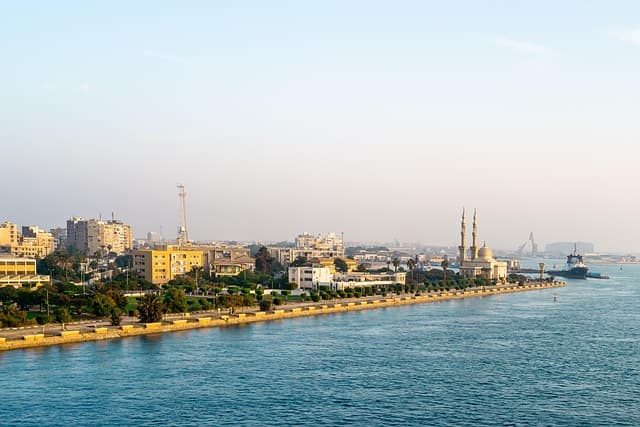
When the Suez Canal opened on November 17, 1869, the Khedive Ismail threw a party that cost Egypt roughly ten percent of its annual GDP. He commissioned Giuseppe Verdi to write an opera for the occasion. Verdi declined, though he later wrote Aida for the Cairo Opera House, which was also built for the opening celebrations. The canal itself, when the last section was flooded and the first ships passed through, connected the Mediterranean to the Red Sea for the first time since the Pharaoh Neco II had attempted something similar around 600 BC, and the Ptolemies had partially completed a version of the route, and the Arab general Amr ibn al-As had reopened a canal along the Nile's eastern branch in 642 AD. The idea of cutting through the isthmus is not a 19th-century European innovation. Egypt had been thinking about it for two and a half millennia.
What is specifically a 19th-century European innovation is the debt trap that followed. Ismail borrowed so heavily to finance the canal's construction and the celebrations surrounding it that by 1875 he was forced to sell Egypt's shares in the Suez Canal Company to the British government for four million pounds, a sum Disraeli borrowed overnight from the Rothschild banking house without parliamentary approval. Seven years later, in 1882, Britain used a nationalist uprising as a pretext to occupy Egypt militarily, a military occupation that would last, in various forms, until 1956. The canal was the reason. It was always the canal.
To understand modern Egypt, meaning the Egypt that produced Nasser, that fought three major wars, that nationalized its own resources, that became briefly the center of pan-Arab politics, you have to understand the Canal Zone and what happened there. This is not a side trip. This is the spine of the 20th century.
---
The British Occupation and What It Actually Looked Like
The phrase "British Egypt" is misleading in a way that matters for understanding what you are looking at when you walk through Ismailia today. Britain never formally colonized Egypt. Egypt was technically an Ottoman province, then a protectorate, then a nominally independent kingdom. The British Consul-General, Lord Cromer, who effectively ran Egypt from 1883 to 1907, had no official government title that reflected his actual power. He operated through Egyptian ministers who answered to him. He was, in his own words, governing "veiled not by the veil of fiction, but by the veil of fact."
Ismailia was built specifically to administer the canal, and the French Suez Canal Company ran it with a colonial efficiency that left visible traces. The company town, with its European villas and its company gardens along the lake, was designed to be comfortable for French and later British administrators and deliberately separate from the Egyptian workers who actually maintained the waterway. Those workers, for the first decade of the canal's operation, were brought in under a system of forced labor called the corvée, an Ottoman-era practice that required Egyptian peasants to contribute unpaid labor to state projects. Ferdinand de Lesseps, who oversaw the canal's construction and who is still celebrated with a statue in various European cities, built his masterwork partly on that system. The British, who were publicly opposed to the corvée and used that opposition as political leverage against the Canal Company, abolished it officially in 1863, which simply meant the Company switched to paid labor while quietly lobbying to keep extraction costs low.
Walk through the Ismailia Museum and you will find the original stone marking the canal's survey, wooden furniture from de Lesseps's house preserved under glass, and photographs of the opening ceremony that show the Empress Eugénie of France in the first ship through the canal. What the museum does not prominently display is a breakdown of what the corvée cost in human terms, or the precise financial mechanisms by which Egypt ended up technically owning a canal it could not control for 87 years.
---
1956 and the Week That Changed Everything
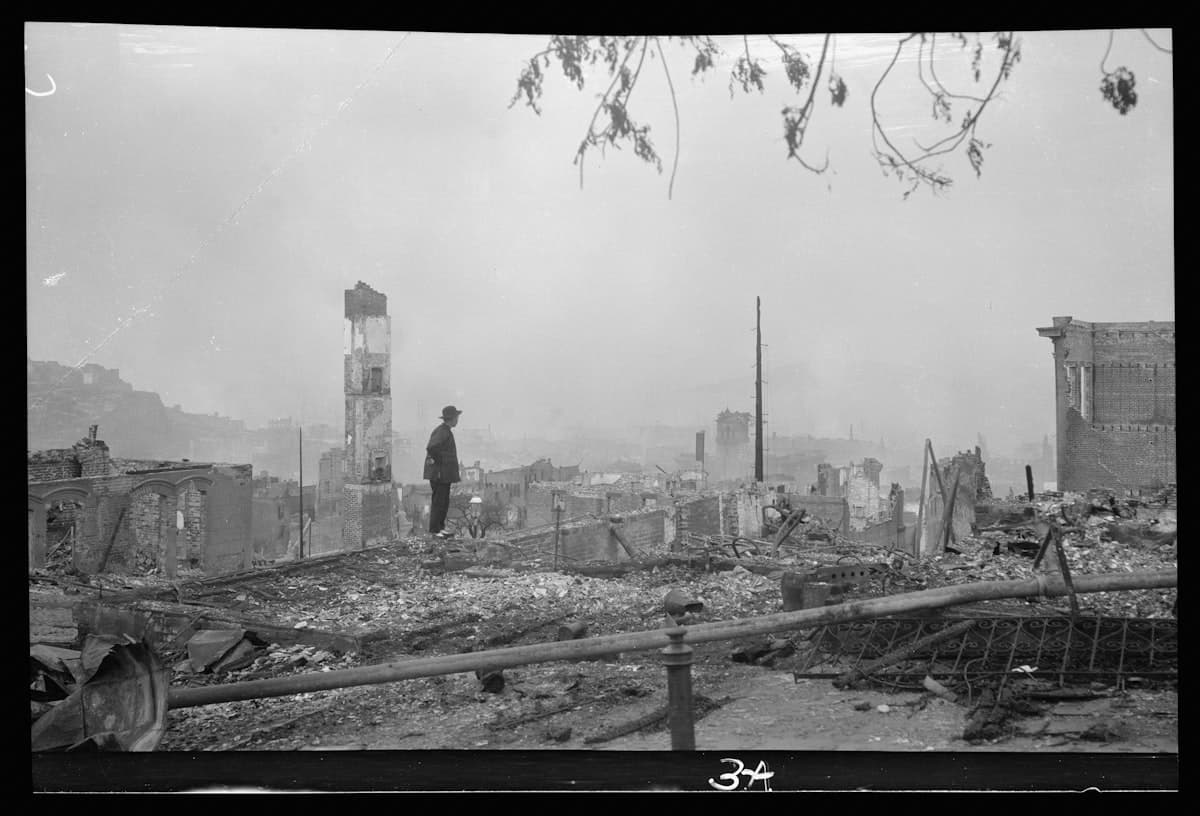
On July 26, 1956, Gamal Abdel Nasser gave a speech in Alexandria that lasted nearly three hours. At a pre-arranged moment inside that speech, he said the name "Ferdinand de Lesseps" aloud. It was a code word. Egyptian army officers listening on radio immediately moved to seize the Canal Company's offices in Ismailia, Cairo, Port Said, and Suez simultaneously. Within the hour, Egypt had nationalized the Suez Canal. The entire operation, the signaling mechanism, the simultaneous seizure of multiple facilities, the coordination across three cities, had been planned and executed without a single leak.
Britain and France responded by secretly coordinating with Israel to manufacture a pretext for military intervention. Israel would attack Egypt through Sinai. Britain and France would issue an ultimatum to both sides to withdraw from the canal zone. Egypt would refuse. Britain and France would bomb Egyptian airfields and land troops at Port Said. The plan, called Operation Musketeer, was executed in October and November of 1956 and it worked militarily. It failed completely politically. The United States, under Eisenhower, refused to support the operation and threatened to tank the British pound if British troops were not withdrawn. Britain backed down. Nasser, who had lost the military engagement, won the political one completely.
Port Said still carries the marks of that battle. The city was bombed for several days in early November 1956. The Cecil Hotel, where British officers had stayed during the occupation, was damaged. The lighthouse that had guided ships into the canal entrance since 1869 was hit. Walk along the corniche in Port Said today and the architecture tells a compressed story: Ottoman-era buildings, French Company buildings, British-era administrative structures, and then a gap where the bombing happened, filled in with the functional concrete of the 1960s.
The Canal Zone's British military bases, which at their peak in the early 1950s housed around 80,000 British troops, making it the largest British military base in the world at the time, were evacuated under a 1954 agreement negotiated by Nasser before the nationalization. The British left behind infrastructure, roads, warehouses, and in some cases equipment. The Egyptian government repurposed what it could. What it could not repurpose, it demolished. There are places along the canal road between Ismailia and Suez where you can still see the concrete foundations of military structures that have no other explanation available from a roadside sign.
---
The Connections
The canal's history does not start in 1869 and it does not end in 1956. The ancient Egyptians called the route between the Nile and the Red Sea the "Waters of Ra." Ramesses II used it for military supply lines. The Persian emperor Darius I completed a navigable canal along this corridor around 500 BC and left a commemorative stele near modern-day Ismailia, which you can see a reproduction of in the museum. The Romans maintained a version of the route. The Arab general Amr ibn al-As reopened the canal in 642 AD specifically to ship grain from Egypt to Arabia, naming it the Canal of the Commander of the Faithful.
By the 9th century, the canal had silted up again and was abandoned. Medieval Islamic Egypt moved its trade by overland caravan through Sinai rather than by water. When the Portuguese opened the sea route around Africa in 1498 and began bypassing the Egyptian land route entirely, the Ottoman-Egyptian economy took a blow from which it recovered only partially. The French under Napoleon surveyed the isthmus in 1798 and reached the (incorrect) conclusion that the Red Sea was 9.9 meters higher than the Mediterranean, which would make a sea-level canal impossible. That survey error delayed the project by decades. When later surveys corrected the mistake, de Lesseps moved forward. The canal Nasser nationalized in 1956 was built on the ghost of channels that had been dug and abandoned and dug again for 2,500 years.
The 2015 expansion, in which Egypt invested roughly $8 billion in 8 months to complete a parallel channel that allows two-way traffic, is the most recent chapter in that sequence. The expansion was funded entirely by Egyptian citizens buying investment certificates. Whether that was a genuine expression of national pride or an indication that the Egyptian state needed a domestic funding mechanism that bypassed international financial scrutiny is a question Egyptian journalists debate actively. Worth knowing before you visit.
---
Common Mistakes
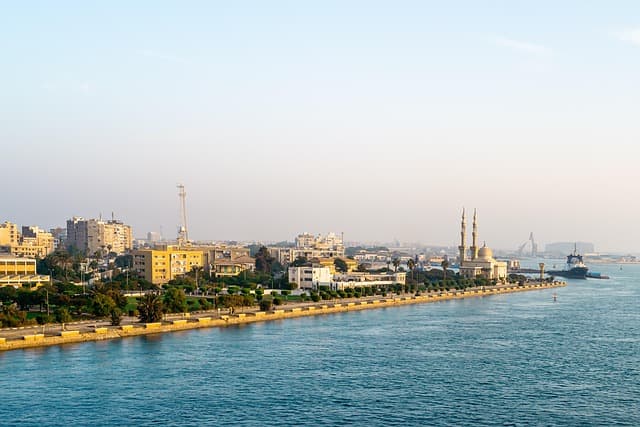
Visiting only Port Said. Port Said has the famous corniche photograph and the lighthouse backdrop, but Ismailia is where the Canal Company actually lived and governed. The surviving French colonial architecture and the museum are both in Ismailia. Port Said without Ismailia gives you the symbol but not the substance.
Taking a canal "cruise" without doing the ground work first. Several operators sell short Suez Canal boat experiences from Ismailia. These are pleasant. They are also shallow. A ship passing 300 meters away means nothing unless you already understand what you are looking at. Do the museum and the corniche walk first.
Confusing the 1956 war with the 1967 war. Tourists frequently conflate the two, and conflating them causes the entire political history to collapse into noise. The 1956 Suez Crisis was about nationalization and was a British and French military failure. The 1967 Six-Day War was a different conflict with different causes and different results. The Canal was closed from 1967 to 1975 because of the 1967 war, not the 1956 one. Know the difference before you start asking questions.
Paying for the sound and light show in Port Said. It costs EGP 350 and narrates the 1956 battle with lighting effects over the canal entrance. It tells you nothing you will not already know after reading this article and the Ismailia museum panels. Skip it.
Expecting much from de Lesseps's house. What survives of the original house is maintained with mixed results. The garden is pleasant. The interior is thin on context. It functions more as a photo opportunity than as a historical experience. Budget 20 minutes, not two hours.
Missing the 1973 War Memorial on the west bank at Ismailia. Most canal guides focus on 1869 and 1956. The October War of 1973, in which Egyptian forces crossed the canal in a surprise assault using water cannons to collapse Israeli sand fortifications, is arguably more tactically innovative than anything else in modern Middle Eastern military history. The memorial is specific and moving and most tour itineraries omit it entirely.
Arriving at the Ismailia Museum after 3pm. Staff begin closing display cases and turning off air conditioning before the official 4pm closing time. Arrive before noon.
---
Practical Tips
The canal is a working industrial waterway. Large container ships, tankers, and bulk carriers pass through continuously. If you want to watch shipping traffic from the corniche in Ismailia, the morning hours between 7am and 10am tend to bring the densest convoys through the stretch closest to town. Bring binoculars if you have them.
Ismailia itself is a pleasant city by Delta standards: quieter than Cairo, genuinely tree-lined around the old Canal Company quarter, with decent grilled fish restaurants along Lake Timsah. It is not a tourist infrastructure city. Touts are minimal. Hotels are functional rather than polished. The Mercure Forsan Island has the best position and the most reliable air conditioning, at roughly EGP 1,800 to EGP 2,500 per night.
Hiring a local licensed guide in Ismailia for a half-day runs EGP 500 to EGP 800 and is worth it specifically because the street-level historical markers are sparse. The visual landscape alone will not tell you which building was a British administrative office and which was built by the Canal Company for its French managers. Context is everything here, and context requires a person who knows the difference.
For the Suez Canal history and British Egypt angle specifically, bring a copy of Robert Tignor's "Modernization and British Colonial Rule in Egypt" or Max Rodenbeck's "Cairo: The City Victorious" for train reading. Neither is a guidebook. Both will make the canal landscape legible in ways no walking tour can fully achieve in a day.
Frequently Asked Questions
The Weekly Dispatch
More on Egypt, every Friday.
Cultural depth and places most guides never mention.
No spam. Unsubscribe anytime.